文章内容
写「让妈妈笑一笑」短诗:先定节奏再填事
给小学中低年级写让妈妈笑一笑的短诗,顺序和给初中生写的相反:先定节奏,再填事情。提纲要求节奏明快、朗朗上口,最稳的办法是全诗用两字或三字一顿的短句,每行不超过八个字,读起来自然有拍子。
行数十五到二十行,按四段分:第一段四行,写妈妈一天累在哪些地方,只写看到的,比如她下班进门先换鞋、先坐下;第二段五行,写我洗碗,水声、碗碰碗的声音放进去;第三段五行,写我捶背,拳头轻轻的、背圆圆的,两个叠词够用;第四段四到六行,写妈妈的笑脸,收尾。
三个意象的排法有讲究:洗碗和捶背是做的事,放中间两段,一件一段,不要混在一起;笑脸是结果,放最后,前面不提前出现笑字,结尾的笑才值钱。
朗朗上口靠三样东西:短句、叠词、押一点尾韵。短句前面说了;叠词用轻轻、圆圆、暖暖这类,两三个就够;尾韵不必每行都押,隔行押就行,比如了、腰、笑这一类音,押上三四处,诵读时就有顺口感。
写完让孩子先读出声。读的时候哪里绊住,就把那行的字删到一口气能读完;哪里孩子自己加了拖音,说明那一行节奏对了,保留。全诗读两遍不累,就是合格的诵读稿。
最后检查心愿有没有落地:诗里要有我想让妈妈开心这句意思,但最好不直说,用洗碗、捶背两个行动顶上去,让笑脸替心愿说话。
选材上还有一点:洗碗、捶背是提纲给的意象,但每件事要挑一个孩子真做过的版本。洗碗可以是站板凳上够不到水龙头的那种,捶背可以是排队等公交时顺手的那种。真做过的版本写出来有细节,假想的版本只剩动作名字。动笔前让孩子先讲一遍那件事,讲出来的话里就有现成的句子。
Writing a Bright Little Poem About Making Mom Smile
For a lower elementary poem about making mom smile, the order is the opposite of the middle school version: set the rhythm first, then fill in the deeds. The outline asks for a bright, chantable beat, and the safest way is two or three syllables per beat, short lines no longer than eight characters, so the poem carries its own clap.
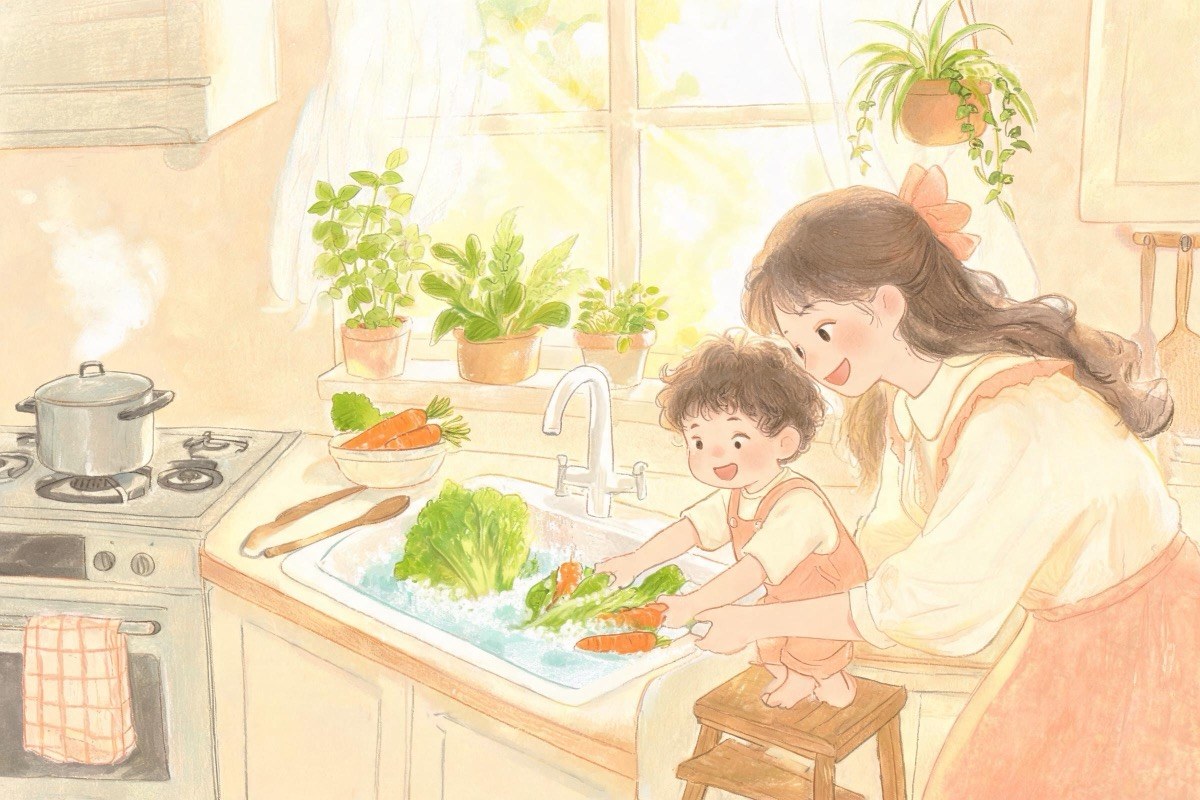
With fifteen to twenty lines, split into four stanzas: four opening lines on where the day tires Mom, written only as what the child sees, her changing shoes first, sitting down first; five lines on me washing dishes, with the water sound and bowls clinking; five lines on me rubbing her back, fists gentle, back round, two reduplicative words are enough; four to six closing lines on her smiling face.
Placing the three images matters: dishwashing and back rubbing are deeds, one per middle stanza, never mixed; the smiling face is the result, kept for the end, with no smile word earlier, so the closing smile is worth something.
Chantability rests on three things: short lines, reduplicative words, a little end rhyme. Short lines are covered; use reduplicatives like softly, roundly, warmly, two or three at most; rhyme every other line rather than every line, landing three or four times on sounds like le, yao, xiao, and the reading feels smooth.
Have the child read the draft aloud. Where the tongue trips, cut that line to one breath; where the child stretches a word on their own, the beat there is right, keep it. If two full readings leave the child unstrained, the poem is recital-ready.
Final check: the wish to make Mom happy must land, but best unstated. Let the two deeds, dishwashing and back rubbing, carry it, and let the smiling face speak for the wish.
One more note on material: dishwashing and back rubbing come from the outline, but each deed should use a version the child really did. Dishwashing can be the kind done standing on a stool that still cannot reach the faucet; back rubbing can be the kind done absentmindedly while waiting in line for the bus. Versions really lived carry details; imagined versions leave only the name of the action. Before writing, have the child retell the event once, and the retelling hands over ready-made lines.
假设诵读稿《妈妈的腰》:逐段看它怎么顺口
假设一首十八行的诵读稿《妈妈的腰》,面向二三年级。逐段看它顺口的原因,也看它哪里还能更好。
第一段四行:妈妈下班,先进厨房,书包还没,放下坐住。评:四个短句全是动作,没有形容词,书包还没放下坐住写她的忙,孩子看在眼里,不用说她辛苦。
第二段五行:我搬板凳,站上洗碗,水声哗哗,碗碰碗沿,泡沫白白。评:洗碗一段五个三字句,哗哗、白白两个叠词管声音和颜色,碗碰碗沿是真实声响,诵读时孩子自然会在碗沿后停半拍。
第三段五行:妈妈的背,像张小凳,我握拳头,轻轻捶呀,捶到腰边。评:捶背段用了全诗唯一比喻,背像小凳,孩子才懂的大小;轻轻捶呀的呀字是拖音点,诵读时这里会自然拉长,节奏就出来了。
第四段四行:妈妈回头,眼睛弯弯,她的笑脸,挂到嘴边。评:笑脸压到最后才出现,弯弯接住前面的叠词习惯,挂到嘴边把笑写成会动的东西。
押韵点:住、碗沿、边、弯、边,an 和 u 交替,隔行押,不刻意。叠词共四个:哗哗、白白、轻轻、弯弯,均匀分布在二三四段,每段一个,不扎堆。
两处可改进:第一段书包还没,放下坐住语序绕,诵读时容易读破,可改成还没放下,先坐不住;第二段泡沫白白离洗碗动作稍远,可换成冲水擦碗,动作接动作更紧。改完再读两遍,顺口就定稿。
诵读时还可以加一个小设计:第一段读得平,第二段水声起来后声音放轻,第三段捶呀那里放慢半拍,第四段笑脸出现时恢复正常音量。孩子不用背这个设计,读三遍自己就会找到,因为诗本身的强弱已经排好了。这就是明快节奏的实质:不是读得响,是读得有起伏。
A Recital Draft Called Moms Back, Checked Stanza by Stanza
Suppose an eighteen-line recital draft called Moms Back, written for grades two and three. Going stanza by stanza shows why it rolls off the tongue, and where it could still improve.
Stanza one, four lines: Mom gets home, first into the kitchen, schoolbag not yet, set down she sits. Note: four short lines, all action, no adjectives; bag not yet down yet she sits writes her busyness as the child sees it, without saying she is tired.
Stanza two, five lines: I drag a stool, stand to wash dishes, water rushes hush-hush, bowl taps the rim, foam white-white. Note: five three-character lines; hush-hush and white-white handle sound and color; bowl taps rim is a real noise, and readers naturally pause half a beat after rim.
Stanza three, five lines: Moms back, like a little stool, I close my fist, tap it softly, tap near her waist. Note: the only metaphor in the poem, back like a stool, a size a child understands; the particle softly-ah is the stretch point where the voice naturally lengthens and the rhythm appears.
Stanza four, four lines: Mom turns around, eyes bending bright, her smiling face, hangs at her mouth. Note: the smile waits until the very end; bending echoes the reduplicative habit built earlier, and hangs at her mouth makes the smile something that moves.
Rhyme points: sits, rim, mouth, bright, waist, alternating an and u sounds, rhyming every other line without forcing it. Four reduplicatives, hush-hush, white-white, softly, bending, spread evenly one per stanza across stanzas two to four, never clustered.
Two places to improve: the word order in stanza one, bag not yet, set down she sits, twists the tongue and breaks the line when read aloud; it could become bag not set down, she cannot sit still first. In stanza two, foam white-white sits a little far from the dishwashing action; rinsing and wiping dishes would chain action to action more tightly. Read it twice more after the fixes, and if it rolls, it is final.
A small staging idea for recital: keep stanza one flat, lower the voice once the water sound starts in stanza two, slow half a beat at the tapping line in stanza three, and return to normal volume when the smile appears in stanza four. The child does not need to memorize this plan; three readings will find it on their own, because the poem already arranges its own strengths and softness. That is what a bright rhythm really means: not reading loudly, but reading with hills and valleys.
小提示:上面此文档内容仅展示完整文档里的部分内容, 若需要下载完整文档请 点击免费下载完整文档 。