文章内容
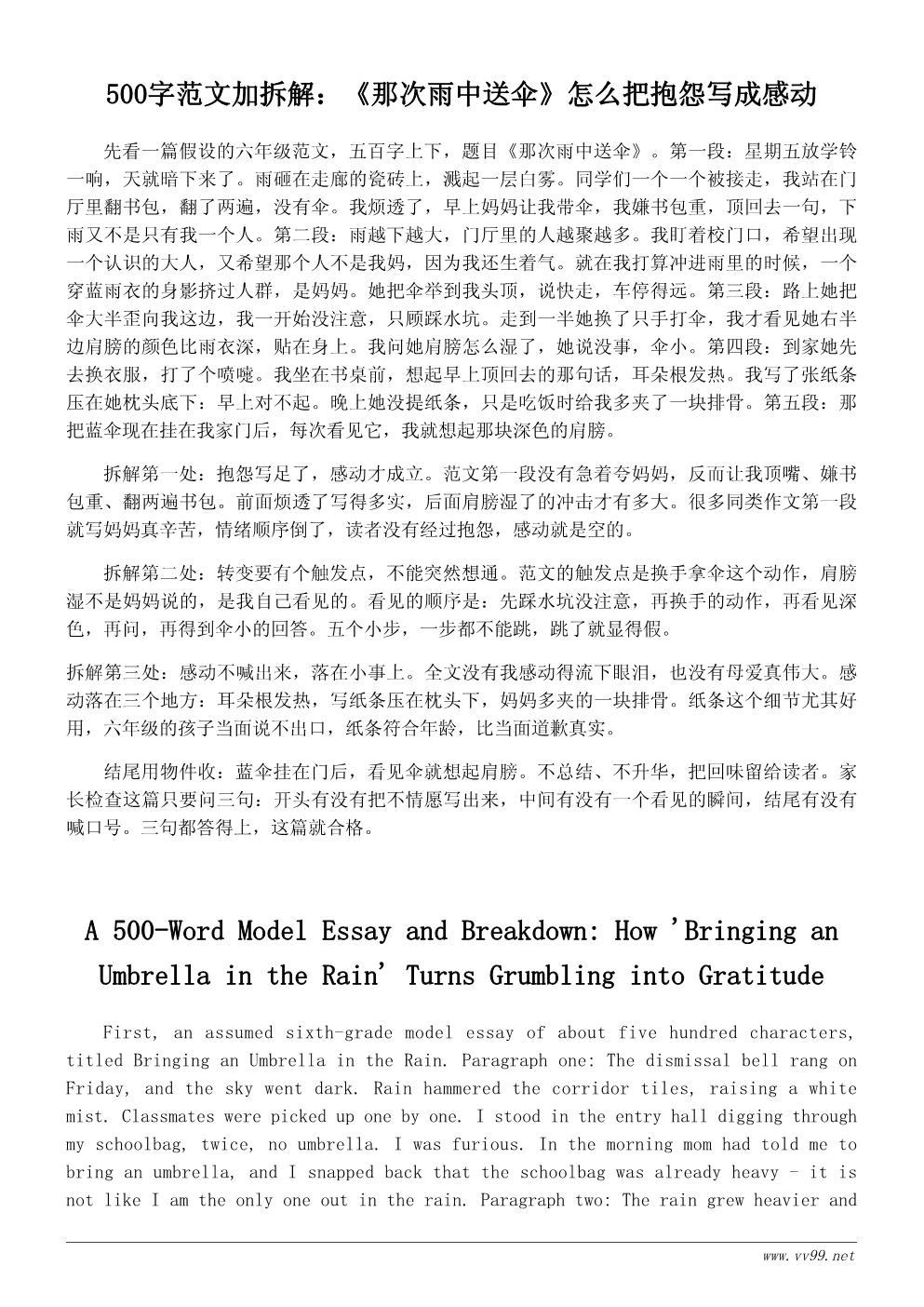
500字范文加拆解:《那次雨中送伞》怎么把抱怨写成感动
先看一篇假设的六年级范文,五百字上下,题目《那次雨中送伞》。第一段:星期五放学铃一响,天就暗下来了。雨砸在走廊的瓷砖上,溅起一层白雾。同学们一个一个被接走,我站在门厅里翻书包,翻了两遍,没有伞。我烦透了,早上妈妈让我带伞,我嫌书包重,顶回去一句,下雨又不是只有我一个人。第二段:雨越下越大,门厅里的人越聚越多。我盯着校门口,希望出现一个认识的大人,又希望那个人不是我妈,因为我还生着气。就在我打算冲进雨里的时候,一个穿蓝雨衣的身影挤过人群,是妈妈。她把伞举到我头顶,说快走,车停得远。第三段:路上她把伞大半歪向我这边,我一开始没注意,只顾踩水坑。走到一半她换了只手打伞,我才看见她右半边肩膀的颜色比雨衣深,贴在身上。我问她肩膀怎么湿了,她说没事,伞小。第四段:到家她先去换衣服,打了个喷嚏。我坐在书桌前,想起早上顶回去的那句话,耳朵根发热。我写了张纸条压在她枕头底下:早上对不起。晚上她没提纸条,只是吃饭时给我多夹了一块排骨。第五段:那把蓝伞现在挂在我家门后,每次看见它,我就想起那块深色的肩膀。
拆解第一处:抱怨写足了,感动才成立。范文第一段没有急着夸妈妈,反而让我顶嘴、嫌书包重、翻两遍书包。前面烦透了写得多实,后面肩膀湿了的冲击才有多大。很多同类作文第一段就写妈妈真辛苦,情绪顺序倒了,读者没有经过抱怨,感动就是空的。
拆解第二处:转变要有个触发点,不能突然想通。范文的触发点是换手拿伞这个动作,肩膀湿不是妈妈说的,是我自己看见的。看见的顺序是:先踩水坑没注意,再换手的动作,再看见深色,再问,再得到伞小的回答。五个小步,一步都不能跳,跳了就显得假。
拆解第三处:感动不喊出来,落在小事上。全文没有我感动得流下眼泪,也没有母爱真伟大。感动落在三个地方:耳朵根发热,写纸条压在枕头下,妈妈多夹的一块排骨。纸条这个细节尤其好用,六年级的孩子当面说不出口,纸条符合年龄,比当面道歉真实。
结尾用物件收:蓝伞挂在门后,看见伞就想起肩膀。不总结、不升华,把回味留给读者。家长检查这篇只要问三句:开头有没有把不情愿写出来,中间有没有一个看见的瞬间,结尾有没有喊口号。三句都答得上,这篇就合格。
A 500-Word Model Essay and Breakdown: How 'Bringing an Umbrella in the Rain' Turns Grumbling into Gratitude
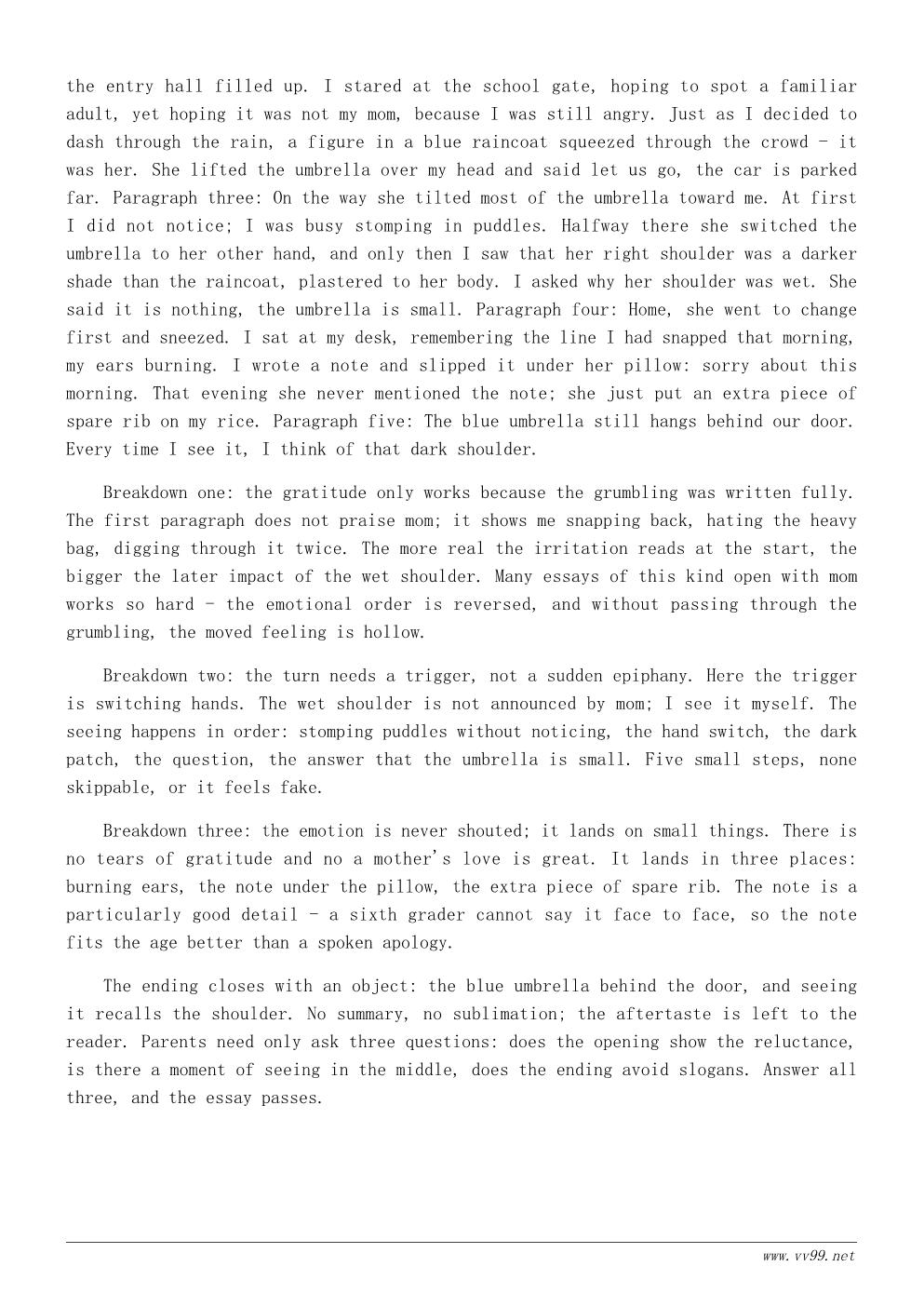
First, an assumed sixth-grade model essay of about five hundred characters, titled Bringing an Umbrella in the Rain. Paragraph one: The dismissal bell rang on Friday, and the sky went dark. Rain hammered the corridor tiles, raising a white mist. Classmates were picked up one by one. I stood in the entry hall digging through my schoolbag, twice, no umbrella. I was furious. In the morning mom had told me to bring an umbrella, and I snapped back that the schoolbag was already heavy - it is not like I am the only one out in the rain. Paragraph two: The rain grew heavier and the entry hall filled up. I stared at the school gate, hoping to spot a familiar adult, yet hoping it was not my mom, because I was still angry. Just as I decided to dash through the rain, a figure in a blue raincoat squeezed through the crowd - it was her. She lifted the umbrella over my head and said let us go, the car is parked far. Paragraph three: On the way she tilted most of the umbrella toward me. At first I did not notice; I was busy stomping in puddles. Halfway there she switched the umbrella to her other hand, and only then I saw that her right shoulder was a darker shade than the raincoat, plastered to her body. I asked why her shoulder was wet. She said it is nothing, the umbrella is small. Paragraph four: Home, she went to change first and sneezed. I sat at my desk, remembering the line I had snapped that morning, my ears burning. I wrote a note and slipped it under her pillow: sorry about this morning. That evening she never mentioned the note; she just put an extra piece of spare rib on my rice. Paragraph five: The blue umbrella still hangs behind our door. Every time I see it, I think of that dark shoulder.
Breakdown one: the gratitude only works because the grumbling was written fully. The first paragraph does not praise mom; it shows me snapping back, hating the heavy bag, digging through it twice. The more real the irritation reads at the start, the bigger the later impact of the wet shoulder. Many essays of this kind open with mom works so hard - the emotional order is reversed, and without passing through the grumbling, the moved feeling is hollow.
Breakdown two: the turn needs a trigger, not a sudden epiphany. Here the trigger is switching hands. The wet shoulder is not announced by mom; I see it myself. The seeing happens in order: stomping puddles without noticing, the hand switch, the dark patch, the question, the answer that the umbrella is small. Five small steps, none skippable, or it feels fake.
Breakdown three: the emotion is never shouted; it lands on small things. There is no tears of gratitude and no a mother's love is great. It lands in three places: burning ears, the note under the pillow, the extra piece of spare rib. The note is a particularly good detail - a sixth grader cannot say it face to face, so the note fits the age better than a spoken apology.
The ending closes with an object: the blue umbrella behind the door, and seeing it recalls the shoulder. No summary, no sublimation; the aftertaste is left to the reader. Parents need only ask three questions: does the opening show the reluctance, is there a moment of seeing in the middle, does the ending avoid slogans. Answer all three, and the essay passes.
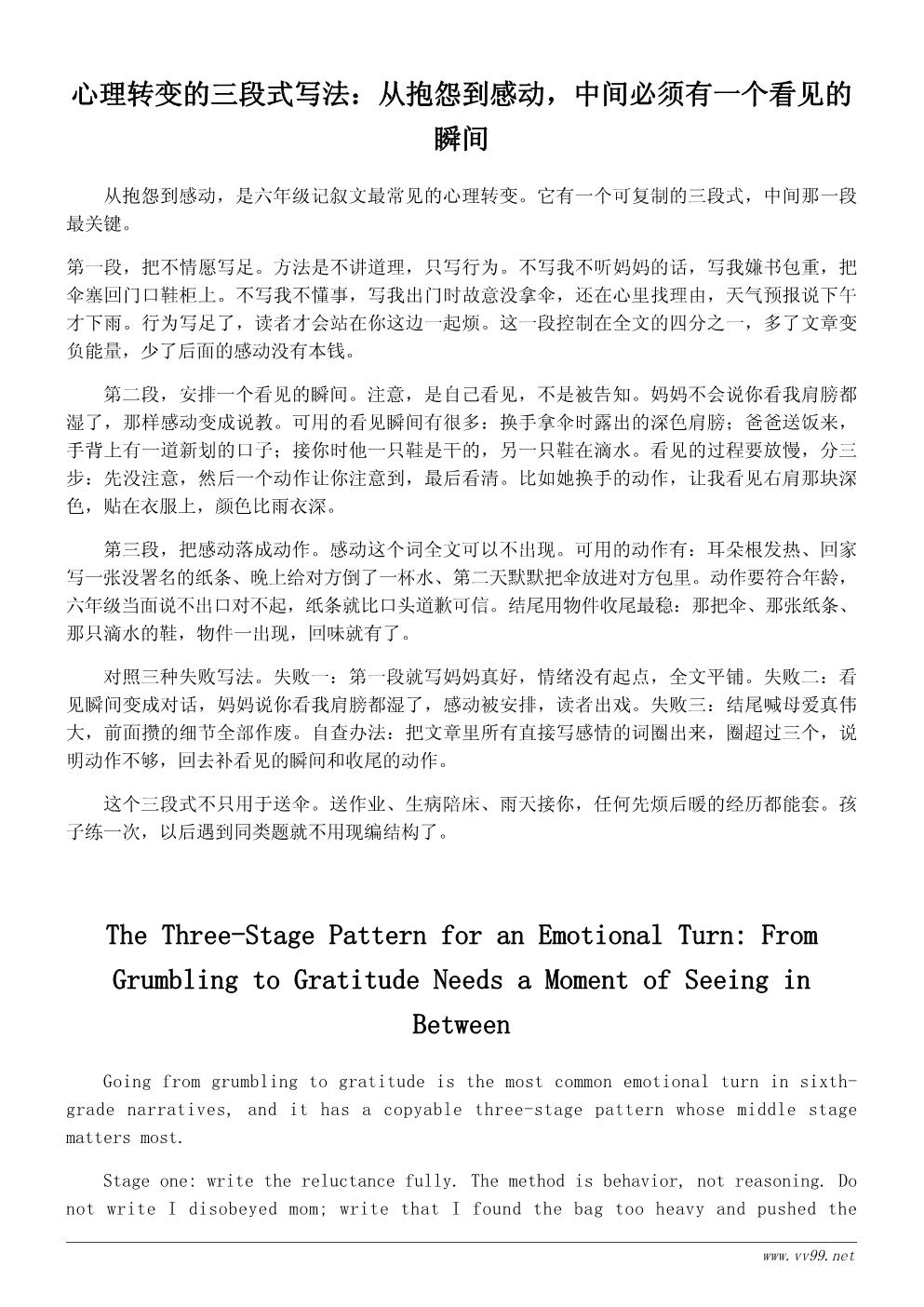
心理转变的三段式写法:从抱怨到感动,中间必须有一个看见的瞬间
从抱怨到感动,是六年级记叙文最常见的心理转变。它有一个可复制的三段式,中间那一段最关键。
第一段,把不情愿写足。方法是不讲道理,只写行为。不写我不听妈妈的话,写我嫌书包重,把伞塞回门口鞋柜上。不写我不懂事,写我出门时故意没拿伞,还在心里找理由,天气预报说下午才下雨。行为写足了,读者才会站在你这边一起烦。这一段控制在全文的四分之一,多了文章变负能量,少了后面的感动没有本钱。
第二段,安排一个看见的瞬间。注意,是自己看见,不是被告知。妈妈不会说你看我肩膀都湿了,那样感动变成说教。可用的看见瞬间有很多:换手拿伞时露出的深色肩膀;爸爸送饭来,手背上有一道新划的口子;接你时他一只鞋是干的,另一只鞋在滴水。看见的过程要放慢,分三步:先没注意,然后一个动作让你注意到,最后看清。比如她换手的动作,让我看见右肩那块深色,贴在衣服上,颜色比雨衣深。
第三段,把感动落成动作。感动这个词全文可以不出现。可用的动作有:耳朵根发热、回家写一张没署名的纸条、晚上给对方倒了一杯水、第二天默默把伞放进对方包里。动作要符合年龄,六年级当面说不出口对不起,纸条就比口头道歉可信。结尾用物件收尾最稳:那把伞、那张纸条、那只滴水的鞋,物件一出现,回味就有了。
对照三种失败写法。失败一:第一段就写妈妈真好,情绪没有起点,全文平铺。失败二:看见瞬间变成对话,妈妈说你看我肩膀都湿了,感动被安排,读者出戏。失败三:结尾喊母爱真伟大,前面攒的细节全部作废。自查办法:把文章里所有直接写感情的词圈出来,圈超过三个,说明动作不够,回去补看见的瞬间和收尾的动作。
这个三段式不只用于送伞。送作业、生病陪床、雨天接你,任何先烦后暖的经历都能套。孩子练一次,以后遇到同类题就不用现编结构了。
The Three-Stage Pattern for an Emotional Turn: From Grumbling to Gratitude Needs a Moment of Seeing in Between
Going from grumbling to gratitude is the most common emotional turn in sixth-grade narratives, and it has a copyable three-stage pattern whose middle stage matters most.
Stage one: write the reluctance fully. The method is behavior, not reasoning. Do not write I disobeyed mom; write that I found the bag too heavy and pushed the umbrella back onto the shoe cabinet. Do not write I was immature; write that I left without the umbrella on purpose and even argued to myself that the forecast said rain only in the afternoon. With the behavior fully shown, the reader joins your irritation. Keep this stage to about a quarter of the essay - more turns the piece negative, less leaves the later gratitude without capital.
Stage two: arrange a moment of seeing. Note: seeing yourself, not being told. Mom will not say look, my shoulder is soaked - that turns gratitude into a lecture. Usable moments of seeing are plentiful: the dark patch on a shoulder when she switches the umbrella to her other hand; dad bringing lunch with a fresh cut on the back of his hand; the adult who picks you up with one dry shoe and one dripping shoe. Slow the seeing down into three steps: first you did not notice, then one action draws your attention, then you see clearly. For example: her switching hands let me see the dark patch on her right shoulder, plastered to the clothes, darker than the raincoat.
Stage three: turn gratitude into an action. The word gratitude need not appear anywhere. Usable actions: burning ears, an unsigned note at home, pouring a glass of water for that person at night, silently putting an umbrella into their bag the next day. The action must fit the age - a sixth grader cannot say sorry face to face, so a note reads more true than a spoken apology. Closing with an object is the steadiest move: the umbrella, the note, the dripping shoe. Once the object appears, the aftertaste arrives.
Compare three failing patterns. Failure one: the first paragraph already says mom is so good - the emotion has no starting point and the essay lies flat. Failure two: the moment of seeing becomes dialogue - mom says look how wet my shoulder is - gratitude is arranged for you, and the reader leaves the story. Failure three: the ending shouts a mother's love is great, voiding every detail collected before. Self-check: circle every word that states a feeling directly; if more than three are circled, the actions are too thin - go back and add a moment of seeing and a closing action.
This three-stage pattern is not limited to umbrella deliveries. Bringing forgotten homework, staying by your bed when sick, picking you up in a storm - any experience that goes from annoyance to warmth fits it. Practice it once, and for similar prompts the structure no longer has to be invented on the spot.
小提示:上面此文档内容仅展示完整文档里的部分内容, 若需要下载完整文档请 点击免费下载完整文档 。