文章内容
那节语文课,老师带我们站在走廊上看雪
那天早读课刚上到一半,窗外飘起了雪。起初只有几粒,打在玻璃上沙沙的,后来就成片了。语文老师正在讲课文,讲到一半忽然停下来,把课本合上了。
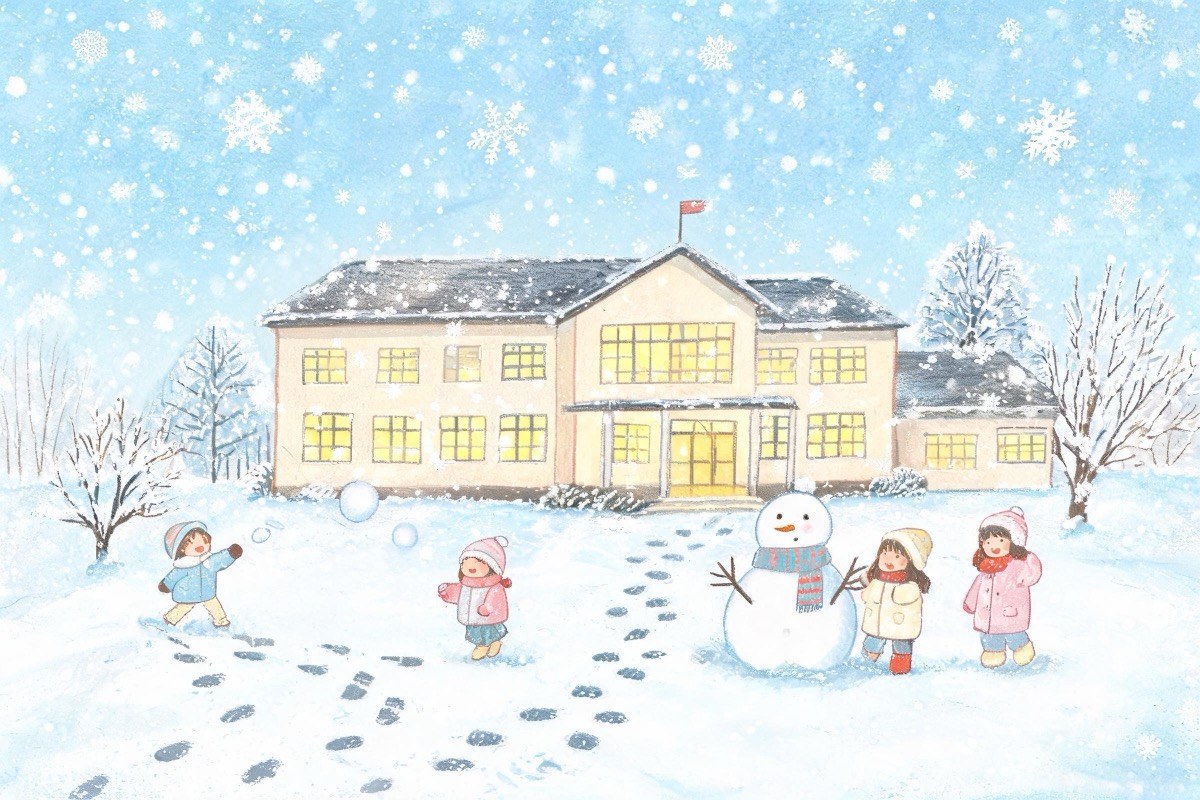
老师说:走,全班到走廊上看雪。我们以为听错了。她重复了一遍,自己先走了出去。我们挤到走廊上,趴在栏杆上。雪落在操场上,落在旗杆上,落在墙外槐树顶上。老师不说话,就让我们看。看了足足十分钟,她才问了一个问题:刚才的雪和现在的雪,落法一样吗?
大家七嘴八舌地说起来。王果果说,刚开始的雪是直着往下掉,一粒一粒,很着急;后来的雪一团一团,转着圈落。董小川说,雪落在槐树枝上不化,一层一层往上堆,枝条慢慢往下弯。李想说,操场上空的雪没有声音,落在走廊栏杆上的雪却有沙沙声。老师把大家说的写在随身带的小黑板上:落的样子、堆的地方、发出的声音。她说:这就是看雪。用眼睛看它怎么落,用耳朵听它什么声音,看它落在什么地方、变成了什么样。
回到教室,老师读了一段课本里写雪的句子,读的时候指出作者哪里看的是落、哪里看的是积。然后让我们每人写一段,只写刚才在走廊上看见的雪,不用写成一篇。教室里安静下来,能听见笔尖在纸上的声音。我写的是:雪粒落在栏杆上,化成一个小点,又一片雪落在同一个地方,小点慢慢变大。
下课前,老师挑了三段读给全班听,其中一段是我的。读到我的时候,我的手心出汗。老师说:这三段里都有只有认真看过的人才写得出来的东西。
第二天雪停了,老师在教室后墙开了一个小专栏,让大家把上学路上发现的东西每天写一条上去。专栏一直开到春天。后来每次写作文,老师常说那句话:字在外面,你要走到它跟前去。
那节课我们没有记笔记,也没有抄课文,可是我一直记到今天。窗外雪还在下,老师带我们走到了它跟前。
The Day Our Teacher Took Us to the Corridor to Watch Snow
That day we were halfway through morning reading when snow began to fall outside the window. At first there were only a few grains, tapping rustling against the glass; then they came in sheets. Our Chinese teacher was explaining the text when she suddenly stopped and closed the book.
She said: Come, whole class, go to the corridor and watch the snow. We thought we had misheard. She repeated it once and walked out first. We crowded onto the corridor and leaned against the railing. The snow fell over the playground, over the flagpole, over the tops of the locust trees beyond the wall. The teacher said nothing and let us watch. After a full ten minutes she asked only one question: did the snow fall the same way just now and a moment ago?
Everyone began to talk at once. Wang Guoguo said the early snow fell straight down, grain by grain, in a hurry; the later snow fell in tangles, spinning as it came. Dong Xiaochuan said the snowflakes on the locust branches did not melt; they piled up layer by layer, and the branches slowly bent down. Li Xiang said the snow over the playground was silent, but the snow hitting the railing of the corridor made a rustling sound. The teacher wrote what everyone said on a small blackboard she carried: the way it falls, where it piles, the sound it makes. She said: this is how one watches snow. With your eyes see how it falls, with your ears hear its sound, look at where it lands and what it becomes there.
Back in the classroom, the teacher read us a passage about snow from the textbook, pointing out where the author watched the falling and where the piling. Then she asked each of us to write one paragraph about only the snow we had just seen from the corridor; a whole essay was not needed. The room went quiet, and you could hear pens moving on paper. I wrote that a snowflake landed on the railing and melted into a small dot, then another snowflake landed on the same spot, and the dot grew larger.
Before class ended the teacher chose three paragraphs to read aloud, and one of them was mine. When she read it, my hands went damp. She said: all three paragraphs contain something that only a person who really watched could write.
The next day the snow stopped, and the teacher opened a small column on the back wall, inviting everyone to write one thing noticed on the way to school. The column stayed up until spring. Later, whenever we practiced writing, the teacher often said that sentence: the words are out there, and you only need to go and stand in front of them.
That class we took no notes and copied no text, yet I remember it to this day. The snow was falling outside the window, and our teacher had taken us to stand right in front of it.
我把课文里写雪的那一段抄了三遍
上那节写雪的指导课之前,我最怕的就是写雪。我一写雪只有三个词:白、厚、很大。有一回我写雪下了很大,堆得很厚,白白的,一共三句话,老师在本子上给我写了四个字:再具体些。怎么具体,我不知道。
指导课是下雪那天上的。老师先带我们去走廊上看了一会儿雪,回来什么也不讲,翻开课文,给我们读了一段写雪的句子。她读得很慢。读的是雪从夜里下起来,第二天早上推开门,院子里的石头全变了样,平常露在外面的棱角都被雪包住了,狗走过雪地的脚印一步一步陷得很深。就这么一段,教室里安静得反常。
老师读完,让我们自己再读一遍,读的时候想一想:她没说雪大,你凭什么知道雪大。我自己读了两遍才找出来:凭石头变了样,凭脚印陷得深。雪大不大,作者一个字没说,全是雪留在东西上的样子在说。我那一刻像被人点了一下——原来写雪可以不写雪,写雪压弯的东西。
下课以前,老师让我们摘抄那段。我抄了第一遍,抄在课本空白处。回家吃饭的时候我又想起来,回屋抄了第二遍,抄在我的积累本上,抄完还在旁边记了一句:不写雪本身,写雪动过的东西。晚上躺下,那段话自己在我脑子里过了一遍,我等于抄了第三遍,这一遍没用手。
后来片段练写,我写的是我们楼下的车。雪下了一夜,第二天早上一排电动车全白了,座垫上的雪厚得能写字,后视镜上挂着一溜冰须,风一吹叮当响。我一句没写雪很大,写完自己读了一遍,觉得这次不一样了。
老师把那段片段贴在教室后墙的专栏上,旁边注了一句:学的就是课文那段的路子。我妈看见我抄了三遍的那页,笑我。我说这不算多,那段话我到现在还背得出。
现在我一写雪,先想起的不是白,是石头被包住的样子。怕写雪的那三个字,白、厚、很大,早就让位了。
I Copied That Paragraph About Snow Three Times
Before that writing lesson about snow, the thing I feared most was writing about snow. I had only three words for it: white, thick, very big. Once I wrote that snow fell hard, piled thick, all white, three sentences in all, and our teacher wrote four characters in my notebook: be more specific. How to be specific, I did not know.
The lesson took place on a snowy day. Our teacher first took us to the corridor to watch the snow for a while, then came back, said nothing, opened the textbook, and read us a paragraph about snow. She read slowly. The paragraph told of snow starting at night and of pushing the door open the next morning to find every stone in the yard changed, its usual sharp edges wrapped round by snow, and of the footprints of a dog crossing the snow, each step sunk deep. Just that one paragraph, and the classroom went quiet in a way that felt strange.
After reading, the teacher asked us to read it once more by ourselves, thinking as we read: she never said the snow was heavy, so how do you know it was. I read it twice before I found it: by the changed stones, by the deep footprints. The author never used one word about how heavy the snow was; everything was told by the marks the snow left on things. At that moment something clicked inside me. It turned out one could write about snow without writing about snow, by writing about the things snow had bent.
Before class ended the teacher asked us to copy out the paragraph. I copied it the first time into the margin of the textbook. At dinner I thought of it again, went back to my room and copied it a second time into my collection notebook, adding one line beside it: do not write the snow itself, write the things the snow has touched. When I lay down at night, the paragraph ran through my head by itself. That was my third copy, and this time my hand did not do it.
Later, in the paragraph exercise, I wrote about the vehicles below our building. After a night of snow, the row of electric scooters was all white in the morning, the snow on the seats thick enough to write on, and a row of icicles hung from the mirrors, tinkling when the wind passed. I never wrote that the snow was heavy. When I finished and read it once, I felt this time was different.
The teacher posted that paragraph on the column at the back wall, with one note beside it: this follows the way of the textbook paragraph. My mother saw the page I had copied three times and laughed at me. I said three was not much, because I can still recite that paragraph today.
Now whenever I write about snow, the first thing I think of is not white but the look of stones wrapped round. The three words I used to hide behind, white, thick, very big, have long since given way.
小提示:上面此文档内容仅展示完整文档里的部分内容, 若需要下载完整文档请 点击免费下载完整文档 。