文章内容
数台阶、调呼吸、回头看:把登山的三件事搬进学习
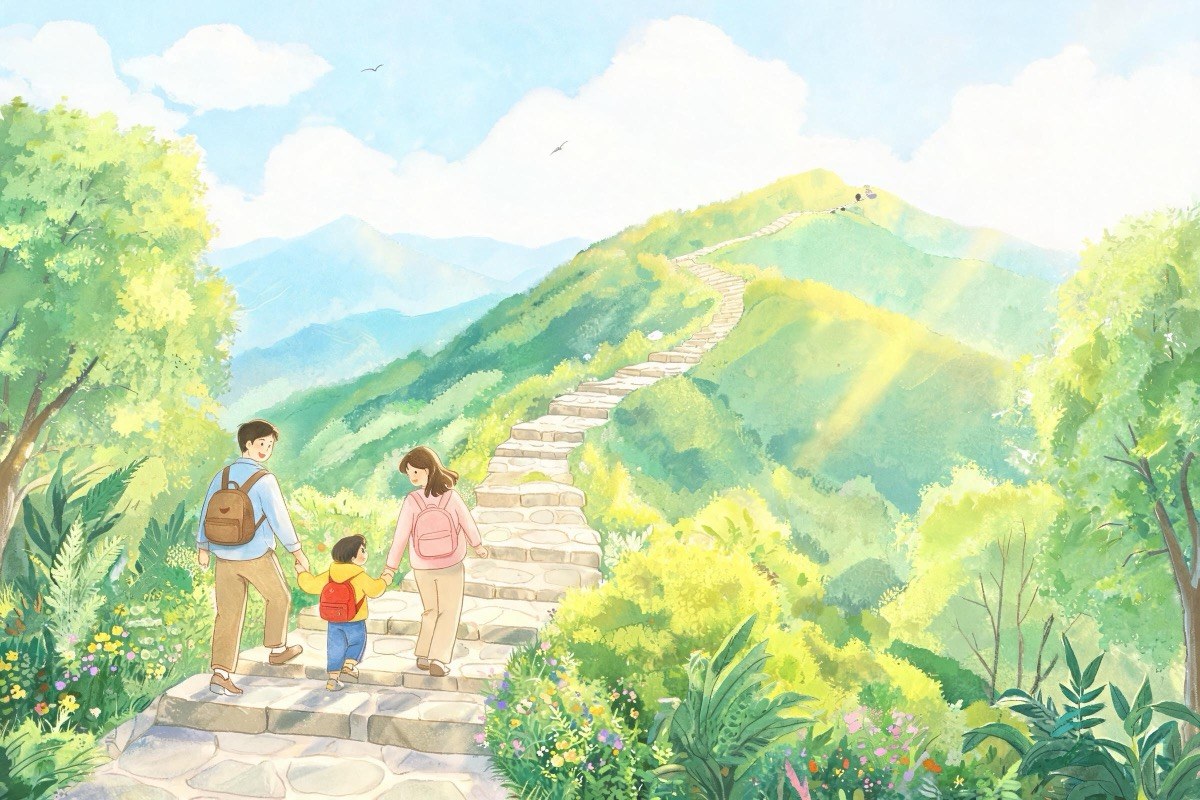
数台阶是个笨办法,但管用。爬云台山路那天,我一开始抬头看山顶,越看越远,腿越来越沉。后来爷爷教我数台阶,一步一声,数到一百就到一个平台。数到第三个一百的时候,人真的站在平台上。那天我明白一件事:整座山不可数,台阶可数。学习也是,背完一本单词书不可数,今天这二十个可数。把不可数的目标换成可数的台阶,行动就开始了,因为数得清的东西人才敢开始。
中途调呼吸,是那天学到的第二件事。上到一半有段长坡,我冲了一段,心跳到嗓子眼,反而要歇更久。爷爷说走山路不是比谁快,是比谁稳,步子放小,呼吸两步一吸两步一呼。我照做,坡反而变短了。学习里也有长坡:难题做不出来时最容易硬熬,一熬两小时,错题越攒越多。这时候该调呼吸,把这道题拆成读题、画图、列式三步,做一步停一步,两步一吸那种节奏。节奏顺了,同样的题做得下去;节奏乱了,会的题也做错。
登顶回望是第三件事。站在顶上才发现,山脚那个起点已经看不见了,中间那个想放弃的凉亭小得像块砖。原来我走了这么远,只是走的时候每一步都觉得没什么。学习里进步常常也是这样:坐在书桌前感觉不到自己在长,只有回头才看得见。所以每周留十分钟回头看,翻这周做完的练习,数一数这周走了几个一百级,哪一段是滑的、哪一段白费劲。回望不是抒情,是给自己定位,知道自己在山腰还是山脚,下一步才知道往哪儿迈。
这三件事连起来是一条路:先把目标切成可数的台阶,每天数自己的;节奏乱了先调呼吸,小步慢走也是走;每周回头看一次,确认自己在往上。我现在的数学从六十多到八十多,靠的不是哪次突击,是每天可数的几道题加每周一次回望。积累这个词太大,台阶这个词刚好。
Counting Steps, Adjusting Breath, Looking Back: Three Climbing Habits for Study
Counting steps is a clumsy method, but it works. That day on the Yuntai mountain trail, I kept looking up at the summit, and the farther it looked the heavier my legs got. Then Grandpa taught me to count steps, one sound per step, one hundred steps to each platform. When I finished counting the third hundred, I really stood on a platform. That day I understood one thing: the whole mountain cannot be counted, but steps can. Study is the same. Finishing a whole word book cannot be counted, but these twenty words today can. Swap the uncountable goal for countable steps, and action begins, because people dare to start only with what they can count.
Adjusting breath halfway was the second lesson. Midway there was a long slope. I sprinted a stretch, heart pounding in my throat, and ended up resting even longer. Grandpa said mountain walking is not a race of speed but of steadiness, shorten the stride, breathe in two steps, out two steps. I did it, and the slope actually grew shorter. Study has long slopes too: when a hard problem will not crack, the easiest thing is to grind, two hours gone, wrong answers piling up. That is when to adjust the breath, splitting the problem into reading, drawing, and setting up equations, one move then one pause, the in-two-out-two rhythm. With rhythm, the same problem gets done; with the rhythm broken, even familiar problems go wrong.
Looking back from the summit was the third. Only at the top did I notice the starting point at the foot had vanished, and the pavilion where I wanted to quit was small as a brick. So I had come this far, even though each step felt like nothing while walking. Progress in study works the same way: sitting at the desk you cannot feel yourself growing; only looking back shows it. So keep ten minutes each week to look back, flip through the week finished exercises, count how many hundreds of steps you walked, which stretch was slippery, which was wasted effort. Looking back is not sentiment; it is locating yourself, knowing whether you are halfway up or still at the foot, so the next step knows where to go.
The three habits form one road: first cut the goal into countable steps and count yours daily; when the rhythm breaks, adjust the breath first, small slow steps are still walking; look back once a week to confirm you are climbing. My math going from the sixties to the eighties came not from any sprint but from a few countable problems every day plus one weekly look back. The word accumulation is too big; the word steps is just right.
一篇600字心得的写法:三个素材怎么串成一条线
三个素材不能平均使力,要按一条线串起来:这条线就是先看见、再明白、再用上。心得全文六百字上下,字数这样分:登山经历三百字,反思一百五十字,联系自身一百五十字。下面按段拆。
第一段一百五十字,进山加数台阶。直接写那天:台阶密,抬头看不见顶,走了二十分钟就开始喘。爷爷让我数,一步一声,数到一百是一平台。写到第三个一百,人站在平台上,回头才发现刚才那段坡已经踩在脚下了。这段只写事,不加议论,议论留给后面。
第二段一百五十字,长坡加调呼吸。写冲坡喘了、歇得更久,写改成两步一吸两步一呼之后坡变短。这段末尾加一句轻的议论收口:不是坡变短了,是我的步子变短了。一句就够,多了就腻。
第三段一百字,登顶回望。写站在顶上看不见起点、凉亭小得像砖,写原来每一步都在往上,只是当时不知道。这段是三个素材里最像抒情的,压着写,一百字以内。
第四段一百五十字,联系自身,这是心得的重心。把三个素材各接一个学习场景:数台阶接单词,一本单词书不可数,一天二十个可数,我现在的单词本每页角上写日期,一页就是一平台;调呼吸接数学难题,以前一道题硬熬四十分钟,现在拆成读题画图列式,每步八分钟,做不下去就停,第二天接着列式;回望接周记,每周日翻一周的错题本,数这周攒了几类错,哪类在变少。三个场景都要有具体数字,数字是心得的可信度。
第五段五十字,收口。不喊口号,写一句判断加一个动作:进步不是某天的爆发,是可数的台阶加每周一次回头。下周六,继续数我的第三个一百。
这个骨架能直接套:素材一写事、素材二写事加一句议论、素材三写回望、第四段三个素材各接一个带数字的学习场景、末段一句判断。换你自己的山、你自己的科目,字数分配照抄,就是一篇有思考深度的新心得。
How to Write a 600-Word Reflection: Threading Three Materials into One Line
The three materials must not get equal weight; thread them on one line: first see, then understand, then use. The whole reflection runs around six hundred words, divided like this: three hundred on the climb, one hundred fifty on reflection, one hundred fifty on connecting to yourself. Now paragraph by paragraph.
Paragraph one, a hundred fifty words, entering the mountain and counting steps. Write that day straight: steps packed tight, no top in sight, breathing hard after twenty minutes. Grandpa had me count, one sound per step, one hundred to a platform. At the end of the third hundred I stood on a platform and, looking back, found the slope we crossed now under my feet. This paragraph only narrates; save the thinking for later.
Paragraph two, a hundred fifty words, the long slope and adjusting breath. Write sprinting, gasping, resting longer, then switching to in-two-out-two and the slope turning shorter. End with one light line of thought: the slope did not shorten; my stride did. One line is enough; more turns syrupy.
Paragraph three, a hundred words, looking back from the top. Write the starting point invisible, the pavilion small as a brick, write that every step was climbing even when I did not know it. This is the most lyrical of the three materials, so hold it down, under a hundred words.
Paragraph four, a hundred fifty words, connecting to yourself, the center of gravity. Attach one study scene to each material: steps to vocabulary, a whole word book uncountable but twenty a day countable, my notebook dated at each page corner, one page one platform; breath to hard math problems, once grinding forty minutes on one, now split into reading, drawing, setting up, eight minutes a move, stop when stuck, resume the equation next day; looking back to the weekly note, every Sunday flipping the mistake book, counting which kinds of errors piled up this week and which kind is shrinking. Every scene needs concrete numbers; numbers are the credibility of a reflection.
Paragraph five, fifty words, closing. No slogans. One judgment plus one action: progress is not an outburst on some day but countable steps plus one weekly look back. Next Saturday I keep counting my third hundred.
This skeleton can be used directly: material one narrates, material two narrates plus one line of thought, material three looks back, paragraph four attaches each material to a numbered study scene, the last paragraph lands one judgment. Swap in your own mountain and your own subjects, copy the word budget, and you have a new reflection with real depth.
小提示:上面此文档内容仅展示完整文档里的部分内容, 若需要下载完整文档请 点击免费下载完整文档 。