文章内容
红门、鸭群和小摊
油麻地有一扇红门,红得最亮,漆得最匀。门里走出一个少年,叫杜小康,白衬衫,皮夹克,课本散发油墨的香。红门是他家的脸面,开门关门,都带一阵风。
后来风翻了。家里的船沉在日子里,红门的漆裂了纹,皮夹克收进箱底。杜小康没哭,他把袖子挽起来,跟着父亲摇船,摇进芦苇荡,去放一群鸭子。
鸭子认得他。嘎嘎嘎,一排白,跟着他走。暴风雨来了,芦苇跪下,鸭子跑散。他喊,嗓子喊哑,他追,摔进泥里,爬起来,头发上挂着断苇。那一夜,鸭子数了又数,一只没少。杜小康也数了自己一遍:还在,站着的还是我。
红门开合的声响,油麻地的人都听得懂。从前开门,是皮夹克的袖口一闪;后来开门,是杜小康扛着鸭圈出门,裤腿卷到膝盖。门还是那扇门,响声还是那个响声,只是开门的人,把苦日子扛出了脚步声。不慌,不乱,一步是一步。芦苇荡里那一夜,鸭子记得,门也记得。风过红门,门不响的时候,是人在使劲。
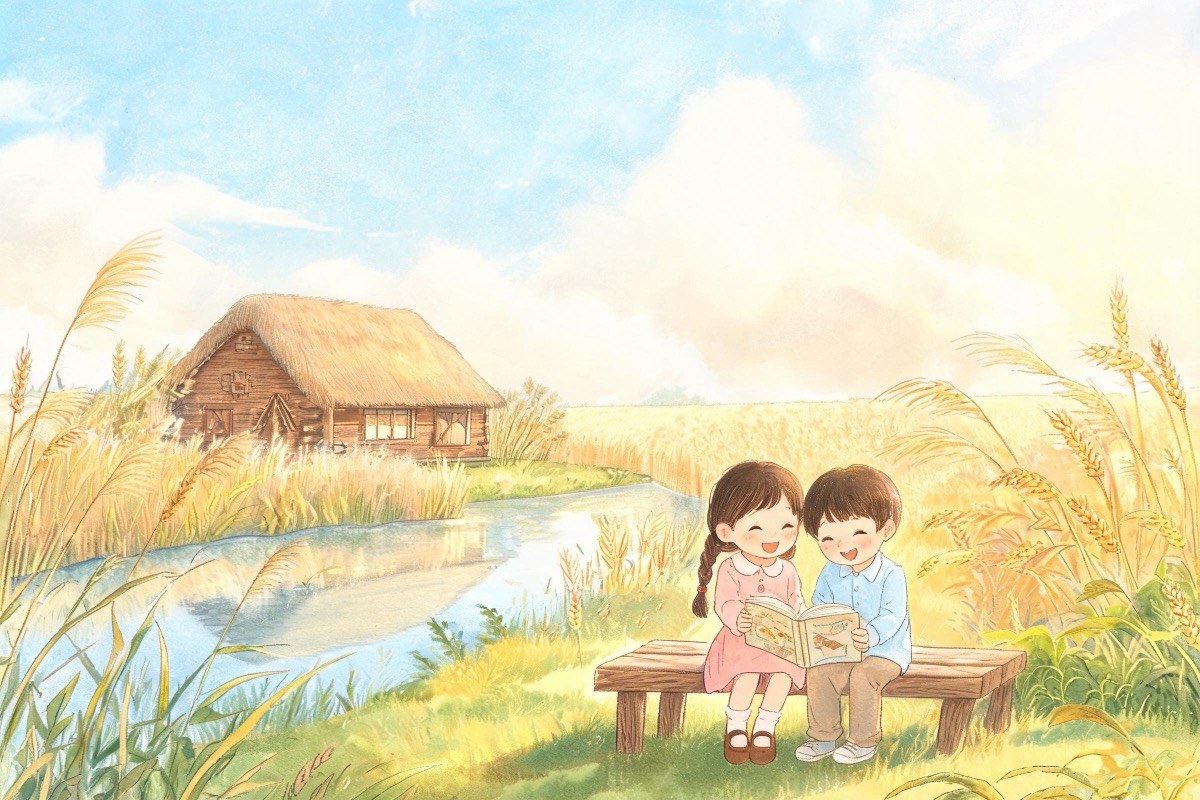
鸭群回家了,下了一筐筐蛋。杜小康在草房子门口摆起小摊:一根绳,几本书,几个纸盒,一把冰棍。放学铃一响,孩子们围过来。他递课本的手冻得发红,笑得比从前还稳。
桑桑来买东西,两个人谁也没提从前。你把冰棍让给我,我把鸽子让给你。红门还立在老地方,漆旧了,门还是那扇门。它现在明白了一件事:红门不是漆红的,是站起来的人给它重新漆红的。
来,跟我念:杜小康,杜小康,红门里走出好儿郎。赶鸭群,过芦荡,暴风雨里敢担当。摆小摊,在校门口,腰杆挺得比门亮。油麻地的孩子都记住:穷不丢人,趴下才丢人;站起来,红门就还红。
The Red Gate, the Ducks, and the Little Stall
In Youmadi there is a red gate, the reddest, the smoothest with lacquer. Out of the gate walks a boy named Du Xiaokang, white shirt, leather jacket, his textbooks smelling of fresh ink. The red gate is his family's face. Every time it opens and shuts, it brings a gust of wind.
Later the wind turned. The family's boat sank in the days of life. The lacquer on the red gate cracked, and the leather jacket went to the bottom of a trunk. Du Xiaokang did not cry. He rolled up his sleeves and followed his father rowing a boat, rowing into the reed marsh, to mind a flock of ducks.
The ducks know him. Quack, quack, quack, a line of white following him. The storm came. The reeds knelt. The ducks scattered. He shouted until his voice went hoarse. He chased, fell into the mud, got up, broken reeds hanging in his hair. That night he counted the ducks again and again — not one missing. Du Xiaokang counted himself too: still here, still the one standing.
The flock went home and laid basketfuls of eggs. Du Xiaokang set a little stall at the gate of the grass house: one rope, a few books, a few paper boxes, a handful of popsicles. When the school bell rang, the children gathered round. The hand that handed him the textbook was red with cold, and he smiled steadier than before.
Sangsang came to buy something. Neither of them mentioned the past. You offer me your popsicle, I offer you my doves. The red gate still stands in its old place, the lacquer grown old, but still the same door. It understands one thing now: the gate is not red from lacquer. It is painted red again by the man who stood back up.
The sound of the red gate opening and shutting, everyone in Youmadi understands it. In the old days, when it opened, a leather jacket's cuff flashed past; later, when it opened, it was Du Xiaokang carrying a duck pen out the door, trouser legs rolled to the knee. Still the same door, still the same sound — only the man opening it now carries hard days in his footsteps. Not flustered, not in disorder — one step is one step. That night in the reed marsh, the ducks remember, and the door remembers too. When the wind passes the red gate and the gate makes no sound, it is the person inside bracing with all their strength.
Come, say it with me: Du Xiaokang, Du Xiaokang, a fine lad out of the red gate. Herding ducks through the marsh, daring to bear the storm. Setting his stall at the school gate, back straighter than the gate shines. All the children of Youmadi remember: being poor is no shame; staying down is. Stand up, and the red gate is red again.
我家门前也有一扇红门
我家门前也有一扇红门,漆了两遍,还是不够红。杜小康家的红门,才是真的红,油亮油亮,一推开,半个油麻地都看得见。那时候他穿皮夹克,课本都比我家的新。
可是有一天,红门旧了。他不上学了。我在窗后看见他跟着父亲摇船走远,船帮上跳着水花。我回家问我爹:杜小康家咋啦。我爹抽了口烟说:船沉了。我爹又说:别去笑话人家。
再见面,他在芦苇荡里。头发乱,裤腿全是泥,手里举着一只受惊的鸭子,像举着一面旗。他喊鸭子的声音都哑了。我忽然觉得,他比穿皮夹克的时候好看。
后来他在我们学校门口摆摊。几本书,几个纸盒,一根绳拉得直直的。我娘让我买作业本,我专找他买。他找钱,数得清清楚楚,说:两块五,一个不少。他说这话的时候腰是直的。
我蹲在摊边看他摆书。他把课本按大小排开,大的在下,小的在上,边角对齐,像给它们排队。有同学想逗他,故意问这问那,他不恼,一样一样答,答得慢,答得细。旁边大人小声说:你看人家娃。我听见了,心里不觉得他低,反倒觉得他高。一个人把穷日子过得这么齐整,齐整本身就是一口气。
我回家跟我爹说:杜小康摆摊了。我爹问:他丢人吗。我说:不丢。他对我可客气了,还多送我一根冰棍。我爹笑了,说:这就对了。穷不可怕,趴着才可怕。
现在我家门前的红门,我也天天漆。杜小康教会我一件事:门旧了不要紧,重新漆就是;人要是趴下了,漆啥都没用。他在校门口摆摊,我在教室里念书,我们都在往前走。
来,跟我念:红门红,鸭群白,杜小康,不趴下。小摊支在校门口,书本摆得方又正。我家红门我常漆,人穷志不短。油麻地的娃都记得:站起来的人,走到哪儿,哪儿就亮。
There Is a Red Gate in Front of My House Too
There is a red gate in front of my house too. Painted twice, still not red enough. Du Xiaokang's red gate — that is truly red, glossy bright, and one push opens it so half of Youmadi can see. In those days he wore a leather jacket, and even his textbooks were newer than ours.
But one day the red gate grew old. He stopped going to school. From behind the window I watched him row away with his father, water dancing on the gunwale. I went home and asked my dad: what happened to Du Xiaokang's family. My dad drew on his pipe and said: the boat sank. Then he said: don't you dare laugh at them.
The next time I saw him, he was out in the reed marsh. Hair a mess, trouser legs caked with mud, holding up a frightened duck in his hand like holding up a flag. His voice calling the ducks had gone hoarse. Suddenly I thought he looked better than in his leather jacket.
Later he set a stall at our school gate. A few books, a few paper boxes, one rope pulled straight. My mother sent me to buy exercise books, and I made a point of buying from him. He gave the change, counted it clear and slow: two fifty, not one cent short. When he said it, his back was straight.
I crouched beside his stall watching him arrange the books. He spread the textbooks out by size, big ones below, small ones on top, corners aligned, as if lining them up in a queue. Some classmates tried to tease him, asking this and that on purpose. He did not get annoyed. He answered one by one, slowly, carefully. An adult nearby murmured: look at that boy. I heard it, and it did not feel like he had sunk low — it felt like he stood tall. When a person lives a poor life so neatly, the neatness itself is a kind of backbone.
At home I told my dad: Du Xiaokang has a stall now. My dad asked: is that shameful. I said: no. He was very polite to me, and even threw in an extra popsicle. My dad laughed and said: there you go. Poverty is not scary; lying down is.
Now I paint the red gate in front of our house every day too. Du Xiaokang taught me one thing: it is fine if the gate grows old — paint it again; but if a man lies down, no paint will help. He runs his stall at the school gate, I read my books in the classroom, and both of us are walking forward.
Come, say it with me: red gate red, ducks white, Du Xiaokang will not stay down. His stall stands at the school gate, his books set square and straight. I keep painting my red gate — poor in things, not in spirit. All the kids of Youmadi remember: a man who stands up lights up wherever he goes.
小提示:上面此文档内容仅展示完整文档里的部分内容, 若需要下载完整文档请 点击免费下载完整文档 。