文章内容
草房子
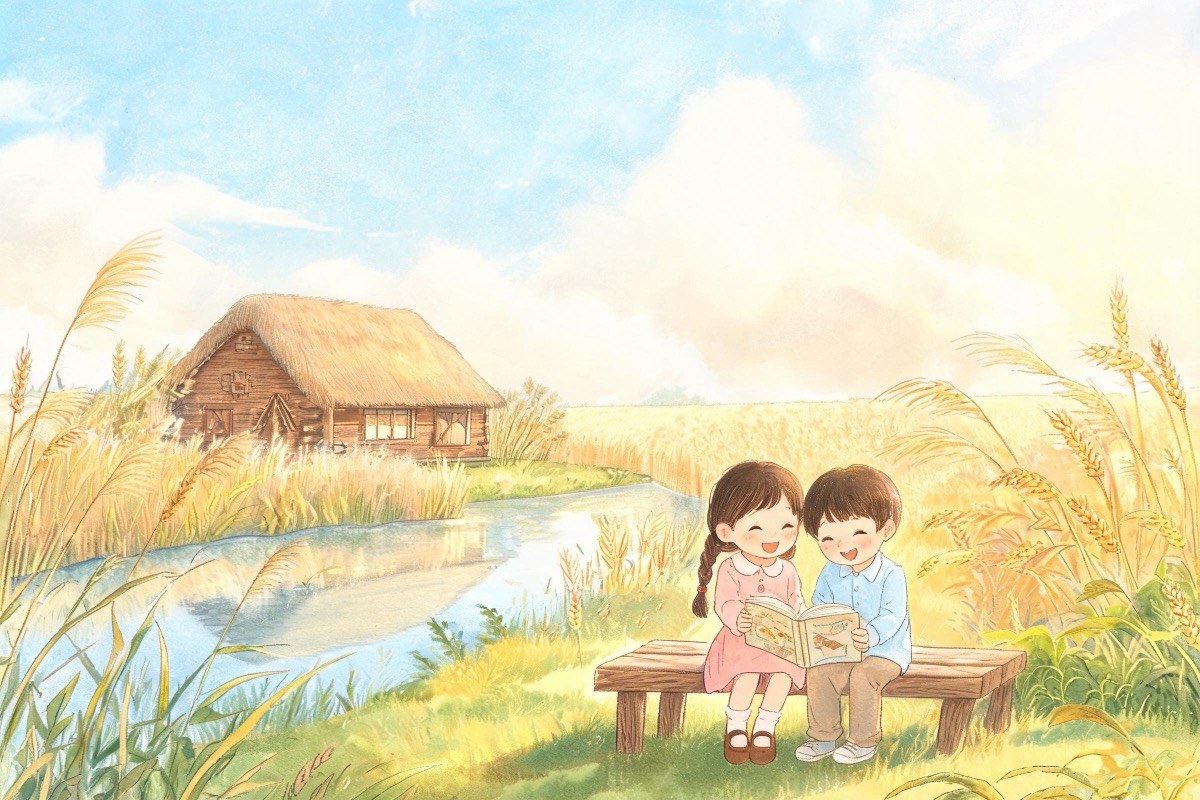
那排房子是草做的。屋顶铺着金黄的茅草,墙是茅草,门是茅草,连走廊都散发着太阳晒过的味道。风来的时候,整排房子低头,又直起。读初中以后我才懂:草做的房子,为什么比砖瓦的更经得住风。
草房子住过最快乐的孩子。桑桑把白鸽赶上天,蚊帐改成渔网,铃铛响过整条河。纸月的字写在作业本上,轻得像怕吵醒谁。秃鹤的光头,在游行队伍里终于抬起来走路。那时候我以为,快乐是这本书的全部。
后来芦苇荡教我另一件事。芦苇荡很深,风一过,千万枝芦苇弯腰,像谁在哭,又不肯出声。杜小康跟着父亲摇船进去,芦荡的暴风雨抽打他的脸,鸭子飞散了,他追,摔倒,再追。芦苇荡不说话,它只是把孩子往里收,再放出来。放出来的时候,孩子已经换了一副骨头。
药寮教我第三件事。桑桑的病,把油麻地最欢的孩子疼成一只弯着腰的小虾。药寮里光线很暗,草药的苦味蹲在墙角。父亲背他去看病,一路走,一路背,背过田野,背过镇子,背过所有说没救了的目光。药寮的苦味里有一点甜,那是父亲脊背上的温度。
苦难和温暖,原来住在同一排草房子里。苦难是茅草上的霜,温暖是霜底下的草。霜让草弯下去,草在霜底下,一直绿着。杜雍和的船沉了,杜小康在油麻地小学门口摆起小摊,课本从他手里递出来,比从前任何一本都干净。
如今我坐在教室里,窗外没有芦苇荡,也没有河。可是翻开书,它们就在。草房子亮着,芦苇荡弯着腰,药寮的苦味隔着纸漫出来。我不再问快乐和苦难哪个是真的。我都收着。
草做的房子,住过最硬的日子,也住过最软的心。合上书,我对自己说:做草房子,不做砖瓦房。风来的时候低头,风走了,直起身,还绿着。
The Grass House
That row of houses is made of grass. The roof is layered with golden thatch, the walls are thatch, the doors are thatch, even the corridor gives off the smell of sun-dried straw. When the wind comes, the whole row bends down, then straightens up. Only after middle school did I understand: why a house made of grass can stand up to the wind better than one of brick and tile.
The grass house housed the happiest children. Sangsang chased his white doves into the sky, turned a mosquito net into a fishing net, let his bell ring along the whole river. Paper Moon's handwriting sat on her exercise book, light as if afraid to wake someone. Bald Crane's shining head, at last held high, walked in the parade. Back then I thought happiness was the whole of this book.
Later the reed marsh taught me another thing. The reed marsh is deep; when the wind passes, ten thousand reeds bend, like someone crying who refuses to make a sound. Du Xiaokang followed his father rowing a boat into it. The storm in the marsh whipped his face, the ducks scattered, he chased, fell, chased again. The reed marsh says nothing. It only takes the child inward, then lets him out. And when he is let out, the child has a new set of bones.
The medicine hut taught me a third thing. Sangsang's illness bent the merriest child of Youmadi into a little shrimp doubled over by pain. Inside the medicine hut the light is dim, the bitterness of herbs squats in the corner. His father carried him on his back to see doctors, walking and carrying, across fields, across towns, across every gaze that said beyond cure. In the bitter smell of the medicine hut there is a little sweetness, and that is the warmth on his father's back.
Suffering and warmth, it turns out, live in the same row of grass houses. Suffering is the frost on the thatch; warmth is the grass beneath the frost. The frost bends the grass down, and the grass, under the frost, stays green the whole time. Du Yonghe's boat sank, and Du Xiaokang set up a little stall at the gate of Youmadi Primary School, handing out textbooks from his hands, cleaner than any book before.
Now I sit in my classroom, and outside the window there is no reed marsh, no river. But open the book, and they are there. The grass house glows, the reed marsh bends, the bitter smell of the medicine hut spreads out through the paper. I no longer ask which is real, happiness or suffering. I keep them both.
A house made of grass housed the hardest days and the softest hearts. Closing the book, I say to myself: be a grass house, not a brick house. Bend down when the wind comes; when the wind leaves, straighten up, and still be green.
一排草房子的自述
我是一排草房子。油麻地小学的一排草房子。我的墙是茅草,我的顶是茅草,我的窗框被几十年的手摸得发亮。我不高,也不硬,风大的年份我弯一弯腰。可我站住了,站了很多年,把一群孩子站成了大人。
我见过最骄傲的孩子。杜小康穿皮夹克进教室,裤脚扎在皮鞋里。他父亲摇着船,船上有整个家。后来那条船翻了,不是在水里翻的,是在日子里翻的。杜小康退学,跟我告别那天,在我门口站了很久。我说:进来躲一躲风。他说不用,他要去芦苇荡。
芦苇荡替我养了他。芦花一片白的时候,暴风雨来了,芦苇全跪下,他不跪。鸭子跑散,他在芦荡里喊,喊哑了。等他再回到油麻地,他在我门口摆一个小摊,一根绳,几本书,几个纸盒。他抬头看我,我认出他了,可他眼睛里多了一样东西,一样我屋顶上从来没有过的东西。后来人们管那叫长大。
我也背过最疼的孩子。桑桑的病是从药寮里传出来的,苦味顺着风爬进我的教室。桑桑的父亲背着他,从我门前走过,一天,又一天。那个孩子的重量压在父亲背上,父亲的汗滴在门槛上。我在心里说:让他轻一点,再轻一点。我做不到。我只能把影子让长一些,给他们遮一小段太阳。
苦难从我屋顶上过,像霜,像雪,像那场压塌半边屋檐的大雨。温暖在我梁上住下,不走。它是秃鹤抬起的头,是纸月放进河里的纸船,是桑桑骑过大自行车的铃铛,是杜小康递出课本时那只冻红的手。
现在你们坐在砖楼里读书,窗玻璃是双层的中空玻璃。你们问我有什么用。我说:我教你们弯而不折。芦苇荡教过的,药寮教过的,我都记得。苦难不是来毁掉谁的,它是来验收的——验收谁能在霜底下,一直绿着。
合上书的时候,替我看一眼那排房子。茅草屋顶,金黄,发亮。风来了,它低头。风走了,它直起身。它还绿着。
A Row of Grass Houses Speaks
I am a row of grass houses. A row of grass houses of Youmadi Primary School. My walls are thatch, my roof is thatch, my window frames are polished bright by decades of hands. I am not tall, and I am not hard. In windy years I bend my waist a little. But I have stood my ground, stood for many years, standing a whole flock of children into grown-ups.
I saw the proudest child. Du Xiaokang walked into the classroom in a leather jacket, trouser cuffs tucked into leather shoes. His father rowed a boat, and on the boat was the whole family. Later that boat capsized — not in water, but in the days of life. Du Xiaokang left school. The day he said goodbye to me, he stood a long time at my door. I said: come in, hide from the wind. He said no, he was going to the reed marsh.
The reed marsh raised him in my place. When the reed flowers turned all white, the storm came. All the reeds knelt; he did not. The ducks scattered, and he shouted in the marsh until his voice went hoarse. When he came back to Youmadi, he set a little stall at my door: one rope, a few books, a few paper boxes. He looked up at me. I recognized him. But his eyes held one more thing, a thing never on my roof. People later called it growing up.
I also carried the child in the most pain. Sangsang's illness spread out from the medicine hut, its bitterness climbing into my classroom on the wind. The boy's father carried him on his back, passing in front of me, one day, then another. The boy's weight pressed on the father's back; the father's sweat dropped on my threshold. In my heart I said: make it lighter, a little lighter. I could not. I could only stretch my shadow longer, to shade them for a small piece of the sun.
Suffering passes over my roof — like frost, like snow, like the great rain that crushed half my eaves. Warmness moves in under my beam and does not leave. It is Bald Crane's lifted head, Paper Moon's paper boats on the river, Sangsang's bicycle bell, Du Xiaokang's red-frozen hand handing out a textbook.
Now you study in brick buildings, your windows double-paned. You ask what use I am. I say: I teach you to bend without breaking. What the reed marsh taught, what the medicine hut taught, I remember all of it. Suffering did not come to destroy anyone. It came to inspect — to inspect who can, beneath the frost, stay green the whole time.
When you close the book, take one look at that row of houses for me. Thatch roofs, golden, shining. When the wind comes, it lowers its head. When the wind leaves, it straightens up. It is still green.
小提示:上面此文档内容仅展示完整文档里的部分内容, 若需要下载完整文档请 点击免费下载完整文档 。