文章内容
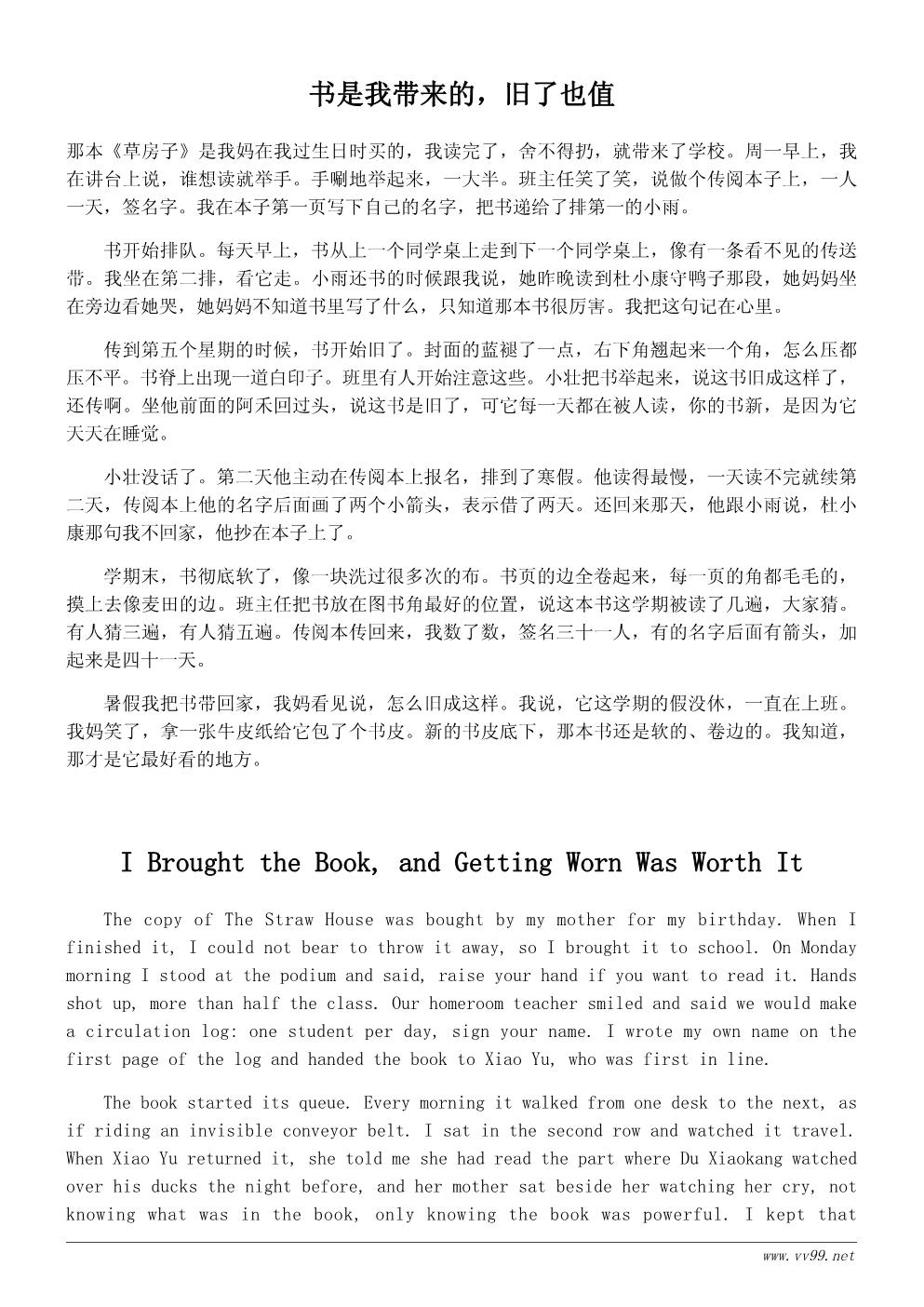
书是我带来的,旧了也值
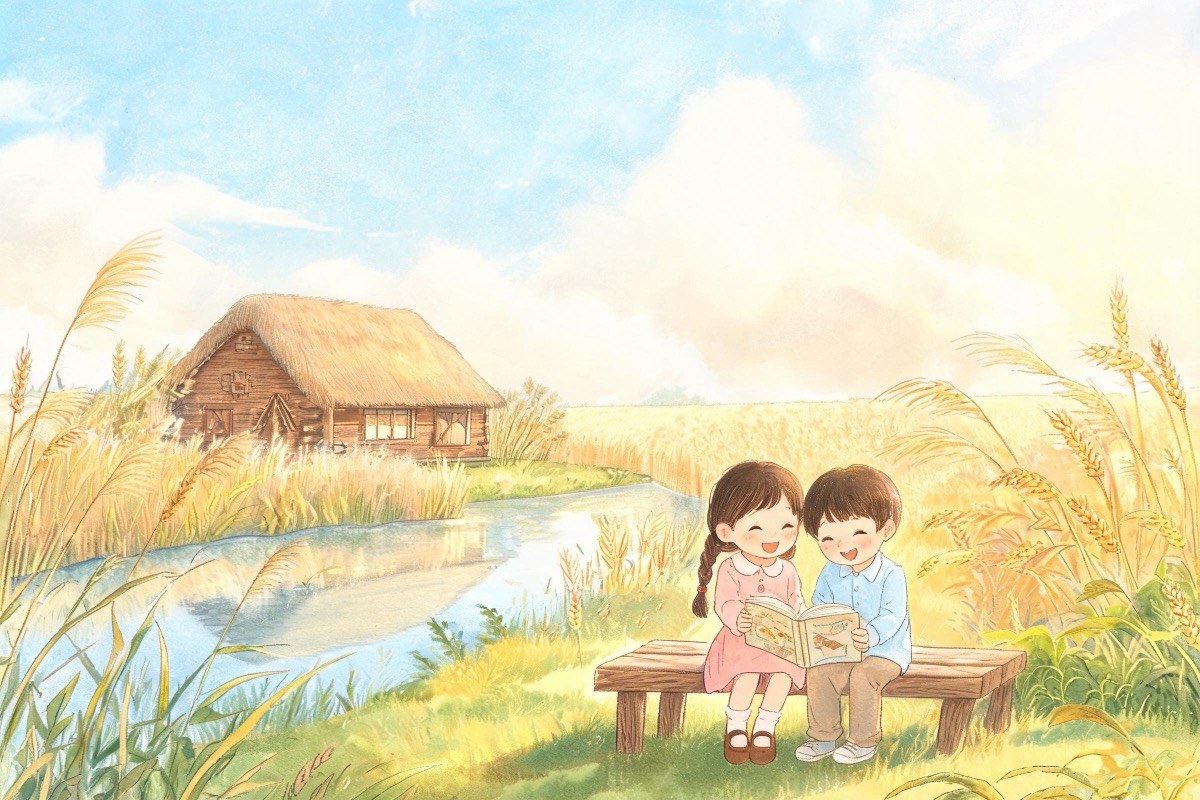
那本《草房子》是我妈在我过生日时买的,我读完了,舍不得扔,就带来了学校。周一早上,我在讲台上说,谁想读就举手。手唰地举起来,一大半。班主任笑了笑,说做个传阅本子上,一人一天,签名字。我在本子第一页写下自己的名字,把书递给了排第一的小雨。
书开始排队。每天早上,书从上一个同学桌上走到下一个同学桌上,像有一条看不见的传送带。我坐在第二排,看它走。小雨还书的时候跟我说,她昨晚读到杜小康守鸭子那段,她妈妈坐在旁边看她哭,她妈妈不知道书里写了什么,只知道那本书很厉害。我把这句记在心里。
传到第五个星期的时候,书开始旧了。封面的蓝褪了一点,右下角翘起来一个角,怎么压都压不平。书脊上出现一道白印子。班里有人开始注意这些。小壮把书举起来,说这书旧成这样了,还传啊。坐他前面的阿禾回过头,说这书是旧了,可它每一天都在被人读,你的书新,是因为它天天在睡觉。
小壮没话了。第二天他主动在传阅本上报名,排到了寒假。他读得最慢,一天读不完就续第二天,传阅本上他的名字后面画了两个小箭头,表示借了两天。还回来那天,他跟小雨说,杜小康那句我不回家,他抄在本子上了。
学期末,书彻底软了,像一块洗过很多次的布。书页的边全卷起来,每一页的角都毛毛的,摸上去像麦田的边。班主任把书放在图书角最好的位置,说这本书这学期被读了几遍,大家猜。有人猜三遍,有人猜五遍。传阅本传回来,我数了数,签名三十一人,有的名字后面有箭头,加起来是四十一天。
暑假我把书带回家,我妈看见说,怎么旧成这样。我说,它这学期的假没休,一直在上班。我妈笑了,拿一张牛皮纸给它包了个书皮。新的书皮底下,那本书还是软的、卷边的。我知道,那才是它最好看的地方。
I Brought the Book, and Getting Worn Was Worth It
The copy of The Straw House was bought by my mother for my birthday. When I finished it, I could not bear to throw it away, so I brought it to school. On Monday morning I stood at the podium and said, raise your hand if you want to read it. Hands shot up, more than half the class. Our homeroom teacher smiled and said we would make a circulation log: one student per day, sign your name. I wrote my own name on the first page of the log and handed the book to Xiao Yu, who was first in line.
The book started its queue. Every morning it walked from one desk to the next, as if riding an invisible conveyor belt. I sat in the second row and watched it travel. When Xiao Yu returned it, she told me she had read the part where Du Xiaokang watched over his ducks the night before, and her mother sat beside her watching her cry, not knowing what was in the book, only knowing the book was powerful. I kept that sentence in my heart.
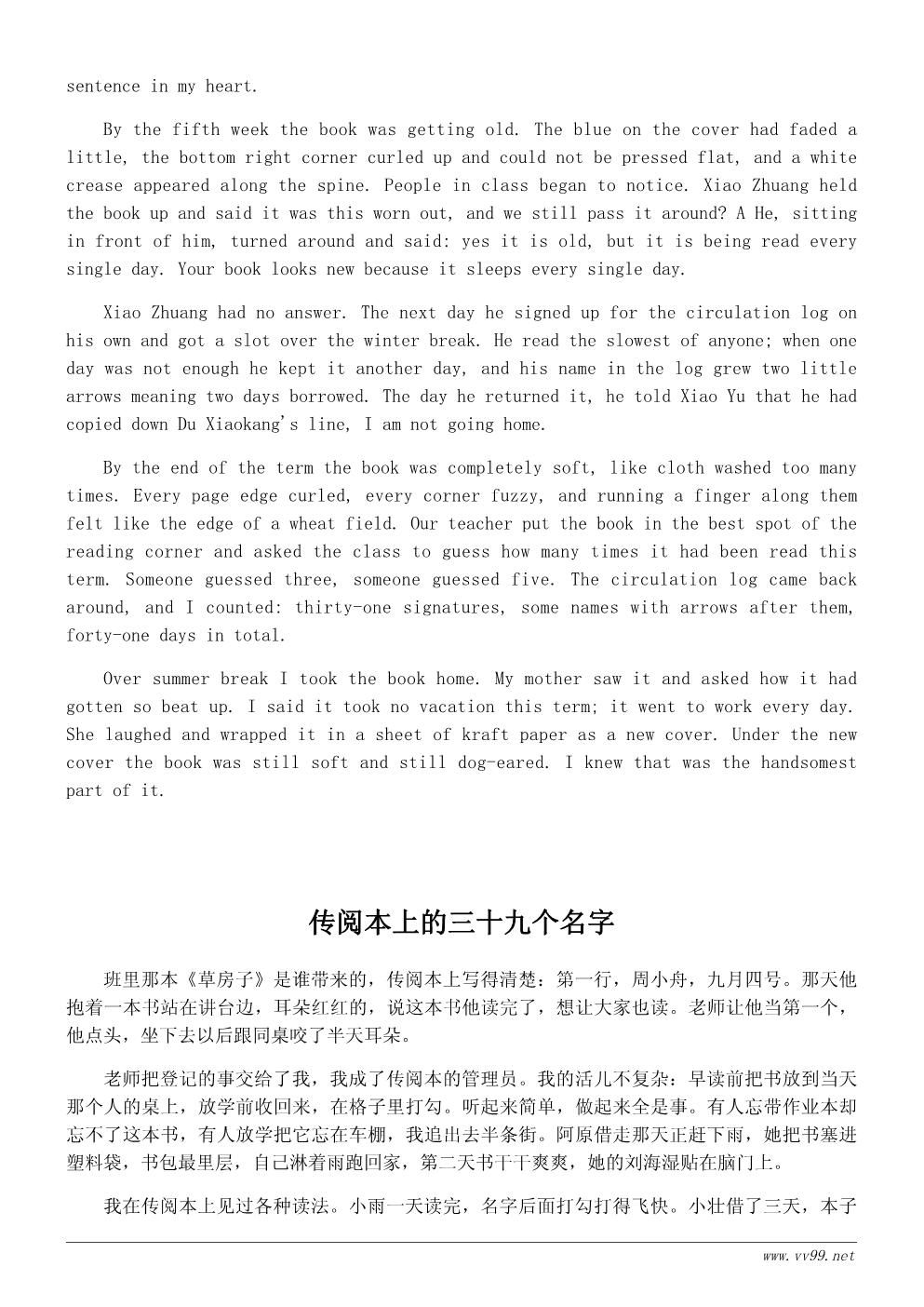
By the fifth week the book was getting old. The blue on the cover had faded a little, the bottom right corner curled up and could not be pressed flat, and a white crease appeared along the spine. People in class began to notice. Xiao Zhuang held the book up and said it was this worn out, and we still pass it around? A He, sitting in front of him, turned around and said: yes it is old, but it is being read every single day. Your book looks new because it sleeps every single day.
Xiao Zhuang had no answer. The next day he signed up for the circulation log on his own and got a slot over the winter break. He read the slowest of anyone; when one day was not enough he kept it another day, and his name in the log grew two little arrows meaning two days borrowed. The day he returned it, he told Xiao Yu that he had copied down Du Xiaokang's line, I am not going home.
By the end of the term the book was completely soft, like cloth washed too many times. Every page edge curled, every corner fuzzy, and running a finger along them felt like the edge of a wheat field. Our teacher put the book in the best spot of the reading corner and asked the class to guess how many times it had been read this term. Someone guessed three, someone guessed five. The circulation log came back around, and I counted: thirty-one signatures, some names with arrows after them, forty-one days in total.
Over summer break I took the book home. My mother saw it and asked how it had gotten so beat up. I said it took no vacation this term; it went to work every day. She laughed and wrapped it in a sheet of kraft paper as a new cover. Under the new cover the book was still soft and still dog-eared. I knew that was the handsomest part of it.
传阅本上的三十九个名字
班里那本《草房子》是谁带来的,传阅本上写得清楚:第一行,周小舟,九月四号。那天他抱着一本书站在讲台边,耳朵红红的,说这本书他读完了,想让大家也读。老师让他当第一个,他点头,坐下去以后跟同桌咬了半天耳朵。
老师把登记的事交给了我,我成了传阅本的管理员。我的活儿不复杂:早读前把书放到当天那个人的桌上,放学前收回来,在格子里打勾。听起来简单,做起来全是事。有人忘带作业本却忘不了这本书,有人放学把它忘在车棚,我追出去半条街。阿原借走那天正赶下雨,她把书塞进塑料袋,书包最里层,自己淋着雨跑回家,第二天书干干爽爽,她的刘海湿贴在脑门上。
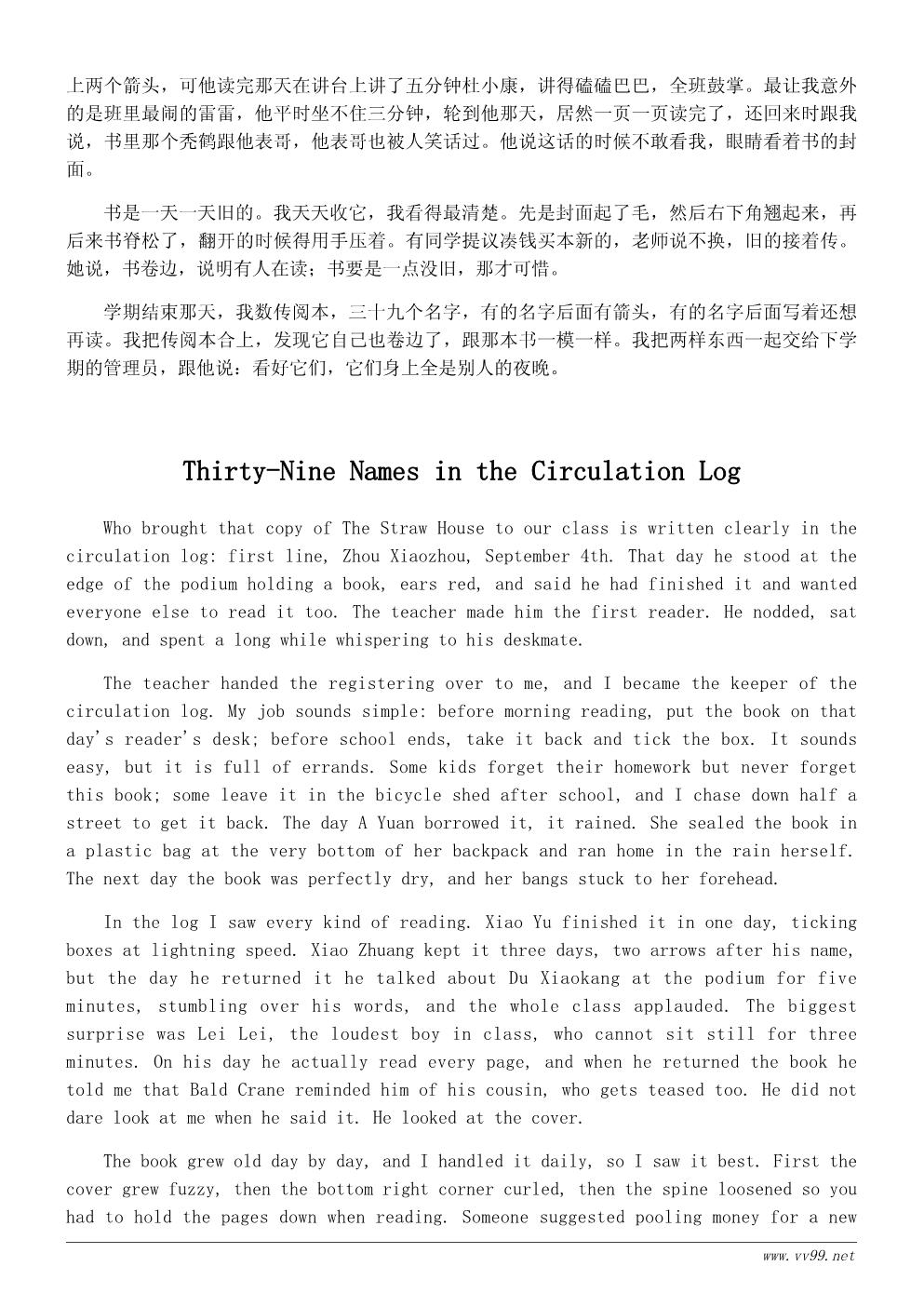
我在传阅本上见过各种读法。小雨一天读完,名字后面打勾打得飞快。小壮借了三天,本子上两个箭头,可他读完那天在讲台上讲了五分钟杜小康,讲得磕磕巴巴,全班鼓掌。最让我意外的是班里最闹的雷雷,他平时坐不住三分钟,轮到他那天,居然一页一页读完了,还回来时跟我说,书里那个秃鹤跟他表哥,他表哥也被人笑话过。他说这话的时候不敢看我,眼睛看着书的封面。
书是一天一天旧的。我天天收它,我看得最清楚。先是封面起了毛,然后右下角翘起来,再后来书脊松了,翻开的时候得用手压着。有同学提议凑钱买本新的,老师说不换,旧的接着传。她说,书卷边,说明有人在读;书要是一点没旧,那才可惜。
学期结束那天,我数传阅本,三十九个名字,有的名字后面有箭头,有的名字后面写着还想再读。我把传阅本合上,发现它自己也卷边了,跟那本书一模一样。我把两样东西一起交给下学期的管理员,跟他说:看好它们,它们身上全是别人的夜晚。
Thirty-Nine Names in the Circulation Log
Who brought that copy of The Straw House to our class is written clearly in the circulation log: first line, Zhou Xiaozhou, September 4th. That day he stood at the edge of the podium holding a book, ears red, and said he had finished it and wanted everyone else to read it too. The teacher made him the first reader. He nodded, sat down, and spent a long while whispering to his deskmate.
The teacher handed the registering over to me, and I became the keeper of the circulation log. My job sounds simple: before morning reading, put the book on that day's reader's desk; before school ends, take it back and tick the box. It sounds easy, but it is full of errands. Some kids forget their homework but never forget this book; some leave it in the bicycle shed after school, and I chase down half a street to get it back. The day A Yuan borrowed it, it rained. She sealed the book in a plastic bag at the very bottom of her backpack and ran home in the rain herself. The next day the book was perfectly dry, and her bangs stuck to her forehead.
In the log I saw every kind of reading. Xiao Yu finished it in one day, ticking boxes at lightning speed. Xiao Zhuang kept it three days, two arrows after his name, but the day he returned it he talked about Du Xiaokang at the podium for five minutes, stumbling over his words, and the whole class applauded. The biggest surprise was Lei Lei, the loudest boy in class, who cannot sit still for three minutes. On his day he actually read every page, and when he returned the book he told me that Bald Crane reminded him of his cousin, who gets teased too. He did not dare look at me when he said it. He looked at the cover.
The book grew old day by day, and I handled it daily, so I saw it best. First the cover grew fuzzy, then the bottom right corner curled, then the spine loosened so you had to hold the pages down when reading. Someone suggested pooling money for a new copy. The teacher said no, keep passing this one around. A book with curled edges means someone is reading it, she said. A book that never wears out is the real pity.
On the last day of the term I counted the log: thirty-nine names, some with arrows, some with the words want to read it again written after them. I closed the log and noticed it had curled edges too, exactly like the book. I handed both to next term's keeper and told him: take good care of them. They are covered with other people's evenings.
小提示:上面此文档内容仅展示完整文档里的部分内容, 若需要下载完整文档请 点击免费下载完整文档 。