文章内容
露水落在青菜叶上
天还没亮,爷爷已经站在菜畦边上了。我跟着他去,路上草鞋踩着的石板是湿的。
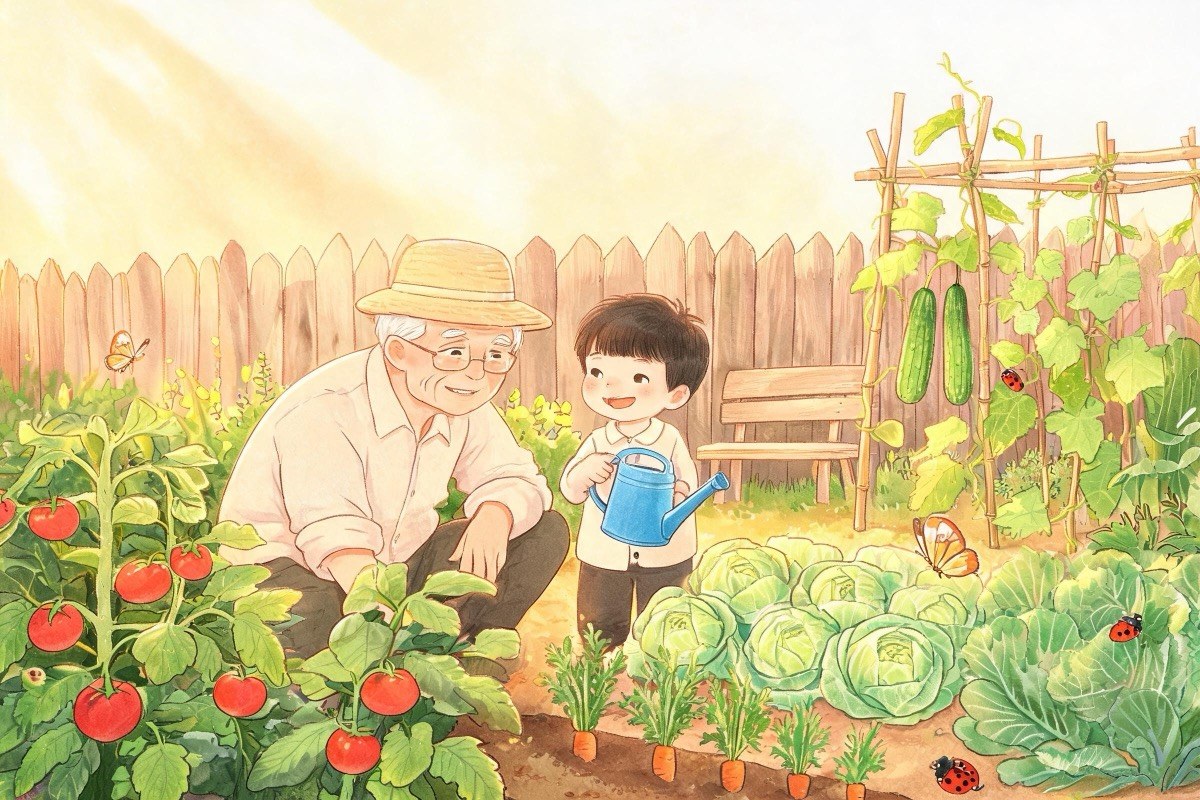
那一畦青菜刚起出来不久,叶片一层一层摊开,绿得发深。露水在叶子上聚成圆的一粒,滚到叶心又散开,叶尖承不住,掉下来,落进土里,几乎没有声音。整畦菜像刚洗过,又像是夜里自己醒过来喝过水。爷爷蹲下去,手指头从叶底插进去,把黄了的叶子掐下来扔进筐。他的手上事多,掐叶、捉虫、松土,一样一样来,不急。
我头一回那么近地看爷爷的手。手背上的筋鼓着,指节粗,虎口和指尖的裂口一道一道,有的塞着泥,有的贴着旧胶布。那双手掐起嫩叶来却轻,指甲盖从叶柄底下往上一挑,叶子就下来了,底下的芯一点没伤。他把手伸进畦沟里试土的干湿,手指头在土里捻了捻,说该浇水了。那双手捧起过秧苗、拔过草、攥过锄头柄,也在我小时候托过我的脸。
太阳上来,露水一点点收小,畦里的青菜轻轻晃。叶子尖上的水珠落下去以后,绿色反而更深了一层,像有人把颜色往叶子里又按了按。爷爷直起腰,把筐里的黄叶提到篱笆外沤肥。他弯着腰干活的时候不吭声,直起腰喘气的时候也不吭声,好像这一畦菜自己会说话,他听着就行。筐里的黄叶越堆越高,畦里的菜却越看越精神,叶子上还挂着没干完的露水。
我站在畦边,忽然心里很静。城里的事急,作业多,考试一场接一场,我总觉脚不沾地。可这一畦青菜不慌,露水夜夜来,爷爷天天来,叶子一天长一点。人最踏实的日子,原来就是弯下腰,把手放进土里,像爷爷那样,一天一天,把东西养大。
Dew Falls on the Green Cabbage Leaves
Before the sky brightened, Grandpa was already standing at the edge of the cabbage ridge. I followed him out, and the stone slabs under my straw sandals were wet.
The ridge of green cabbage had been planted not long ago, its leaves spread out layer by layer, a deep, fresh green. Dew gathered into round beads on the leaves, rolled to the center and spread out again, and when the leaf tips could not hold it, the drops fell into the soil almost without a sound. The whole ridge looked freshly washed, or as if it had woken during the night and drunk water. Grandpa squatted down, slid his fingers under the leaves, and pinched off the yellowed ones into the basket. His hands had a great deal of work to do: pinching leaves, catching insects, loosening soil, one thing after another, never hurried.
It was the first time I looked closely at the hands of Grandpa. The tendons on the backs of his hands stood out, the knuckles were thick, and the cracks across his finger tips and the web of his thumb ran line after line, some packed with soil, some covered with old bandage tape. Yet those hands were gentle with tender leaves: the nail slid under the leaf stem and lifted, and the leaf came away without hurting the heart of the plant. He put his hand into the furrow to test the soil, rubbed a pinch of it between his fingers, and said it was time to water. Those hands had held seedlings, pulled weeds, gripped the handle of a hoe, and when I was small, they had also cupped my face.
When the sun rose, the dew shrank little by little, and the cabbages in the ridge swayed softly. Grandpa straightened up and carried the basket of yellow leaves outside the fence to rot down into fertilizer. He made no sound while bent over his work, and no sound while catching his breath upright, as if this ridge of vegetables could speak for itself and he only had to listen.
Standing at the edge of the ridge, I felt suddenly very calm. Life in the town rushes: homework piles up, exams come one after another, and my feet never seem to touch the ground. But this ridge of cabbage is not in a hurry. The dew comes every night, Grandpa comes every day, and the leaves grow a little each day. The steadiest life, I realized, is simply to bend down, put your hands into the soil, and like Grandpa, raise things one day at a time.
那双手,把这畦菜养大
爷爷的手,我闭着眼也能认出来。指节大,掌心横纹深,右手虎口有一块锄头磨出来的硬茧,冬天裂口,他就掰一截蜡烛头往裂口里抹。
清明前后移栽菜苗,那双手一早就忙起来。头天傍晚他给苗床浇透水,天不亮起苗,手指头捏着苗脖子往上一带,根上带着一撮土。他在一畦空地里用一根竹签戳坑,左手递苗,右手填土,指尖把土压实,动作快得我看不过来。栽完他直起腰,手背上沾满泥,指缝里全是黑的。畦里的菜苗一排排立着,叶子上挂着早上的露水,一颗一颗,被初升的太阳照得发亮。
有一年夏天连着下雨,那双手半夜就醒了。他披上雨衣往园子去,我也跟去。雨大,菜畦里汪着水,他蹲在畦边用铁锹在畦沟挖排水口,水打着旋往外走。他一趟一趟把泡着的青菜拔出来,拎到篱笆下暂放,手在雨里泡得发白。天亮雨停,那畦菜保住了大半,他坐在檐下,手心里全是泥嵌进裂口的痕。
入冬,菜畦歇了。他坐在灶边烤火,把那双手伸到火光里,裂口一道一道露出来。奶奶给他缠白布条。他把手翻过来又翻过去,说手闲着也裂,干活也裂,裂着裂着就开春了。我听着这话,心里动了一下。开春以后,那双手果然又下了地,翻土、点种、间苗,一畦青菜从土里一寸一寸长起来,叶子上夜夜挂着露水。
现在我在城里,早上赶着上学,偶尔在早餐摊看见一碟清炒青菜,绿得很齐整。我会想起那一畦菜,想起凌晨的露水,想起那双手。平凡的日子就是这样被养大的:没有人说爱这个字,可那双手把一畦青菜从苗养到叶,从春养到冬,也把一大家人的日子,稳稳地端上了桌。
Those Hands Raised This Ridge of Vegetables
I could recognize the hands of Grandpa with my eyes closed. Big knuckles, deep creases across the palms, a hard callus on the web of his right hand worn by the hoe, and in winter the cracks opened up, so he broke off a stub of candle and rubbed the wax into the splits.
Around the time of the spring term, those hands grew busy early transplanting seedlings. The evening before, he soaked the seedbed with water; before dawn he lifted the seedlings, his fingers closing around the neck of a plant and pulling it up with a tuft of soil on the roots. In an empty ridge he poked holes with a bamboo stick, his left hand offering the seedling, his right hand filling in soil, his fingertips pressing it firm, moving faster than my eyes could follow. When he finished he straightened up, his hand backs covered with mud, his finger seams black. The seedlings stood in neat rows in the ridge, morning dew hanging on their leaves, bead by bead, shining in the rising sun.
One summer the rain fell for days on end, and those hands woke in the middle of the night. He put on his raincoat and went to the garden, and I followed. The rain was heavy, water pooled in the ridges, and he crouched at the edge to dig a drain in the furrow with a spade, the water swirling out. Trip after trip he pulled out the waterlogged cabbages and set them under the fence for a while, his hands whitened in the rain. By dawn the rain stopped, most of that ridge was saved, and he sat under the eaves, the palms marked where mud had pressed into the cracks.
When winter came the ridges rested. He sat by the stove warming himself, holding those hands into the firelight, the cracks showing line after line. Grandma wrapped them for him with strips of white cloth. He turned his hands over and over, saying they crack whether idle or working, and crack their way into spring. Those words moved something in me. After spring came, those hands indeed went back to the soil: turning earth, sowing seeds, thinning seedlings, and a ridge of green cabbage grew up inch by inch from the ground, dew hanging on its leaves every night.
Now I live in town, hurrying to school in the morning, and sometimes at a breakfast stall I see a dish of stir-fried green cabbage, its green very neat. I think of that ridge, of the pre-dawn dew, of those hands. Ordinary days are raised like this: no one says the word love, yet those hands carried a ridge of vegetables from seedling to leaf, from spring to winter, and steadied the days of a whole family onto the table.
小提示:上面此文档内容仅展示完整文档里的部分内容, 若需要下载完整文档请 点击免费下载完整文档 。