文章内容
菜园边的旧竹椅
竹椅是跟着菜园一起进到我们生活里来的。那年开春,爷爷用板车拉回菜籽、锄头和一把竹椅,竹椅搁在篱笆边的空地上,四条腿陷进松土里,像扎了根。
爷爷待竹椅,比对家里那把木椅好。木椅在堂屋里,常年没人坐;竹椅在菜园边,天天有人坐。每天傍晚,爷爷从菜畦里出来,先在井边冲掉鞋上的泥,再坐到竹椅上。他坐下去的时候,竹节咯吱响一声,像跟人打招呼。他坐在椅上卷裤脚、摘手套,把当天锄过的草在椅边墩干净,然后才慢慢走回家。
椅子的扶手断过一次。那年夏天雨大,爷爷搬椅子回屋,一脚踩滑,竹椅磕在门槛上,右边扶手裂了道口子。他没扔,去镇上请人缠了两道竹篾,又自己刷了桐油。新缠的竹篾颜色浅,站在两步外就能看出来。后来很多年,那道浅色的疤一直在,被手磨得越来越亮,比别处还亮。
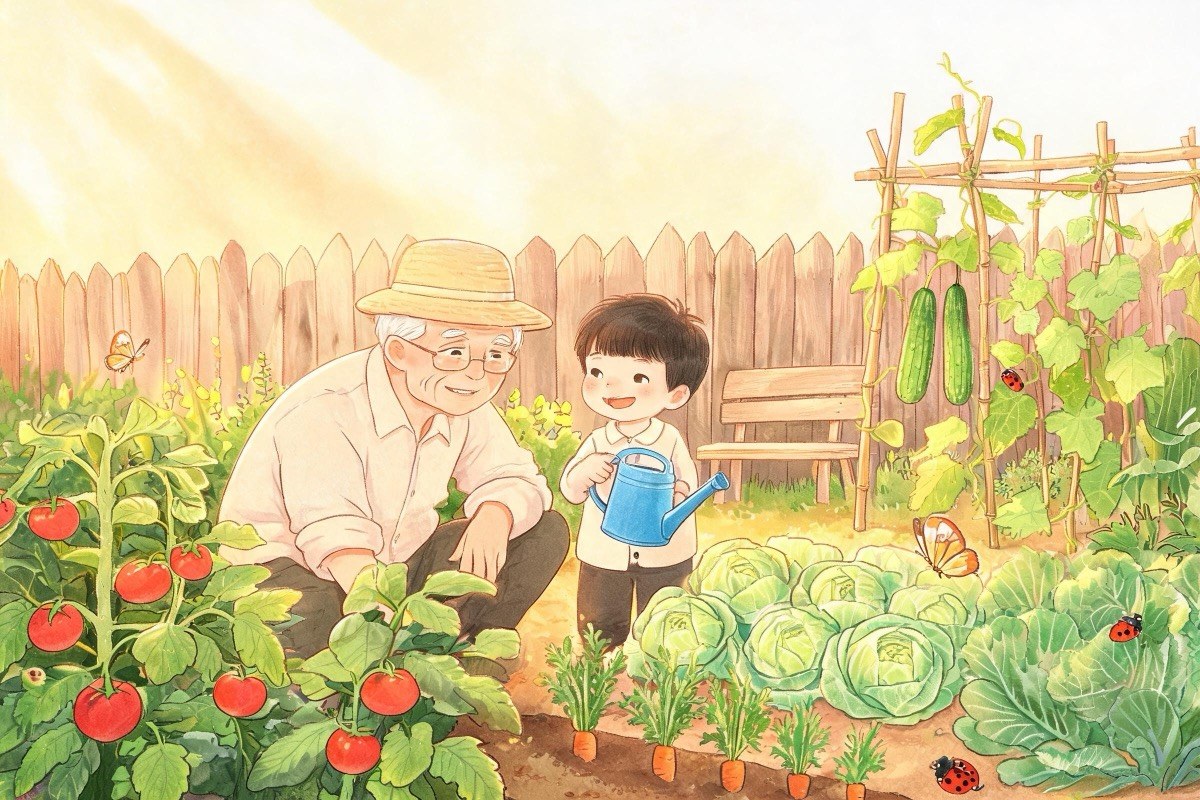
我小时候坐不上那把椅子。它归爷爷。我只有在他浇水的时候被允许坐一会儿,坐上去,脚够不着地,竹节在身子底下响。椅子太高,我坐在上面看菜园,视角跟爷爷一样高。我看见他提着水壶从畦沟里走,水线又细又稳,落在苗根边上。他浇完一遍,直起腰,朝椅子这边看一眼。夕阳在他背后,把他的影子拉到椅子上,又拉到菜畦那边去。
爷爷生病那年,菜园交给父亲管。有一天傍晚,我看见父亲坐在那把竹椅上,背有点驼,姿势却跟爷爷从前一样。夕阳照着他,也照着篱笆上爷爷搭的丝瓜藤。椅子四条腿底下的土,凹下去一小块,谁坐都是那个高度。
再后来,竹椅空了。父亲把它留在篱笆边,没搬进屋。每年开春,他把它搬到太阳底下晒一晒,刷一遍桐油。椅子还是那把椅子,浅色竹篾的疤还是那道疤。夕阳斜过来的时候,椅面上一道亮一道暗,像有人坐在那里。
去年秋天我回老家,在竹椅上坐了一会儿。竹子被太阳晒得温热,坐下去,竹节咯吱响了一声。菜园里的萝卜刚出土,篱笆边的葱一行一行立着。我坐着没动,看夕阳把整片菜园染成金色,又一点点暗下去。椅子在脚下轻轻响,像爷爷在旁边,刚坐下来的样子。
The Old Bamboo Chair by the Garden
The bamboo chair came into our life together with the garden. That spring, Grandpa hauled in seeds, a hoe and a bamboo chair on a handcart. The chair was set on the bare ground by the fence, its four legs sinking into the loose soil as if it had taken root.
Grandpa treated the bamboo chair better than the wooden one at home. The wooden chair sat in the main room, seldom used; the bamboo chair sat by the garden, occupied every day. Each evening, Grandpa came out of the beds, rinsed the mud off his shoes at the well, then sat down. The bamboo joints creaked once, like a greeting. On the chair he rolled up his trouser cuffs, pulled off his gloves, knocked the fresh weeds clean against the leg, and only then walked home slowly.
The armrest broke once. The summer it rained hard, Grandpa was carrying the chair indoors when his foot slipped, and the chair struck the doorframe, splitting the right armrest. He did not throw it away. He went to town, had it bound with two bands of bamboo strip, then brushed tung oil over it himself. The new binding was pale, visible from two steps away. For years after, that pale scar stayed there, worn shinier than anywhere else on the chair.
When I was small I was not allowed to sit in it. It belonged to Grandpa. Only while he watered could I sit for a moment. My feet did not reach the ground, and the joints creaked under me. The chair was tall; from up there I saw the garden at the same height as Grandpa. I watched him walk along the furrows with his watering can, the stream thin and steady, landing at the roots. When he finished, he straightened his back and glanced toward the chair. The setting sun was behind him, stretching his shadow onto the chair and then across the beds.
The year Grandpa fell ill, Father took over the garden. One evening I saw Father sitting in that bamboo chair, his back a little bent, his posture exactly the way Grandpa used to sit. The setting sun lit him and the luffa vines Grandpa had trained along the fence. The soil under the four legs had pressed into a shallow hollow; whoever sat there sat at the same height.
Later the chair stood empty. Father left it by the fence, never moving it indoors. Every spring he took it out into the sun and brushed on a coat of tung oil. It was still the same chair, and the pale scar of bamboo strip was still there. When the sun slanted low, the seat fell half in light, half in shade, as if someone were sitting in it.
Last autumn I went back to the old house and sat in the bamboo chair for a while. The bamboo was warm from the sun, and the joints creaked once as I sat down. The radishes in the garden had just come out of the ground, and the onions along the fence stood in neat rows. I sat still and watched the sun turn the whole garden gold, then slowly darken it. The chair creaked softly under me, like Grandpa just settling down beside me.
夕阳把竹椅照热的时候
夕阳落到西边屋顶的时候,菜园里的光就变了颜色。丝瓜架的影子拉长,横过整条畦沟;竹椅立在篱笆边,椅面被最后一段阳光照得发亮。这时候爷爷还在地里,竹椅是空的。它得等。
爷爷手上的活不写完,他不坐。夕阳先照到竹椅,再照到爷爷弯着的背。他给新栽的茄苗培土,一锹一锹,土块在指间捏碎。影子越来越长,从菜畦这头爬到那头,把他整个人罩住。他浑然不觉,直到水壶见底,才提着空壶往井边走。
井水冲过鞋,爷爷走向竹椅。竹节咯吱一响,他坐下了。他从椅边拿起蒲扇,不扇风,只把裤脚上的泥条捻掉。他看菜园。目光从东头的葱畦起,一行一行往西过:葱立得齐,蒜苗拱出了土,萝卜畦里那处缺了五棵的位置,他打算周末补上。看一遍,他在心里记一遍。竹椅承着他,一声不响。
我放学回来,书包都没放下,先跑到菜园边。爷爷在椅上坐着,我在椅前蹲着。他递给我一根刚摘的黄瓜,在井水里涮两下,脆生生咬下去,籽还是嫩的。我们一个坐一个蹲,谁也不说话。夕阳从丝瓜架的缝里漏下来,落在我们身上,落在空水壶上。蝉在这时候换了个调子,叫得更密了。
天再暗一点,爷爷站起来,把竹椅挪进篱笆门里头,怕夜里露水重。椅子靠墙立着,四条腿还带着白天的太阳味。他锁上篱笆门,提着黄瓜和一把小葱回家。菜园暗下去,竹椅在黑暗里立着,等第二天的太阳。
那些傍晚,竹椅比谁都清楚:哪天丝瓜爬上了架,哪天第一根辣椒转了色,哪天爷爷坐在椅上的时间比平时长。有一回他坐了很久,久到夕阳都落了,我以为他睡着了,走近一看,他在看那畦补过苗的萝卜,嘴角有一点笑。
如今菜园还在,竹椅还在篱笆边。夕阳仍旧每天斜过来,先照椅面,再照菜畦。椅是空的,地里没有人弯腰。可光走过菜园的样子没变,从东头的葱畦走到西头的架子,像有人坐在椅上,从头看一遍。
When the Setting Sun Warmed the Chair
When the sun dropped to the roof on the west, the light in the garden changed color. The shadow of the luffa trellis stretched long across the whole furrow; the bamboo chair stood by the fence, its seat shining in the last of the sunlight. At that hour Grandpa was still in the ground. The chair was empty. It had to wait.
He did not sit until the work in his hands was done. The sun lit the chair first, then his bent back. He earthed up the young eggplant seedlings, shovelful by shovelful, crumbling the clods between his fingers. The shadow grew longer, crawling from one end of the bed to the other, covering him entirely. He never noticed, until the can ran dry and he carried it empty to the well.
After rinsing his shoes in well water, Grandpa walked to the bamboo chair. The joints creaked, and he sat down. He picked up the palm-leaf fan from beside the chair, not to fan himself but to twist the streaks of mud off his trouser cuffs. He looked over the garden. His gaze started at the onion beds on the east and moved row by row to the west: the onions stood straight, the garlic shoots had pushed through, and the gap of five missing hills in the radish bed he would fill on the weekend. He looked once and kept score once. The chair held him without a sound.
When I came home from school, I dropped nothing and ran first to the garden edge. Grandpa sat in the chair; I crouched in front of it. He handed me a cucumber just picked, rinsed twice in well water, bitten through while still crisp, its seeds tender. One sat, one crouched, neither speaking. The sun leaked through the gaps in the luffa trellis onto us, onto the empty can. The cicadas changed their tune then, calling thicker.
A little darker, Grandpa stood and moved the chair inside the fence gate, afraid of the night dew. The chair leaned against the wall, its legs still holding the warmth of the day. He latched the gate and carried the cucumber and a handful of scallions home. The garden went dark; the chair stood in the darkness, waiting for the sun of the next day.
Those evenings, the chair knew better than anyone: which day the luffa climbed the trellis, which day the first pepper turned color, which day Grandpa sat in it longer than usual. Once he sat so long that the sun was gone before he rose. I thought he had fallen asleep; coming closer, I saw him looking at the radish bed where the seedlings had been replanted, a small smile at the corner of his mouth.
The garden is still there now, and the bamboo chair still stands by the fence. The sun still slants in every day, lighting the seat first, then the beds. The chair is empty; no one bends over the ground. But the way the light walks across the garden has not changed, from the onion beds on the east to the trellis on the west, as if someone sat in the chair, watching it all over again.
小提示:上面此文档内容仅展示完整文档里的部分内容, 若需要下载完整文档请 点击免费下载完整文档 。