文章内容
把课堂搬进菜园去
课本翻到植物的身体那一页,根、茎、叶、花、果实,五个词排成一列。我念了两遍,底下眼神散的散,玩的玩。我合上书,说:走,去菜园。教室里先是安静了一拍,接着炸开一片拍手声。
学校后墙有一分多地,是校办的小菜园,平日由工友老周打理,我提前跟他打了招呼,他说那两天正好间苗,叫我们别客气。四十多个孩子涌进畦沟,我给他们定了规矩:脚走沟,手看人脸色再动。先认菜。我拔起一棵香菜,从根须讲到锯齿边的叶子,再掐一小段茎让他们轮流闻。有个女孩问,香菜和芹菜小时候是不是一样。我没答,蹲下来拨开两畦苗让他们自己比,比完她自己点了头。
认到辣椒,我说成熟的转了色,红的才能摘,青的留下继续长。孩子们散开采摘。我留意平时上课最坐不住的男孩,他蹲在椒株前,捏着一个红椒左看右看,掂分量,才拧下来,动作轻得像怕弄疼它。他把椒放进竹筐,又回头检查了一遍筐底,怕红椒被青椒压着。
摘完,筐搁在讲台角上。那天的课堂练习,写一种蔬菜的身体,全班交上来的句子头一回没有重样的。有孩子写辣椒的柄是拧断的,断口白白的;有孩子写茄子身上有一层光,摸完手上紫了一小片。
放学前,那个男孩跑到办公室门口,问下周还去不去菜园。我说去。他走了两步又回头,说老师,我奶奶家也有菜园,我帮他浇过水。他说这话时腰板挺得直。
我在教案本上记了一行:这一课不在课本里,在土里。菜园里的规矩、观察、轻重,孩子用手就学会了,用不着我讲二十遍。教育反思这四个字太大,我只知道,那筐辣椒后来炒进了食堂,孩子们吃得比哪天都干净。
Moving the Classroom into the Garden
The textbook opened to the page on the body of a plant: root, stem, leaf, flower, fruit, five words in a row. I read them twice; below, eyes wandered, hands played. I closed the book and said: come on, we are going to the garden.
Behind the school wall there is a small plot, the school garden, tended day to day by Old Zhou the caretaker; I had spoken with him beforehand. More than forty children poured into the furrows. I set the rules first: feet stay in the furrow, hands move only when I say. First, know your vegetables. I pulled up a coriander plant and talked from the root threads to the saw-toothed leaves, then snapped a bit of stem for them to smell in turn. A girl asked whether coriander and celery look the same when young. I did not answer. I crouched and parted the seedlings in two beds and let them compare; after comparing, she nodded to herself.
When we reached the peppers, I said the ripe ones have changed color: only the red ones may be picked, the green ones stay to keep growing. The children spread out to pick. I kept an eye on the boy who could not sit still in class. He squatted before a pepper plant, held a red pepper, looked at it left and right, weighed it in his palm, then twisted it off, his touch light as if he were afraid of hurting it. He put the pepper in the bamboo basket and turned back to check the bottom of the basket once more, afraid the red ones would be pressed by the green ones.
After the picking, the basket sat on the corner of the platform. The exercise that day was to write about the body of one vegetable; for the first time, no two papers in the class were alike. One child wrote that the stalk of a pepper is twisted off and the break is white; another wrote that an eggplant wears a layer of light, and after touching it a small patch of purple stays on the hand.
Before school ended, that boy ran to the door of my office and asked whether we would go to the garden next week. I said yes. He walked two steps and turned back: teacher, my grandmother has a garden too, and I have helped it water. His back was straight when he said it.
I wrote one line in my lesson-plan book: this lesson is not in the textbook, it is in the soil. In the garden, the rules, the looking, the weight of a hand, children learn them with their hands, without my saying it twenty times. Education reflection is a big phrase; all I know is that those peppers were later cooked in the canteen, and the children ate them cleaner than on any other day.
带儿子回爷爷的菜园
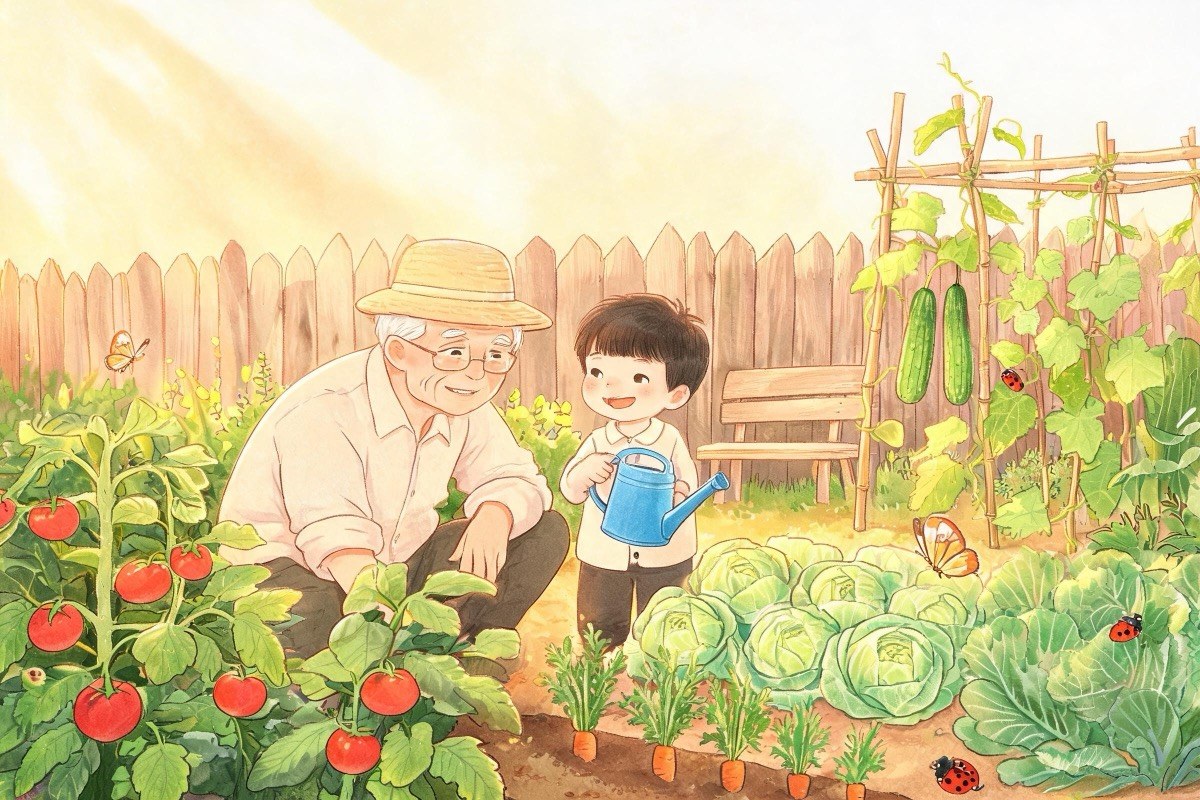
周六早上,儿子满七岁,还分不清小葱和蒜苗。我带他回父亲的菜园,在城外三十里。
车刚停稳,父亲已经扛着锄头站在畦边。他没抱儿子,递过去一只小竹筐,说:跟着我。儿子攥着筐跟上去,步子迈得半大,筐磕着小腿。
沿畦埂,父亲这儿指指、那儿指指:这是葱,这是蒜,叶子长得像,掐一根闻闻就知道。儿子掐了一根,皱了一脸,说臭,转头又掐了一根。
到了豆角架前,父亲蹲下,指着架竿说,豆角是顺着竿往上爬的,荚挂在叶子底下,掐得断、掐下来有响声的才算嫩,掐不动的留下接着长。儿子试了一根,没掐动,抬头看父亲。父亲不帮,只说:拧一下,拧四分之一圈。这回咔的一声断了。他蹲在那儿一根接一根地掐,筐底渐渐铺绿了。
往回走,父亲拔出一棵花生,抖掉土,把根转向儿子。儿子叫起来,问花生怎么长在根上。父亲说,地上开花,地下结果,花谢了,子房往土里钻,花生就在土里鼓起来。儿子蹲着数,数出四粒,非要把这棵花生带回家栽进花盆。父亲说,盆太浅,子房钻不到土里。
中午摘了满满一筐,有豆角,有茄子,还有两根顶花带刺的黄瓜。回程车上儿子睡着了,筐抱在怀里,一根豆角贴着脸。妻子打电话来,说你就让他玩土。我说,玩土,他才知道了吃的东西打哪儿来。他在课本里背过盘中餐粒粒皆辛苦,可他没掐过一根豆角。书里的句子是别人的,手上的感觉才是他自己的。
晚上他帮母亲择豆角,一边择一边说,爷爷讲掐不动的要留下接着长。我听见了,没接话,打开手机记了下来。父亲教给他的,从来不只是摘菜。
Back to the Garden of My Father
Saturday morning, my son turned seven and still could not tell a green onion from a garlic sprout. I took him back to the garden of my father, thirty li outside the city.
The car had barely stopped when my father stood by the ridge with a hoe on his shoulder. He did not hug the boy; he handed him a small bamboo basket and said: follow me. The boy held the basket and followed, his steps half the size, the basket knocking his calf.
Along the ridge the old man pointed here and there: this is scallion, this is garlic, the leaves look alike, but crush one and smell. The boy crushed one and wrinkled his whole face, said stinky, then crushed another.
At the bean plot the old man squatted and pointed to the poles: snap beans climb up the poles, the pods hang under the leaves; only the ones that snap with a sound are tender, the ones that do not snap stay and keep growing. The boy tried one and could not snap it, and looked up. The old man did not help, only said again: twist it, a quarter turn. This time it snapped with a sound. The boy squatted there snapping one after another, and the bottom of the basket turned green.
On the way back the old man pulled up a peanut plant, shook off the dirt, and turned the roots toward the boy. The boy cried out: peanuts grow on roots. The old man said: the flower is above, the fruit below; the flower withers, the ovary pushes into the soil, and the peanut swells there. The boy crouched and counted four, and wanted to carry the whole plant home into a flowerpot. The old man said: the pot is too shallow, the ovary cannot reach the soil.
At noon the basket was full: snap beans, eggplants, two cucumbers still with the flower on. On the way home the boy fell asleep in the car, the basket on his lap, one snap bean against his cheek. His mother called and said I only let him play in dirt. I said: playing in dirt is how he learns where food comes from. In class he can recite the poem about each grain on the plate being the fruit of hard labor, but he has never snapped a snap bean. The line in the book belongs to someone else; the feeling in the hand belongs to himself.
That night he helped his mother shell beans, saying as he worked: Grandpa taught that the ones that do not snap should be left to grow. I heard it and wrote it into my phone. What the old man teaches was never only how to pick.
小提示:上面此文档内容仅展示完整文档里的部分内容, 若需要下载完整文档请 点击免费下载完整文档 。