文章内容
一进菜园门,童年就回来了
周六中午回乡下,家里门开着,父亲不在,墙边的锄头也不在。他准在屋后菜园。我换了鞋下地去帮忙。一脚踩进畦沟,土腥气混着香菜茎被掐碎后的清气迎面撞过来,我愣在原地。这个味道,二十多年没撞见过它了。
小时候我就是从这个畦沟里进进出出的。夏天我拽着父亲的衣角,他蹲下间苗,我蹲旁边拔草,拔几根就跑过去献宝。他捏起来看看,说这根不是草,这根是胡萝卜苗。我那时分不清,蹲下去看半天也分不出;如今蹲下去,一眼就能分出来,反倒没人问我了。
菜园里干过的事,我一件一件都记得。偷吃黄瓜,摘下来在袖子上蹭两下就咬,顶花的那截脆,带点苦,父亲看见了不点破,由我啃完。罩蜻蜓,红蜻蜓爱停在豆角架顶,靠近得慢,手要慢,呼吸也要慢,罩住一只就在掌心里笑出声,指缝里透出它翅膀扑腾的风。抖花生最热闹,拔起一棵往土上磕,花生扑簌簌落一地,我蹲着数,数出四粒、六粒,数到高兴处喊父亲来看。
一晃我四十,父亲七十三。那天在园里,他拿锄,我拿水舀,他在前头指点:这畦要浇透,那畦沙,别浇多。我弯腰从井台提水,一趟下来腰发酸,忽然就明白他这样弯了多少年,腰是怎么一点点弯下去的。
回程路上妻子问我,你在菜园里发什么呆。我答不上来。菜园像间库房,里头存的不是菜,是童年。人一脚踩进去,味道、土、蹲下的姿势、掌心的风,全回来了,比脑子里存的那点东西可靠得多。手上的事,比脑子里的事记得牢。
傍晚父亲把间下来的青菜炒了一盘,我吃了两大碗饭。他看我吃得好,话不多,只把盘子往我跟前推了推。竹椅摆在院角,夕阳照上去,跟他七十三岁的样子很称。
Step into the Garden and Childhood Returns
Saturday noon I drove back to the village. The house door stood open; Father was not in it, and the hoe by the wall was gone. He must be in the garden behind the house. I changed shoes and went down to help. One step into the furrow, and the smell of soil mixed with the clean smell of crushed coriander stems hit me from the front. I stood there stunned. I had not met this smell for more than twenty years.
When I was small, I came in and out of this very furrow. In summer I pulled at the hem of Father clothes. He squatted to thin seedlings; I squatted beside him and pulled grass, pulled a few and ran to show him. He lifted one, looked, and said: this one is not grass, this one is a carrot seedling. Back then I could not tell them apart; I crouched and looked a long time and still could not. Now I crouch down and tell at a glance, yet no one asks me anymore.
Everything done in that garden, I remember one by one. Eating a cucumber without asking: pick it, wipe it twice on the sleeve, bite; the flowery end is crisp and a little bitter; Father saw through it and said nothing, let me finish it. Catching dragonflies: red dragonflies love the tops of bean poles; to go near, the hand must move slow, the breath must move slow; when one is covered in the palm, the laugh bursts out loud, and the wind of its wings leaks through the gaps of the fingers. Shaking peanuts was the liveliest: pull up one plant, knock it on the soil, and the peanuts fall in a rustle; I crouched and counted, four, six, and called Father over when the count pleased me.
In a flash I am forty, and Father is seventy-three. That day in the garden he held the hoe and I held the water ladle. He directed from the front: this bed needs a thorough watering, that one is sandy, do not pour too much. I bent to carry water from the well, and after one trip my waist ached, and I suddenly understood how many years he had bent this way, and how his back bent down little by little.
On the way back my wife asked what I had been spacing out about in the garden. I could not answer. A vegetable garden is like a storehouse. What it keeps is not vegetables; it is childhood. One step in, and the smell, the soil, the posture of crouching, the wind in the palm, all come back, far more reliable than what the head keeps. What the hands remember lasts longer than what the head remembers.
At dusk Father stir-fried the greens he had thinned out, and I ate two big bowls of rice. Seeing me eat well, he said little, only pushed the plate a little closer to me. The bamboo chair stood in the corner of the yard, lit by the setting sun, well matched with his seventy-three years.
儿子追蝴蝶,我追童年
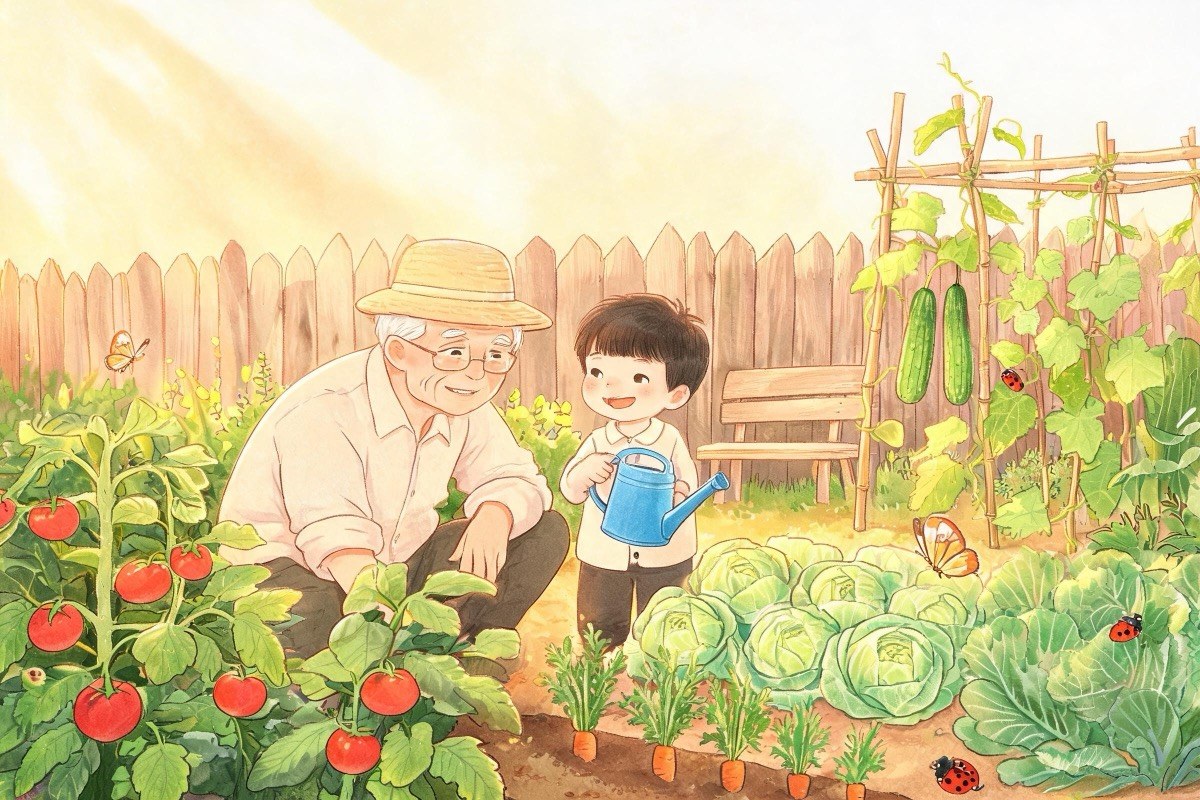
父亲的菜园在村脚,半亩大,一畦一畦排得整齐。儿子蹲在畦边玩土,一只粉蝶落进甘蓝地里,他看见了,起身就追,小小的背影在甘蓝棵子中间钻来钻去。我站在畦那头看着,忽然像看见了自己。
小时候我也在这块园子里追过蝴蝶。那时父亲还壮,锄头抡得高,看见我撞进甘蓝地,故意沉下脸喊:甘蓝要让你撞烂了。我绕着畦埂跑,他举着锄头追过来,锄头其实举得很低。母亲拎着篮子在地头笑,笑完骂我们爷俩,一个都管不住。
好笑的是,我小时候怕毛毛虫。甘蓝叶上一条绿的,能让我一蹦后退,回头喊父亲。那天儿子用两根手指托起一条毛毛虫,凑到我眼前:爸爸你看,它有好多脚。我接过来放回叶子上,手一点没抖。我什么时候不怕的?想不起来了。
父亲坐在田边的竹椅上抽烟,开口说:你那时候比他皮多了。我笑,蹲下去问他,我那时候还干过什么。他一样一样数:下沟摸鱼,裤腿卷到膝盖;摘青梅吃,酸得直咧嘴,还接着摘;拔一根萝卜,在衣襟上蹭蹭就啃,啃得满脸汁。我听着,每一件都在心里敲了一下,像有人替我摇了一下小铃。
儿子不知道这块菜园是我小时候的游乐场。他只知道毛毛虫有好多脚,蝴蝶追不上,土可以堆成一座小丘。这就够了。童年没有走远,它藏在菜园里,藏在甘蓝叶子底下、畦沟的土腥气里。人一脚踩进去,它就回来,爬上下一代的背,重新追一遍蝴蝶。
回程车上儿子睡着了,口袋里露出半截甘蓝叶子,是他非要带回来给甘蓝虫做口粮的。我没掏出来。从后视镜里看,父亲站在村口看我们走,竹椅空在他身后,椅面上还留着太阳晒过的温度。
My Son Chases Butterflies, I Chase Childhood
The garden of my father lies at the foot of the village, half a mu, one bed after one bed, laid out straight. The boy squatted by the ridge playing with dirt. A white butterfly landed in the cabbages; he saw it, got up, and chased, his small back darting between the cabbage heads. I stood at the other end of the furrow watching, and suddenly it was like seeing myself.
When I was small, I chased butterflies in this same garden. Father was still strong then, swinging the hoe high. Seeing me crash into the cabbages, he put on a stern face and shouted: you will crush them. I ran around the ridge, and he came after me with the hoe raised, though the hoe was raised quite low. My mother stood at the head of the field with a basket, laughing, then scolded us two, saying neither could be managed.
The funny part: I was afraid of caterpillars back then. One green one on a cabbage leaf could make me jump backward and call for Father. That day my son lifted one on two fingers and brought it to my eyes: Dad, look, it has so many feet. I took it and put it back on the leaf, and my hand did not shake at all. When did I stop being afraid? I could not remember.
Father sat on the bamboo chair by the field smoking, and said: you were far naughtier than him. I laughed and crouched down to ask what else I had done. He counted one by one: wading into the ditch for fish, trouser legs rolled to the knee; picking green plums, sour enough to twist the mouth, and picking more anyway; pulling a radish, wiping it on the lapel, gnawing it, juice all over the face. I listened, and each item struck something inside me, like someone ringing a small bell for me.
The boy does not know that this garden was my playground when I was small. He only knows that caterpillars have many feet, that butterflies cannot be caught, that dirt can be piled into a little hill. That is enough. Childhood did not go far away; it hides in the garden, under the cabbage leaves, in the earthy smell of the furrow. One step in, and it comes back, climbs onto the back of the next generation, and chases butterflies all over again.
In the car on the way home the boy fell asleep, half a cabbage leaf sticking out of his pocket, the food he insisted on bringing back for the cabbage worm. I did not take it out. In the mirror Father stood at the village entrance watching us leave, the bamboo chair empty behind him, the seat still holding the warmth of the sun.
小提示:上面此文档内容仅展示完整文档里的部分内容, 若需要下载完整文档请 点击免费下载完整文档 。