文章内容
菜畦、汗水与黄昏的距离
菜畦是一行一行的。一行丝瓜,一行毛豆,一行我说不清名字的青菜。它们站得整齐,像爷爷半辈子排好的日子。
我站在这一头,爷爷站在那一头。中间隔着六条畦,隔着整个暑假,隔着我没说出口的那些话。城里的一年太长,长到我忘了怎么开口喊他。
七月的太阳不跟人商量。它把爷爷的影子踩在脚底下,踩得很扁。爷爷弯着腰,脊背拱起,像一截老桥。汗从他的帽檐出发,走很远的路,落到土里,土的颜色就深了一点点。
我数过。他直一次腰,用袖子擦一次脸,再弯下去。一个中午,他直了十一次腰。那十一滴汗,没有一滴落在抱怨上,全部落在菜根旁边。菜不会说谢谢,菜只是长。爷爷给丝瓜搭架,一根竹竿一根竹竿地绑,绳结全是同一个方向,像汗排着队往前走,从不插队。
丝瓜知道夏天有多长。它一天开几朵黄花,一天长一寸,把黄昏一天一天往后顶。毛豆知道夏天有多重。它的叶子在午后垂下来,又在傍晚抬起来,像一个人咬紧了牙。
黄昏是从菜园外边进来的。先是光变软,照在畦沟里,像水。然后是影子变长,爷爷的影子从脚边一直铺到我脚边,我才知道,原来他离我并不远,是我自己站得太靠边。
我拎起桶。水很沉,我走得歪歪斜斜,六条畦走了很久。爷爷没说话,只是把腰直了直,让开半步。水浇下去,土吸一口,又吸一口,像替我们俩,把没说出口的话都喝掉了。
那天晚上我写在日记里的只有一句:菜畦六条,我走了一遍,就懂了爷爷走过的几千遍。汗水不响,黄昏不说,它们只是把一个人,一寸一寸,放到另一个人的影子里。
The Distance Between the Bed, the Sweat and the Dusk
The vegetable beds stand row by row. One row of luffa, one row of green soybeans, one row of greens whose name I cannot say. They stand in good order, like the days my grandfather has arranged for half a lifetime.
I stand at this end, grandfather stands at that. Between us lie six beds, the whole of summer vacation, and the words I could not bring myself to say. A year in the city is so long that I forgot how to call out to him.
The July sun consults no one. It stamps his shadow flat under its foot. He bends at the waist, his back arched like an old bridge. Sweat sets out from the brim of his hat, travels a long way, and falls into the soil, and the soil there darkens just a little.
I counted. He straightens once, wipes his face with his sleeve once, bends again. In one noon he straightened eleven times. Not one of those eleven drops of sweat fell on complaint; every one fell beside the roots. The vegetables do not say thank you. The vegetables only grow. He builds a trellis for the luffa, tying pole after pole, every knot facing the same direction, like sweat marching in line, never cutting ahead.
The luffa knows how long summer is. It opens a few yellow flowers a day, grows an inch a day, and pushes the dusk one day further back each day. The soybeans know how heavy summer is. Their leaves droop in the afternoon and lift again toward evening, like a person clenching the teeth.
Dusk enters from outside the garden. First the light turns soft in the furrows, like water. Then the shadows lengthen, and his shadow spreads from his feet all the way to mine. Only then I know he was never far from me; it was I who kept standing too far aside.
I lift the bucket. The water is heavy, I walk crooked and unsteady, and the six beds take a long time. He says nothing, only straightens his back and yields half a step. The water goes down, the soil takes one drink, then another, as if for the two of us it drank up everything we left unsaid.
That night my diary holds only one line: six beds, I walked them once, and I understood the thousand times he has walked them. Sweat makes no sound, dusk says nothing. They only place one person, inch by inch, into the shadow of another.
爷爷的黄昏账本
爷爷有一本账,不写在纸上,写在菜畦里。春天记一笔苗,夏天记一笔汗,秋天才有机会记一笔收。他记账不用笔,用腰,一次一次弯下去,就是往土里存一个数字。
六月的账最难记。番茄红之前要数多少天,黄瓜上架要绑多少道绳,他不说,他只弯下去。汗是爷爷的货币,他花得大方,一捧一捧往畦里撒,从不查余额。
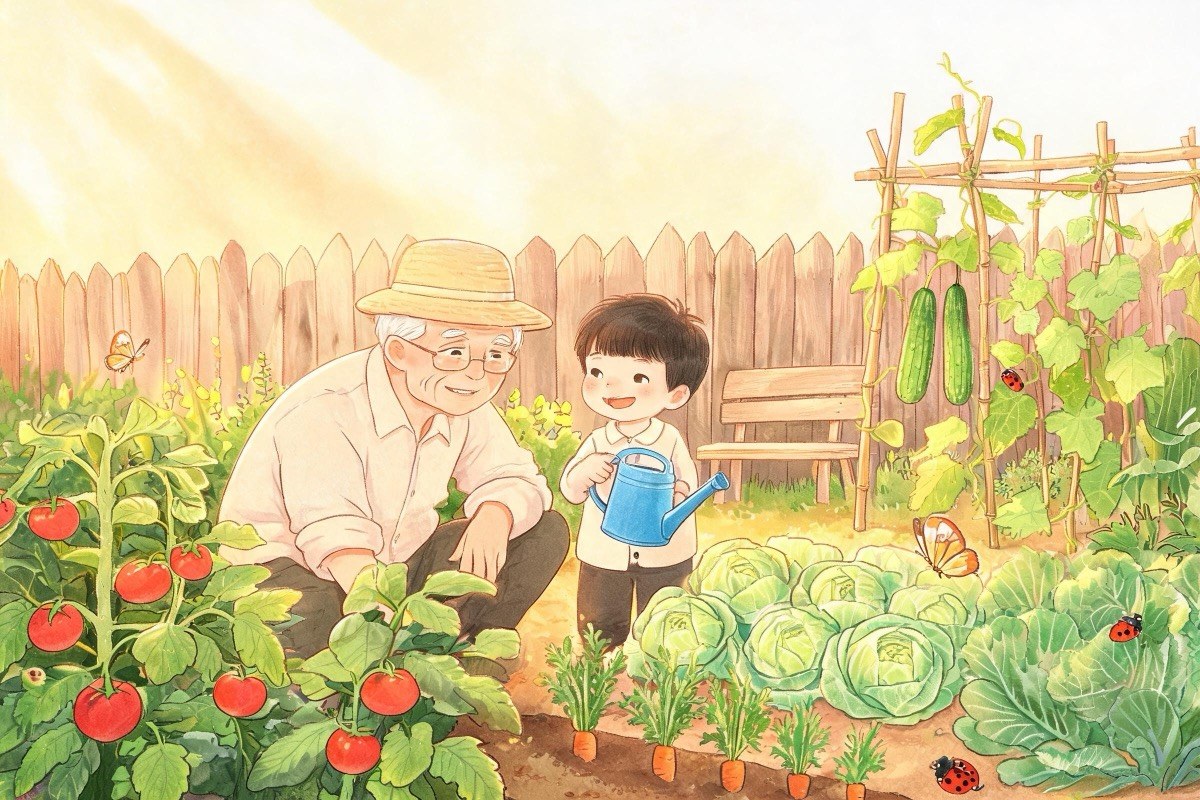
我在初三,书包很重,重得像装了整个学期的黄昏。模拟考的名次贴在墙上,我看了三天,第四天我逃去乡下,逃进那片菜园。
爷爷什么也没问。他递给我一双手套,让我站在畦沟里,替他递秧苗。我蹲下一个时辰,脖子酸了,膝盖湿了,汗从额头滑到下巴,滴在土上,土接住了,像接住过千万滴那样自然。
那一刻我懂了他的账本。原来汗水掉进土里不是消失,是存起来,利息长在菜上,长在番茄一层一层变红的边上,长在黄瓜顶花的那一小截脆里。
黄昏照例来了,把菜园染成旧铜色。爷爷直起腰,朝畦垄尽头望。他望得很慢,像盘点一天的账。他说,你看,这一畦今年争气。他的语气,和我爸看见我进步时一模一样。
回去的路上,我们的影子在土路上合成一条。爷爷忽然说,读书的地和他种的地是一样的,汗先到,收成才到,急不得,也假不得。我点头,又点头,喉咙里像卡着一枚未熟的番茄,酸得我一时说不出话。
那晚灯下,两碗绿豆汤,一碗给我,一碗给他。蝉在窗外记账,一声一声,把那个夏夜记得又轻又稳。我在自己的本子上写:离中考还有九十天,我每天存一点汗。爷爷在旁边数他的黄瓜,谁也没说话,账本却都记满了。
The Dusk Ledger of Grandfather
Grandfather keeps a ledger, not on paper but in the vegetable beds. He records the seedlings in spring, the sweat in summer, and only in autumn may he record the harvest. He does not bookkeep with a pen but with his back, bending down again and again, each time depositing a number into the soil.
The accounts of June are the hardest to keep. How many days before the tomatoes turn red, how many ropes to tie the cucumbers onto their frames, he never says. He only bends down. Sweat is his currency, and he spends it generously, handful by handful into the beds, never checking his balance.
I am in the final year of middle school, and my schoolbag is heavy, as heavy as if it carried the dusk of an entire term. The ranking of the mock exam was posted on the wall; I looked at it three days, and on the fourth day I ran away to the countryside, ran into that garden.
He asked nothing. He handed me a pair of gloves and set me in the furrow to pass him seedlings. I crouched for an hour, my neck sore, my knees wet, sweat sliding from my forehead to my chin and dropping onto the soil. The soil caught it, as naturally as it had caught ten million drops before.
In that moment I understood his ledger. So sweat that falls into the soil does not vanish; it is deposited, and the interest grows on the vegetables, on the edges of tomatoes reddening layer by layer, in the crisp inch of a cucumber wearing its flower.
Dusk came as always, dyeing the garden the color of old copper. He straightened up and looked toward the end of the ridges, looking slowly, like a man auditing the day. He said, look, this bed did us proud this year. His tone was the exact tone of my father when he sees my progress.
On the way home our shadows merged into one on the dirt road. He said suddenly, the ground of study and the ground he farms are the same: the sweat arrives first, then the harvest arrives; it cannot be rushed, and it cannot be faked. I nodded, and nodded again, my throat tight like holding an unripe tomato, too sour to speak for a moment.
That night under the lamp, two bowls of mung bean soup, one for me, one for him. Outside the window the cicadas kept their ledger, sound by sound, writing that summer night down light and steady. I wrote in my own notebook: ninety days to the exam, I will deposit a little sweat every day. Beside me he counted his cucumbers. Neither of us spoke, yet both ledgers were full.
小提示:上面此文档内容仅展示完整文档里的部分内容, 若需要下载完整文档请 点击免费下载完整文档 。