文章内容
种子不着急,我也不着急了
初一的暑假,爷爷分给我半畦地,让我自己种一茬黄瓜。我兴奋极了,觉得自己能干出一番大事。结果第一个星期,我就差点放弃。这半畦地,给我上了初中以来最重要的一堂课。
播种那天,爷爷教我挖穴、点种、覆土、浇水,一步都不许省。我照做了,然后开始了我的工程:每隔两个小时,我就跑到畦边看一眼,恨不得把土扒开,看看种子是不是已经发芽。第三天我实在忍不住,偷偷扒开一处土,看见种子还是那颗种子,白白地躺在那里,一点动静也没有。我跑去问爷爷,是不是种子死了。爷爷说,它没死,它在生根。根先往下走,芽才敢往上长。你扒开它的土,就是打断它的功课。
那句话我愣了很久。原来安静不等于什么都没发生,地底下的事,眼睛看不见,却在最要紧的地方进行。我学会了等待:每天浇一次水,站在畦边看一会儿,然后走开,不再扒土。第七天早上,土拱起一个个小裂口,嫩芽顶着种壳钻出来,像举着一面面小旗。那一刻我明白了,等待不是空白,等待本身是生长的一部分。
接下来的日子是除草和浇水。这两件事没有一件是新鲜的,天天做,样样重复。草割了又长,比割得还快;水浇了又干,太阳一晒土就发白。有一阵我心烦,问爷爷,天天干这些,什么时候是个头。爷爷蹲在畦边,头也不抬:菜不看你干了多久,菜看你干没干。地最诚实,糊弄它一次,它还你一畦蔫苗。我哑口无言。我们写作业、背单词,不也总想抄近道吗?可土地早就把答案写明白了:重复不是原地踏步,重复是扎根。
立秋过后,黄瓜开始挂果。第一根黄瓜是爷爷帮我摘的,顶花带刺,绿得发亮。他递给我,说,从播种到今天,六十八天,你自己算算。我捧着那根黄瓜,忽然不敢嫌它轻了。六十八天里,我扒过一次土、烦过两回、浇过六十八次水、除过不知多少草,最后才换来手里这一根。收获原来是一封迟到的信,信里写的,全是前面那些不起眼的日子。
开学后,我把这半畦地的道理用到了学习上。背不下来的单词,我不再当天骂自己笨,我想它可能在生根;月考没考好,我不再掀桌子,我想我是不是扒了种子的土。耐心不是干等,是照着规律一天天做;坚持也不是苦熬,是把该做的事做扎实,然后把结果交给时间。
现在遇到特别着急的事,我会想起那个蹲在畦边等发芽的自己。种子不着急,它先把根扎进黑暗里。我也不着急了,我先把今天该做的事做完。剩下的,土地和时间,自会替我回答。
The Seed Is Not in a Hurry, and Neither Am I
In the summer vacation of the first year of middle school, grandfather gave me half a bed of land to grow a crop of cucumbers by myself. I was thrilled, convinced I could accomplish something great. As a result, in the first week I almost gave up. That half bed gave me the most important lesson since entering middle school.
On sowing day, grandfather taught me to dig the hole, drop the seed, cover the soil, and water, not allowing a single step to be skipped. I obeyed, and then began my project: every two hours I ran to the edge of the bed for a glance, itching to dig open the soil and see whether the seed had sprouted. On the third day I could not resist; I secretly dug open one spot and saw the seed still the same seed, lying there white, without a sign of movement. I ran to ask grandfather whether the seed had died. He said, it is not dead, it is growing roots. The root goes down first, so that the sprout may dare to go up. When you dig open its soil, you interrupt its homework.
That sentence stunned me for a long while. So silence does not mean nothing is happening; what happens underground is invisible to the eye, yet takes place at the most critical place. I learned to wait: water once a day, stand by the bed for a moment, then walk away without digging. On the morning of the seventh day, the soil arched into little cracks, and tender sprouts pushed out wearing their seed shells, like raising tiny flags. In that moment I understood: waiting is not emptiness; waiting itself is part of growing.
The days that followed were weeding and watering. Neither was ever new; done daily, all of it repetition. Cut the grass and it grows back, faster than you cut; water the soil and it dries, whitening under the sun. For a while I grew irritated and asked grandfather, doing this every day, when will it end. He squatted by the bed, head down: the vegetables do not watch how long you work, they watch whether you work. The land is the most honest thing; cheat it once, and it pays you back with a bed of wilted seedlings. I was speechless. With homework and vocabulary, do we not always look for shortcuts? But the land had long written out the answer: repetition is not standing still; repetition is taking root.
After the start of autumn, cucumbers began to hang. Grandfather picked the first one for me, flower still on its tip, spiny, green and shining. He handed it to me and said, from sowing to today, sixty-eight days, do the math yourself. Holding that cucumber, I suddenly dared not call it light. In sixty-eight days I had dug open the soil once, lost patience twice, watered sixty-eight times, pulled who knows how many weeds, and only then exchanged all that for this one piece in my hand. Harvest, it turns out, is a belated letter, and what it writes is all those unremarkable days before.
After school reopened, I applied the lessons of that half bed to my studies. For words I cannot memorize, I no longer call myself stupid the same day; I think it may be growing roots. For a bad monthly exam, I no longer flip the table; I wonder whether I dug open the soil of the seed. Patience is not idling; it is doing things day by day according to the pattern. Persistence is not enduring bitterly; it is doing what must be done solidly, then handing the result over to time.
Now when I meet something that makes me especially anxious, I think of myself squatting by the bed waiting for the sprout. The seed is not in a hurry; it first sends its roots down into the dark. I am not in a hurry either; I first finish what should be done today. As for the rest, the land and time will answer for me.
爷爷的慢,是一种快
我这个人,从小有个毛病:开始得快,结束得也快。兴趣班报过五个,坚持过最长的是三个月。所有人都说我三分钟热度,我自己也认了。直到初二暑假,我在爷爷的菜园里待了一个月,才第一次看懂另一种活法——爷爷的慢。
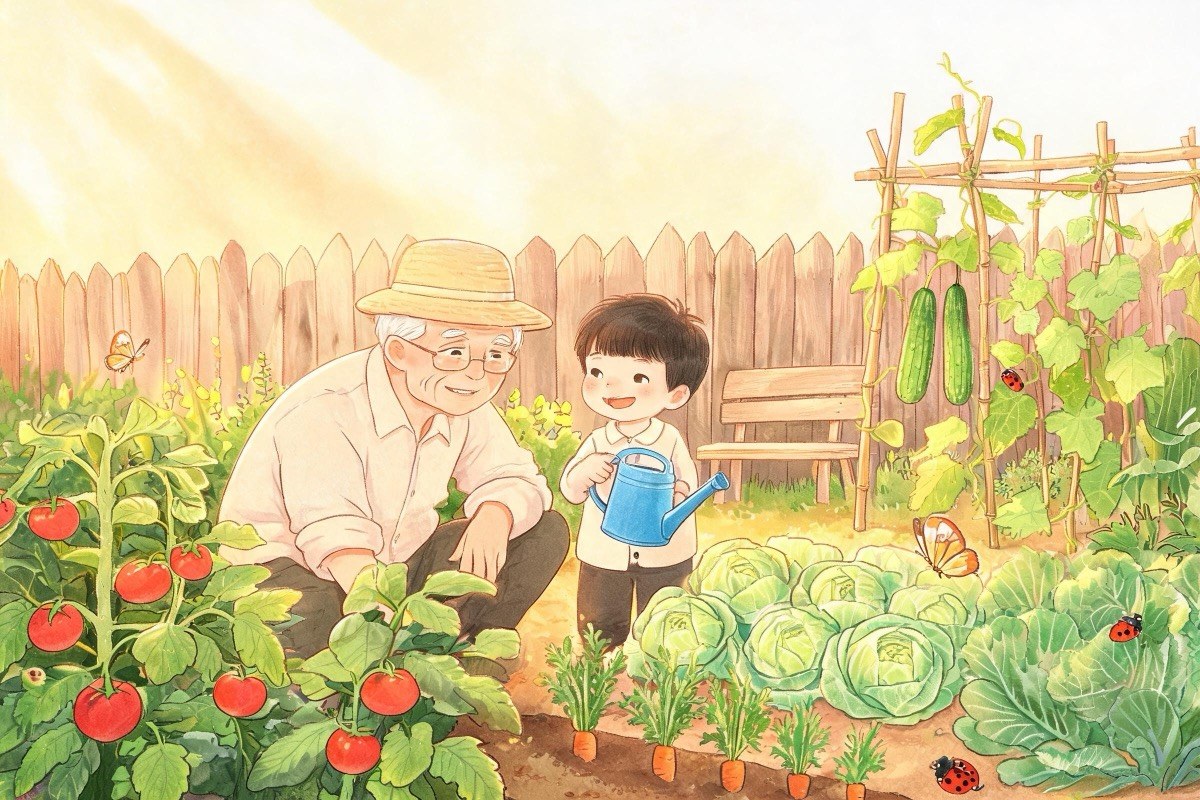
爷爷种菜,慢得让人着急。播种前,他要翻两遍地,沤一冬的肥,还要看三天的天气。我催他,早点种下早点收嘛。他不答,只把土块捏碎,一颗一颗摆匀。播种之后,他每天早晚各绕畦一圈,看土的颜色,看芽的动静,从不伸手扒土。他等发芽的样子,像等一个信得过的朋友赴约,笃定,不急。
除草浇水,是他一天里最不动声色的部分。他除草不连根拔大草,只割去上面的叶,留根在土里慢慢烂掉肥田;浇水不漫灌,一瓢一瓢顺着畦沟走。我问为什么这么费事,他说,地是要种一辈子的,不能图快把它亏待了。他做这些事的时候没有表情,像呼吸一样自然。一个月里,他一天没缺过,也一天没加过班似的卖力。慢,但是不停。
九月底,那畦白菜收了三筐。邻居来帮忙搬,打趣说,老哥你这菜长得比谁家都齐整。爷爷抽烟,笑而不答。我在旁边心里一震:原来他一点都没误过农时。翻地、点种、间苗、追肥,每一样都比别人提前半步,只是那半步藏在看不见的地方。他的慢不是迟钝,是把力气花在别人看不见的地方;他的快也不喧哗,是到时候自然全都到位。
那天晚上我想了很久,想到我那些半途而废的兴趣班。我每次都是在最慢、最重复的阶段离开的——练琴的音阶,素描的线条,长跑的极点。我以为那些是通往乐趣的障碍,原来那些就是乐趣本身,就像爷爷的除草浇水,不是种菜的代价,种菜本来就是除草浇水。想跳过过程直接要收获的人,收获也会跳过他。
这学期我重新报了吉他,跟自己约法三章:最难听的那三个月,不许退。现在正是最难听的三个月,手指疼,曲子碎,可我每天练四十分钟,像爷爷绕畦一圈。我不催自己,我知道根先在下面走。等有一天我弹出完整的曲子,那不会是一夜之间的事,那是每天四十分钟攒出来的。爷爷的慢,是一种快;因为它把快拆成了每一天,藏在谁也抢不走的地方。
The Slow of Grandfather Is a Kind of Fast
Since childhood I have had one flaw: I start fast and finish fast too. I enrolled in five hobby classes, and the longest I lasted was three months. Everyone called me a three-minute enthusiasm kind of person, and I admitted it myself. It was not until the summer vacation of the second year of middle school, when I stayed a month in grandfather of the garden, that I first understood another way of living — the slowness of grandfather.
Grandfather grows vegetables so slowly it makes people anxious. Before sowing he plows the land twice, composts fertilizer over a whole winter, and watches the weather for three days. I urge him, plant early and harvest early. He does not answer, only crumbles the clods and sets the seeds evenly, one by one. After sowing, he walks one round of the bed every morning and evening, watching the color of the soil and the doings of the sprouts, never digging with his hands. The way he waits for germination is like waiting for a trusted friend to keep an appointment: sure, unhurried.
Weeding and watering are the most unobtrusive parts of his day. When weeding he does not yank out the big grass by the roots; he cuts off the leaves above and leaves the roots in the soil to rot slowly into fertility. He does not flood the beds; he pours ladle by ladle along the furrows. I ask why so much fuss, and he says, the land is to be farmed for a lifetime; one must not cheat it for the sake of speed. His face shows nothing while he works, as natural as breathing. In a whole month he missed not one day, and never labored as if working overtime. Slow, but never stopping.
At the end of September, that bed of cabbages yielded three baskets. A neighbor came to help carry them, teasing, brother, your vegetables grow tidier than anyone of the village. Grandfather smokes and smiles without answering. Watching from the side, my heart shook: he had not missed a single farming season. Plowing, sowing, thinning, top-dressing, every step half a pace ahead of others, only those half paces were hidden where no one sees. His slowness is not dullness; it is spending strength where others cannot see. His speed makes no noise either; when the time comes, everything simply arrives.
That night I thought for a long time, thinking of my abandoned hobby classes. Each time I left at the slowest, most repetitive stage — the scales in piano practice, the lines in sketching, the wall in long-distance running. I had taken those for obstacles on the road to fun; it turns out those are the fun itself, just as the weeding and watering of grandfather are not the price of farming — farming is weeding and watering. A person who wants to skip the process and claim the harvest directly will also be skipped by the harvest.
This term I enrolled in guitar again, making three rules with myself: during the three ugliest months, no quitting. Now is exactly the three ugliest months; my fingers ache, the tunes break to pieces, yet I practice forty minutes every day, like grandfather walking his round of the bed. I do not urge myself; I know the roots travel below first. Someday when I play a whole piece, it will not have happened overnight; it will have been saved up forty minutes at a time. The slowness of grandfather is a kind of fast, because it dismantles fastness into every single day, hidden in a place no one can take away.
小提示:上面此文档内容仅展示完整文档里的部分内容, 若需要下载完整文档请 点击免费下载完整文档 。