文章内容
我家屋后的菜园长成了我的作文
以前一写作文,我就咬着笔杆,对着空白本子发半天呆,脑子里一个字也蹦不出来。老师说要写身边的事,可我总觉得自己的日子平淡得像一只洗干净的盘子,没什么可写的。是屋后那片菜园,让我改了想法。
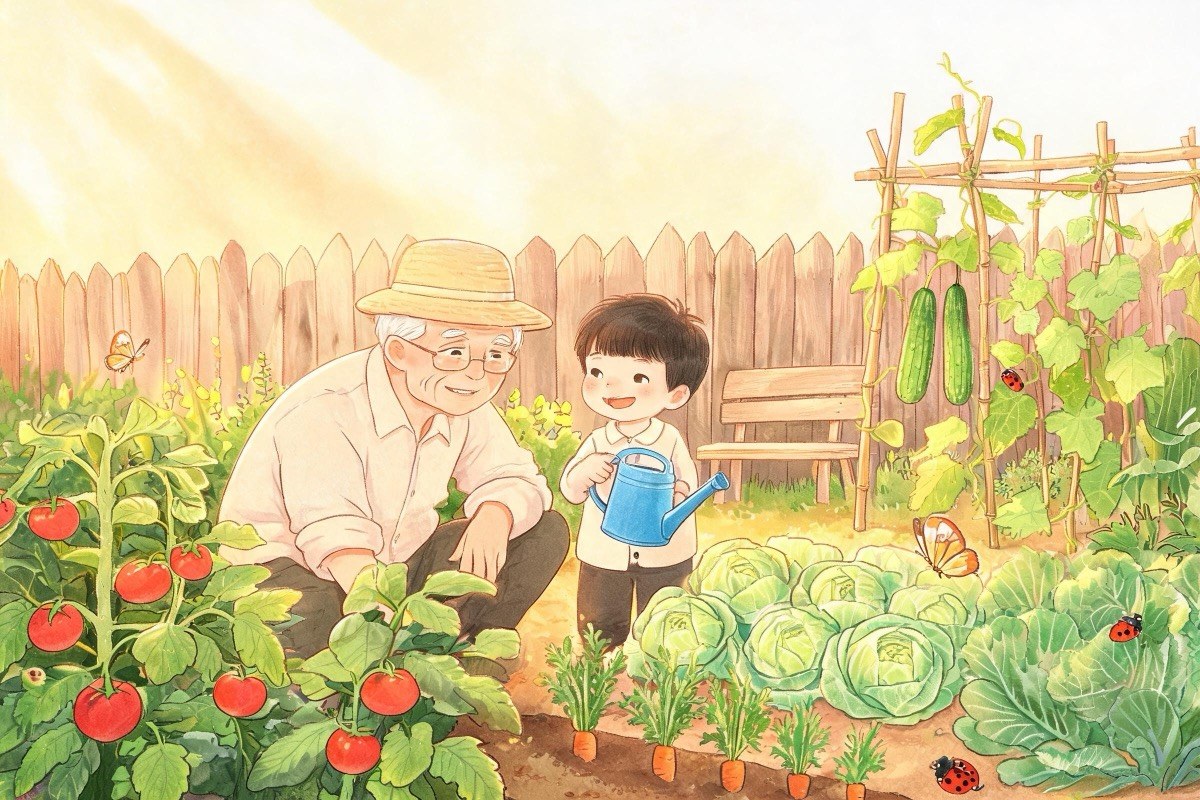
爷爷在屋后侍弄一小块地,好多年了。小时候我跟着去菜园,只觉得是拔草,无聊得很。那年秋天,周记布置写观察,我憋着气往菜园走,想着随便看一眼就回家。可蹲在萝卜地边上,我发现以前没见过的东西:白萝卜的叶子上有一层细绒毛,太阳斜着照过来,叶尖亮着一圈光。一只七星瓢虫沿着叶脉爬,爬两步停一停,又飞走了。我天天从这块地边走过,却从来没有这样仔细看过它。
我跑回家喊爷爷,说萝卜长毛了。爷爷笑:你能看出这个,算有眼睛。明天再来看看。第二天我真去了,还带上一本旧本子,记下日期、天气、萝卜有几片叶子。第三天,我看见萝卜根部的土裂开一小道缝,像是萝卜在土里一点一点往上拱。拔出来一根,沉甸甸的,带着泥的尾巴用指甲一刮,露出白白的一截。爷爷说,这茬能吃啦。那天晚上,桌上是一盘肉末萝卜丝,我吃了两碗饭。
后来的七八天,我的旧本子记满了:瓢虫、白霜、裂开的土、萝卜的味道、爷爷握锄头的手,还有风把韭菜吹得东倒西歪的样子。作文那天,我没有再咬笔杆。我把本子上的记录一条一条抄到作文纸上,加上自己的想法,一篇《爷爷菜园里的白萝卜》一气写完。
第二天的语文课上,老师把我的作文念给全班听。她说:这篇有细节,看得出作者是真看过、真生活过的。我坐在座位上,耳朵有点发烫,心里却偷偷地高兴。放学我跑到菜园跟爷爷说,爷爷正浇水,头也不回:菜园就在那儿,又不会跑,你肯看,它就肯给你。
现在每次不知道写什么,我就会想起屋后那块小菜地。原来日子不是平淡,是我看得太少、太粗。作文里的话不是搜肠刮肚找出来的,它们像地里的白萝卜一样,是长出来的。只要你肯蹲下来,认真看一眼,它们就在那里。
The Vegetable Garden Behind Our House Grew Into My Composition
Once, whenever a composition was assigned, I would bite the end of my pencil and stare at the blank paper for half an hour, unable to think of a single word. The teacher said to write about life close at hand, but I felt my own days were as flat as a washed plate. It was the vegetable garden behind our house that changed my mind.
My grandpa has tilled a small plot behind our house for years. As a child, I thought going to the garden only meant pulling weeds, which was boring. That autumn week, the teacher assigned an observation piece, and I walked to the garden sulking, planning to glance once and go home. But crouching beside the radish patch, I saw things I had never noticed: the white radish leaves had a fine fuzz, and in the slanting sunlight the leaf tips glowed with a ring of light. A ladybug crawled along a leaf vein, stopped twice, then flew away. I passed this patch every single day and had never looked at it this closely.
I ran home and shouted that the radishes had grown hair. Grandpa laughed and said that if I could see that, I had eyes worth using, and told me to come look again tomorrow. I did, and I brought an old exercise book, writing down the date, the weather, and how many leaves each radish had. On the third day I saw the soil at the base of a radish split open a little crack, as if the radish were pushing itself up inch by inch underground. I pulled one out, heavy in my hand, its muddy tail turning pure white where my fingernail scraped it. Grandpa said this batch was ready to eat. That night dinner had shredded radish with minced meat, and I finished two bowls of rice.
Over the next seven or eight days the old exercise book filled up: the ladybug, the white frost, the cracked soil, the taste of the radish, the hands of my grandpa on the hoe, and the chives blown crooked by the wind. On composition day I no longer bit my pencil. I copied the records one by one onto composition paper, added my own thoughts, and finished the piece in one go.
The next day in language class the teacher read my composition to the whole class. She said it had details, and that you could tell the writer had truly looked and truly lived. My ears went hot, but inside I was quietly glad. After school I ran to the garden to tell grandpa. He was watering, head not even turned: the garden is right there, it will not run away; if you are willing to look, it is willing to give.
Now whenever I cannot think of what to write, I think of that little plot behind our house. Life was never flat; I had simply looked at too little, too carelessly. The words of a composition are not hunted out of an empty head. They grow, like white radishes in the soil. Squat down and look once with care, and they are already there.
书包里那个记菜园的小红本
上初中以后,语文老师要求每周一篇周记。头几个星期,我坐在书桌前翻来覆去地想,写来写去就是上学、吃饭、睡觉,连我自己都不想看第二遍。后来是爷爷的菜园,救了我的周记,也救了我那篇寒假大作文。
转折是从一个小红本开始的。那个周末去乡下,爷爷在菜园里给蚕豆培土,我蹲在田埂上玩手机。爷爷递过来一个红皮小本和一支铅笔:你闲着也是闲着,回去的路上记一样东西,今天你在菜园里看到的。我嘟囔着接过来,想了想,记了一句:蚕豆苗矮矮的,叶子边上卷着,土埋到脖子。就这一句,交差了。
没想到第二个周末,我自己从书包里摸出了那个小红本。那天下了小雨,菜园里的泥是黑的、亮的,蚯蚓爬到路面又慌慌张张钻回去,白菜叶上的雨珠滚来滚去,就是不散。我蹲在那里记了大半页,记完才发现手上有泥,鞋也湿了,可心里是满的。从那以后,小红本一直塞在书包夹层里,去一次菜园就记一条:丝瓜的卷须往哪边绕,蚂蚱从哪片叶子上跳起来,爷爷的草帽为什么有一道裂口用胶带粘着。
寒假作业里有一篇大作文,题目是《一种植物》。班里同学写兰花的、写仙人掌的都有,我坐在桌前翻开小红本,一条一条看过去,看到去年冬天那条:霜下了,别的菜都蔫了,蚕豆苗还直着腰,叶子上那层白霜一化,绿得发亮。我就写它。写蚕豆怎么在冷天里站着,写爷爷说蚕豆是笨作物,不用管,自己会过冬,写开春时它开出带紫边的白花,花心里藏着一小滴蜜。那篇作文我写得又快又顺,像有人把话递到我嘴边。
作文发下来,老师在末尾写了一行批语:有生活的气息,读得到泥土味。我把那行字看了三遍。放学骑车去乡下,跟爷爷晃本子,爷爷翻开看,看得比我还慢,半天说了一句:记东西好,记下来的东西不会丢。
现在我书包里那个小红本已经写满了,边角都起了毛。它里面没有一句好词好句,全是蚕豆、蚯蚓、霜、草帽这类不起眼的东西。可我知道,等哪天要写点什么,它们都在。那些字不是我想出来的,是菜园一片叶子一片叶子交给我的。
The Little Red Notebook in My Schoolbag
After entering middle school, the language teacher required a weekly journal entry. For the first few weeks I tossed and turned at my desk, and whatever I wrote came down to school, meals, and sleep; even I did not want to read it twice. In the end it was grandpa vegetable garden that saved my journal, and also saved that big composition assigned over winter break.
The turning point began with a little red notebook. That weekend in the countryside, grandpa was hilling soil around the fava beans while I squatted on the ridge playing on my phone. He handed me a small red-covered book and a pencil: since you are idle anyway, on the way home write down one thing you saw in the garden today. I grumbled, took it, thought for a moment, and wrote one line: the fava bean seedlings are short, the leaf edges curl, and the soil is mounded up to their necks. One line, and the job was done.
I did not expect that the next weekend I would dig the red notebook out of my schoolbag on my own. It had drizzled that day; the mud in the garden was black and glossy, earthworms crawled onto the path and hurried back in, and rain beads rolled on the cabbage leaves without scattering. I crouched and filled most of a page, and only finished noticing the mud on my hands and the wet shoes when I stood up, though my heart felt full. After that the red notebook stayed in the hidden pocket of my schoolbag, and one entry went in for every visit: which way the loofah tendrils coil, from which leaf a grasshopper jumps, why the straw hat of my grandpa has a crack patched with tape.
The winter break homework included a long composition titled one plant. Classmates wrote about orchids and cacti. I sat at my desk, opened the red notebook, read entry by entry, and came to the line from last winter: frost fell, other vegetables wilted, but the fava bean seedlings still stood straight, and when the white frost on their leaves melted they turned a shining green. I wrote about that. I wrote how fava beans stand through cold days, how grandpa calls the fava bean a plain crop that needs no tending and survives winter on its own, and how in spring it opens white flowers edged with purple, each blossom hiding a tiny drop of nectar. That composition came out fast and smooth, as if someone were passing the words to my lips.
When the papers came back, the teacher had written one line at the end: it carries the breath of real life; you can smell the soil through it. I read that line three times. After school I rode my bike to the countryside and waved the notebook at grandpa. He opened it and read more slowly than I did, and after a long while said: keeping records is good; what you write down will not get lost.
Now the red notebook in my schoolbag is full, its corners frayed. Not one line in it is a fine phrase; it is all fava beans, earthworms, frost, straw hats, and other unremarkable things. But I know that whenever I need to write something, they are all there. Those words were not invented in my head; the garden handed them to me leaf by leaf.
小提示:上面此文档内容仅展示完整文档里的部分内容, 若需要下载完整文档请 点击免费下载完整文档 。