文章内容
移栽的辣椒死了,我重栽了一回
初二下学期的月考,数学我考砸了,六十八分。卷子发下来那天,我把它塞进书包最底层,一路上想着怎么跟我妈开口。回到家,正好赶上五一放假,我跟着爷爷去菜园移栽辣椒苗,心里乱成一团,手上的活也敷衍。
爷爷头天晚上把苗起了,根上带着土坨,让我栽。我嫌蹲着累,栽得又浅又直,土也不压实,一炷香的功夫栽完三十棵,站起来腿麻得差点摔倒。爷爷蹲下去挨个看,没说我,只是把我栽的苗一棵棵拔出来,重新挖坑,把土坨坐实,浇上定根水。他在后头重栽,我在前头看着,半天问一句:都活了?他说:有一半悬,根没坐实,苗自己缓不过来。
结果真让他说中了。过了一个星期,我栽的那三十棵蔫了二十多棵,地里东倒西歪一片。我蹲在地边,又懊恼又委屈:明明是我栽的,怎么全死了?爷爷递给我一把小锄:死掉的拔了,坑重新晒一晒,再栽一茬。我抬头:还来得及?他说:辣椒生长期长,现在补栽,秋天照样摘。就是这一茬要你自己从头管到尾。
那半个月我天天往地里跑。补栽的苗我照着爷爷的样子栽,坑挖深,土坨坐实,定根水浇透,傍晚再去看一眼。有一场倒春寒似的冷雨,我半夜想起来没盖膜,跑出去跟爷爷一起给苗盖上旧塑料布。慢慢地,新栽的苗一棵棵立起来了,叶心冒出嫩绿的新叶。我数过,补栽的二十八棵,活了二十六棵。
那天蹲在活过来的辣椒地边,我忽然想起书包底层那张六十八分的卷子。辣椒死了能补栽,只要季节没过去;我这才初二,一次月考算什么季节?我死掉的只是几道二次函数的题,根子没坐实——概念没吃透,练习浮在面上。爷爷种地从不骂死掉的苗,他只问:坑挖够了没有,土压实了没有。
回家我把那张卷子从书包底层抽出来,平铺在桌上,一道一道重做,错的题把概念翻回课本重新啃。期中考到八十四分,不算多好,但每一分都坐得实。现在每当我想放弃哪件事,就想起菜园里那二十六棵辣椒。它们用一整个夏天的挂果告诉我:死掉不可怕,怕的是不敢重栽。
The Transplanted Peppers Died, and I Planted Them Again
In the monthly exam of the second term of eighth grade, I failed math badly: sixty-eight points. The day the paper came back, I stuffed it at the bottom of my schoolbag and all the way home kept wondering how to bring it up to my mother. It happened to be the May Day holiday, and I followed grandpa to the garden to transplant pepper seedlings, my mind in a mess, my hands going through the motions.
Grandpa had lifted the seedlings the night before, soil clumps hugging their roots, and let me plant. Hating to squat, I planted shallow and straight, tamping nothing down, finishing thirty seedlings in the time of an incense stick, then nearly falling over as my numb legs stood up. Grandpa crouched and inspected them one by one. He said nothing to me, only pulled up each seedling I had set, redug the holes, settled the soil clumps firm, and watered them in with rooting water. He replanted behind me while I watched ahead, and after a while I asked: will they all live? He said: half of them are doubtful; roots not settled, the seedlings cannot recover on their own.
He proved right. A week later, more than twenty of my thirty seedlings had wilted, a field of them leaning every which way. I crouched at the edge, torn between regret and grievance: I planted them with my own hands, why did they all die? Grandpa handed me a small hoe: pull the dead ones, let the holes sun a while, and plant another round. I looked up: is it still in time? He said: peppers have a long growing season; replant now and you still pick in autumn. Only this round you manage yourself from start to finish.
For half a month I ran to the plot every day. I planted the replacements the way grandpa showed: holes deep, clumps settled, rooting water soaked through, and one more look in the evening. One cold spring rain came like a late frost; at midnight I remembered the film was not on and ran out to cover the seedlings with an old plastic sheet alongside grandpa. Slowly, the new seedlings stood up one by one, tender green young leaves emerging at their hearts. I counted: of the twenty-eight replanted, twenty-six lived.
Crouching beside the revived pepper patch that day, the sixty-eight-point paper at the bottom of my schoolbag suddenly came back to me. Dead peppers can be replanted as long as the season has not passed; I am only in eighth grade, what season is one monthly exam? What died were a few quadratic function problems, and the roots were not settled: concepts not chewed through, practice floating on the surface. Grandpa never scolds a dead seedling; he only asks whether the hole was dug deep enough and the soil tamped firm enough.
Back home I pulled that sixty-eight-point paper out of the bottom of the bag, spread it flat on the desk, and redid problem after problem, going back to the textbook to gnaw at the concepts behind each error. I got eighty-four on the midterms, not outstanding, but every point sat on firm ground. Now whenever I feel like giving up on something, I think of those twenty-six pepper plants in the garden. Through a whole summer of fruit, they told me: dying is not what to fear; what to fear is not daring to replant.
那架丝瓜教会我别跟难题绕路
初三开学前那个暑假,爷爷的丝瓜架出了个难题,也解开了我心里另一个难题。
那阵子我在补物理,电学和力学搅在一起,越学越烦。一遇到难题我就绕:看两分钟没头绪,就翻答案,看不懂就跳过,反正作业对付完了。我妈说我这是假用功,我顶嘴说我学了,其实心里清楚,我专挑自己会做的题做,难的绕着走。
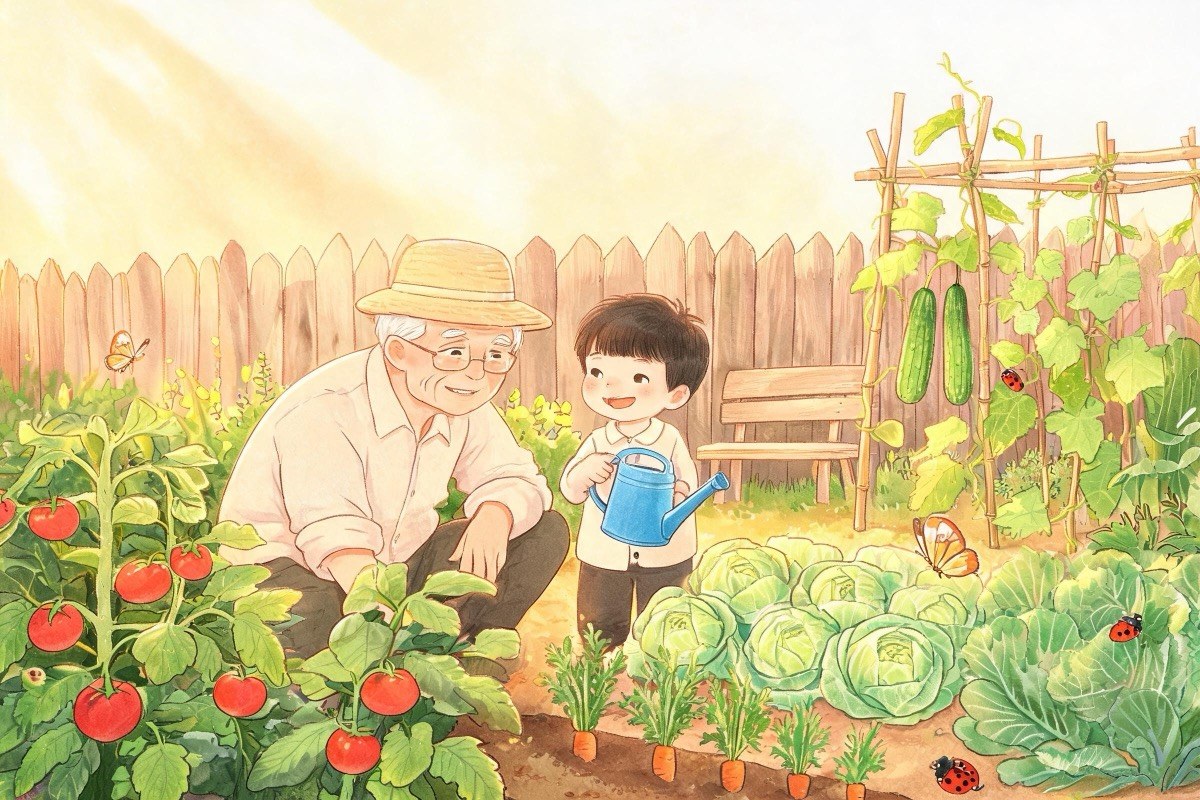
菜园里那排丝瓜,爷爷插的竹架一人多高。有一根藤不知怎么搞的,爬到半架就往下垂,眼看要在地上趴着长。我心疼它,找了根布条想把藤拉直绑上架,爷爷一把按住我的手:别绑,它自己会找。我不服气:它往下垂,再不帮就废了。爷爷蹲下来指着藤尖给我看:你看它的卷须,往哪边探。我凑近看,那些细卷须真的在空中一圈一圈地探,碰到竹竿就缠上去,缠得紧紧的。垂下来的那段藤,第二天早上竟然自己拐了个弯,卷须够到了一根横竿,整根藤又抬起了头。
爷爷说:你替它爬,它自己的卷须就废了,风一吹全塌。它自己一圈一圈探出来的架,八级风也吹不落。我站在架下看了半天,脸上有点烧。我学物理,就是在替丝瓜爬架:答案一翻,难题就绕过去了,我的脑子没有探过,没有缠上过。题目做没做对像藤直不直,可卷须废没废,只有风来了才知道——考试就是那场风。
开学后我改了办法。物理难题先给自己一刻钟,像卷须一样一圈一圈探:画受力图、列已知条件、翻回课本找对应的公式,探到缠上为止。头一个星期慢得吓人,一道题耗半小时,可缠上之后那种踏实,跟抄答案完全两回事。第一次月考物理四十七分,第二次五十六,中考我物理考了全班第五。
毕业前的周末我回乡下,丝瓜架上挂着七八根老丝瓜,爷爷留作种子,藤还缠在架上,一圈一圈的卷须把竹竿箍得死死的。爷爷摘了一根给我妈煮汤。我坐在架下,看那些卷须,忽然明白:学习没有绕路的藤,每一道难题都是我的竹竿,我的脑子得自己一圈一圈缠上去。这是菜园教我的,比任何补习班都管用。
That Loofah Trellis Taught Me Not to Dodge Hard Problems
That summer before ninth grade started, grandpa loofah trellis posed a problem in the garden, and it untangled another problem inside my heart.
Around that time I was catching up on physics, electricity and mechanics tangled together, and the more I studied the more frustrated I got. Whenever a hard problem appeared I dodged it: two minutes without a clue, I flipped to the answer; if I could not follow it, I skipped it, and the homework got finished one way or another. My mother said I was studying in appearance only. I talked back that I did study, while inside I knew the truth: I picked only problems I could do and walked around the hard ones.
In the garden stood a row of loofah trellises of bamboo, taller than a person. One vine, for some reason, drooped downward halfway up the frame, about to sprawl and grow along the ground. Feeling sorry for it, I found a cloth strip to pull the vine straight and tie it to the frame. Grandpa caught my hand: do not tie it; it will find its own way. I objected: it is drooping; without help it is ruined. Grandpa crouched and pointed at the vine tip: look at its tendrils, which way they reach. I leaned in. The fine tendrils really were feeling around in the air, circling, and wherever they touched a bamboo pole they coiled on tight. The drooping section, by the next morning, had bent a corner on its own; a tendril had reached a crossbar, and the whole vine lifted its head again.
Grandpa said: if you climb for it, its own tendrils go useless, and one wind brings it all down. A frame the vine found itself, circling and circling, no gale can shake it off. I stood under the trellis a long while, my face burning. My physics study was exactly someone climbing the trellis for the vine: flip the answer and the hard problem was bypassed; my brain had never felt around, never coiled onto anything. Whether the problem looked done was like whether the vine looked straight, but whether the tendrils went useless only the wind can tell, and an exam is that wind.
After school started I changed my method. For a hard physics problem I gave myself fifteen minutes to feel around like a tendril: draw the force diagram, list the knowns, go back to the textbook for the matching formula, keep circling until it coils on. The first week was frighteningly slow, half an hour on one problem, but the solidity after it coiled on was a different thing from copying answers altogether. The first monthly test in physics I got forty-seven; the second, fifty-six; on the entrance exam my physics ranked fifth in the class.
The weekend before graduation I went back to the countryside. Seven or eight old loofahs hung on the trellis, kept by grandpa for seed, the vine still coiled around the frame, its rings of tendrils gripping the bamboo tight. Grandpa picked one for my mother to make soup. Sitting under the trellis watching those tendrils, it came to me: in study there is no vine that takes a detour; every hard problem is my bamboo pole, and my brain must coil onto it ring by ring itself. The garden taught me this, and it works better than any cram school.
小提示:上面此文档内容仅展示完整文档里的部分内容, 若需要下载完整文档请 点击免费下载完整文档 。