文章内容
手磨红的那天,我懂了珍惜
暑假第一周,妈妈把我送到乡下爷爷家,说让我体验体验劳动。我嘴上答应,心里想,劳动有什么难的,不就是种种菜嘛。没想到第一个上午,劳动就给我上了一课。
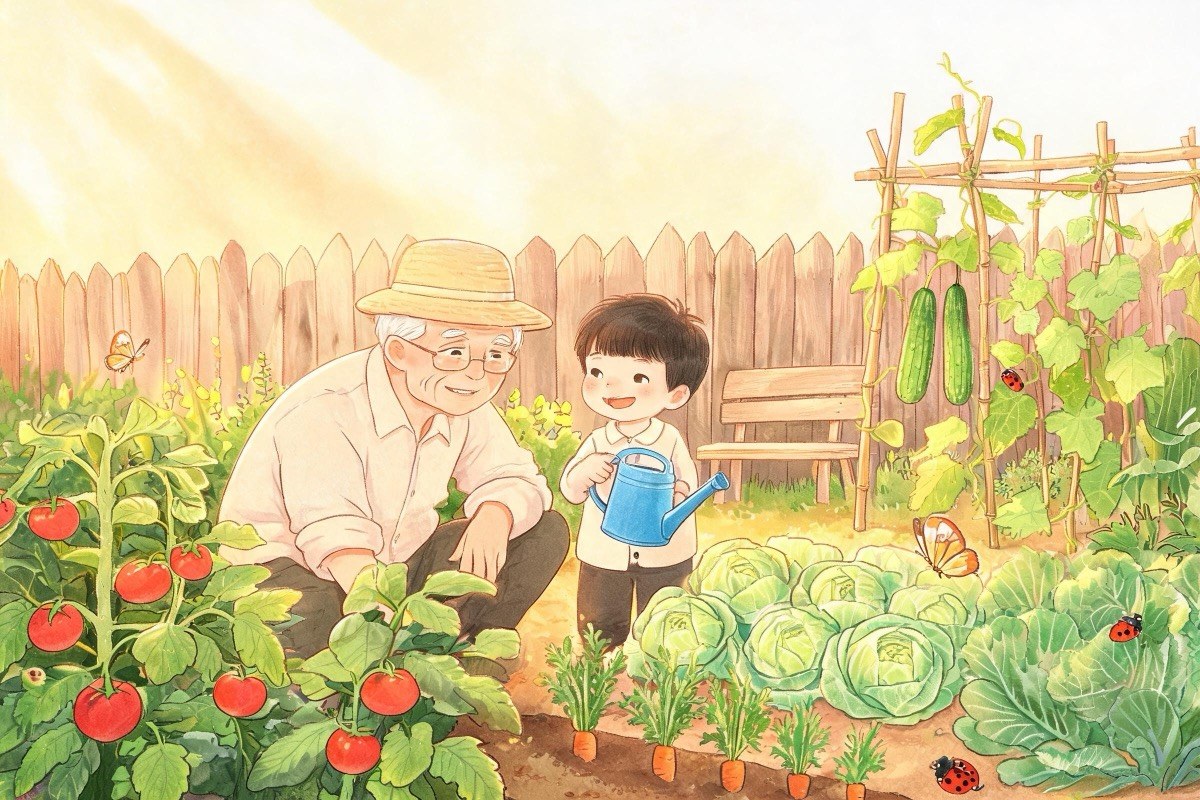
那天早上六点多,爷爷就喊我起来浇菜。他递给我一只绿色的小水壶,让我去井边打水。我提着空壶跑去,觉得轻飘飘的,还顺路踢了一颗小石子。等灌满水再提起来,壶身子直往下坠,像壶里装了一整条小河。我两只手攥紧提手,走几步就得换一次手,水洒出来一半,浇在畦外的土路上。
爷爷没笑话我,只是把壶接过去,又递给我一把小锄头,让我帮着松土。我学着他的样子,锄头举起来,落下去。第一下用力太猛,锄头啃进土里,震得我虎口发麻。第二下我学乖了,可锄头把在我手心里磨来磨去。到第九下第十下,我低头一看,两只手的虎口和掌心都磨得通红,红得像抹了胭脂,碰一下菜叶子都钻心地疼。
我坐在田埂上不想干了。爷爷也不催,他蹲在畦边,一锄一锄,慢得很稳。他的手掌我见过,全是硬茧,冬天还会裂口子。他种了一辈子菜,手才磨成那样。我忽然有点不好意思,站起来拍拍土,接着干。手疼,我就换手,一上午把六条畦都浇完了。
晚上吃饭,奶奶炒了一盘青菜,就是上午我浇过水的那一畦。我夹了一筷子,忽然觉得格外甜,格外香。以前在城里,青菜我总不爱吃,挑两筷子就推开。那天我却把一盘吃得差不多干净。奶奶笑我胃口好,我心里清楚,不是胃口变了,是这盘菜里有我的一上午,有我磨红的双手,有我洒了又浇的那半壶水。
睡觉前,我把手伸到台灯底下看,红印子还没消,掌心有点肿。我盯着看了很久,忽然想起老师教过的那句诗,谁知盘中餐,粒粒皆辛苦。以前背它是为了交作业,那天晚上,它是真的背进心里去了。原来我们每天吃的每一粒米、每一棵菜,背后都是一双磨红的手,都是弯下去又直起来的腰。
后来在爷爷家的日子,我每天早上都去浇菜。手上的红印子消了又起,起了又消,最后变成薄薄的一层茧。我不再觉得那是疼,我觉得那是菜园发给我的奖章。从那以后,碗里的饭我再也没剩过,掉在桌上的米粒,我也会捡起来吃掉。因为我知道,珍惜这两个字不是喊出来的,是手磨红之后,自己懂了的。
The Day My Hands Were Rubbed Red, I Learned to Cherish
In the first week of summer vacation, mother sent me to grandfather of the village, saying let me experience labor. I agreed with my mouth, thinking in my heart, how hard can labor be, it is just growing vegetables. I did not expect that on the very first morning, labor would give me a lesson.
It was past six when grandfather called me up to water the vegetables. He handed me a little green watering can and told me to fetch water at the well. I ran off with the empty can, light as a feather, even kicking a pebble on the way. When I lifted it filled with water, the body of the can pulled straight down, as if a whole small river had been poured into it. I gripped the handle with both hands, changed hands every few steps, and half the water spilled out, watering the path outside the beds instead.
Grandfather did not laugh at me. He only took the can back and handed me a small hoe to loosen the soil. I copied him: raise the hoe, let it fall. The first stroke was too violent; the hoe bit into the soil and numbed the gap of my thumb. On the second stroke I tried to be clever, but the handle rubbed back and forth in my palm. By the ninth and tenth strokes, I looked down and saw the webbed parts and palms of both hands rubbed bright red, red as if painted with rouge, and even touching a vegetable leaf stung.
I sat on the ridge and did not want to work anymore. Grandfather did not urge me; he squatted by the bed, one stroke after another, slow and steady. I had seen his palms, all hard callus, cracking in winter. He had grown vegetables a whole lifetime to get hands like that. I suddenly felt ashamed, stood up, dusted off my pants, and went on. When one hand hurt, I switched to the other, and finished watering all six beds before noon.
At supper grandmother stir-fried a plate of greens from the very bed I had watered that morning. I took one chopstick and suddenly found it unusually sweet and fragrant. In the city I never liked greens; I would pick at two bites and push the plate away. That day I cleaned the whole plate almost by myself. Grandmother laughed at my appetite, but I knew clearly it was not the appetite that changed: that plate held my whole morning, my rubbed-red hands, and the half can of water I spilled and then poured.
Before bed I put my hands under the lamp. The red marks had not faded, and my palms were a little swollen. I stared at them for a long time and suddenly remembered the line our teacher taught: every grain in the bowl comes from hard toil. Before, I recited it to finish homework; that night it was truly recited into my heart. Every grain of rice and every vegetable we eat stands before a pair of red-rubbed hands, before a back that bends down and straightens up again.
In the days that followed at grandfather of home, I went to water the vegetables every morning. The red marks on my hands faded and rose again, and at last became a thin layer of callus. I no longer felt them as pain; I felt them as medals the garden awarded me. Since then I have never left rice in my bowl, and if a grain falls on the table I pick it up and eat it. Because I know now that the word cherish is not shouted; it is understood by oneself after the hands are rubbed red.
一碗剩饭引发的劳动课
那天中午,我在碗里剩了小半碗饭。妈妈让我吃完,我嫌饭硬,趁她转身,把饭倒进了泔水桶。这一切被爷爷看见了。我以为他要骂我,他没有。他只是放下筷子说,走,跟我去菜园。
七月的菜园像个蒸笼。爷爷交给我一只水桶,让我从井里打水浇那三畦刚移栽的青菜。第一桶,我摇摇晃晃提进菜园,水泼掉小半,浇在菜苗脚边。第二桶,胳膊开始发酸,肩膀被桶梁勒出一道白印。第三桶,我几乎是拖着走的,两条腿像灌了铅。三桶水浇完,我瘫坐在南瓜架底下,衣服湿透,像刚从河里捞出来。
爷爷又让我去拔草。青菜畦里的草和菜苗长得像双胞胎,我蹲下去,揪一把,再蹲下去,再揪一把。日头爬到头顶,草叶上的刺划着手,锄头把磨着虎口。收工的时候,我右手虎口磨得通红,中间还鼓起一个亮晶晶的水泡。爷爷用针帮我把水泡挑破,涂上药,什么也没说。
晚上,他把中午那碗饭重新盛了出来——不,是重新蒸的一碗,摆在我面前。米粒白白胖胖,冒着热气。爷爷说,饿了一天了吧,吃。我端起碗,第一口下去,我愣住了:平常寡淡的白米饭,那天甜得像糯米。我一口一口把那碗饭吃得干干净净,连碗底的几粒都用筷子追着送进嘴里。吃的时候,我想起井边的三桶水,想起通红的水泡,想起爷爷那双裂了口子的手。原来我们倒掉的每一口饭,都是别人这样一桶水一桶水、一锄头一锄头换来的。
那天晚上我在日记本上写:以前背锄禾日当午,只觉得顺口;今天背它,嗓子发紧。粮食来之不易,这六个字以前是作文里的,今天长在我的手上了。手磨红的地方一碰就疼,每疼一次,我就想起那三桶水,想起泔水桶里我那半碗白白胖胖的饭。
后来我再也没倒过一口饭。在学校食堂,同学把咬了一口的馒头扔掉,我看见了,心里像被针扎一下。我鼓起勇气对他说,这个还能吃,我帮你吃了吧。同学瞪大眼睛,我的脸也红了,可我不觉得难为情。爷爷听说以后,笑了,只说了一句,菜园没白去。
现在每当有人问我,什么是珍惜。我会伸出右手,给他看虎口上那块淡淡的印子。它不疼了,但它一直在提醒我:一碗饭很轻,可把它种出来、浇出来、收回来,很重。珍惜粮食,不用讲大道理,从把碗里的最后一口饭吃干净开始,就从今天这一口开始。
A Labor Lesson Started by a Bowl of Leftover Rice
At noon that day I left half a bowl of rice in my bowl. Mother told me to finish it, but I found the rice too hard, and while she turned away I poured it into the swill bucket. Grandfather saw all of it. I expected him to scold me. He did not. He only set down his chopsticks and said, come, go with me to the garden.
The garden in July was like a steamer. Grandfather handed me a bucket and told me to draw water from the well and water the three beds of greens just transplanted. With the first bucket I staggered into the garden, sloshing away nearly half, watering the feet of the seedlings. With the second, my arms began to ache, and the bail of the bucket carved a white line across my shoulder. With the third I almost dragged it along, my legs filled with lead. After three buckets I collapsed under the pumpkin trellis, soaked through, as if just pulled out of a river.
Then grandfather set me to pulling weeds. The weeds in the cabbage beds looked like twins of the seedlings. I squatted, pulled a handful, squatted again, pulled again. The sun climbed overhead; the burrs of grass scratched my hands, and the hoe handle rubbed the web of my thumb. At quitting time the web of my right hand was rubbed bright red, with a shiny blister swelling in the middle. Grandfather pricked the blister with a needle, applied medicine, and said nothing.
At night he served out a bowl of rice — no, a bowl freshly steamed — and set it before me. The grains were white and plump, breathing steam. Grandfather said, you have been hungry all day, eat. I lifted the bowl, and at the first mouthful I froze: the plain white rice of ordinary days tasted that day as sweet as glutinous rice. Bite by bite I cleaned the whole bowl, chasing the last few grains at the bottom into my mouth with my chopsticks. As I ate, I thought of the three buckets at the well, the red blister, the cracked hands of grandfather. So every mouthful of rice we throw away was bought by someone with bucket after bucket of water, stroke after stroke of the hoe.
That night I wrote in my diary: before, reciting the poem about hoeing at noon felt only smooth on the tongue; today reciting it tightened my throat. Grain comes hard, six characters that used to belong to compositions, today grown onto my own hands. The rubbed-red spot aches at a touch, and each ache reminds me of those three buckets, and of my half bowl of white plump rice in the swill bucket.
Since then I have never poured out a single mouthful of rice. At the school canteen, when a classmate threw away a steamed bun with one bite taken, my heart pricked as if by a needle. I mustered courage and said to him, this is still edible, let me finish it for you. He stared at me, my face went red too, but I did not feel ashamed. When grandfather heard about it, he smiled and said only one line: the garden trip was not wasted.
Now whenever someone asks me what cherishing means, I hold out my right hand and show them the faint mark on the web of my thumb. It no longer hurts, but it keeps reminding me: a bowl of rice is light, yet growing it, watering it, and harvesting it is heavy. To cherish grain needs no grand reasoning; begin by finishing the last mouthful in your bowl, begin with this mouthful today.
小提示:上面此文档内容仅展示完整文档里的部分内容, 若需要下载完整文档请 点击免费下载完整文档 。