文章内容
三个方法把雨写出画面
很多同学写雨天,从头到尾只有一句:下雨了,很大。读者看完脑子里是空的。画面感不是形容词堆得多,而是让读者用自己的眼睛、耳朵、皮肤重新经历一遍那场雨。这里给三个方法,每个都可以当天就练。
方法一:用五感拆开写雨。雨不是一个视觉,是五种感觉。眼睛看:雨把对面的楼泡软了,轮廓在窗上洇开。耳朵听:雨砸在铁皮雨棚上是炒豆子,落在树叶上是另一种沙沙。皮肤感:风裹着雨星子扑到胳膊上,凉得起鸡皮疙瘩。鼻子闻:下雨天那股土腥味,老话叫雨土味。舌头也可以参与:雨星子飘到嘴唇上,有点凉,什么味道也没有。示例句:雨点先砸在操场积水里,一圈圈白花,然后才听见声音,噼里啪啦,像谁在房顶倒一盆弹珠。注意这句的顺序:先看见后听见,这是真实的,远处下雨总是先到眼睛再到耳朵。把五种感觉各写一句,你的雨天就有五个面。
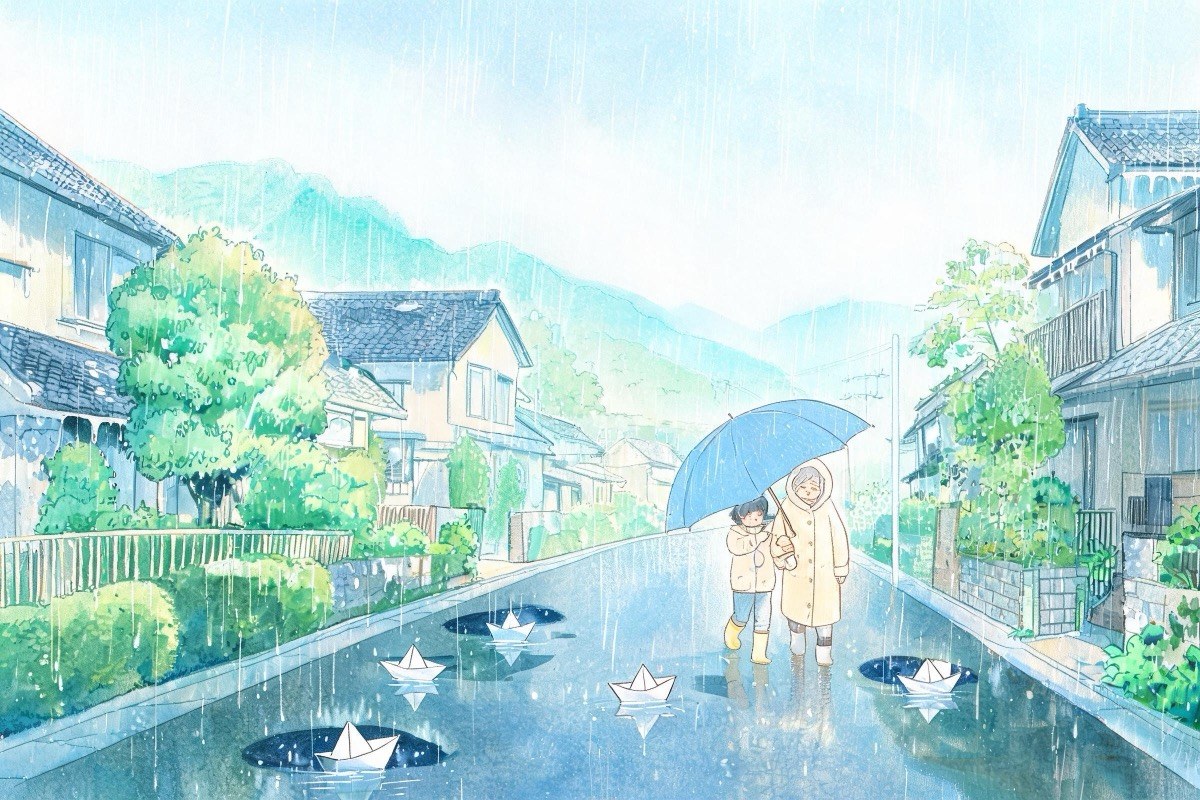
方法二:全篇抓住一个具体物件。写雨不要什么都写,选一个物件当镜头:一把伞、一双雨鞋、一扇窗。所有事情围绕它发生。选伞,就写伞骨断了一根、伞面积水要抖三下才干、伞柄上有个牙印。选雨鞋,就写鞋帮上的泥点子、走路咕叽咕叽响、脱下来能立住。物件具体,文章就具体。示例句:妈妈的蓝伞伞骨断了一根,撑开歪着一个角,她举伞的手一直往我这边挪,那个歪角正好对着她自己的头。一把歪伞比十句母爱伟大都有用。
方法三:让回忆与现实交错。写回忆类雨天文章,别从很久以前说起。从现在写起:此刻你在窗边听见雨,然后雨声把你拽回那年。现实一句,回忆一段,再回现实一句,像两次跳水之间换口气。示例句:此刻雨打在空调外机上,滴滴答答。那年也是这个声音,打在老屋的瓦上。外婆坐在檐下,竹椅吱呀。我如今坐在二十三楼,瓦没有了,声音还在。这样的交错让文章有时间纵深,读者跟着你在两个时空里来回,读完会记得住。
三个方法可以叠加:先用五感开场,再让物件出场,最后交错收尾。练的时候先各写一段,再拼成一篇。改的时候只删一种句子:所有下雨了、很大、特别美这类空句,删掉它们,画面就出来了。
Three Ways to Make Rain Feel Real on Paper
Many students write rain from beginning to end with one sentence: It rained, very hard. The reader finishes with an empty head. Cinematic detail is not piling up adjectives; it is letting the reader live that rain again through their own eyes, ears, and skin. Here are three methods, each practicable the same day.
Method one: take the rain apart with five senses. Rain is not one visual; it is five sensations. Eyes: the rain softened the building across the street, its outline bleeding across the window. Ears: rain on the tin awning sounds like frying beans; on leaves it changes to a different rustle. Skin: wind flings rain dust onto your arms, cold enough to raise goosebumps. Nose: that earthy smell on rainy days, the old folks call it rain-dust smell. Tongue may join too: a stray drop lands on your lip, cool, tasting of nothing. Example sentence: The drops first hammered the puddles on the playground, ring after ring of white flowers, and only then came the sound, crackling, like someone pouring a basin of marbles off the roof. Notice the order: seen before heard. That is accurate - distant rain always reaches the eyes before the ears. Write one sentence for each sense and your rain has five faces.
Method two: hold one concrete object through the whole piece. Do not write everything about the rain; choose one object as the camera: an umbrella, a pair of rain boots, a window. Everything happens around it. Choose the umbrella: write its broken rib, how its pooled water needs three shakes to clear, the tooth mark on its handle. Choose the boots: write the mud specks on the shaft, the squelch-squelch of walking, how they still stand upright when taken off. If the object is concrete, the essay is concrete. Example sentence: Mother's blue umbrella had one broken rib, propped open with a crooked corner; the hand holding it kept sliding toward my side, so the crooked corner ended up aimed straight at her own head. One crooked umbrella beats ten sentences about how great motherly love is.
Method three: interleave memory and present. For a rain essay about memory, do not start long, long ago. Start now: you hear rain by the window, and the sound pulls you back to that year. One sentence of present, one paragraph of memory, one sentence back, like catching breath between two dives. Example sentence: Now the rain beats on the air-conditioner unit, drip drip drip. That year it was the same sound, beating on the tiles of the old house. Grandmother sat under the eaves, the bamboo chair creaking. I now sit on the twenty-third floor; the tiles are gone, the sound remains. This interleaving gives the essay depth in time; readers travel with you between two moments and remember it.
The three methods stack: open with five senses, bring in the object, close with the interleave. When practicing, write one paragraph of each, then stitch them into one piece. When revising, delete only one kind of sentence: every empty line like it rained, it was big, it was beautiful. Delete them and the pictures appear.
示例句对照:空句和实句差在哪
讲方法容易,难的是落到句子上。下面用十二组对照,把常见的空句逐句改成实句。每组后面用一句话点出差别在哪,你可以拿自己的作文照着这个路子换。
第一组。原句:下雨了,很大。改句:雨点砸在操场积水里,白花连成片,远处的教学楼只剩一个灰影子。差别:原句在报告天气,改句在放镜头。
第二组。原句:雨下得真大啊。改句:屋檐的水从滴答连成了线,台阶前挂起一道短帘子。差别:感叹换成看得见的东西。
第三组。原句:天阴沉沉的。改句:对面楼的轮廓先没了,然后树也没了,最后连红绿灯都只剩一团红。差别:按消失的顺序写阴天,读者会跟着数。
第四组。原句:我没带伞,很着急。改句:我在校门口数伞,七把,五把,三把,电话手表打了两遍没人接。差别:着急这个字删掉,用数伞和打电话让读者自己急。
第五组。原句:妈妈送伞来了,我很感动。改句:妈妈跳下电动车,头发贴在脑门上,手里攥着一把蓝伞。差别:感动不写,写她到场时的样子。
第六组。原句:伞总是歪向我这边。改句:妈妈的左肩洇出一大片深色,我推伞,她不动声色推回来。差别:歪向变成湿肩膀加推伞两个动作。
第七组。原句:雨声很好听。改句:雨砸在铁皮棚上是炒豆子,落在香樟叶上换了调子,沙沙的。差别:好听换成两种声音的对比。
第八组。原句:空气很清新。改句:雨一停,操场那股土腥味混着青草味,深吸一口,凉到嗓子眼。差别:清新换成具体的气味和身体的反应。
第九组。原句:我穿着雨鞋踩水,很开心。改句:我专挑积水踩,咕叽,咕叽,裤脚甩出一串泥点,回家准挨说,可停不下来。差别:开心换成动作加一点小坏。
第十组。原句:外婆家下雨了,我想起小时候。改句:此刻雨打在空调外机上,滴滴答答,和那年打在老屋瓦上的声音一模一样。差别:想起换成两个声音对上。
第十一组。原句:时光过得真快,我很怀念。改句:鞋柜里那双黄雨鞋还立着,鞋帮上的泥点洗不掉,我的脚已经塞不进去了。差别:怀念换成一双穿不进的雨鞋。
第十二组。原句:那场雨让我明白了亲情。改句:到家我看见妈妈鞋里的水在地板上印出两个脚印,慢慢洇开。差别:明白删掉,让脚印替你说。
练习方法:把自己作文里写天气、写心情、写道理的句子全画出来,一句一句按这十二组的路子换。换完再读,画线的句子越少,文章越有画面。
Side by Side: Empty Sentences Versus Real Ones
Talking about methods is easy; the hard part is landing on sentences. Below are twelve pairs turning empty sentences into real ones, one by one. After each pair, one line points out the difference. Take your own essay and swap along these lines.
Pair one. Original: It rained, very hard. Revised: Drops hammered the puddles on the playground, white flowers merging into sheets; the teaching building in the distance was only a gray shadow left. Difference: the original reports weather; the revised one rolls a camera.
Pair two. Original: The rain is really heavy. Revised: The drip from the eaves joined into a line, and a short curtain hung in front of the steps. Difference: an exclamation replaced by something visible.
Pair three. Original: The sky was gloomy. Revised: The outline of the building across first disappeared, then the trees, and at last even the traffic light was only a red blur. Difference: writing a gloomy day in the order things vanish; readers count along.
Pair four. Original: I had no umbrella and felt anxious. Revised: At the school gate I counted umbrellas, seven, five, three; I called my phone watch twice, no answer. Difference: the word anxious is deleted; counting umbrellas and calling make the reader anxious by themselves.
Pair five. Original: Mom came with an umbrella, I was moved. Revised: Mom jumped off the electric scooter, hair plastered to her forehead, a blue umbrella clutched in her hand. Difference: moved is not written; her look on arrival is.
Pair six. Original: The umbrella always tilted toward me. Revised: Mother's left shoulder spread into a large dark patch; I pushed the umbrella, she quietly pushed it back. Difference: tilted becomes a wet shoulder plus the push.
Pair seven. Original: The sound of rain is pleasant. Revised: Rain on the tin roof sounds like frying beans; on the camphor leaves it changes tune, rustling. Difference: pleasant becomes a contrast of two sounds.
Pair eight. Original: The air was fresh. Revised: When the rain stopped, that earthy smell on the playground mixed with grass; one deep breath went cool all the way to my throat. Difference: fresh becomes a concrete smell and a body reaction.
Pair nine. Original: I wore rain boots and stomped in water, very happy. Revised: I aimed at puddles on purpose, squelch, squelch, my trouser cuffs flinging mud specks; I would surely get scolded at home, but I could not stop. Difference: happy becomes action plus a little mischief.
Pair ten. Original: It rained at Grandma's house, I remembered childhood. Revised: Now the rain beats on the air-conditioner unit, drip drip drip, exactly the sound it made on the old house tiles that year. Difference: remembered becomes two sounds matching.
Pair eleven. Original: Time flies, I miss it. Revised: The yellow rain boots still stand in the shoe cabinet, the mud specks on the shaft washed in, and my feet no longer fit. Difference: missing becomes a pair of boots outgrown.
Pair twelve. Original: That rain made me understand family love. Revised: At home I watched the water from Mother's shoes print two footprints on the floor, slowly spreading. Difference: understand is deleted; let the footprints say it.
Practice method: underline every sentence in your essay that reports weather, states feelings, or preaches a lesson, and replace them one by one along these twelve pairs. Read again afterward: the fewer underlined sentences remain, the more pictures your essay has.
小提示:上面此文档内容仅展示完整文档里的部分内容, 若需要下载完整文档请 点击免费下载完整文档 。