文章内容
雨停了,接我的人没走
《下雨天的回忆》里,有一句话我抄在了读书笔记的最后一页:雨会停,伞会收,只有接你的那个人,一直在门口站着。读六年级的我起初不懂这句话为什么要单独写出来,雨停了不就是可以回家了吗?后来我想起一个人,才明白它写的是等待。
那个人是我外婆。上幼儿园那几年,只要下雨,她一定出现在校门口的石墩旁边,撑一把黑色的大伞,伞面高过她的头顶,她整个人缩在伞底下,只露出半截藏青色的棉袄。别的家长接了孩子就走,她不,她要等我。我个子小,从人群里钻出来老半天,她也不着急,看见我就把伞举过来,第一句永远是:书包给我,沉。
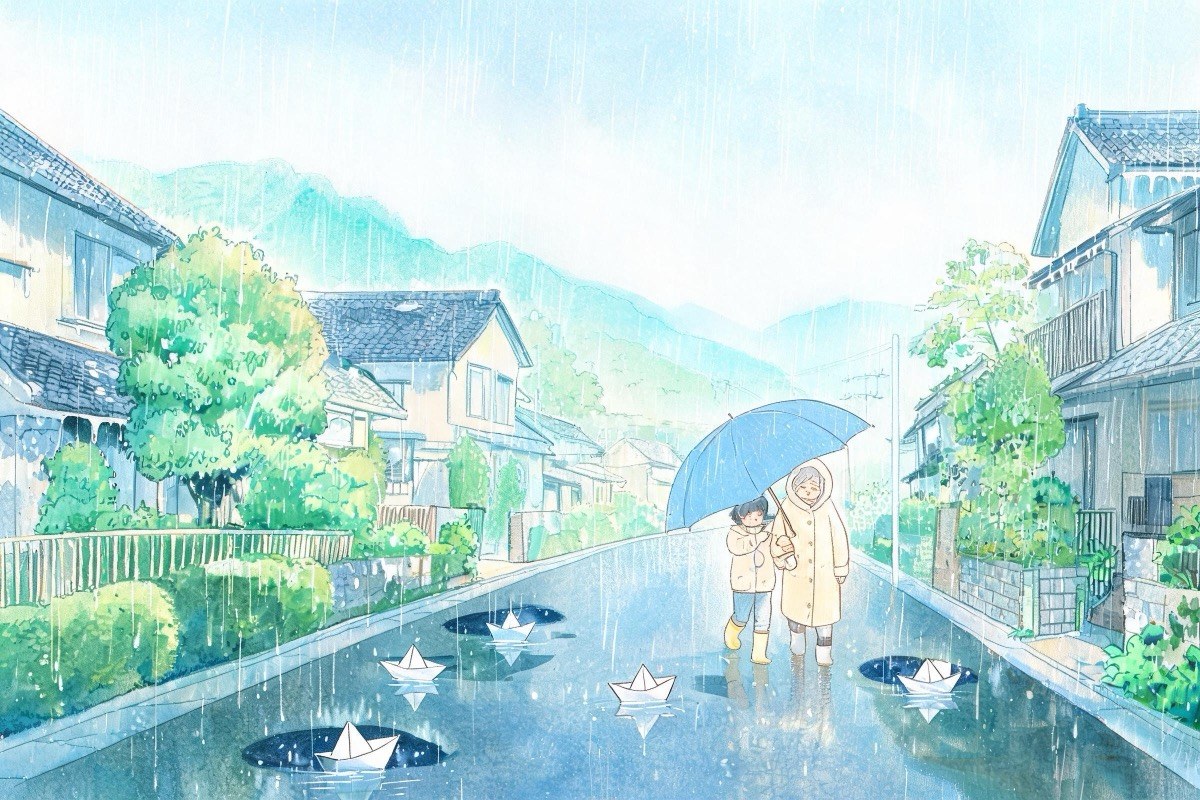
有一回雨下得特别大,校门口的积水漫过脚背。我出来晚了,别的人都走光了,她还站在那儿,裤脚卷到小腿,脚边的水洼里立着她的鞋。我跑过去钻进伞下,问她怎么不找个地方躲躲。她说:我要是躲走了,你出来看不见人,该害怕了。这句话和书里那句话撞在一起,我一下子懂了:门口那个人不是不怕淋雨,她是怕我找不到她。
现在外婆的膝盖不好了,下雨天不出门,家里下雨就剩我一个人从学校走回来。上上周的雨天,我放学没直接回家,绕去外婆家,进门时她正对着窗户发呆,窗玻璃上全是水痕。我说:以后下雨,我去接你,去菜市场接你,就像当年你在石墩旁边接我一样。她嘴上说不用不用,雨再大你别跑,手却把桌上的橘子全塞进了我书包。
那天下雨,我撑伞走到外婆家楼下,抬头看见她家窗户开着,窗台上那盆吊兰被风吹得一晃一晃。我上楼敲门,她开门第一句也是:书包给我,沉。几十年了,这句话一个字没变,说的人从她变成了我。书里写儿子长大后去车站接父亲,我接外婆的时候,心里也是满满的,像那把伞终于找对了要罩的人。
书读到这儿我合上了。雨会停,伞会收,可门口站着的人,我想换我来当。
The Rain Stopped, but No One Left
In Rainy Day Memories there is a line I copied onto the last page of my reading notebook: the rain stops, the umbrella folds, but the person who comes for you keeps standing at the door. In sixth grade I did not at first understand why that sentence stood alone; once the rain stops, isn't it time to go home? Then I remembered a certain person, and understood that the line is about waiting.
That person is my grandmother. During my kindergarten years, whenever it rained she would appear beside the stone block at the school gate, holding a big black umbrella taller than her head, her whole body tucked under it, only half of her navy padded jacket showing. Other parents grabbed their children and left; she did not. She waited for me. I was small and took forever to squeeze out through the crowd, and she never hurried. When she spotted me she lifted the umbrella over me, and her first line was always: give me your schoolbag, it's heavy.
Once the rain came down harder than ever, and the water at the school gate rose over our insteps. I came out late; everyone else was gone, and she was still there, trouser cuffs rolled to her calves, her shoes standing in a puddle at her feet. I ran to her and ducked under the umbrella and asked why she hadn't found somewhere to shelter. She said: if I hid away and you came out and saw no one, you would be scared. That sentence collided with the one in the book, and I understood at once: the person at the gate is not unafraid of rain; she is afraid I cannot find her.
Now my grandmother's knees are bad, and on rainy days she stays home while I walk back from school alone. The day before last, in the rain, I did not go straight home after class but detoured to her place. When I came in, she was staring out the window, its glass streaked with water. I told her: from now on, when it rains, I will come for you, I will meet you at the market, just like you used to wait for me by the stone block. She kept saying no, no, don't run in heavy rain, while her hands pushed every orange on the table into my schoolbag.
That rainy day I walked upstairs to her flat and looked up to see her window open, the spider plant on the sill swaying in the wind. I knocked, and her first line at the door was also: give me your schoolbag, it's heavy. For decades that sentence has not changed one word; only the speaker changed, from her to me. When the book's son grows up to meet his father at the station, and when I meet my grandmother, my heart is just as full, as if the umbrella has finally found the right head to cover.
I closed the book there. The rain stops, the umbrella folds, but the person standing at the door, I want to be the one now.
给妈妈送伞的那个傍晚
《下雨天的回忆》里让我印象最深的一句话,是父亲说的那句:接孩子的时候,心里只有一件事,就是孩子淋没淋着。这句话平常得不能再平常,可我读到时,立刻想起了我家那个送伞的傍晚。
三年级的一个暴雨天,妈妈单位加班,走的时候天还好好的,雨是半路下起来的。放学时爸爸骑着电动车来接我,车筐里多了一把伞。他说:走,给你妈送伞去。路上积水溅起白花花的水线,电动车开得慢,雨点打在雨衣上啪啪响。到了妈妈单位楼下,楼道口已经站了几个躲雨的同事,妈妈也在里面,抱着胳膊看手机。爸爸把伞递过去,只说了一句:雨大,骑不了车,明天早上我送你。妈妈愣了一下,看看我,又看看爸爸,眼睛有点红。
回家的路上,爸爸车筐里空了,我们俩穿雨衣淋了一小段,我反而高兴,故意往水深的地方骑,水花甩得爸爸一裤腿都是。他在前面喊:你个小坏蛋。那个傍晚雨那么大,我心里却热热的。
从那以后我家有个规矩:谁出门遇上下雨,家里一定有人去接,或者被接。爸爸出差,妈妈去接;妈妈加班,我和爸爸去送伞。去年冬天我上六年级,晚自习放学下雨,到校门口看见爸爸站在路灯底下,伞没收,伞尖滴着一串水。我跑过去,把书包从他手里接过来:爸,我这么大了,下次别等了。他把伞塞给我:你妈让我等的。我们俩都笑了。
前几天收拾柜子,我翻出那把三年级的旧伞,伞柄上还有我小时候用钥匙划的歪歪扭扭的字。我把新买的折叠伞放进爸爸常穿的外套口袋,又放了一把在妈妈包的最外层。他们嘴上不说,第二天一个说伞找着了,一个说包里怎么多了东西,语气里都是藏不住的高兴。
书里那句话我算是真读懂了。心里只有一件事的人,不会说爱,只会出现在门口。今后的打算是:等爸妈老了,下雨天,换我站在路灯底下。
The Evening We Brought Mama an Umbrella
The line in Rainy Day Memories that struck me most is the father's simple words: when you go for your child, your heart holds only one thing, whether the child got wet. It is the plainest sentence imaginable, yet the moment I read it, I thought of the evening our family went out with an umbrella.
One stormy day in third grade, my mother was working late; the sky was fine when she left, and the rain started halfway through the day. At dismissal my father came for me on his electric scooter, an umbrella added to the front basket. He said: come, let's bring your mom an umbrella. Sprays of white water rose from the flooded road, the scooter crawled, and rain cracked against our raincoats. Under her office building, a few colleagues were already sheltering in the stairwell entrance, my mother among them, arms folded, watching her phone. My father handed her the umbrella and said only: it's too heavy to ride, I'll drive you tomorrow morning. She froze for a second, looked at me, then at him, her eyes going a little red.
On the way home the basket was empty, and we got wet for a stretch in our raincoats, but I was happy, deliberately steering through the deep water so the spray soaked my father's trouser leg. He shouted ahead: you little rascal. The rain that evening was enormous, and my chest was warm.
After that our family had a rule: whoever is out when rain falls, someone at home goes for them, or they go for someone. When my father travels, my mother fetches him; when my mother works late, my father and I bring her an umbrella. Last winter, in sixth grade, I left evening study hall into rain, and at the school gate I saw my father under the streetlight, umbrella open, its tip dripping a string of water. I ran over and took the schoolbag from his hand: Dad, I'm this old now, don't wait next time. He pressed the umbrella into mine: your mother told me to wait. We both laughed.
A few days ago, tidying the cupboard, I found that old umbrella from third grade, its handle still marked with the crooked letters I had scratched with a key as a child. I put a new folding umbrella in my father's usual coat pocket, and another in the outermost pocket of my mother's bag. Neither of them said anything, but the next day one mentioned finding his umbrella and the other wondered what the extra thing in her bag was, and both hid their delight badly.
I think I truly understand the book's line now. A person whose heart holds one thing does not say love; they simply show up at the door. My plan for the future: when Mom and Dad are old, on rainy days I will be the one standing under the streetlight.
小提示:上面此文档内容仅展示完整文档里的部分内容, 若需要下载完整文档请 点击免费下载完整文档 。