文章内容
伞是斜的
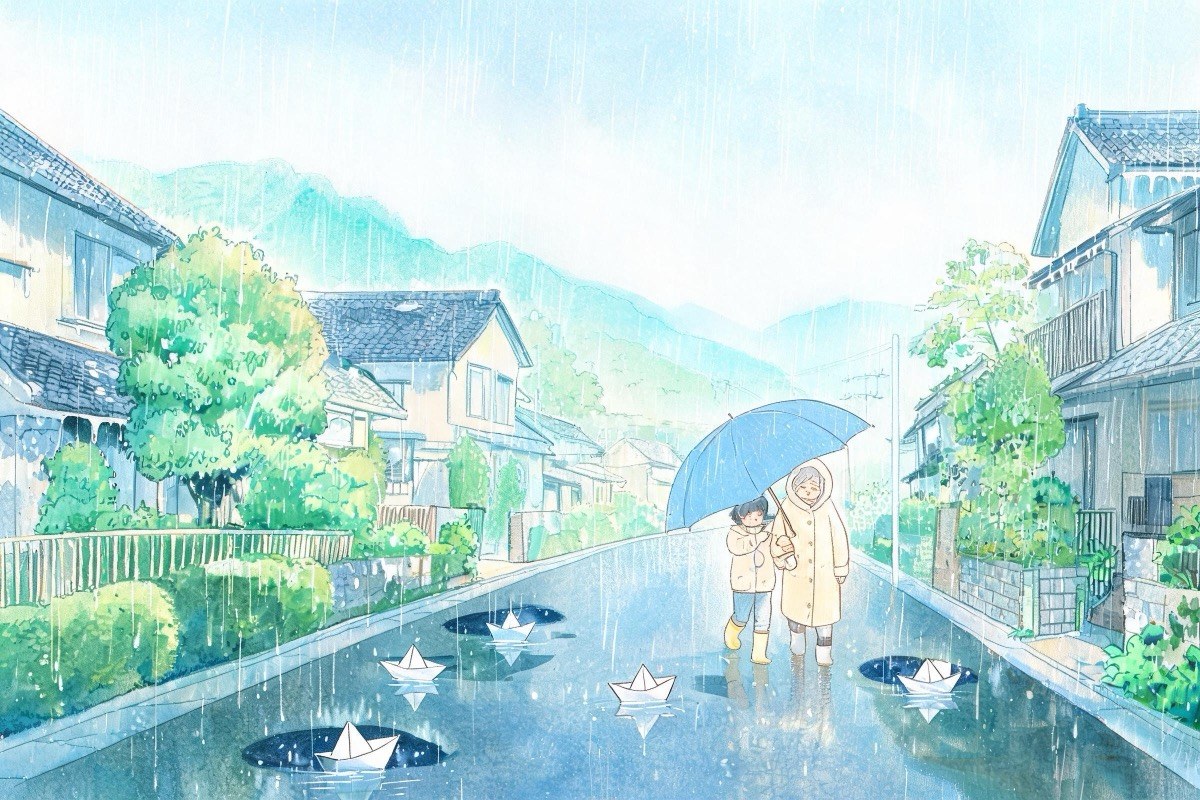
《下雨天的回忆》里最让我忘不掉的一幕,是放学时大雨哗哗地下,父亲赶到校门口,把伞塞到儿子手里。回家的路上,儿子的伞一直稳稳地罩在头顶,父亲的左肩却湿了一大片。儿子后来才发现,那把伞从头到尾都是斜的,斜向他那一侧。
读到这里,我把书合上了,因为我想起了自己的那个雨天。四年级的夏天,最后一节课的铃声响过,天就暗了下来,雨点砸在窗户上啪啪地响。我站在校门口的雨棚下,看着来接的家长一个接一个地跑进来,伞上的水珠甩出一圈一圈的水花。左等右等,始终没有我们家的伞。就在我打算冲进雨里的时候,人群里挤进来一个熟悉的身影,是妈妈。她的工服外套湿透了,贴在身上,手里还攥着一把没打开的伞。她第一句话不是道歉,而是从兜里掏出一个还热乎的馒头:路上没顾上买,先垫垫。
回家的路上,伞罩在我头顶,雨点打在伞面上,像炒豆子一样响。我无意间抬头,看见伞是斜的,斜向我这边;妈妈的左肩从肩头到袖口全是深色的水渍。我悄悄把伞往她那边推了推,她又不动声色地推了回来,好像那把伞自己会走路,总认得回我头顶的路。
书里的父亲和我妈妈,做的是同一件事。他们接孩子的时候,心里只想着孩子有没有淋着,根本没留意自己湿没湿。伞是斜的,爱也是斜的,斜的那一边,永远留给我们。
书的后半部分,儿子长大了,父亲老了,有一天下大雨,儿子去车站接父亲。伞撑在父亲头顶,儿子的左肩湿了一大片。这一次,伞还是斜的,只是斜的方向换了。作者没有多写一个字,我却在这一段看了很久。原来那把斜伞不是父亲一个人的习惯,它传了下来,儿子接住伞的时候,也接住了当年那只推回来的手。
那天晚上写作业,窗外又下起雨来。我写到一半抬起头,妈妈坐在旁边缝书包的带子,台灯的光落在她头发上。我忽然有点坐不住,起身给她倒了一杯热水,放在手边。她抬头看了我一眼,笑了,又低头接着缝。有些话说不出口,那就等下一个雨天,让伞替我说。
合上书,我走到门后,把那把旧伞拿出来,用干布把伞骨上的锈擦了一遍。下个雨天,我要把伞斜向妈妈那一侧。
The Umbrella Tilted Toward Me
The scene in Rainy Day Memories I cannot forget is this: rain pours down at the end of the school day, and a father rushes to the school gate to press an umbrella into his son's hand. On the way home, the umbrella stays steady over the boy's head, while the father's left shoulder turns dark with rain. Only later does the son realize the umbrella was tilted the whole time, leaning toward him.
I closed the book right there, because it reminded me of my own rainy day. One summer in fourth grade, the sky went dark right after the last bell, and raindrops slapped against the windows. I stood under the awning at the school gate, watching parents arrive one after another, water flying off their umbrellas in rings. I waited and waited, and no umbrella from our family appeared. Just as I decided to dash into the rain, a familiar figure pushed through the crowd. It was my mother. Her work jacket was soaked through and clung to her body, and she gripped an unopened umbrella in her hand. Her first words were not an apology but a steamed bun she pulled from her pocket, still warm: she had no time to buy anything on the way, so I should eat something first.
On the way home, the umbrella covered my head, and the rain on its surface sounded like beans popping in a pan. I happened to look up and saw that the umbrella was tilted toward me; my mother's left shoulder was dark with water from shoulder to cuff. I quietly pushed the umbrella toward her, and she pushed it back without a word, as if the umbrella could walk on its own and always knew the way back to my head.
The father in the book and my mother were doing the same thing. When they came for their children, all they thought about was whether the child was dry, never noticing how wet they themselves had gotten. The umbrella was tilted, and so was their love, always leaning to our side.
In the second half of the book, the son grows up and the father grows old. One day of heavy rain, the son goes to the station to meet his father. The umbrella stays over the father's head while the son's left shoulder darkens with rain. The umbrella is still tilted; only the direction has changed. The author writes not one extra word, yet I sat with that passage for a long time. The tilted umbrella was never just the father's habit; it was handed down, and when the son took the umbrella, he also took in that hand which once quietly pushed it back.
That evening I was doing homework when it began to rain outside. I looked up from my writing; my mother sat beside me sewing the strap of my schoolbag, the lamplight resting on her hair. Suddenly I could not sit still, so I got up and poured her a cup of hot water and set it within reach. She looked up, smiled, and bent back to her sewing. Some words cannot be spoken aloud; then let the umbrella say them on the next rainy day.
After closing the book, I went to the door, took out our old umbrella, and wiped the rust off its ribs with a dry cloth. Next rainy day, I will tilt the umbrella toward my mother's side.
那年屋檐下
《下雨天的回忆》写的是一个下雨天的故事:放学下起大雨,父亲冒雨赶到学校送伞,父子俩共撑一把伞走回家,路上伞总是偏向孩子那边。书里那个被接走的孩子,回家时身上几乎是干的。
我读这一段的时候,心里有点发酸,因为二年级的那个雨天,没有人给我送伞。那天放学,同学们一个一个被接走,教室外的屋檐下只剩下我一个人。雨帘一层一层地落,操场上的水洼溅起密密麻麻的小坑。我把校服袖子拉下来蒙住头,冲进雨里。雨水顺着头发流进脖子里,凉得我直缩脖子。书里那个孩子有伞,我没有。我一边往家走一边哭,眼泪和雨水混在一起,谁也分不清谁。
快到家的时候,身后有人喊我的名字。是爸爸。他骑着自行车从单位赶回来,裤腿卷到膝盖,手里拎着我的雨衣。他追上我,什么也没解释,只是把雨衣披在我身上,又把书包从肩上抢过去,举到头顶。那段回家的路,他举着书包走在我旁边,胳膊举得直直的,书包带在他手里勒出一道印子。
到家他才说了一句话:对不起,来晚了。我憋了一路没哭,听见这句反而哭出声来。原来他一路都在后悔自己迟到,而我一路都在怪他不来。我们俩都在雨里,各自揣着心思走了那么久。
书里说,下雨天的回忆是暖的。我后来慢慢明白,迟来的伞也是伞。爸爸没读过什么讲父爱的文章,他只会把书包举高,把雨衣披好,再用一句对不起,把那个淋雨的傍晚接上。从那以后,每逢下雨,我总会想起他举着书包的那条胳膊,又直,又稳。
前年秋天又一个雨天,我放学自己出校门,看见爸爸的车停在老地方。他老了一些,头发白了半边,还是把雨衣先递给我,问了一句:今天没淋着吧。我说没有,这么大了还淋不着。他笑笑,骑车在前面走,我跟在后面,雨点打在雨衣帽子上,笃笃地响。那条路上我忽然想,书里的孩子有伞,我当年没有伞,可我有一件披过来的雨衣、一只举在头顶的书包。它们比伞沉,也比伞记人。
Under the Eaves That Year
Rainy Day Memories tells a story set on a rainy day: heavy rain falls at dismissal, a father hurries to school through the storm with an umbrella, and the two walk home sharing it, the umbrella always leaning toward the child. The boy in the book arrives home almost completely dry.
That part made my heart ache a little, because on my rainy day in second grade, nobody brought me an umbrella. One by one my classmates were picked up, and under the eaves outside the classroom only I was left. Curtains of rain fell layer upon layer, and the puddles on the playground dimpled with countless tiny craters. I pulled my uniform sleeve over my head and ran into the rain. Water ran down my hair into my neck, so cold I kept shrinking. The child in the book had an umbrella; I had none. I walked home crying, tears mixing with rain so that no one could tell them apart.
Nearly home, someone called my name from behind. It was my father. He had biked all the way from his workplace, trouser legs rolled to his knees, my raincoat in his hand. He caught up, explained nothing, just wrapped the raincoat around me, snatched my backpack off my shoulder, and held it over my head. For the rest of the walk home he carried the backpack high beside me, his arm stretched straight, the strap cutting a red line into his hand.
Only when we got home did he say one sentence: I'm sorry I was late. I had held back tears the whole way and burst out crying at that line. All the way he had been blaming himself for being late, and all the way I had been blaming him for not coming. We had both been out in the rain, each carrying our own thoughts.
The book says memories of rainy days are warm. I came to understand later that a late umbrella is still an umbrella. My father never read essays about a father's love. He only knew how to hold a backpack high, wrap a raincoat tight, and use one sorry to bridge that rainy evening. Ever since, whenever it rains, I think of that arm of his holding the backpack up, straight and steady.
On another rainy day the autumn before last, I walked out of school on my own and saw my father's bike parked in the usual place. He had aged, half his hair gone white, and he still handed me the raincoat first, asking one question: you didn't get wet today, did you? I said no, I'm too old for that now. He smiled and rode ahead while I followed behind, raindrops drumming on the hood of the raincoat. Somewhere along that road it struck me: the child in the book had an umbrella, and I had had none, but I had a raincoat wrapped around me and a backpack held high over my head. They were heavier than an umbrella, and they remember people better too.
小提示:上面此文档内容仅展示完整文档里的部分内容, 若需要下载完整文档请 点击免费下载完整文档 。