文章内容
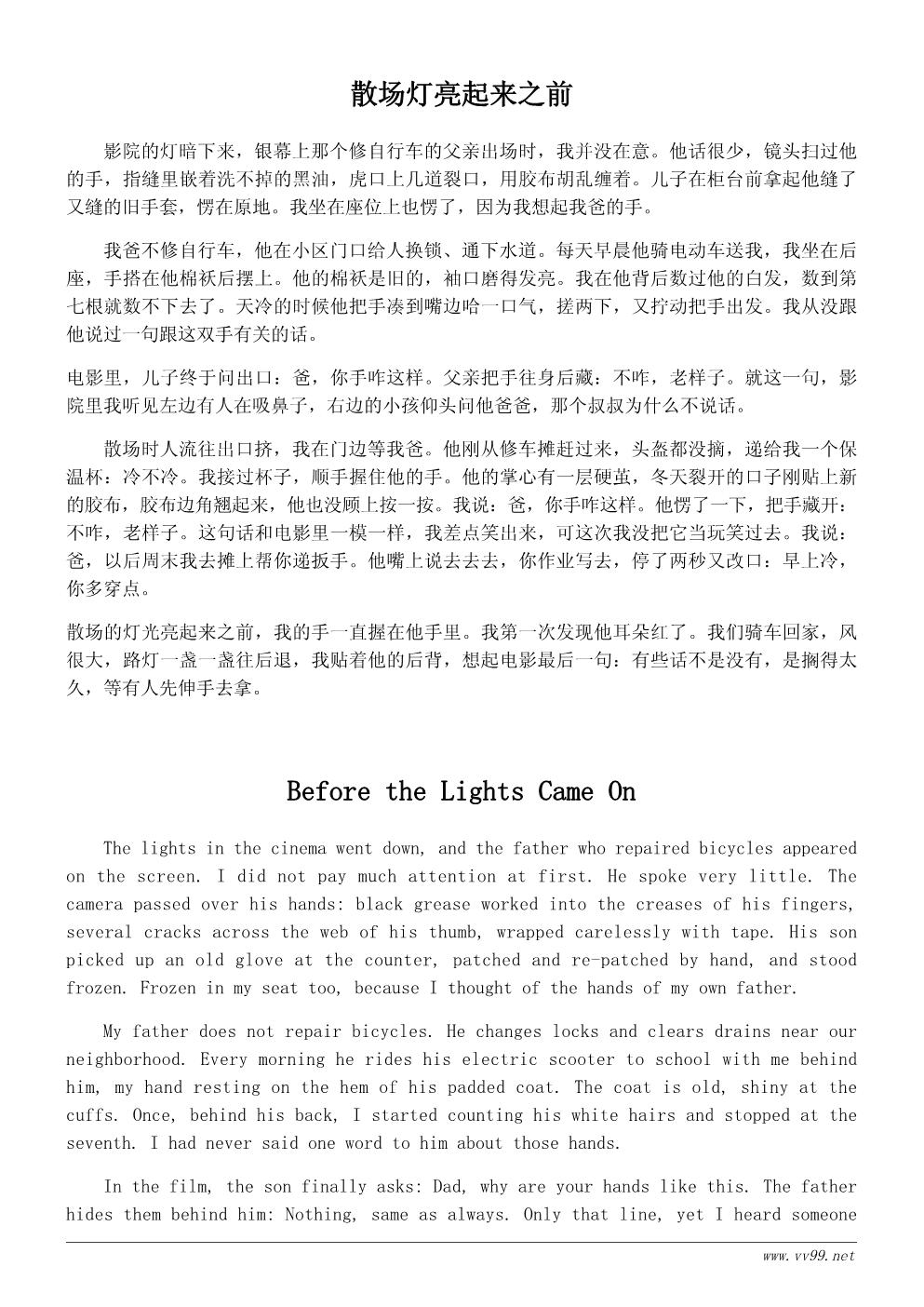
散场灯亮起来之前
影院的灯暗下来,银幕上那个修自行车的父亲出场时,我并没在意。他话很少,镜头扫过他的手,指缝里嵌着洗不掉的黑油,虎口上几道裂口,用胶布胡乱缠着。儿子在柜台前拿起他缝了又缝的旧手套,愣在原地。我坐在座位上也愣了,因为我想起我爸的手。
我爸不修自行车,他在小区门口给人换锁、通下水道。每天早晨他骑电动车送我,我坐在后座,手搭在他棉袄后摆上。他的棉袄是旧的,袖口磨得发亮。我在他背后数过他的白发,数到第七根就数不下去了。天冷的时候他把手凑到嘴边哈一口气,搓两下,又拧动把手出发。我从没跟他说过一句跟这双手有关的话。
电影里,儿子终于问出口:爸,你手咋这样。父亲把手往身后藏:不咋,老样子。就这一句,影院里我听见左边有人在吸鼻子,右边的小孩仰头问他爸爸,那个叔叔为什么不说话。
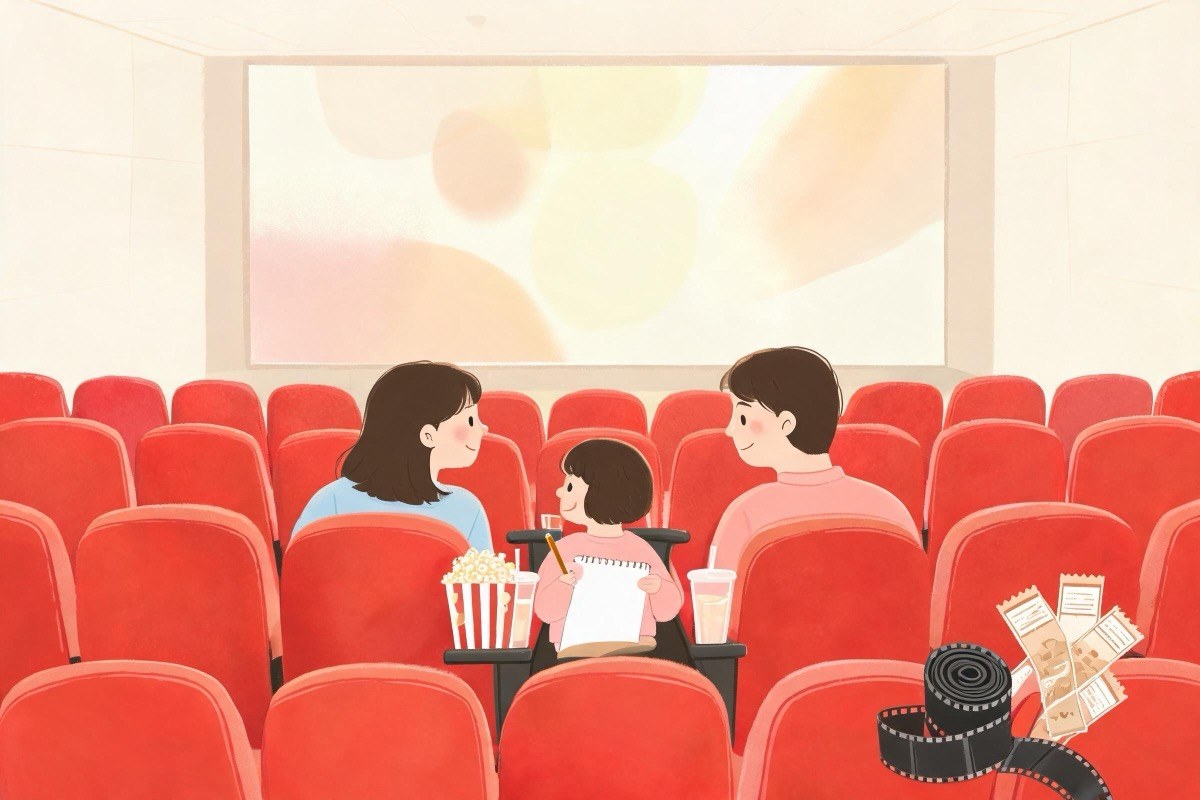
散场时人流往出口挤,我在门边等我爸。他刚从修车摊赶过来,头盔都没摘,递给我一个保温杯:冷不冷。我接过杯子,顺手握住他的手。他的掌心有一层硬茧,冬天裂开的口子刚贴上新的胶布,胶布边角翘起来,他也没顾上按一按。我说:爸,你手咋这样。他愣了一下,把手藏开:不咋,老样子。这句话和电影里一模一样,我差点笑出来,可这次我没把它当玩笑过去。我说:爸,以后周末我去摊上帮你递扳手。他嘴上说去去去,你作业写去,停了两秒又改口:早上冷,你多穿点。
散场的灯光亮起来之前,我的手一直握在他手里。我第一次发现他耳朵红了。我们骑车回家,风很大,路灯一盏一盏往后退,我贴着他的后背,想起电影最后一句:有些话不是没有,是搁得太久,等有人先伸手去拿。
Before the Lights Came On
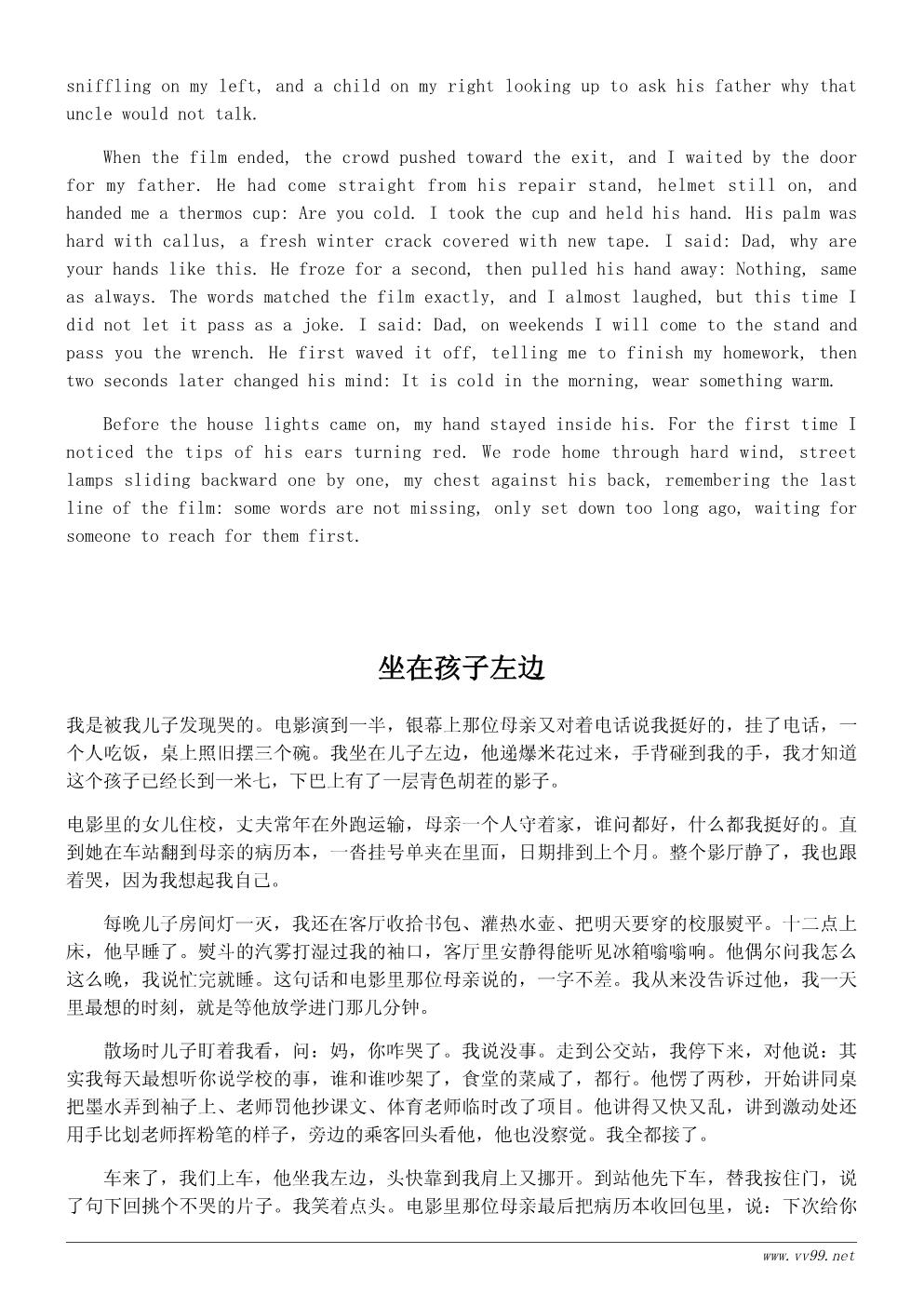
The lights in the cinema went down, and the father who repaired bicycles appeared on the screen. I did not pay much attention at first. He spoke very little. The camera passed over his hands: black grease worked into the creases of his fingers, several cracks across the web of his thumb, wrapped carelessly with tape. His son picked up an old glove at the counter, patched and re-patched by hand, and stood frozen. Frozen in my seat too, because I thought of the hands of my own father.
My father does not repair bicycles. He changes locks and clears drains near our neighborhood. Every morning he rides his electric scooter to school with me behind him, my hand resting on the hem of his padded coat. The coat is old, shiny at the cuffs. Once, behind his back, I started counting his white hairs and stopped at the seventh. I had never said one word to him about those hands.
In the film, the son finally asks: Dad, why are your hands like this. The father hides them behind him: Nothing, same as always. Only that line, yet I heard someone sniffling on my left, and a child on my right looking up to ask his father why that uncle would not talk.
When the film ended, the crowd pushed toward the exit, and I waited by the door for my father. He had come straight from his repair stand, helmet still on, and handed me a thermos cup: Are you cold. I took the cup and held his hand. His palm was hard with callus, a fresh winter crack covered with new tape. I said: Dad, why are your hands like this. He froze for a second, then pulled his hand away: Nothing, same as always. The words matched the film exactly, and I almost laughed, but this time I did not let it pass as a joke. I said: Dad, on weekends I will come to the stand and pass you the wrench. He first waved it off, telling me to finish my homework, then two seconds later changed his mind: It is cold in the morning, wear something warm.
Before the house lights came on, my hand stayed inside his. For the first time I noticed the tips of his ears turning red. We rode home through hard wind, street lamps sliding backward one by one, my chest against his back, remembering the last line of the film: some words are not missing, only set down too long ago, waiting for someone to reach for them first.
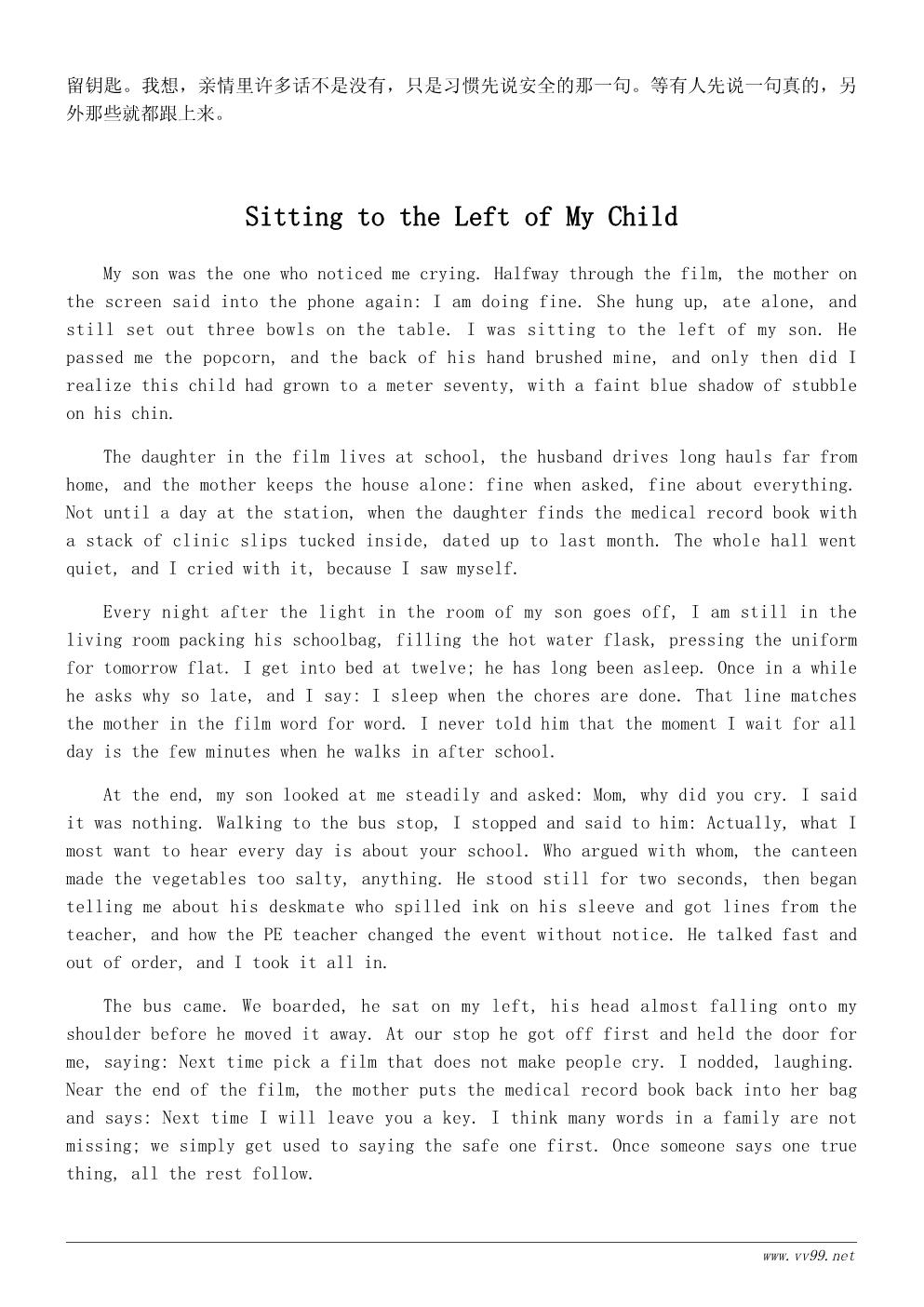
坐在孩子左边
我是被我儿子发现哭的。电影演到一半,银幕上那位母亲又对着电话说我挺好的,挂了电话,一个人吃饭,桌上照旧摆三个碗。我坐在儿子左边,他递爆米花过来,手背碰到我的手,我才知道这个孩子已经长到一米七,下巴上有了一层青色胡茬的影子。
电影里的女儿住校,丈夫常年在外跑运输,母亲一个人守着家,谁问都好,什么都我挺好的。直到她在车站翻到母亲的病历本,一沓挂号单夹在里面,日期排到上个月。整个影厅静了,我也跟着哭,因为我想起我自己。
每晚儿子房间灯一灭,我还在客厅收拾书包、灌热水壶、把明天要穿的校服熨平。十二点上床,他早睡了。熨斗的汽雾打湿过我的袖口,客厅里安静得能听见冰箱嗡嗡响。他偶尔问我怎么这么晚,我说忙完就睡。这句话和电影里那位母亲说的,一字不差。我从来没告诉过他,我一天里最想的时刻,就是等他放学进门那几分钟。
散场时儿子盯着我看,问:妈,你咋哭了。我说没事。走到公交站,我停下来,对他说:其实我每天最想听你说学校的事,谁和谁吵架了,食堂的菜咸了,都行。他愣了两秒,开始讲同桌把墨水弄到袖子上、老师罚他抄课文、体育老师临时改了项目。他讲得又快又乱,讲到激动处还用手比划老师挥粉笔的样子,旁边的乘客回头看他,他也没察觉。我全都接了。
车来了,我们上车,他坐我左边,头快靠到我肩上又挪开。到站他先下车,替我按住门,说了句下回挑个不哭的片子。我笑着点头。电影里那位母亲最后把病历本收回包里,说:下次给你留钥匙。我想,亲情里许多话不是没有,只是习惯先说安全的那一句。等有人先说一句真的,另外那些就都跟上来。
Sitting to the Left of My Child
My son was the one who noticed me crying. Halfway through the film, the mother on the screen said into the phone again: I am doing fine. She hung up, ate alone, and still set out three bowls on the table. I was sitting to the left of my son. He passed me the popcorn, and the back of his hand brushed mine, and only then did I realize this child had grown to a meter seventy, with a faint blue shadow of stubble on his chin.
The daughter in the film lives at school, the husband drives long hauls far from home, and the mother keeps the house alone: fine when asked, fine about everything. Not until a day at the station, when the daughter finds the medical record book with a stack of clinic slips tucked inside, dated up to last month. The whole hall went quiet, and I cried with it, because I saw myself.
Every night after the light in the room of my son goes off, I am still in the living room packing his schoolbag, filling the hot water flask, pressing the uniform for tomorrow flat. I get into bed at twelve; he has long been asleep. Once in a while he asks why so late, and I say: I sleep when the chores are done. That line matches the mother in the film word for word. I never told him that the moment I wait for all day is the few minutes when he walks in after school.
At the end, my son looked at me steadily and asked: Mom, why did you cry. I said it was nothing. Walking to the bus stop, I stopped and said to him: Actually, what I most want to hear every day is about your school. Who argued with whom, the canteen made the vegetables too salty, anything. He stood still for two seconds, then began telling me about his deskmate who spilled ink on his sleeve and got lines from the teacher, and how the PE teacher changed the event without notice. He talked fast and out of order, and I took it all in.
The bus came. We boarded, he sat on my left, his head almost falling onto my shoulder before he moved it away. At our stop he got off first and held the door for me, saying: Next time pick a film that does not make people cry. I nodded, laughing. Near the end of the film, the mother puts the medical record book back into her bag and says: Next time I will leave you a key. I think many words in a family are not missing; we simply get used to saying the safe one first. Once someone says one true thing, all the rest follow.
小提示:上面此文档内容仅展示完整文档里的部分内容, 若需要下载完整文档请 点击免费下载完整文档 。