文章内容
晃着晃着就稳了
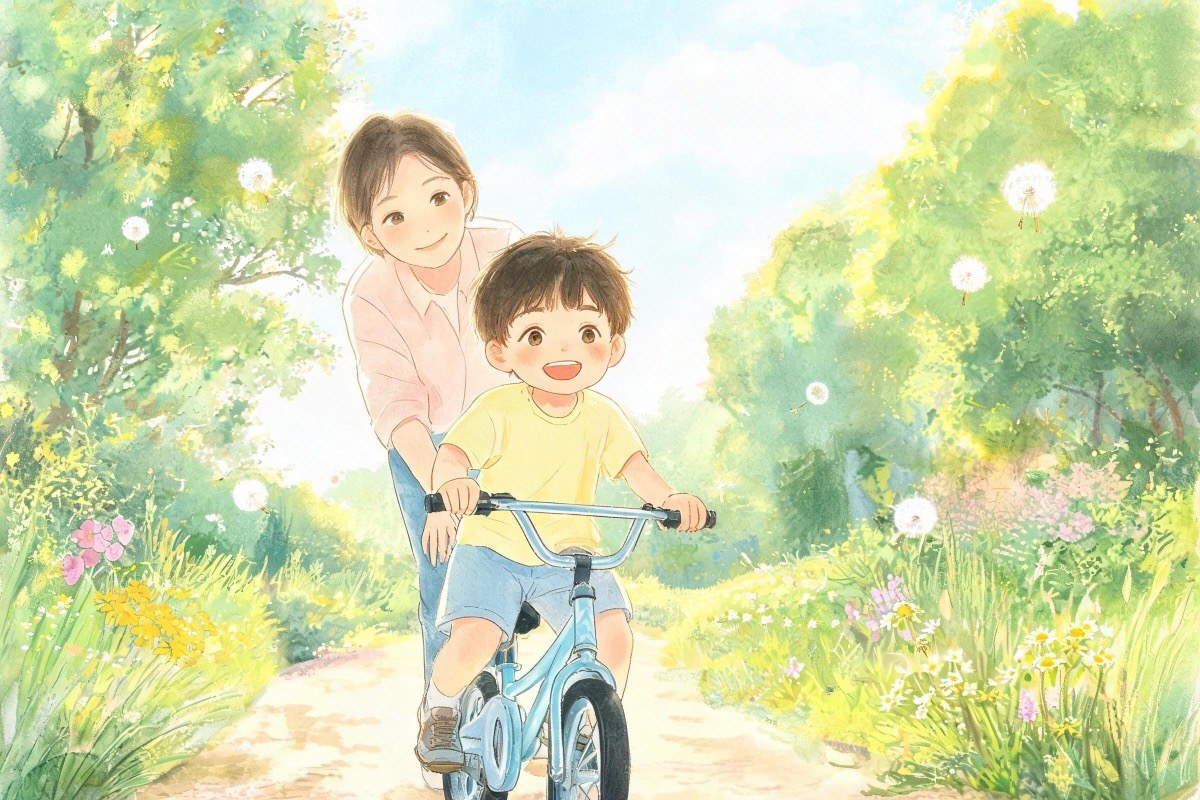
周六一早,爸爸从杂物间推出那辆旧自行车,车梁上的漆掉了一片,露出底下的铁灰色。车座太高,我踮起脚,脚尖才够着地面。爸爸半蹲着,一只手扶住后座,说先绕院子转三圈。
头一圈,链条咔哒咔哒响,车头左右晃,像喝醉了酒。爸爸的手一直稳稳扶着,我听见他的呼吸就在背后,一下一下的。第二圈拐过墙角,车身忽然轻了,晃着晃着居然稳住了。我喊了一声,没人应。回头一看,爸爸站在院子当中,两只手插在兜里,离我足有十几步远。
我一慌,车头一歪,连人带车栽进墙根的枣树丛里。膝盖蹭破了皮,渗出一小片红。我坐在台阶上歇了十分钟,看着膝盖上的土印子,没哭。爸爸把车扶起来,车把上沾了几片枣树叶,他用袖子擦了擦,什么也没说,把车推回我跟前。
歇够了,我再上去。脚蹬转得很慢,链条一格一格地咬。爸爸这次没扶后座,只走在车旁边,手虚虚地悬着,不碰。走到第二个转弯,我的脚自己知道先往哪边探,车头过去,身子跟着过去,像身体里多长出一个会算数的东西。我盯着前方十米处的电线杆,不晃脑袋,也不回头看。一圈,两圈,三圈。风从耳朵边过去,链条的声音变得又轻又快。骑到巷子口,我捏了闸,车轮在地面上蹭出一声短响。整条巷子,我自己骑完了。巷子里晾着的被单被我带起的风吹得一鼓,又落下。
回家,妈妈看见我膝盖上的土,没问,转身进了厨房。晚上那碗面,上面卧着一个煎蛋。我头一回吃面吃到最后才舍得动那个蛋。妈妈看见我膝盖上的土印子,提了一句摔进枣树丛那一下。爸爸扒着面,只说了一句:那辆车在杂物间里睡了十年,今天总算又骑起来了。
Wobbling Into Balance
Early Saturday morning, Dad wheeled the old bicycle out of the storage room. A patch of paint had flaked off the frame, showing iron gray underneath. The seat was too high; on tiptoe my toes barely touched the ground. Dad half-squat, one hand on the rear seat, said we would start with three laps around the courtyard.
On the first lap the chain clattered, and the handlebars swayed left and right like a drunk man. Dad hand stayed steady behind me; I could hear his breathing right at my back, in and out. On the second lap, around the corner, the bike suddenly felt light, and the wobble settled into balance. I shouted, and nobody answered. I looked back. Dad stood in the middle of the yard, both hands in his pockets, more than ten paces away.
I panicked, the handlebars jerked, and I fell with the bike into the jujube bushes by the wall. My knee scraped open, a small patch of red welling up. I sat on the steps for ten minutes, looking at the dirt mark on my knee, and did not cry. Dad lifted the bike. A few jujube leaves stuck to the handlebars; he wiped them with his sleeve, said nothing, and pushed the bike back to me.
When I climbed back on, rested, the pedals turned slowly and the chain bit notch by notch. This time Dad did not hold the seat; he walked beside the bike with his hand hovering, not touching. At the second turn my feet knew on their own which side to reach, the front wheel passing, my body following, as if something inside me had grown that could do arithmetic. I fixed my eyes on the utility pole ten meters ahead, kept my head still, and did not look back. One lap, two, three. Wind passed by my ears, and the chain turned soft and fast. At the mouth of the alley I squeezed the brakes, and the wheel made a short scrape on the ground. The whole alley, ridden by myself. The sheet hanging in the alley billowed in the wind I stirred up, then fell back.
At home, Mom saw the dirt on my knee, asked nothing, and went into the kitchen. That evening the bowl of noodles carried a fried egg on top. For the first time I saved the egg until the very last bite. Dad told him about my fall into the jujube bushes, and Dad only said: that bike had slept in the storage room for ten years, and today it finally rode again.
缠在车把上的胶布条
爸爸把自行车推出来之前,先用旧内胎剪成的布条把车把缠了两圈。女儿问为什么,他说铁车把凉,手攥久了打滑。女儿扶着车把,他在后头扶着后座,两个人从巷子这头往那头走。
车头歪,他就把后座扶正;身子往后仰,他就喊一声坐稳。女儿脚短,腿够不着地,每次停车都得他抢一步扶住。巷子中段有个小坡,是前几年修下水道留下的土坎。他先让女儿推着车走上去两趟,空手走一趟,说先看坡有多陡,再上车就不慌。女儿推着车上坡,车蹬子磕到她的腿肚,她龇了一下牙,没吭声。
练到太阳偏西,女儿忽然说,你松手试试。爸爸没应声,手悄悄离开了后座。车往前走了五六米,开始晃。女儿喊爸爸,喊了两声,回头看见他还站在原地,一只手举在半空,没敢真放下。车把一歪,车停在土堆边上,人跳了下来,没摔。
当天收车,女儿坐在门槛上揉胳膊,说再来一次。第二回松手,车晃得轻了些,晃到一半自己稳住了。爸爸在后头长出了一口气,那口气出得太响,女儿听见了,回头瞪他,他装作咳嗽。
第二天傍晚,他们不用扶了。女儿骑到巷口,又骑回来,裙角扫过墙根的狗尾巴草。爸爸靠在门框上看,手里端着的茶凉了也没喝。邻居问,你家丫头会骑了?他应一声,嘴角压不住,进屋又给他续了一杯热的。
收车的时候,女儿拿抹布把车座擦了一遍,又把链子上的土抹掉。爸爸蹲在旁边看着,看她把车推进门,车把上缠的胶布条在灯下发亮。他说,明天把辅助轮拆了,这车本来就是给学会的人骑的。女儿把车靠墙放好,车铃铛碰在墙上,叮的一声,很轻。
Tape Strips on the Handlebars
Before wheeling the bike out, Dad wrapped the handlebars twice with strips cut from an old inner tube. His daughter asked why. He said the bare metal runs cold, and a cold grip slips. She held the handlebars; he held the rear seat behind her, and the two of them walked from one end of the alley to the other.
When the front wheel wandered, he straightened the seat; when she leaned back, he called out, sit steady. Her legs were short and could not reach the ground, so every stop needed him to step in and catch the bike. Midway through the alley stood a small mound left by sewer work years ago. He first made her push the bike up it twice, then walk up empty-handed once, saying: see how steep the slope is first, and the fear on the saddle will be smaller. She pushed the bike up, and a pedal caught her calf; she gritted her teeth and said nothing.
By late afternoon she suddenly said, let go and see. Dad made no sound, and his hand quietly left the seat. The bike ran five or six meters, then began to sway. She called Dad, twice, then turned to see him still standing where he was, one hand raised in midair, not daring to set it down fully. The handlebars tilted, the bike stopped by a mound of dirt, and she hopped off without falling.
That evening as they parked the bike, the girl sat on the doorstep rubbing her arms and said, once more. The second time he let go, the sway was lighter, and halfway it steadied by itself. Behind her Dad let out a long breath, too loud, and she heard it and glared; he pretended to cough.
The next evening nobody needed to hold it. She rode to the mouth of the alley and back, the hem of her skirt brushing the foxtail grass along the wall. Dad leaned on the doorframe watching, the tea in his hand gone cold untouched. A neighbor asked: your girl can ride now? He answered yes, the corner of his mouth refusing to stay down, went inside, and poured himself a fresh hot cup.
When they put the bike away, the girl wiped the seat with a cloth and dusted off the chain. Dad crouched beside her, watching her push it through the door, the tape strips on the handlebars shining under the lamp. He said: tomorrow we remove the training wheels. This bike was always meant for someone who has learned. The girl leaned the bike against the wall, and the bell tapped the brick with a soft ding.
小提示:上面此文档内容仅展示完整文档里的部分内容, 若需要下载完整文档请 点击免费下载完整文档 。