文章内容
松手那半只手
暑假的头一个礼拜,大刘把他表哥的旧车推到了打谷场。车太高,我俩一人试了一下,都只够着半个脚掌。大刘说,没关系,先练推车。
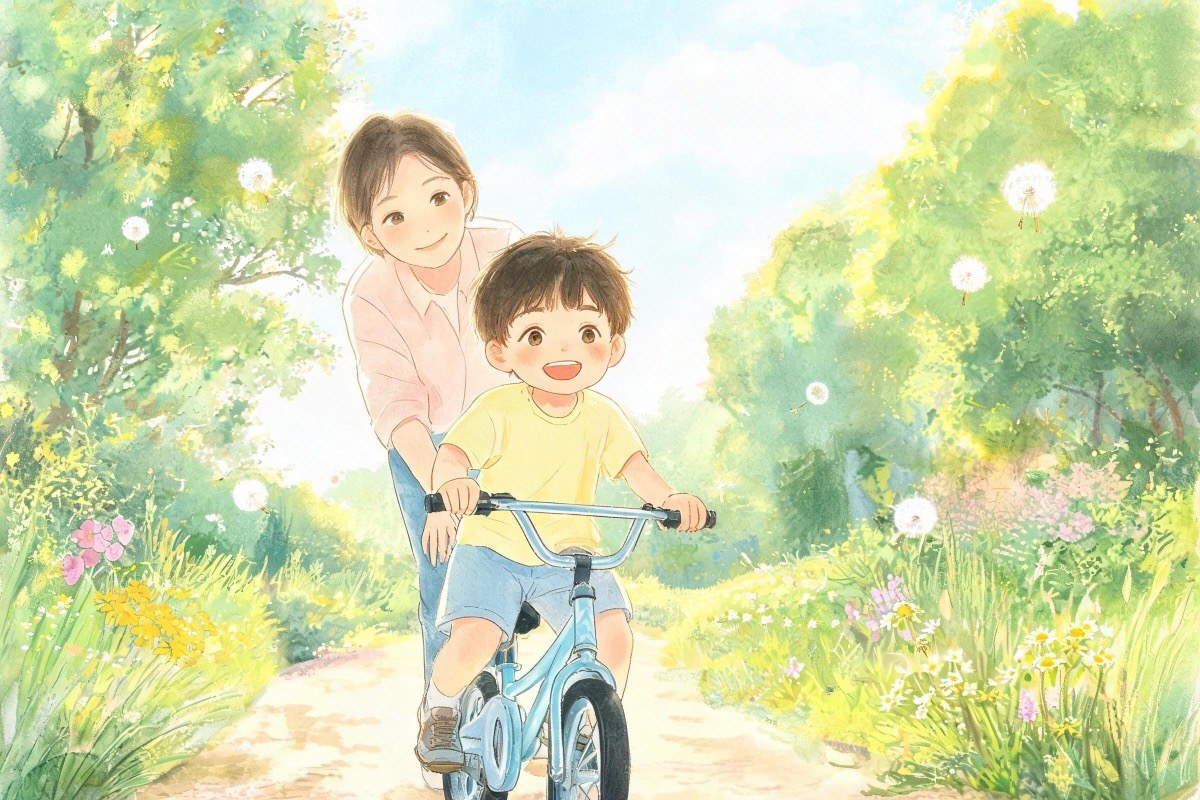
于是我们推着车绕场子。七月的太阳把晒场的水泥地烤得发白,车把烫手,得攥着校服袖子拧。推了四五圈,大刘忽然跨上去,让我在后头拽着后座跑。我拽着,他蹬,车在麦秸垛之间歪歪斜斜地走。他喊,松手。我说我不敢。他喊,你先松一半。
打谷场上白天晒麦子,晚上就空了,只有我们俩和一圈车辙。场边拴着一头黄牛,尾巴甩一下,扫掉一片影子。远处有人喊吃饭,喊的是别人家孩子。大刘他表哥那辆车原先给他表弟学,表弟学了一半迷上了弹弓,车就闲下来,让大刘借了来。车座上垫着一块旧棉布,绑的是自行车内胎剪的皮筋,坐上去软,还有一股胶皮味。
我就松了半只手,指尖还搭在座垫边上。车晃了两下,居然没倒。大刘蹬过麦秸垛,又绕回来,脸晒得通红,汗把刘海粘在额头上。他说,成了,你松手。这回我把整只手收了回来,站在原地,看他自己骑了半圈。车往左偏,他用脚点了一下地,稳住,又骑回来。
后来轮到我。大刘拽着后座跟在我后头跑,跑得上气不接下气,还嫌我蹬得慢。骑到第三圈,我听见后头没声了,回头一看,他坐在麦秸垛上喝水,瓶子举起来朝我晃了晃。我心里一慌,脚底下就乱,车一头扎进场边的草里,人跳了出去,膝盖没伤,手掌蹭破了一层皮。
收场的时候,我俩坐在场边的石磙上。大刘掰了半块西瓜给我,说下礼拜教你捏闸掉头。我啃着西瓜看那辆车靠在麦秸垛上,车座被太阳晒得鼓起来一块。回家路上我想,其实最记得的不是学会那一下,是松手那半只手——指尖还搭着,像答应了一件事。
The Half-Released Hand
The first week of summer vacation, Da Liu wheeled his cousin old bike onto the threshing ground. It stood too tall; we each tried it once, and both could only reach half a sole on the ground. Da Liu said, no problem, we practice pushing first.
So we pushed the bike around the field. The July sun baked the concrete pale, and the handlebars burned the hands, so we gripped them through our shirt sleeves. After four or five laps, Da Liu suddenly swung a leg over and told me to run behind holding the seat. I held, he pedaled, and the bike weaved crooked between the straw stacks. He shouted, let go. I said I dare not. He shouted, let go halfway first.
The threshing ground dried wheat by day and stood empty by night, with only the two of us and a ring of tire tracks. A yellow ox was tied at the edge, its tail flicking away swaths of shadow. Somewhere far off someone called a child to supper, but it was somebody else child. The cousin had meant the bike for his own little brother, who gave up halfway for a slingshot, leaving the bike idle for Da Liu to borrow. An old cotton pad sat on the seat, bound with bands cut from an inner tube; it felt soft, with a rubbery smell.
I released half my hand, fingertips still resting on the seat edge. The bike wobbled twice and somehow stayed up. Da Liu pedaled past the straw stack and circled back, face sunburned red, sweat gluing his bangs to his forehead. He said, made it, let go. This time I pulled my whole hand back and stood where I was, watching him ride half a lap alone. The bike drifted left; he tapped the ground with one foot, steadied it, and rode back.
Then it was my turn. Da Liu ran behind me with a hand on the seat, out of breath, still complaining I pedaled too slow. On the third lap I heard nothing behind me, looked back, and he sat on a straw stack drinking, waving the bottle at me. My heart jerked, my feet went confused, and the bike dove into the grass at the field edge. I hopped clear; my knee was fine, my palm scraped off a layer of skin.
At closing time we sat on the stone roller by the field. Da Liu broke a watermelon in half and gave me one, saying next week he would teach me to brake and turn around. I ate the melon watching that bike lean against the straw stack, its seat bulging up in the sun. On the way home I thought: what I remember most is not the moment I learned, but that half-released hand — fingertips still touching, like a promise made.
花园里学骑车的老头
小区花园里有个学骑车的老头,六十多岁,头发全白了,是物业老周。
起初没人注意他。傍晚六点半,他把一辆女式旧车从车棚推出来,绕花坛练推车,一圈,两圈。有孩子骑滑板车从他身边冲过去,他扶着车把让开,让完了接着推自己的圈。有人认出来他是物业的老周,都愣:老周还会骑车?老周不接话,抿着嘴蹬。
他学得很慢。上车要扶两次,蹬起来身子往后坠,像坐在拖拉机上。有一回在直路上晃晃悠悠骑了二十米,围观的几个老太太鼓掌,他难为情,脚一软,车停在原地,人跨在车上笑,露出一口磨短了的牙。
练车的时辰也怪,不早不晚,偏赶六点半到七点,正是花园人最多的时候。有年轻人要帮他扶,他摆手,说腿脚不利索的是车,不是他。有小孩骑平衡车绕着他转,他也不恼,骑他的圈。物业的同事劝他,明天还得值班修水泵。他说,修水泵的腿,得再学会蹬车,两不误。说完照旧绕花坛,第六圈,第七圈,白头发在路灯底下一晃一晃。
后来大家才知道缘由。老周的老伴去年走了,生前在河对岸的菜市场摆摊,他每天蹬三轮送她。摊子如今不摆了,河对岸没人等他,他忽然发现自己不会骑两轮。儿子从外地寄来这辆旧车,附一张纸条:爸,学着骑,有空我回来带你骑。纸条他揣了一个月,边角都软了。
立秋那天傍晚,老周骑过了花坛,骑过了车棚,从花园这头骑到那头,全程没停。几个老太太又鼓掌,这回他没难为情,骑到尽头捏了闸,单脚点地,朝大家点点头。第二天起,他傍晚骑车绕小区一圈,车筐里放着一把小葱,是从早市买回来的。
再后来,有孩子想学骑车,家长喊老周。他扶着后座跟在后头跑,喊出来的话就三句:看前头,别停,我在。跟谁学的他不知道,那三句说得又稳又熟。
The Old Man Learning to Ride in the Garden
In the neighborhood garden there was an old man learning to ride, past sixty, hair fully white. He was Old Zhou from property management.
At first nobody noticed. Every evening at six thirty he wheeled an old women frame bike out of the shed and pushed laps around the flower bed, one lap, two. Kids on scooters shot past him; he steadied the bars, stepped aside, then went on pushing his own laps. Those who recognized him were stunned: Old Zhou can ride? He did not answer them, pressed his lips together, and pedaled.
He learned slowly. Mounting needed two tries to steady himself, and riding he leaned back as if sitting on a tractor. Once, wobbling down the straight path for twenty meters, the watching grandmothers applauded, and he got embarrassed; his foot buckled, the bike stopped in place, and he sat astride it laughing, showing teeth worn short.
His hours were odd too: never early, never late, always six thirty to seven, the busiest hour in the garden. Young people offered to hold the bike; he waved them off, saying the stiff legs belonged to the bike, not to him. Kids on balance bikes circled him; he did not mind and rode his laps. A colleague from property management warned him he was on duty the next morning to fix the water pump. He said: the legs that fix pumps must also learn to pedal. Both, no excuses. Then he circled the flower bed as always, lap six, lap seven, his white hair swinging under the streetlamp.
Only later did people learn the reason. His wife passed last year. While she lived she ran a stall at the market across the river, and he pedaled the tricycle to take her every day. The stall is gone now; nobody across the river waits for him, and he suddenly found he could not ride two wheels. His son, far away, mailed him this old bike with a note: Dad, learn to ride. When I come back I will ride with you. He kept the note in his pocket for a month, its corners gone soft.
On the evening of the Start of Autumn, Old Zhou rode past the flower bed, past the shed, from one end of the garden to the other without stopping. The grandmothers applauded again; this time he was not embarrassed. He reached the end, squeezed the brakes, set one foot down, and nodded to everyone. From the next day he rode one lap around the neighborhood each evening, a bunch of scallions in the basket, bought at the morning market.
Later, when a child wanted to learn, the parents called Old Zhou. He ran behind with a hand on the seat, and all he said came in three lines: eyes forward, keep pedaling, I am here. Who taught him those words, nobody knows, but he said them steady and fluent.
小提示:上面此文档内容仅展示完整文档里的部分内容, 若需要下载完整文档请 点击免费下载完整文档 。