文章内容
爸爸的手掌有老茧
车是三年级那个周六从杂物间推出来的,链条锈得发红。邻居家的孩子都会骑了,放学一大群一大群地骑过去,我总找借口绕开那条路。
爸爸蹲下调整车座,我看见他掌心的裂口。他是修车的,机油渗进皮肤的纹路里,怎么洗也洗不干净。
他说扶着后座,让我只管蹬。头一回,车把像活蛇一样左右乱拧,我赶紧跳了下来。
爸爸说眼睛看前面,别看轮子。我骑出十米,又骑出十五米,车慢慢不晃了。我得意起来,扭头看他——后座后面空空的。他早就松了手,站在巷口的垃圾桶旁边,拿抹布擦手。
我一慌,车往右一歪,压在小腿上。脚踏板在小腿上磕出一道印子,辣辣地疼。我坐在地上说再也不骑了,不学了。
爸爸没骂我。他把车提起来,看了看我的腿,说歇一会儿,再上去。
我抹了把脸,其实没哭,就是脸上又是土又是汗。爸爸拿湿毛巾给我擦了腿,又把脚踏板上的土拍掉。
再上去那回,他扶着车座在旁边跑。他宽大的手掌搭在车座边上,老茧蹭着我的手腕,粗粗的,很稳。
那天下午练了一遍又一遍。他松一次手,又松两次,每回松手都在后面喊,没扶,声音越跑越快。妈妈在楼上喊吃饭,我们谁也没应。
有一回我又歪了,脚刚着地,他在后面说,别停,接着蹬。我咬着牙接着蹬,车居然又直了。
等我不用人扶也能骑完一整条巷子的时候,风灌进袖口,袖子鼓得像气球。我使劲蹬,想告诉爸爸,扭头看见他站在巷口,手撑在膝盖上喘气,衬衫湿透了。
他一直在后面跟着跑。后来他说,每回松手,他的心跳得比我还快。
现在骑车路过巷口那个垃圾桶,我总会慢下来。车不是我一个人学会的,一直往前走的,也不止我一个人。
The Calluses on the Hands of My Father
The bicycle was wheeled out of the storage room on a Saturday morning in my third year of primary school, its chain rusted red. All the neighborhood children could ride by then; after school they streamed past in groups, and I kept finding excuses to avoid that street.
My father crouched to adjust the seat, and I saw the cracks in his palms. He repairs machines for a living, and machine oil has worked into the lines of his skin and never washes off completely.
He said he would hold the back of the seat and I only needed to pedal. The first time, the handlebar twisted left and right like a live snake, and I jumped off just in time.
He told me to keep my eyes forward and not look at the wheels. I rode ten meters, then fifteen, and the bicycle slowly stopped wobbling. I got cocky and turned to look at him — behind the seat there was nobody. He had let go long ago and stood by the trash can at the mouth of the lane, wiping his hands with a rag.
I lost my nerve, the bicycle tipped to the right, and it fell across my shin. The pedal had cut a mark into my leg, stinging more than bleeding. I sat on the ground and said I would never ride again, that I quit.
My father did not scold me. He lifted the bicycle, looked at my leg, and said we would rest a while and then get back on.
I wiped my face. I was not really crying; my face was just covered with dust and sweat. My father wiped my leg with a wet towel and patted the dirt off the pedal.
When I got back on, he held the seat and ran alongside. His broad palm rested on the edge of the seat, its calluses brushing my wrist, rough but steady.
That afternoon we practiced again and again. He let go once, then twice more, and every time he released he shouted from behind that he was not holding on, his footsteps growing faster and faster. My mother called us for dinner from upstairs, and neither of us answered.
Once I wobbled again, and my foot had barely touched the ground when he called out from behind: do not stop, keep pedaling. I gritted my teeth and kept pedaling, and the bicycle straightened on its own.
When I could finally ride the whole length of the lane with no one holding, the wind blew into my sleeves and made them swell like balloons. I pedaled hard, wanting to tell my father, but when I turned I saw him standing at the mouth of the lane, hands on his knees, breathing hard, his shirt soaked through.
He had been running behind me the whole time. He said later that every time he let go, his heart beat faster than mine.
Now whenever I pass that trash can at the mouth of the lane, I always slow down. I did not learn to ride all by myself, and the one who kept going forward was not only me.
清早的第四圈
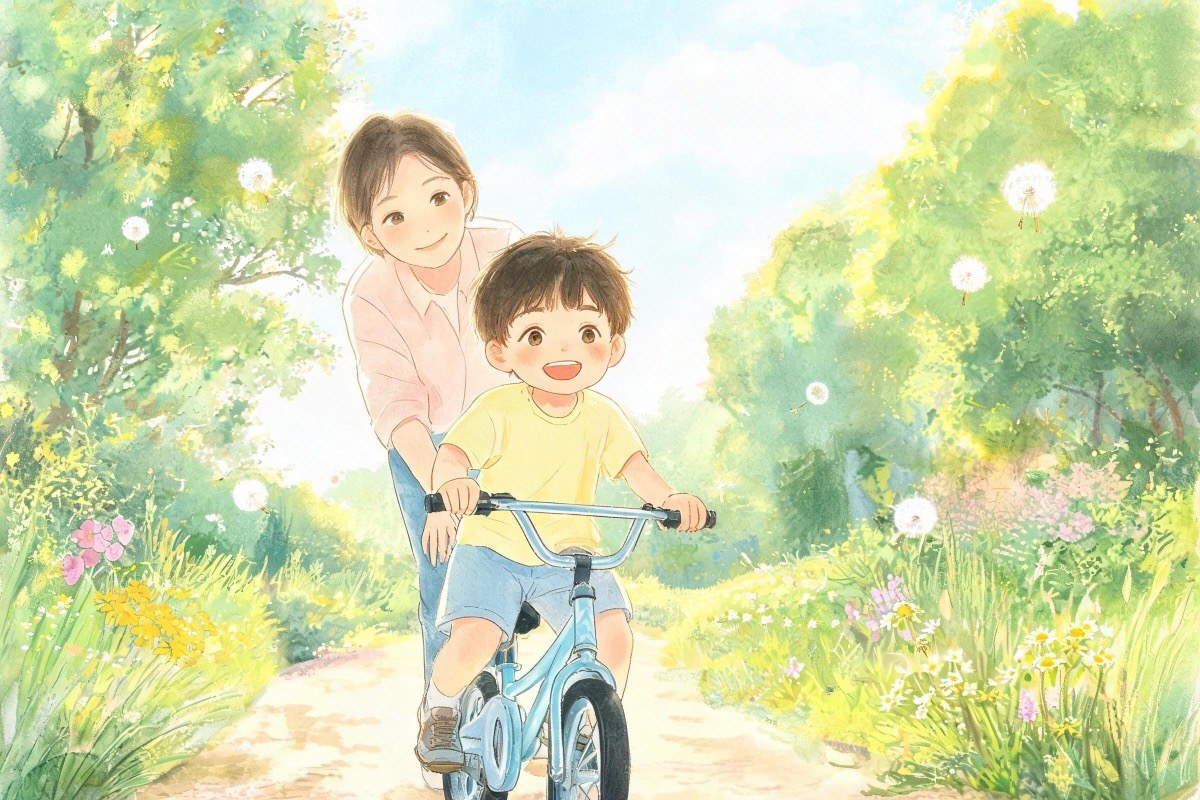
暑假第一天,妈妈把那辆小轮车搬到楼下空地,说这个假期必须学会。楼下的表哥骑得飞快,绕着花坛一圈接一圈,看得我心里发痒。
爸爸下班回来,袖子还卷着,听完妈妈的话就把车扶正,让我跨上去。他说他扶着后座,我只管蹬。
头一圈他还跟着,第二圈我听见身后妈妈的喊声,一回头,车一歪,摔进了草地里,膝盖破了皮。爸爸蹲下来看,拿随身的手帕给我擦掉膝盖上的草屑。
我坐在草地上生闷气,觉得摔一次就说明我没天分。爸爸没讲道理,只说,再来,这回眼睛看着你要去的方向,别盯着轮子。
再上去那回我骑得小心,两只手死死攥着车把,指节都白了。骑到花坛那儿我就提前捏闸,宁可停下来也不敢拐弯。爸爸说,怕拐弯就慢慢拐,身子别僵。
我盯着花坛对面的那棵柳树,慢慢拐,居然拐过去了。风从耳朵边上过去,我心头一热,差点又歪。
傍晚凉快了接着练。有一回我骑得顺了,得意起来,单手扶把,车头一摆,我整个人从车座上滑下来,屁股墩坐在地上。爸爸这回笑了,笑完还是把我拉起来,说单手的事等学会了再说。
那天晚上我坐在台阶上,看着楼下黑漆漆的空地,跟妈妈说,别人都是天生就会的,我可能就是不会。
妈妈说,你爸小时候在土路上学,摔得比这狠。她说要不明天再试,不试也没人笑话你,就是你自己以后出门只能走路。
隔天清早我起得早,自己把车推到空地。没人扶,我先跨上去,一只脚点地,一圈一圈慢慢蹬。骑到花坛那儿,我提前减速,拐过去了,再往前,又拐了一个。
爸爸上班路过空地,站在栅栏外看了一会儿,没喊我,等我骑完第四圈才竖起一根大拇指,上班去了。
后来我越骑越远,从空地骑到小区门口,又骑回来。上坡蹬得费劲,脸憋得通红,我也没下来推,一寸一寸挪上去了。
开学前那个晚上,表哥来我家,说以后上下学可以一起骑车。我嘴上说有什么了不起,心里早就乐开了花。
那个暑假我摔了很多跤,膝盖上的疤到现在还在。可我记得最清楚的,是清早没人扶的那第四圈。
The Fourth Lap in the Early Morning
On the first day of summer vacation, my mother wheeled the small-wheeled bicycle down to the open ground below our building and said I had to learn it that summer, no excuses. My cousin upstairs rode like the wind, round and round the flower bed, and it made my heart itch to watch.
My father came home from work with his sleeves still rolled up, listened to my mother, then straightened the bicycle and told me to swing my leg over. He said he would hold the back of the seat and I only needed to pedal.
On the first lap he still followed. On the second lap I heard my mother calling from behind, turned my head, and the bicycle tipped, dropping me into the grass with a scraped knee. My father crouched to look and wiped the grass bits off my knee with a handkerchief he always carried.
I sat in the grass sulking, convinced that one fall proved I had no talent. My father offered no grand reasoning, only: again, and this time keep your eyes on where you want to go, not on the wheels.
When I got back on, I rode carefully, both hands gripping the handlebar so hard my knuckles turned white. Whenever I reached the flower bed I squeezed the brake early, preferring to stop rather than risk the turn. My father said, if you are afraid of turning, turn slowly, and do not stiffen your body.
I stared at the willow tree across from the flower bed, turned slowly, and actually made it past. The wind brushed past my ears, my chest warmed, and I nearly wobbled again.
In the cool of the evening we kept practicing. Once I was riding smoothly and got showy, steering with one hand; the front of the bicycle swung, and I slid right off the seat and landed on the ground. This time my father laughed, but after laughing he still pulled me up and said one-handed riding could wait until I had truly learned.
That night I sat on the steps looking at the dark open ground downstairs and told my mother that other people were born knowing how to ride, and I was probably just one of the kids who never could.
My mother said that when your father was a boy he learned on a dirt road and fell far harder than this. She said we could try again tomorrow, and that if I did not try, nobody would laugh at me — I would simply have to walk everywhere for the rest of my life.
The next morning I got up early and pushed the bicycle down to the open ground myself. Nobody was holding it. I swung one leg over, kept one foot on the ground, and pedaled around slowly, lap by lap. At the flower bed I slowed ahead of time and turned through it, then went on and turned through another.
My father passed by the open ground on his way to work, stood outside the fence and watched for a while without calling me, and only after I finished the fourth lap did he raise a thumb and head off to work.
After that I rode farther and farther, from the open ground to the gate of the compound and back. The uphill stretch was hard; my face turned red with effort, but I never got off to push. I moved up it inch by inch.
On the night before school reopened, my cousin came over and said we could ride to school together from now on. I said out loud, big deal, but inside I was already dancing.
That summer I fell many times, and the scar on my knee is still there. But what I remember most clearly is that fourth early-morning lap with nobody holding on.
小提示:上面此文档内容仅展示完整文档里的部分内容, 若需要下载完整文档请 点击免费下载完整文档 。