文章内容
蝉声里的链条声
多年以后我才明白,那个夏天最响的不是蝉,是链条。
蝉是从傍晚开始叫的。太阳一落到房后,梧桐树上的蝉就接力似的,一声接一声,把整条巷子叫得又稠又厚。我们家的院子在巷子中段,蝉声落进来,落在井台的水渍上,落在那辆立着的自行车上。
车是白天的,练是傍晚的。白天太毒,柏油路晒得发软,脚踩上去黏鞋底。爸爸收工回来,天边的云还烧着半边,他洗了手,把车扶正,说,走。
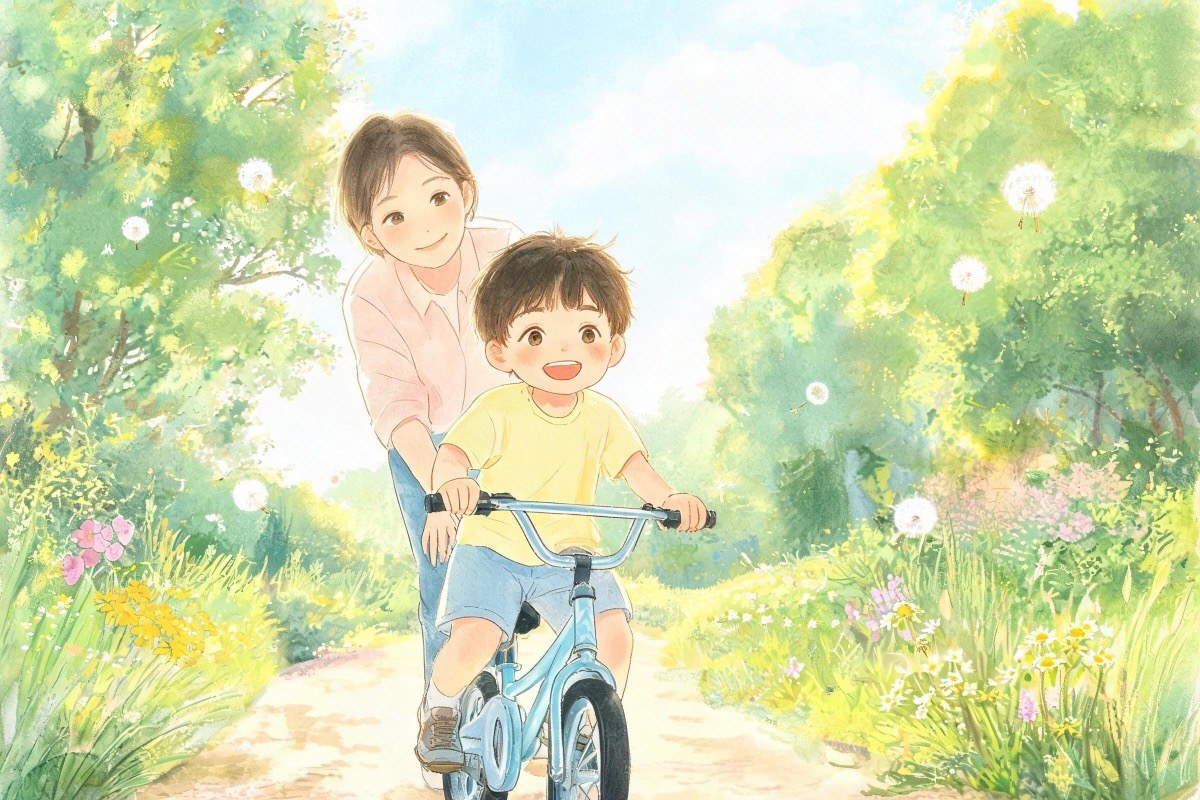
他扶着后座,我在前面蹬。巷子两边的墙把傍晚的风拢成一条,从背后推我的背。蝉在头顶叫,叫得越凶,我蹬得越快,好像快一点就能甩开什么。
甩不开的是摔。有一回压到井台的边,膝盖磕在石条上。蝉声停了一拍——其实没停,是我耳朵里空了一拍。爸爸蹲下来,卷起我的裤腿看,他的背对着西边的天,把那半边的光都挡住了。
那是我第一次注意到他的背。工装的后背有一块洗不掉的深色,汗湿了又干,干了又湿,盐渍出一圈白边。他蹲着的时候,背弓起来,像一截压弯了的扁担。
歇了不到一支烟的工夫,他把车提起来,说接着练。蝉又叫密了。我跨上去,他扶着,我们沿着巷子往深处去,路灯一盏一盏亮起来,把两个人的影子拉长,又叠在一起。
他松手是在哪一盏灯底下,我记不清了。只记得有一盏灯,我的影子单独在地上晃,晃着晃着就直了。他在后面小跑,脚步声混在蝉声里,由近到远,又由远追近。
学会那晚,我骑到巷口又骑回来。蝉声从四面八方涌过来,梧桐叶子在灯影里翻出银背。爸爸站在院门口,没鼓掌,也没喊,他点着一根烟,背对着门口的光,看车灯照过来的那一线。
烟头一明一灭。他的背在门框里立着,不知什么时候,那背没有白天蹲下时看着那么宽了。
后来我去了很远的地方上学,夏天听见蝉,别人听见的是热,我听见的是链条声,是蝉声缝里夹着的脚步声。有一年暑假回去,巷子拆了半边,梧桐还在,蝉还在叫。爸爸从车棚里推出一辆旧车,链条早锈死了,他说,你如今骑车,我反而不敢看了。
我知道他不敢看的是什么。他见过我摔在井台边的那一晚,也见过一盏灯底下影子单独晃起来的那一晚。蝉不懂这些,蝉只管叫,把每一个夏天都叫成那个夏天的样子。
车轮碾过的那个夏天没有回来过。可每年蝉一开口,它就整个回来了:傍晚的风、井台的水渍、工装后背的白盐边,还有门框里那个看车灯照过来的背影。
The Sound of the Chain Inside the Cicada Song
It was only years later that I understood: the loudest thing in that summer was not the cicadas but the chain.
The cicadas began at dusk. The moment the sun dropped behind the rooftops, the cicadas in the plane trees took up the call one after another, until the whole lane grew thick and heavy with sound. Our courtyard sat in the middle of the lane, and the cicada song fell into it — onto the water stains at the well, onto the bicycle standing there.
The bicycle belonged to the daytime, but we practiced at dusk. The middle of the day was too fierce; the asphalt softened in the sun and stuck to your shoes. When my father came home from work, half the sky still burning with cloud, he washed his hands, straightened the bicycle, and said, let us go.
He held the back of the seat while I pedaled ahead. The walls on both sides of the lane gathered the evening wind into a single stream that pushed my back from behind. The cicadas screamed overhead, and the fiercer they screamed, the faster I pedaled, as if going faster could shake off something.
What could not be shaken off was falling. Once I clipped the edge of the well and my knee struck the stone slab. The cicada song paused for a beat — it had not actually stopped; it was my ears that went empty for a beat. My father crouched and rolled up my trouser leg to look, his back turned to the western sky, blocking off all its light.
That was the first time I noticed his back. There was a dark patch on the back of his work jacket that no washing removed — sweat wet it and dried it, wet it and dried it, until a white rim of salt bloomed around it. Crouching, his back arched like a carrying pole bent under a load.
He rested less than the time it takes to smoke one cigarette, then lifted the bicycle and said, keep going. The cicadas had thickened again. I swung over the seat, he held on, and we rode deeper into the lane while the streetlamps came on one by one, stretching our two shadows long and then folding them together.
I cannot remember under which lamp he let go. I only remember one lamp under which my shadow wobbled on the ground alone — wobbling, wobbling, and then going straight. He was jogging behind me, his footsteps mixed into the cicada song, near, then far, then catching up again.
The evening I finally learned, I rode to the mouth of the lane and back. The cicada song surged in from all directions, and the plane tree leaves turned over silver backs in the lamplight. My father stood at the courtyard gate, neither clapping nor calling out. He lit a cigarette, his back to the light of the doorway, watching the thin line of my headlamp coming toward him.
The tip of the cigarette brightened and dimmed. His back stood framed in the doorway, and at some point it no longer looked as broad as it had when he crouched in the daylight.
Later I went far away to study. In summer, when others hear cicadas they hear the heat; I hear the chain, and footsteps stitched into the cicada song. One summer I went home and found half the lane demolished, though the plane tree remained and the cicadas still sang. My father wheeled an old bicycle out of the shed, its chain long rusted solid, and said that now when you ride, I am the one who dares not watch.
I knew what he dared not watch. He had seen me fall at the edge of the well, and he had seen a shadow wobble straight alone under a lamp. Cicadas understand none of this. They only sing, calling every summer back into the shape of that summer.
The summer the wheels rolled over never came back. But every year the moment the cicadas open their mouths, it returns entire: the evening wind, the water stains at the well, the white salt rim on the back of the work jacket, and the back in the doorway watching my headlamp approach.
墙角里的旧自行车
今天收拾老屋,在墙角碰倒了一辆自行车。车倒下去的声音很闷,惊得院子里的蝉齐齐哑了一瞬,又一层一层续上。
我扶着车站起来,手心蹭了一层灰。车把歪着,刹车皮硬得像老树皮,车座弹簧的一头戳出来,顶着我的掌心。就是这辆车。
院子里的梧桐今年格外多蝉。空壳还挂在树干上,一捏,脆得掉渣。小时候不觉得蝉多,只觉得傍晚来得慢。太阳落到房后要用很久,蝉就等在那段时间里,一开嗓,整条巷子都是它们的。
那年夏天也是傍晚学车。我在这辆车前学会的平衡,是在这个院子里绕出来的。先绕梧桐,再绕井台,后来绕整个院子。爸爸站在哪儿我都看得见,他一站定,背对着西晒的墙,影子斜斜地铺过来,铺到我的脚边。
他的背宽。这是小时候的看法。他背我去看过电影,背过一袋五十斤的面粉上五楼,背弓着,脖子往前探,像一只扛重物的老牛。我趴在那个背上,觉得天塌下来也有他顶着。
学车那些傍晚,那个背一直在车后头。摔了,它蹲下来;稳了,它直起来小跑。蝉把傍晚叫得发烫,他的汗把工装后背洇出一圈白边,我坐在后座上扶着他的腰,指头能摸到那块布硬硬的盐渍。
学会以后,我再没坐过后座。他也不再扶车。有一回我骑得飞快,从巷口冲回家,刹住车回头,看见他还站在巷口的老槐树底下,背对着我,望着别处,好像根本没看。后来我妈说,你爸那几天天天去巷口站着,看你骑过去,再走回来。
车在墙角立了很多年。我上中学换了新车,大学回来它就在杂物间,再后来搬进老屋墙角。链条锈死,铃铛哑了,谁也没扔。我爸说留着吧,占不了地方。
蝉还在叫。我推着这辆锈车在院子里支起来,试着蹬了一圈。链条不动,脚踏板空转,车晃了两下,我用脚撑住了。四十年过去,平衡还在腿上,扶车的人却不在了。
我把车擦了一遍,擦不掉锈,就把车把扶正,让它重新立稳在墙角。蝉声从梧桐那边一阵一阵涌过来,像很多年前的傍晚,整条巷子都在给一辆车让路。
有些东西锈在角落里,不是没用了。它立在那儿,夏天就认得回来的路。
The Old Bicycle in the Corner of the Wall
Today while clearing out the old house, I knocked over a bicycle in the corner of the wall. It fell with a dull thud that startled the cicadas in the courtyard into one instant of silence, after which their song layered back up, layer by layer.
I straightened up holding the frame, my palm coated in dust. The handlebar was bent, the brake pads hard as old bark, and one end of the seat spring poked out and pressed into my palm. This was the bicycle.
This year the courtyard plane tree holds an unusual number of cicadas. Their empty shells still hang on the trunk; squeeze one and it crumbles to flakes. As a child I never thought there were many cicadas — only that evening came slowly. The sun took a long time to sink behind the rooftops, and the cicadas waited inside that stretch of time, and once they opened their throats, the whole lane belonged to them.
I learned balance on that bicycle one such summer, circling it around this courtyard. First around the plane tree, then around the well, then around the whole courtyard. Wherever my father stood, I could see him. Once he planted himself, his back to the west-facing wall, his shadow slanted across the ground to my feet.
His back was broad. That was the verdict of a child. He carried me to the movies on it, carried a fifty-jin sack of flour up five flights of stairs, back bowed, neck reaching forward, like an old ox under a heavy load. Flat on that back, I felt that even if the sky fell, he would hold it up.
On those evenings of practice, that back was always behind the bicycle. When I fell, it crouched down; when I steadied, it straightened and jogged. The cicadas made the evening hot with their noise, and his sweat ringed the back of his jacket with white salt. Sitting on the rear seat holding his waist, my fingers could feel the stiff salt stains in the cloth.
After I learned, I never sat on the rear seat again, and he never held the bicycle again. Once I rode home fast, charging from the mouth of the lane, and when I braked and looked back, he was still standing under the old locust tree at the lane mouth, his back to me, looking elsewhere, as if he had not watched at all. Years later my mother told me that for days he had stood at the lane mouth every day, watching me ride past, then walking home.
The bicycle stood in corners for years. I got a new one in middle school; when I came back for university it was in the storage room, and later it moved into the corner of this old house. The chain rusted solid, the bell went mute, and nobody threw it away. My father said, keep it, it takes up no room.
The cicadas are still singing. I propped the rusted bicycle up in the courtyard and tried one lap. The chain would not move; the pedals spun empty; the bicycle wobbled twice and my foot caught it. Forty years on, the balance is still in my legs, but the one who held the seat is gone.
I wiped the bicycle down. The rust would not come off, so I straightened the handlebar and let it stand upright in the corner again. The cicada song surged in wave after wave from the plane tree, like an evening many years ago when the whole lane was making way for a bicycle.
Some things rust in a corner not because they are useless. They stand there, and summer knows the road back.
小提示:上面此文档内容仅展示完整文档里的部分内容, 若需要下载完整文档请 点击免费下载完整文档 。