文章内容
没有追上的影子
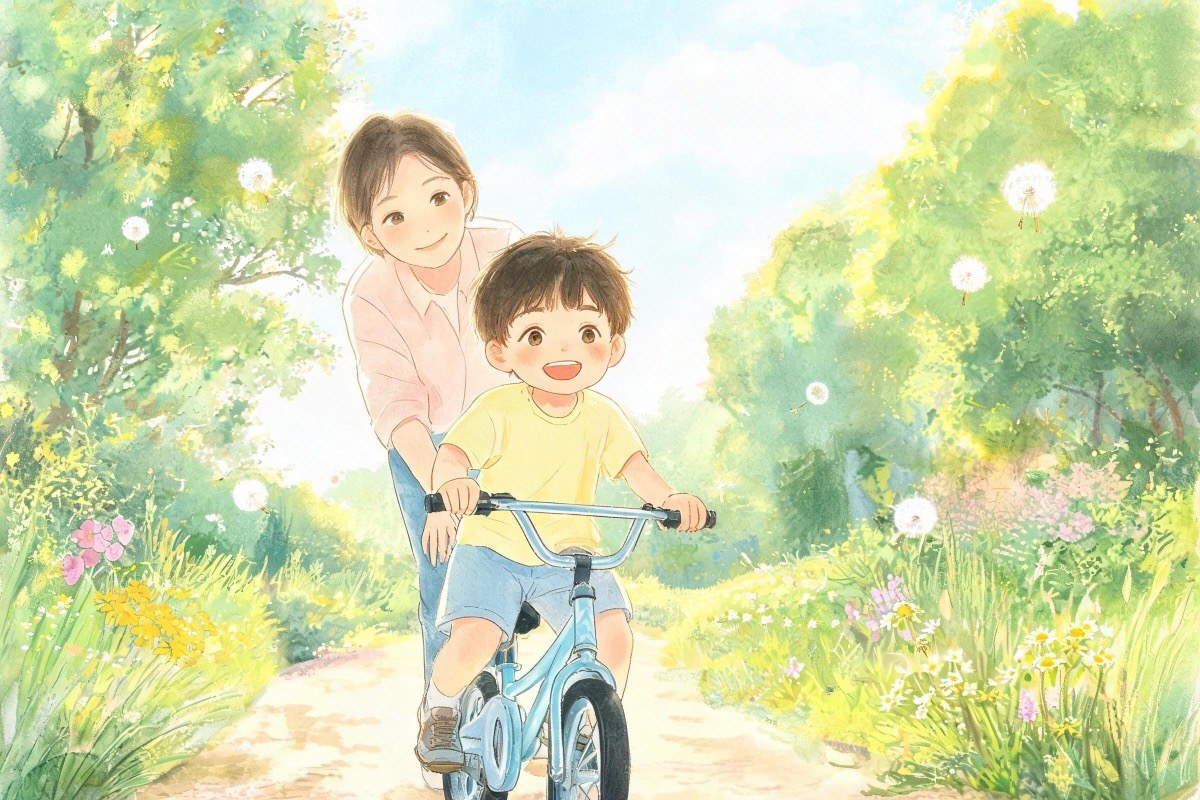
广场上的周六早晨,儿子和另外三四个孩子一起学骑自行车。别的孩子都有人在后面扶着后座,只有我站在三米开外,双手背在身后,像在看别人家的孩子。
他在青砖地上骑得歪歪扭扭,前轮压到一道砖缝,人和车一起倒了。膝盖擦破一块,渗出血珠。我往前迈了半步,又收回来。他先回头看我,我说,先看看车有没有事。声音比心跳平静。
他自己爬起来,把车摆正,用手抹了一下膝盖,又跨上去。骑出几米,第二次摔倒。这一次他没有回头。我忽然明白,忍住不扶比扶一把难得多——忍的不是手,是自己心里那股冲上去的劲儿。
旁边那个男孩的父亲全程攥着后座不放,孩子一直喊怕,车子反倒扭来扭去走不直。我儿子的车却越走越直,甚至开始试着绕广场中间的旗杆。
不知什么时候,我不再跟在他后面跑了。只有他的影子在前面跑,被早晨的太阳拉得又细又长,一直拉到广场那头。
他骑到尽头,调过头,远远地冲我喊,妈妈你看我会骑了!我应道,看见了,你一直会骑。他以为我一直在扶着,我没有告诉他。
下午我在日记里写:孩子的成长,常常发生在大人把手忍住的那道缝里。那一天我以为我在看他学车,回家才想明白,我学的其实是放手。
后来儿子长大,学了很多新东西,游泳,骑车上长坡,做第一碗面。每一次我都把手背在身后。他以为我在旁边歇着,其实我在忍住不冲过去。
偶尔也有没忍住的时候。有一回他学滑板摔得重,我冲过去扶了。他推开我的手,说,你以前不是这样的。那句话我记了很久。原来放手这件事,孩子比大人更早学会,也更不肯倒退。
到现在我还记得那个没有追上他的影子。它跑在我前面,替我上了一堂谁也替我上不了的课:信任不是看见他成功了才放手,是在他成功之前就放手。
The Shadow That Did Not Catch Up
On Saturday morning at the plaza, my son and three or four other children learned to ride bicycles. Every other child had someone holding the back rack, while I stood three meters away, with both hands behind my back, as if I were watching the child of someone else.
He wobbled across the blue stone bricks. The front wheel caught a seam, and man and bike fell together. His knee was scraped and a bead of blood came out. I stepped half a step forward and pulled it back. He looked at me first. I told him to check whether the bike was all right. My voice was calmer than my heart.
He got up by himself, set the bike straight, wiped his knee with his hand, and got back on. A few more meters, and he fell a second time. This time he did not look back. I understood all at once: holding back the wish to help is harder than helping. What you hold back is not the hand, but the impulse beating in your own chest.
The boy next to him had his back rack held tightly by his father the whole time, and kept crying that he was afraid, and the bike would not go straight. The bike of my son, on the contrary, went straighter and straighter, and he even began to try going around the flagpole at the center of the plaza.
At some moment, without noticing, I had stopped running behind him. Only his shadow kept running ahead, thin and long, stretched by the morning sun to the far end of the plaza.
He rode to the end, turned the bike around, and shouted from a distance, Mom, look, I can ride. I answered, I saw it, you have been able to ride all along. He thought I had been holding him up the whole time. I did not tell him otherwise.
In the afternoon I wrote this in my diary: the growth of a child often happens in the gap left by the held-back hand of an adult. That day I thought I was watching him learn to ride. Only when I got home did I understand that what I had really been learning was how to let go.
Later my son grew up and learned many new things, swimming, riding a bicycle up the long slope, cooking his first bowl of noodles. Every time, I kept my hands behind my back. He thought I was resting nearby, while I was holding back the wish to rush over.
Sometimes I failed too. Once he fell badly while learning to skate, and I rushed over and lifted him up. He pushed my hand away and said, you were not like this before. I have remembered that sentence for a long time. It turns out that letting go is learned earlier by children than by adults, and they are also less willing to go back.
Even now I remember that shadow which did not catch up. It ran ahead of me and taught me a lesson that no one could teach in my place: trust is not letting go after seeing him succeed, but letting go before he succeeds.
巷子两头的下午
老屋门前的巷子又直又长,青石板被几代人的脚磨得发亮。女儿六岁生日刚过,舅舅把那辆带辅助轮的小车拆了轮子,推到巷口,说就在巷子里学,两头我守着。
头一个下午她摔了四回。第一回磕在门槛石上,小腿青了一块;第二回连人带车栽进巷边的浅水沟,裤腿全是泥。我蹲在巷口没动,手在心里掐着自己的手腕。她坐在泥里哭,哭完自己把车从沟里拖出来,冲我喊,爸爸你过来看看车坏没坏。我走过去,只把车把给她摆正,其余让她自己来。
舅舅在另一头看不下去,说你这当爹的怎么当的。我说,手一伸,她就知道有退路;今天不扶,是让她知道没有退路,但有人看着。这话我说得生硬,其实是说给自己听的——当爹的手比谁都痒。
第二个下午她只在拐弯处摔了一回,掌根蹭破点皮,吹一吹又骑。巷子两头的门都开着,邻居递出来半块创可贴,她接过去自己贴,贴歪了也不管。我忽然发现,巷子里的大人孩子都默认了一件事:摔了,先自己起来。
到第三个下午,我在巷口假装看手机,眼睛全在镜片的余光里。她骑得越来越快,风把她的头发掀起来。我这才反应过来,从第二个下午起,我就没再碰过那辆车。放手不是某个时刻的决定,是手一点一点、自己松开的。
她骑到巷口,捏闸,脚点地,抬头冲我笑,露出缺了半颗的门牙。她说,爸爸,我摔了五回,骑了六回,我赢了。我点头,说这个算法对。
晚上她妈给她擦药,问她怕不怕。她说怕,但是摔完了车还在,爸爸还在巷口,就不怕了。我在门外听见,没接话。原来孩子把大人的忍看得明明白白,她不需要手,她需要的是巷口那个人不走。
后来女儿上学、骑车上学、骑车过天桥,摔过也摔得少了。我常想起巷子那头的下午,想起自己掐着手腕的样子。教孩子骑车,教的其实不是车,是让他相信:摔了能起来,起来还有人接着看。
The Afternoons at Both Ends of the Lane
The lane in front of the old house was straight and long, its blue stone slabs polished bright by the feet of several generations. Right after my daughter turned six, her uncle removed the training wheels from the small bike and pushed it to the mouth of the lane, saying she would learn right here, with one of us watching at each end.
On the first afternoon she fell four times. The first time she hit the threshold stone and her calf turned blue; the second time she and the bike toppled into the shallow ditch beside the lane, and her trouser legs were covered with mud. I squatted at the lane mouth and did not move, pinching my own wrist from inside my hands. She sat in the mud and cried, then dragged the bike out of the ditch by herself and shouted to me, Dad, come see whether the bike is broken. I walked over, straightened the handlebars for her only, and let her do the rest.
Her uncle could not stand it from the other end and said, what kind of father are you. I said, if I reach out a hand, she learns there is a way back; not helping today is to let her know there is no way back, but someone is watching. I said it stiffly, and it was really said to myself, because a father hands are the itchiest of all.
On the second afternoon she fell only once, at the turning, scraping the heel of her palm a little. She blew on it and rode again. The doors at both ends of the lane were open, and a neighbor handed out half a bandage; she took it and applied it herself, crooked, and did not care. I suddenly noticed that all the adults and children in the lane took one thing for granted: when you fall, get up first by yourself.
On the third afternoon I pretended at the lane mouth to look at my phone, while all my eyes lived in the peripheral vision of the lenses. She rode faster and faster, and the wind lifted her hair. Only then did I realize that since the second afternoon I had not touched that bike once. Letting go is not a decision taken at one moment; it is a hand loosening bit by bit, by itself.
She rode to the mouth of the lane, squeezed the brake, touched the ground with her feet, and looked up and smiled at me, showing the half-missing front tooth. She said, Dad, I fell five times and rode six times, I won. I nodded and said that arithmetic is right.
That evening her mother was applying medicine to her and asked whether she had been afraid. She said yes, but after each fall the bike was still there, and Dad was still at the lane mouth, so she was not afraid. I heard it from outside the door and did not answer. It turns out the child sees the patience of adults perfectly clearly: she did not need a hand, she needed the person at the lane mouth not to leave.
Later my daughter went to school, went to school by bicycle, crossed the overpass by bicycle; she still fell, but less often. I often think of those afternoons at the far end of the lane, and of myself pinching my wrist. Teaching a child to ride a bicycle teaches, in fact, not the bike, but the belief that when you fall you can get up, and when you get up someone is still watching.
小提示:上面此文档内容仅展示完整文档里的部分内容, 若需要下载完整文档请 点击免费下载完整文档 。