文章内容
我的诚信作文翻身记:从讲道理到讲故事
上学期第一次写诚信作文,我闭着眼二十分钟就交了,自以为写得很好。作文里全是道理:诚信是中华民族的传统美德,我们要诚实守信,不做不诚实的事。结尾还抄了一句课本上的名言。我觉得这样的作文挑不出毛病。
作文本发下来,分数是我从没见过的低。老师在文末批了一行字:通篇没有一件事,读者不知道你到底诚不诚信。我不服气,去找老师问:我写的每句话都对,为什么不行?老师把我的作文本翻到那页,让我当场读第一段。我读到诚信是传统美德那句就卡住了,因为我自己也说不清这句和我有什么关系。老师说:这就是问题。你一直在讲道理,可诚信作文要的是故事,读者想看到你经历的那件事。
老师给了我三步改法。第一步,选事。他让我回想一个学期里跟诚实沾边的瞬间:有没有打碎东西主动承认过,有没有买东西被多找零钱,有没有答应同学的事差点没做到。我想了十几分钟,想起有一回在文具店买本子,店主多找了我五块钱,我攥着钱走出十几步又折回去。老师听完说:就写这个,别换别的。第二步,放慢。他要求我把折回去那十几步拆开写:手心出汗没有,路上在想什么,回去之后怎么开口。第三步,删道理。写完全文再回头数,凡是直接喊口号的句子全部删掉,只留最后一段允许说一句自己的真实感受。
改完的第二稿,开头是我攥着五块钱走出店门。中间写我脑子里两个声音吵架,一个说反正不是骗人,一个说回家数钱时妈妈会问。结尾我写店主愣了一下说了一句谢谢,我下楼时脚步很轻。全文没有诚信两个字出现超过一次,分数却上到了全班前几名。我把两稿并排贴在书桌前,空泛那稿像广播稿,具体那稿像我自己。
这半年我总结出一个判断方法:写完任何一篇作文,把主题词全部圈出来,如果圈出来的地方比写到的事还多,说明又在讲道理了。讲道理谁都会,讲故事才是我自己的本事。现在每次动笔前我先问自己:这件事我能拆成几个动作?拆得出来再写,拆不出来就换事。
My Integrity Essay Makeover: From Preaching to Storytelling
Last term I wrote my first integrity essay with my eyes half closed and handed it in after twenty minutes, sure it was excellent. The whole piece was reasoning: integrity is a fine tradition of the Chinese nation, we should be honest and keep our promises, never do dishonest things. The ending even copied a famous line from the textbook. I thought nothing could be wrong with it.
When the notebook came back, the score was the lowest I had ever seen. The teacher wrote one line at the end: not a single event in the whole text, so the reader has no idea whether you are actually honest. I went to her feeling wronged and asked why, since every sentence I wrote was correct. She opened my notebook to that page and made me read the first paragraph aloud. I got stuck at the fine tradition sentence because I could not explain what it had to do with me. She said: there is the problem. You kept preaching, but an integrity essay wants a story. The reader wants to see the thing that happened to you.
She gave me three steps. Step one, pick the event. She asked me to recall honest moments from the term: admitting to breaking something, getting too much change, almost failing a promise to a classmate. After ten minutes I remembered buying a notebook at the stationery shop, the owner handed me five yuan too much, I walked a dozen steps away clutching the money, then turned back. She said: write this one, change nothing else. Step two, slow it down. She required me to unpack those dozen steps: were my palms sweaty, what raced through my head, how I started the sentence when I got back. Step three, delete the preaching. After finishing the draft I counted every slogan sentence and removed them all, allowing only one true feeling in the last paragraph.
The second draft opened with me walking out of the shop with the five yuan in my fist. The middle had two voices arguing in my head: one said it was not cheating anyway, the other said Mom would ask when she counted the money at home. The ending said the owner froze for a second and thanked me, and my steps felt light on the stairs down. The word integrity appeared once in the whole text, yet the score jumped to the top of the class. I pasted both drafts side by side on my desk. The vague one read like a broadcast script; the specific one read like me.
Over that term I built a test for myself: after any essay, circle every theme word. If the circles outnumber the events, I am preaching again. Anyone can preach; telling the story is the skill that belongs to me. Now before writing I ask: can I break this event into actions? If yes, write. If not, change the event.
范文对照点评:同一件事,两稿差在哪
下面用同一个题材——文具店多找五块钱——展示两稿的逐段差别。第一稿开头:诚信是做人的根本,一个人如果失去了诚信,就失去了一切。点评:这是议论文开头,放在记叙文里等于没开头,读者既不知道时间也不知道地点。改法:直接从动作切入,例如那天我买完本子,把店主递来的零钱塞进书包侧袋,走出店门才发现多了五块。信息量立刻从概念变成现场。
第一稿中间:我想了想,觉得应该把钱还回去,因为做人要诚实。点评:一句话打发掉了全文最值钱的部分。还钱前的犹豫才是诚信作文的核心,犹豫越具体,主题越立得住。改法:把想了想三个字换成身体反应和念头往来,手心黏黏的,五块钱在口袋里硌着腿;走回去要过三个路口,会不会被店主当成想赖账的;这钱够买两张贴纸,就这么还回去有点亏。三个念头轮流出现,每个都不长,读者就能替人物纠结。
第一稿结尾:同学们,让我们都做一个诚实守信的人吧!点评:感叹句加呼吁,是作文本里最常见的废结尾。改法:只写归还后的一个细节,店主愣了一下,从抽屉里摸出一块橡皮塞给我,说找零的钱自己送回来的人不多。结尾停在橡皮上,道理不用喊,读者自己会得出。
第二稿全文六百多字,结构是发现多钱、走开、折返、开口、意外回馈五个节点,每个节点一段,段与段之间不写过渡句。点评这份结构时老师只提了一处修改建议:折返那段两个念头顺序要换,先写舍不得,再写过意不去,因为先承认贪小便宜的小心思,后面回头才显得真。这个建议点出了诚信作文最容易假的地方:把自已写成一秒钟都没犹豫过的好学生。真实的犹豫不丢人,跳过犹豫才不可信。
两稿并排看,字数只差八十多字,分数差了两档。差距不在好词好句,在三个决定:开头要不要从动作开始,犹豫要不要写足,结尾要不要忍住不喊口号。这三个决定每个都能单独练,下次写任何记事作文,先检查这三处,比背五十个开头模板都有用。
Side-by-Side Review: Two Drafts of the Same Event
Below is the same subject — five yuan too much at the stationery shop — reviewed paragraph by paragraph across two drafts. Draft one opens: integrity is the foundation of being a person; lose integrity and you lose everything. Comment: this is an argumentative opening; in a narrative it is the same as no opening at all. The reader knows neither the time nor the place. Fix it by starting with action: that day after buying the notebook, I stuffed the change into my bag pocket and only noticed the extra five yuan once I was outside. The information jumps from concept to scene.
Draft one middle: I thought for a while and decided to return it, because one should be honest. Comment: one sentence waves away the most valuable part of the essay. The hesitation before returning is the heart of an integrity essay; the more concrete the hesitation, the stronger the theme. Fix it by replacing thought for a while with body reactions and racing thoughts: palms sticky, the five yuan pressing against my leg through the pocket; I would cross three intersections walking back, would the owner think I was trying to weasel out; the money could buy two stickers, returning it feels like a loss. Let three thoughts take turns, each short, and the reader will wrestle for the character.
Draft one ending: classmates, let us all be honest and trustworthy people! Comment: exclamation plus call to action, the most wasted ending in exercise books. Fix it by writing one detail after the return: the owner froze, fished an eraser from the drawer and pressed it into my hand, saying few people walk back with change that was their own mistake. Stop the essay on the eraser. No need to shout the lesson; the reader draws it.
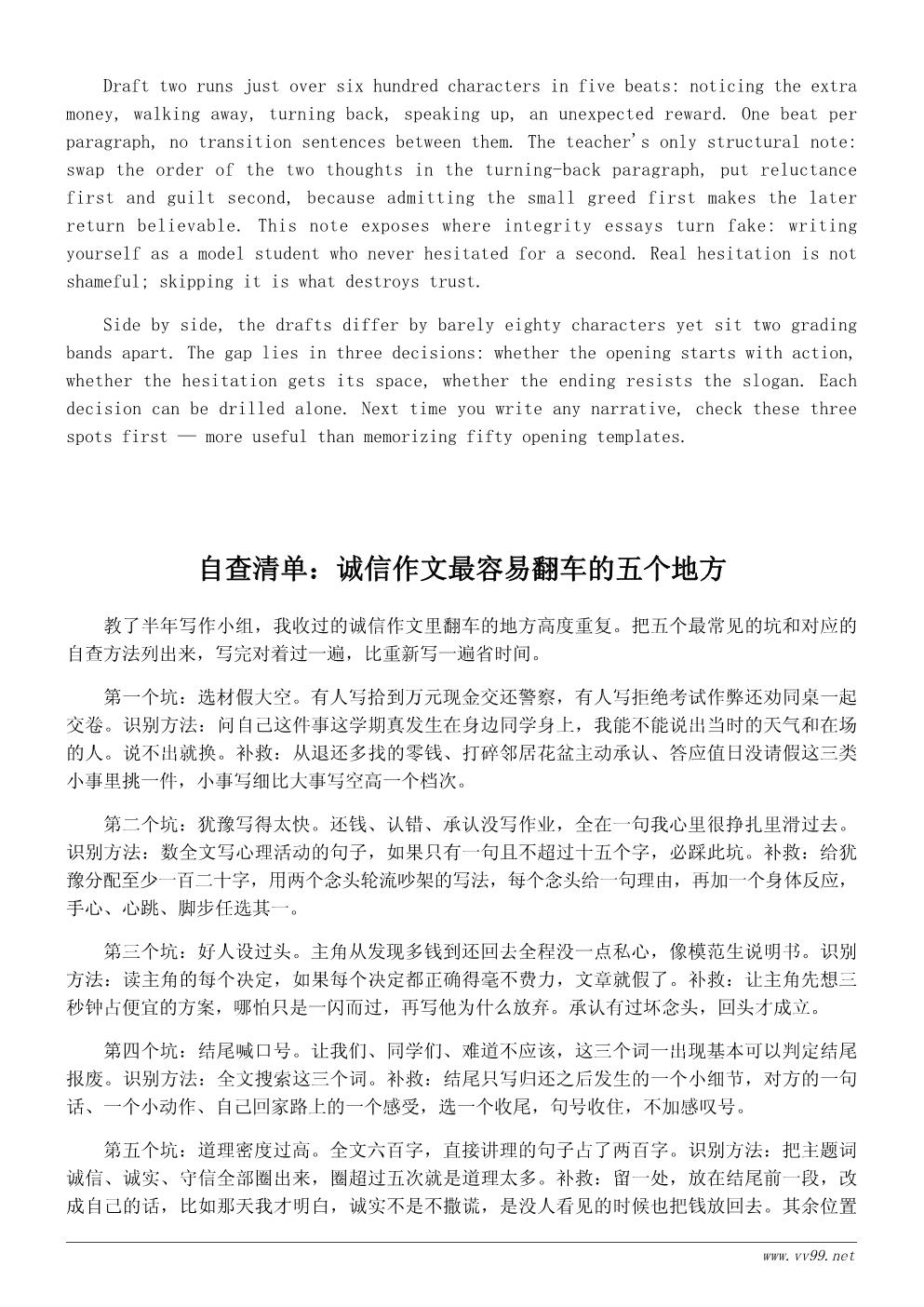
Draft two runs just over six hundred characters in five beats: noticing the extra money, walking away, turning back, speaking up, an unexpected reward. One beat per paragraph, no transition sentences between them. The teacher's only structural note: swap the order of the two thoughts in the turning-back paragraph, put reluctance first and guilt second, because admitting the small greed first makes the later return believable. This note exposes where integrity essays turn fake: writing yourself as a model student who never hesitated for a second. Real hesitation is not shameful; skipping it is what destroys trust.
Side by side, the drafts differ by barely eighty characters yet sit two grading bands apart. The gap lies in three decisions: whether the opening starts with action, whether the hesitation gets its space, whether the ending resists the slogan. Each decision can be drilled alone. Next time you write any narrative, check these three spots first — more useful than memorizing fifty opening templates.
小提示:上面此文档内容仅展示完整文档里的部分内容, 若需要下载完整文档请 点击免费下载完整文档 。