文章内容
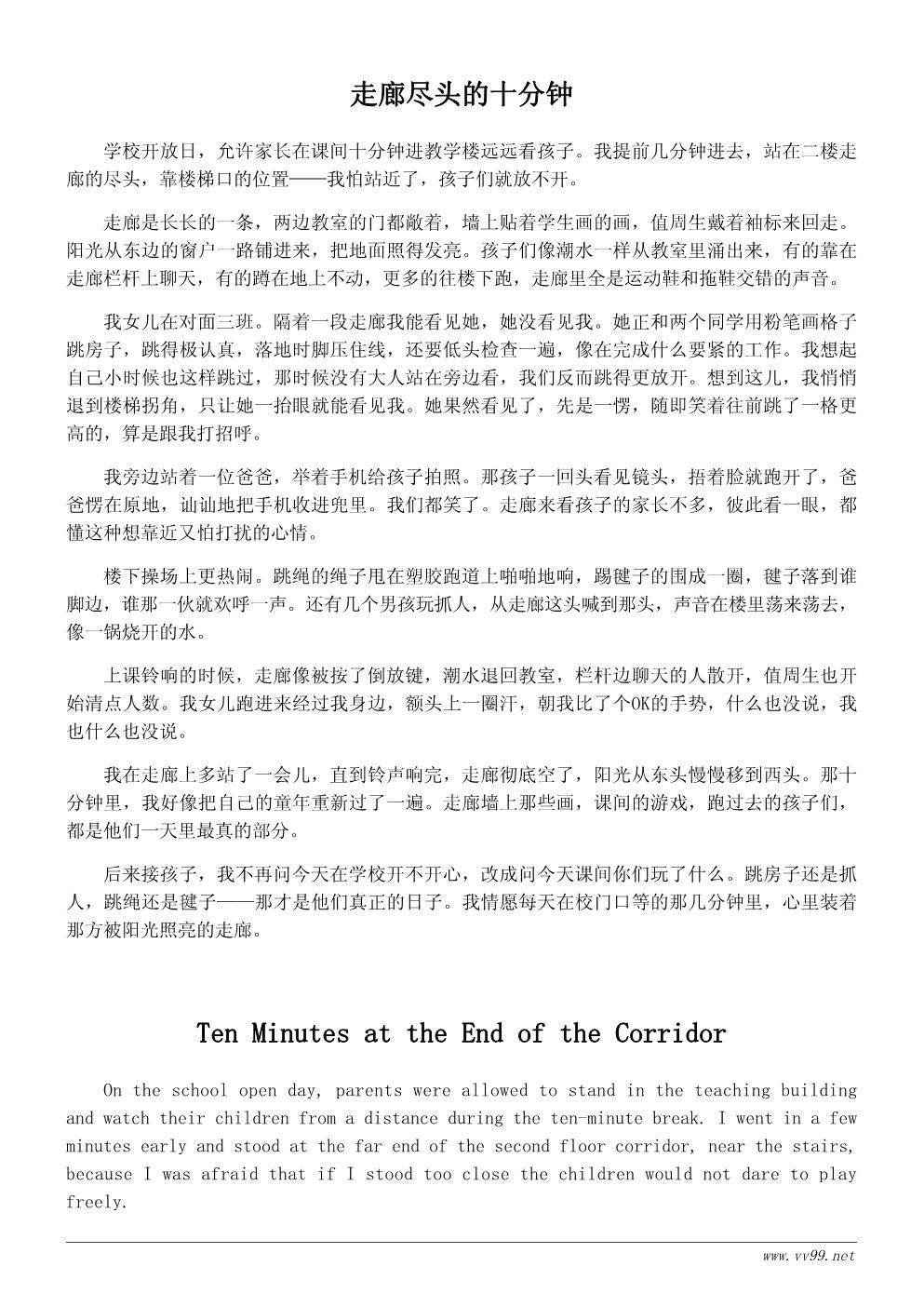
走廊尽头的十分钟
学校开放日,允许家长在课间十分钟进教学楼远远看孩子。我提前几分钟进去,站在二楼走廊的尽头,靠楼梯口的位置——我怕站近了,孩子们就放不开。
走廊是长长的一条,两边教室的门都敞着,墙上贴着学生画的画,值周生戴着袖标来回走。阳光从东边的窗户一路铺进来,把地面照得发亮。孩子们像潮水一样从教室里涌出来,有的靠在走廊栏杆上聊天,有的蹲在地上不动,更多的往楼下跑,走廊里全是运动鞋和拖鞋交错的声音。
我女儿在对面三班。隔着一段走廊我能看见她,她没看见我。她正和两个同学用粉笔画格子跳房子,跳得极认真,落地时脚压住线,还要低头检查一遍,像在完成什么要紧的工作。我想起自己小时候也这样跳过,那时候没有大人站在旁边看,我们反而跳得更放开。想到这儿,我悄悄退到楼梯拐角,只让她一抬眼就能看见我。她果然看见了,先是一愣,随即笑着往前跳了一格更高的,算是跟我打招呼。
我旁边站着一位爸爸,举着手机给孩子拍照。那孩子一回头看见镜头,捂着脸就跑开了,爸爸愣在原地,讪讪地把手机收进兜里。我们都笑了。走廊来看孩子的家长不多,彼此看一眼,都懂这种想靠近又怕打扰的心情。
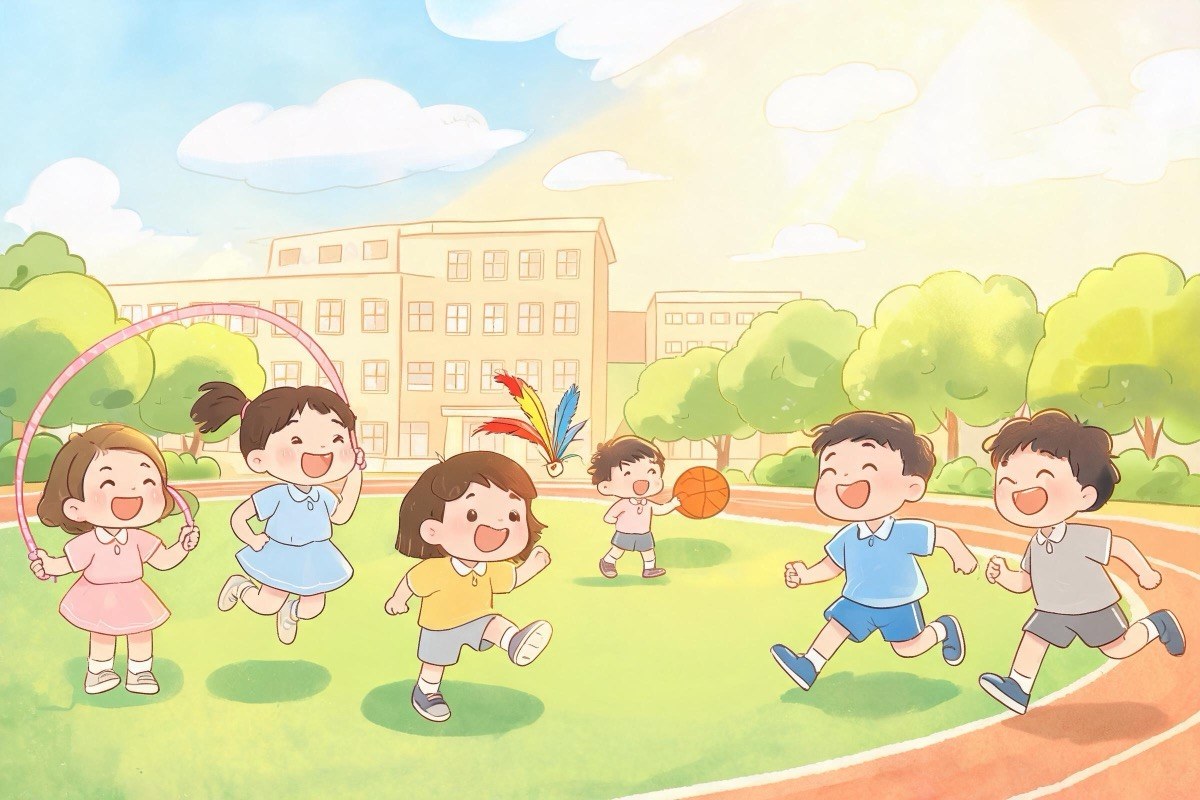
楼下操场上更热闹。跳绳的绳子甩在塑胶跑道上啪啪地响,踢毽子的围成一圈,毽子落到谁脚边,谁那一伙就欢呼一声。还有几个男孩玩抓人,从走廊这头喊到那头,声音在楼里荡来荡去,像一锅烧开的水。
上课铃响的时候,走廊像被按了倒放键,潮水退回教室,栏杆边聊天的人散开,值周生也开始清点人数。我女儿跑进来经过我身边,额头上一圈汗,朝我比了个OK的手势,什么也没说,我也什么也没说。
我在走廊上多站了一会儿,直到铃声响完,走廊彻底空了,阳光从东头慢慢移到西头。那十分钟里,我好像把自己的童年重新过了一遍。走廊墙上那些画,课间的游戏,跑过去的孩子们,都是他们一天里最真的部分。
后来接孩子,我不再问今天在学校开不开心,改成问今天课间你们玩了什么。跳房子还是抓人,跳绳还是毽子——那才是他们真正的日子。我情愿每天在校门口等的那几分钟里,心里装着那方被阳光照亮的走廊。
Ten Minutes at the End of the Corridor
On the school open day, parents were allowed to stand in the teaching building and watch their children from a distance during the ten-minute break. I went in a few minutes early and stood at the far end of the second floor corridor, near the stairs, because I was afraid that if I stood too close the children would not dare to play freely.
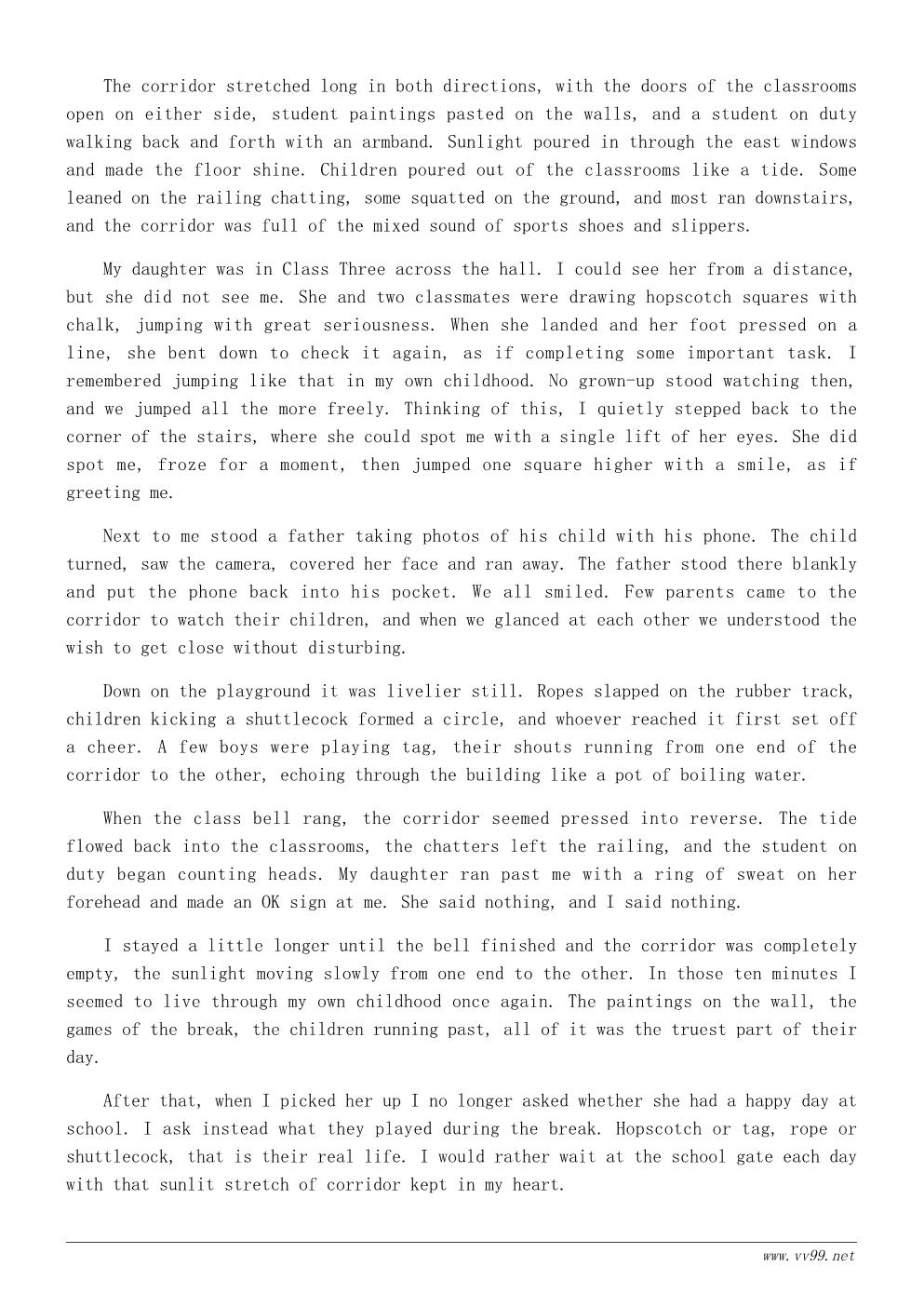
The corridor stretched long in both directions, with the doors of the classrooms open on either side, student paintings pasted on the walls, and a student on duty walking back and forth with an armband. Sunlight poured in through the east windows and made the floor shine. Children poured out of the classrooms like a tide. Some leaned on the railing chatting, some squatted on the ground, and most ran downstairs, and the corridor was full of the mixed sound of sports shoes and slippers.
My daughter was in Class Three across the hall. I could see her from a distance, but she did not see me. She and two classmates were drawing hopscotch squares with chalk, jumping with great seriousness. When she landed and her foot pressed on a line, she bent down to check it again, as if completing some important task. I remembered jumping like that in my own childhood. No grown-up stood watching then, and we jumped all the more freely. Thinking of this, I quietly stepped back to the corner of the stairs, where she could spot me with a single lift of her eyes. She did spot me, froze for a moment, then jumped one square higher with a smile, as if greeting me.
Next to me stood a father taking photos of his child with his phone. The child turned, saw the camera, covered her face and ran away. The father stood there blankly and put the phone back into his pocket. We all smiled. Few parents came to the corridor to watch their children, and when we glanced at each other we understood the wish to get close without disturbing.
Down on the playground it was livelier still. Ropes slapped on the rubber track, children kicking a shuttlecock formed a circle, and whoever reached it first set off a cheer. A few boys were playing tag, their shouts running from one end of the corridor to the other, echoing through the building like a pot of boiling water.
When the class bell rang, the corridor seemed pressed into reverse. The tide flowed back into the classrooms, the chatters left the railing, and the student on duty began counting heads. My daughter ran past me with a ring of sweat on her forehead and made an OK sign at me. She said nothing, and I said nothing.
I stayed a little longer until the bell finished and the corridor was completely empty, the sunlight moving slowly from one end to the other. In those ten minutes I seemed to live through my own childhood once again. The paintings on the wall, the games of the break, the children running past, all of it was the truest part of their day.
After that, when I picked her up I no longer asked whether she had a happy day at school. I ask instead what they played during the break. Hopscotch or tag, rope or shuttlecock, that is their real life. I would rather wait at the school gate each day with that sunlit stretch of corridor kept in my heart.
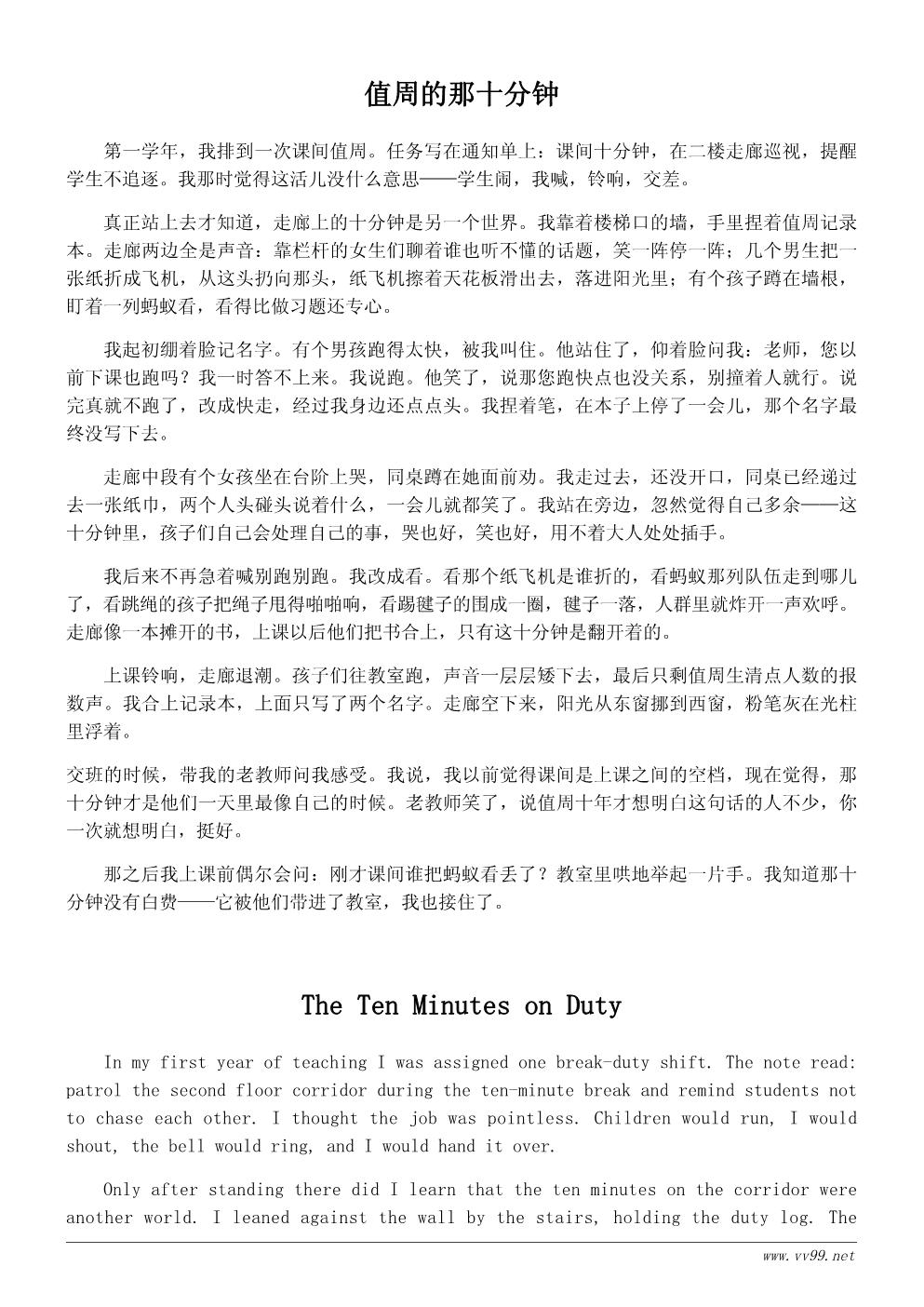
值周的那十分钟
第一学年,我排到一次课间值周。任务写在通知单上:课间十分钟,在二楼走廊巡视,提醒学生不追逐。我那时觉得这活儿没什么意思——学生闹,我喊,铃响,交差。
真正站上去才知道,走廊上的十分钟是另一个世界。我靠着楼梯口的墙,手里捏着值周记录本。走廊两边全是声音:靠栏杆的女生们聊着谁也听不懂的话题,笑一阵停一阵;几个男生把一张纸折成飞机,从这头扔向那头,纸飞机擦着天花板滑出去,落进阳光里;有个孩子蹲在墙根,盯着一列蚂蚁看,看得比做习题还专心。
我起初绷着脸记名字。有个男孩跑得太快,被我叫住。他站住了,仰着脸问我:老师,您以前下课也跑吗?我一时答不上来。我说跑。他笑了,说那您跑快点也没关系,别撞着人就行。说完真就不跑了,改成快走,经过我身边还点点头。我捏着笔,在本子上停了一会儿,那个名字最终没写下去。
走廊中段有个女孩坐在台阶上哭,同桌蹲在她面前劝。我走过去,还没开口,同桌已经递过去一张纸巾,两个人头碰头说着什么,一会儿就都笑了。我站在旁边,忽然觉得自己多余——这十分钟里,孩子们自己会处理自己的事,哭也好,笑也好,用不着大人处处插手。
我后来不再急着喊别跑别跑。我改成看。看那个纸飞机是谁折的,看蚂蚁那列队伍走到哪儿了,看跳绳的孩子把绳子甩得啪啪响,看踢毽子的围成一圈,毽子一落,人群里就炸开一声欢呼。走廊像一本摊开的书,上课以后他们把书合上,只有这十分钟是翻开着的。
上课铃响,走廊退潮。孩子们往教室跑,声音一层层矮下去,最后只剩值周生清点人数的报数声。我合上记录本,上面只写了两个名字。走廊空下来,阳光从东窗挪到西窗,粉笔灰在光柱里浮着。
交班的时候,带我的老教师问我感受。我说,我以前觉得课间是上课之间的空档,现在觉得,那十分钟才是他们一天里最像自己的时候。老教师笑了,说值周十年才想明白这句话的人不少,你一次就想明白,挺好。
那之后我上课前偶尔会问:刚才课间谁把蚂蚁看丢了?教室里哄地举起一片手。我知道那十分钟没有白费——它被他们带进了教室,我也接住了。
The Ten Minutes on Duty
In my first year of teaching I was assigned one break-duty shift. The note read: patrol the second floor corridor during the ten-minute break and remind students not to chase each other. I thought the job was pointless. Children would run, I would shout, the bell would ring, and I would hand it over.
Only after standing there did I learn that the ten minutes on the corridor were another world. I leaned against the wall by the stairs, holding the duty log. The corridor was full of sounds on both sides. The girls at the railing talked about topics no outsider could follow, laughing in bursts. A few boys folded a sheet of paper into an airplane and threw it from one end to the other; it skimmed along the ceiling and landed in the sunlight. One child squatted by the wall watching a line of ants, more focused than he ever was on exercises.
At first I kept a stern face and wrote down names. A boy ran too fast and I called him back. He stopped and looked up at me and asked: teacher, did you run during breaks when you were small? I could not answer at once. I said I did. He laughed and said then it is fine to run fast, just do not bump into anyone. After that he really walked instead of running, and nodded to me as he passed. I held my pen over the log for a while, and in the end did not write his name down.
Halfway down the corridor a girl sat on the steps crying while her deskmate squatted in front of her. I walked over, but before I spoke the deskmate had already handed her a tissue, the two heads together saying something, and soon both were laughing. Standing there I suddenly felt unnecessary. In these ten minutes children handle their own affairs themselves, the crying and the laughing, without adults stepping in everywhere.
After that I stopped rushing to shout do not run. I began to watch. I watched who folded the paper airplane, how far the ant column had marched, how the rope jumpers slapped the ground, how the shuttlecock circle cheered when the cock fell. The corridor was like an open book. They close it when class begins; only in these ten minutes is it left open.
When the class bell rang the corridor went back like a tide. The children ran to classrooms, the noise sank layer by layer, and only the counting voices of the student on duty remained. I closed the log. Only two names were on it. The corridor emptied, the sunlight moved from the east window to the west, and chalk dust floated in the beam.
At the handover the veteran teacher who mentored me asked how it felt. I said I used to think the break was the gap between classes; now I think those ten minutes are when they are most themselves. She smiled and said many people take ten years of duty to learn that sentence, and I learned it in one shift, which is good.
Since then, before class I sometimes ask: who lost sight of the ants during the break just now? A forest of hands shoots up. I know those ten minutes were not wasted. The children carried them into the classroom, and I caught them.
小提示:上面此文档内容仅展示完整文档里的部分内容, 若需要下载完整文档请 点击免费下载完整文档 。