文章内容
怎么设计一节「小溪边的夏天」写景作文指导课:从目标到板书
教学目标写三行,每行都可检查。知识目标:学生能说出按顺序观察的两种方法,从远到近和从整体到局部。能力目标:每人完成一段一百五十字左右的景物片段,至少用到三种感觉。情感目标:学生能说出一个校园里想再去观察的地点。目标写成这样,下课前能当场验证,教学反思也不用凭感觉。
重点和难点要分开写。重点是按顺序观察:先定观察点,再定方向。难点是把五感写成具体的词,避开「美丽」「怡人」这类空话。突破难点的办法要写进教学过程:让学生在范文里圈出感觉词,再用具体的动作和声音替换掉空泛的形容词。
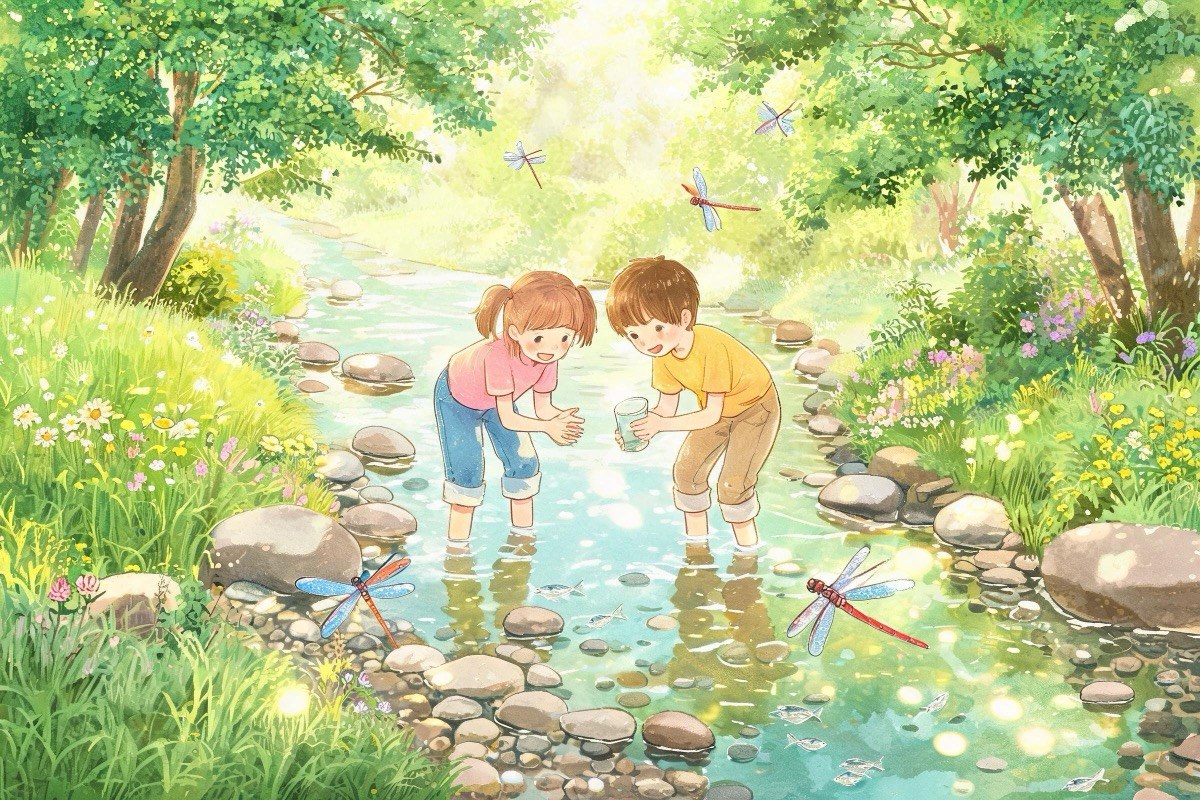
教学过程按三环节排,四十分钟一节课的分配是:景物导入五分钟,范文引路十二分钟,当堂片段练笔十八分钟,讲评小结五分钟。导入环节播放一段溪水的声音,学生闭眼听,听完说「听见了什么」,老师点题:闭着眼睛也能把景物写活,这就是感觉的作用。
范文引路环节只拆一段。选一段既有顺序又有感觉的文字,例如先写小溪整体、再写石头和水草的那一段。让学生用两种颜色的笔,一种圈表示顺序的词,一种圈表示感觉的词,汇报后教师总结两句话:顺序是骨架,感觉是血肉。
练笔环节的硬性要求写三条:一百五十字、至少三种感觉、一个自己想的比喻。同桌互评就按这三条打星,教师挑两篇投影读,只评这三条,不做笼统的好差评价。
板书设计成一张可抄写的思维导图:中间写「小溪」,左边两个分支是「从远到近」「从整体到局部」,右边五个小分支是「看、听、触、嗅、想」。下课前学生把这张图抄进笔记本,回家写作文时可以直接套用。
How to Design a Stream Side Descriptive Writing Lesson from Goals to Board Plan
Write the teaching goals in three lines, each one checkable. Knowledge goal: students can name two ways of observing in order, from far to near and from whole to parts. Skill goal: each student writes a descriptive fragment of about one hundred fifty characters using at least three senses. Attitude goal: each student names one spot on campus they would like to observe again. Goals written this way can be verified before the bell, and the teaching reflection no longer runs on gut feeling.
Separate the key point from the difficult point. Key point: observe in order, first fix the viewing spot, then fix the direction. Difficult point: turn the five senses into concrete words and avoid empty adjectives like beautiful or pleasant. The fix goes into the teaching process: students circle sense words in the model text, then replace vague adjectives with concrete actions and sounds.
Arrange the lesson in three blocks. For a forty-minute period: scenery lead-in five minutes, model text twelve minutes, on-the-spot fragment writing eighteen minutes, review and summary five minutes. In the lead-in, play a clip of stream water. Students close their eyes, listen, and say what they heard. The teacher states the point: you can bring scenery to life with your eyes closed, and that is what the senses do.
In the model text block, take apart only one paragraph. Pick one that carries both order and senses, for example a paragraph that starts with the whole stream and then moves to stones and water weeds. Students use two colored pens, one circling order words and one circling sense words. After reports, the teacher sums up in two lines: order is the skeleton, senses are the flesh and blood.
The writing block carries three hard requirements: about one hundred fifty characters, at least three senses, and one metaphor of their own. Partners rate each other with stars on exactly these three lines. The teacher projects two pieces and comments only on the three requirements, never on general quality.
Design the board plan as a copyable mind map: write stream in the center, two branches on the left for from far to near and from whole to parts, five small branches on the right for seeing, hearing, touching, smelling, and imagining. Before the bell, students copy the map into their notebooks and can reuse it when writing at home.
一份「小溪边的夏天」教案实例:逐环节点评好在哪、漏在哪
假设教案这样写导入:教师播放溪水声十秒,提问「你听到了什么」,学生自由答三到五个,教师板书课题「写景要按顺序、用五感」。点评:导入干净,十秒声音加三五个回答,五分钟能收住。隐患是教师容易恋战,学生答到兴头上舍不得停。建议在教案里写死「最多五个回答」,超时就把话题压进范文环节。
范文引路环节写的是:出示一段一百二十字的范文,先教师范读,再学生默读圈词,圈顺序词和感觉词各三处以上,同桌核对后汇报。点评:这段设计好在「只圈两类词」,任务窄而清楚。常见漏洞是范文选太长,三百字的范文一节课读不完也拆不完。样本里一百二十字的篇幅刚好,两分钟读完,十分钟拆完。
当堂练笔环节写的是:以校园小池为观察对象,写一段一百五十字片段,要求用「先整体后局部」的顺序和至少三种感觉,写完后同桌按三条要求互评打星。点评:把观察对象固定在校园小池,教室里就能完成,不必真去溪边,这是可复制的关键。漏写处:没给写不满字数学生的底线要求,建议补一行「写满一百字也算完成,课后再补」。
板书设计写的是:中间「写景」,左列「远到近、整体到局部」,右列「五感」,右下角留一块「学生好词收集区」。点评:好词收集区是亮点,随堂把学生练笔里的好词抄上去,讲评环节直接指着板书讲,比空讲形容词有效。容易漏的是板书位置:收集区要留白,别提前写满。
对照这份样本自查四项:导入有没有写死时长和回答个数、范文有没有标明字数、练笔有没有可操作的评价标准、板书有没有随堂生成的空间。四项齐,教案就能直接拿去上课,不用临场补设计。
A Sample Stream Writing Lesson Plan, Reviewed Block by Block
Suppose the lead-in reads: the teacher plays ten seconds of stream sound, asks what you hear, students answer freely three to five times, and the teacher writes the title on the board: description needs order and senses. Comment: the lead-in is clean, ten seconds of sound plus three to five answers wraps inside five minutes. The hidden risk is the teacher lingering. When answers get lively, it is hard to stop. Write a hard cap in the plan, at most five answers, and push any overflow into the model text block.
The model text block reads: show a one hundred twenty character passage, the teacher reads it aloud once, students reread silently and circle at least three order words and three sense words, then compare with a partner and report. Comment: the strength is circling only two kinds of words, a narrow and clear task. The common hole is picking a model that is too long, three hundred characters cannot be read and taken apart in one period. One hundred twenty characters take two minutes to read and ten to dissect.
The writing block reads: take the campus pond as the observation object, write a one hundred fifty character fragment using a whole to parts order and at least three senses, then partners rate with stars against the three requirements. Comment: fixing the object as the campus pond means the task works inside a classroom with no real trip to a stream, and that is what makes the lesson repeatable. One gap: no floor for students who cannot reach the word count. Add one line: one hundred full characters counts as done, top it up after class.
The board design reads: writing scenery in the center, far to near and whole to parts in the left column, five senses in the right column, and a blank corner labeled student word bank. Comment: the word bank is the highlight. Copy good words from student fragments onto it during class, and the review block points at the board instead of lecturing about adjectives. What is easy to miss: keep the bank blank, do not fill it in advance.
Check the sample against four questions: does the lead-in fix its length and answer count, does the model text state its length, does the writing task carry a workable rubric, does the board leave room for live generation. With all four, the plan goes straight into the classroom with no improvised design.
小提示:上面此文档内容仅展示完整文档里的部分内容, 若需要下载完整文档请 点击免费下载完整文档 。