文章内容
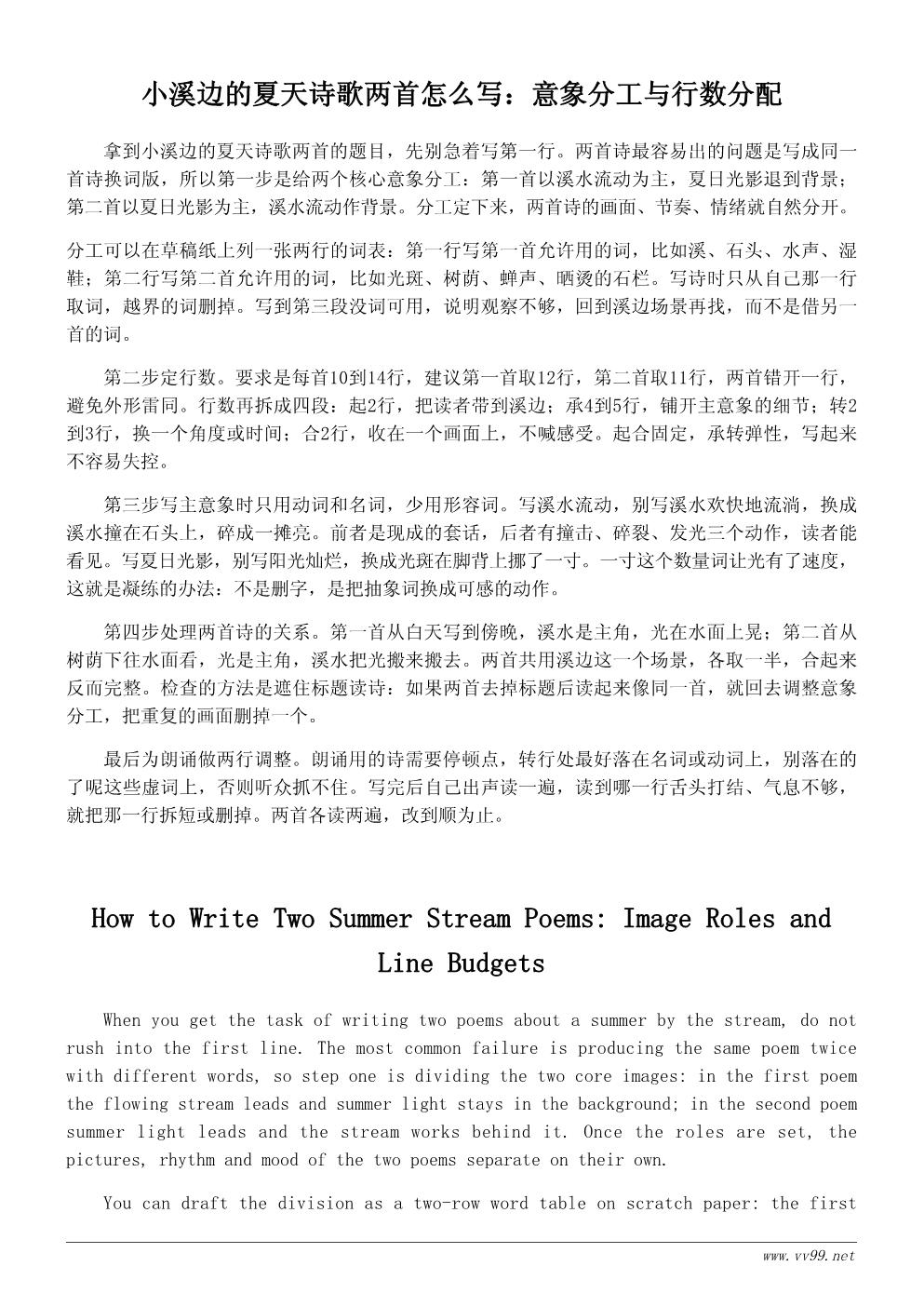
小溪边的夏天诗歌两首怎么写:意象分工与行数分配
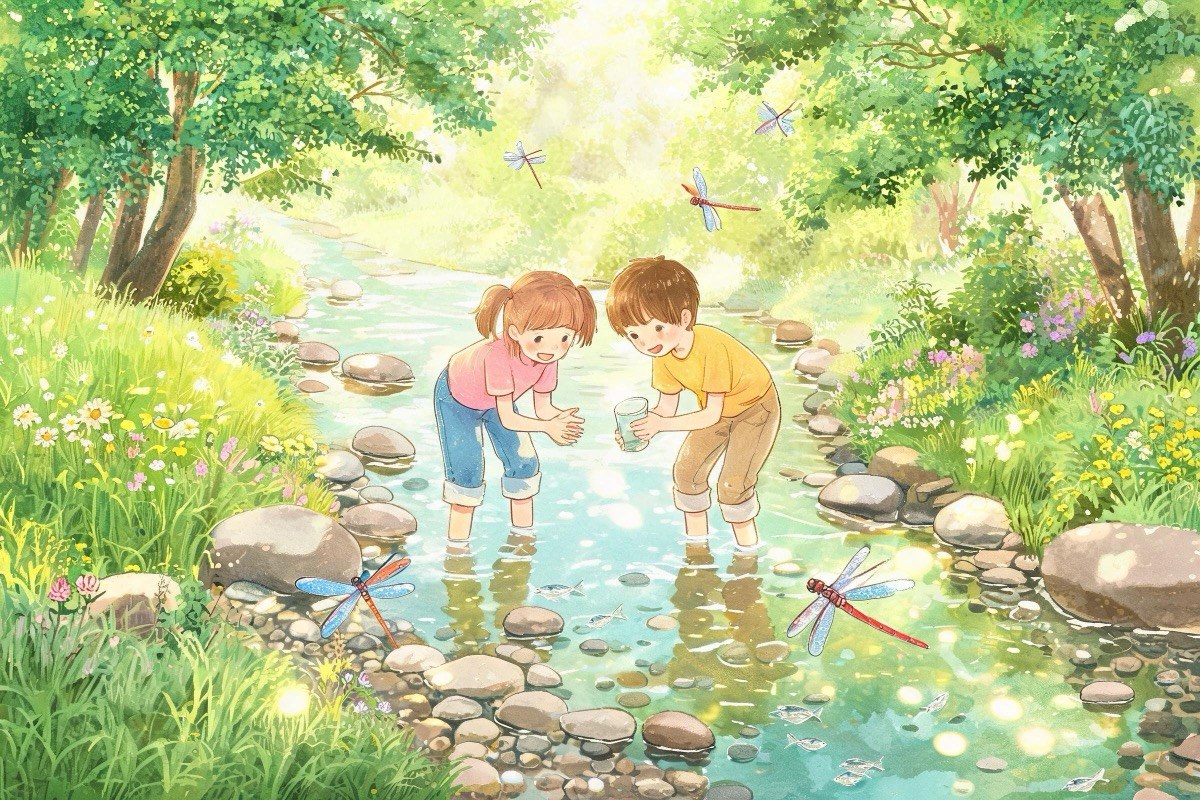
拿到小溪边的夏天诗歌两首的题目,先别急着写第一行。两首诗最容易出的问题是写成同一首诗换词版,所以第一步是给两个核心意象分工:第一首以溪水流动为主,夏日光影退到背景;第二首以夏日光影为主,溪水流动作背景。分工定下来,两首诗的画面、节奏、情绪就自然分开。
分工可以在草稿纸上列一张两行的词表:第一行写第一首允许用的词,比如溪、石头、水声、湿鞋;第二行写第二首允许用的词,比如光斑、树荫、蝉声、晒烫的石栏。写诗时只从自己那一行取词,越界的词删掉。写到第三段没词可用,说明观察不够,回到溪边场景再找,而不是借另一首的词。
第二步定行数。要求是每首10到14行,建议第一首取12行,第二首取11行,两首错开一行,避免外形雷同。行数再拆成四段:起2行,把读者带到溪边;承4到5行,铺开主意象的细节;转2到3行,换一个角度或时间;合2行,收在一个画面上,不喊感受。起合固定,承转弹性,写起来不容易失控。
第三步写主意象时只用动词和名词,少用形容词。写溪水流动,别写溪水欢快地流淌,换成溪水撞在石头上,碎成一摊亮。前者是现成的套话,后者有撞击、碎裂、发光三个动作,读者能看见。写夏日光影,别写阳光灿烂,换成光斑在脚背上挪了一寸。一寸这个数量词让光有了速度,这就是凝练的办法:不是删字,是把抽象词换成可感的动作。
第四步处理两首诗的关系。第一首从白天写到傍晚,溪水是主角,光在水面上晃;第二首从树荫下往水面看,光是主角,溪水把光搬来搬去。两首共用溪边这一个场景,各取一半,合起来反而完整。检查的方法是遮住标题读诗:如果两首去掉标题后读起来像同一首,就回去调整意象分工,把重复的画面删掉一个。
最后为朗诵做两行调整。朗诵用的诗需要停顿点,转行处最好落在名词或动词上,别落在的了呢这些虚词上,否则听众抓不住。写完后自己出声读一遍,读到哪一行舌头打结、气息不够,就把那一行拆短或删掉。两首各读两遍,改到顺为止。
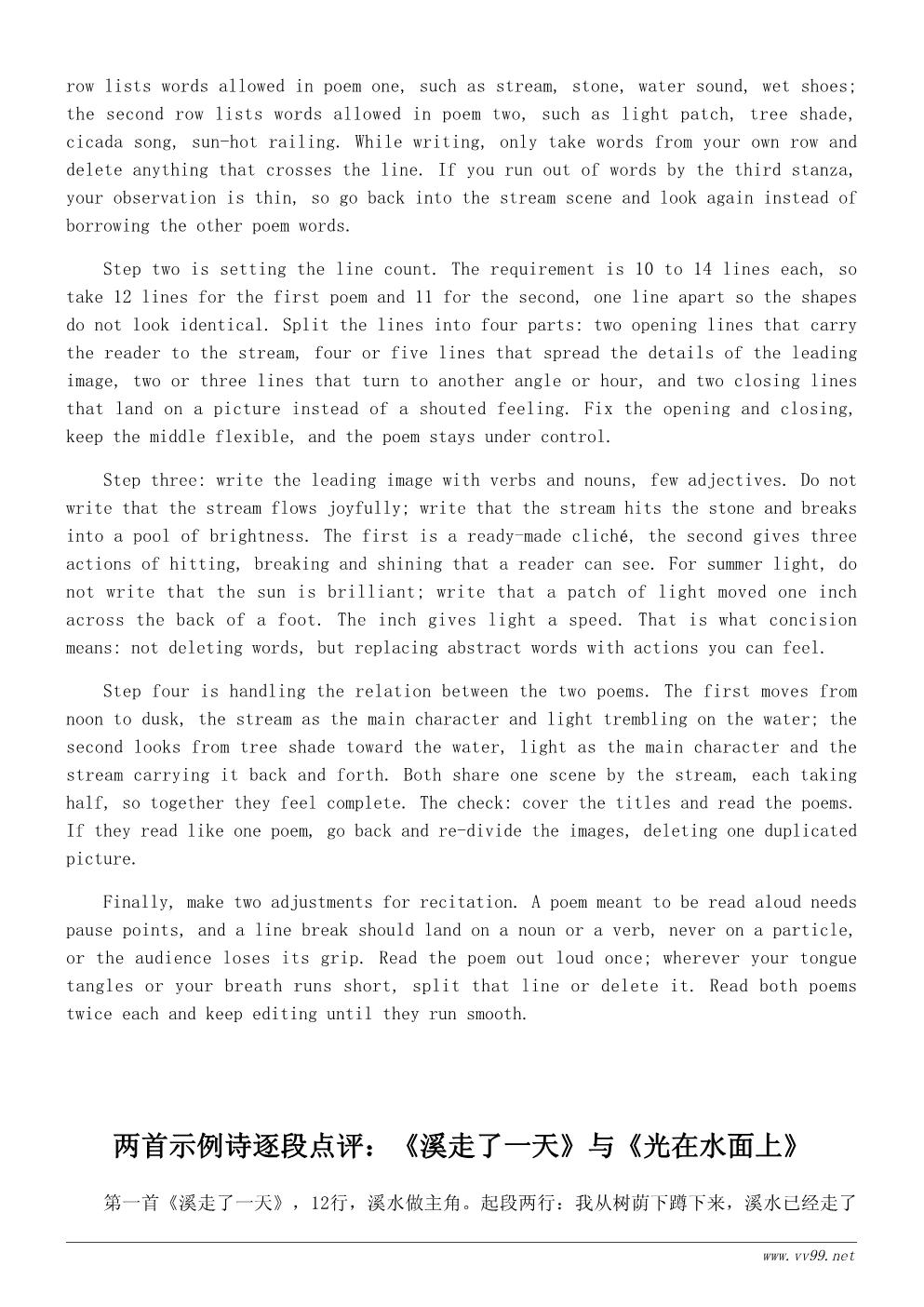
How to Write Two Summer Stream Poems: Image Roles and Line Budgets
When you get the task of writing two poems about a summer by the stream, do not rush into the first line. The most common failure is producing the same poem twice with different words, so step one is dividing the two core images: in the first poem the flowing stream leads and summer light stays in the background; in the second poem summer light leads and the stream works behind it. Once the roles are set, the pictures, rhythm and mood of the two poems separate on their own.
You can draft the division as a two-row word table on scratch paper: the first row lists words allowed in poem one, such as stream, stone, water sound, wet shoes; the second row lists words allowed in poem two, such as light patch, tree shade, cicada song, sun-hot railing. While writing, only take words from your own row and delete anything that crosses the line. If you run out of words by the third stanza, your observation is thin, so go back into the stream scene and look again instead of borrowing the other poem words.
Step two is setting the line count. The requirement is 10 to 14 lines each, so take 12 lines for the first poem and 11 for the second, one line apart so the shapes do not look identical. Split the lines into four parts: two opening lines that carry the reader to the stream, four or five lines that spread the details of the leading image, two or three lines that turn to another angle or hour, and two closing lines that land on a picture instead of a shouted feeling. Fix the opening and closing, keep the middle flexible, and the poem stays under control.
Step three: write the leading image with verbs and nouns, few adjectives. Do not write that the stream flows joyfully; write that the stream hits the stone and breaks into a pool of brightness. The first is a ready-made cliché, the second gives three actions of hitting, breaking and shining that a reader can see. For summer light, do not write that the sun is brilliant; write that a patch of light moved one inch across the back of a foot. The inch gives light a speed. That is what concision means: not deleting words, but replacing abstract words with actions you can feel.
Step four is handling the relation between the two poems. The first moves from noon to dusk, the stream as the main character and light trembling on the water; the second looks from tree shade toward the water, light as the main character and the stream carrying it back and forth. Both share one scene by the stream, each taking half, so together they feel complete. The check: cover the titles and read the poems. If they read like one poem, go back and re-divide the images, deleting one duplicated picture.
Finally, make two adjustments for recitation. A poem meant to be read aloud needs pause points, and a line break should land on a noun or a verb, never on a particle, or the audience loses its grip. Read the poem out loud once; wherever your tongue tangles or your breath runs short, split that line or delete it. Read both poems twice each and keep editing until they run smooth.
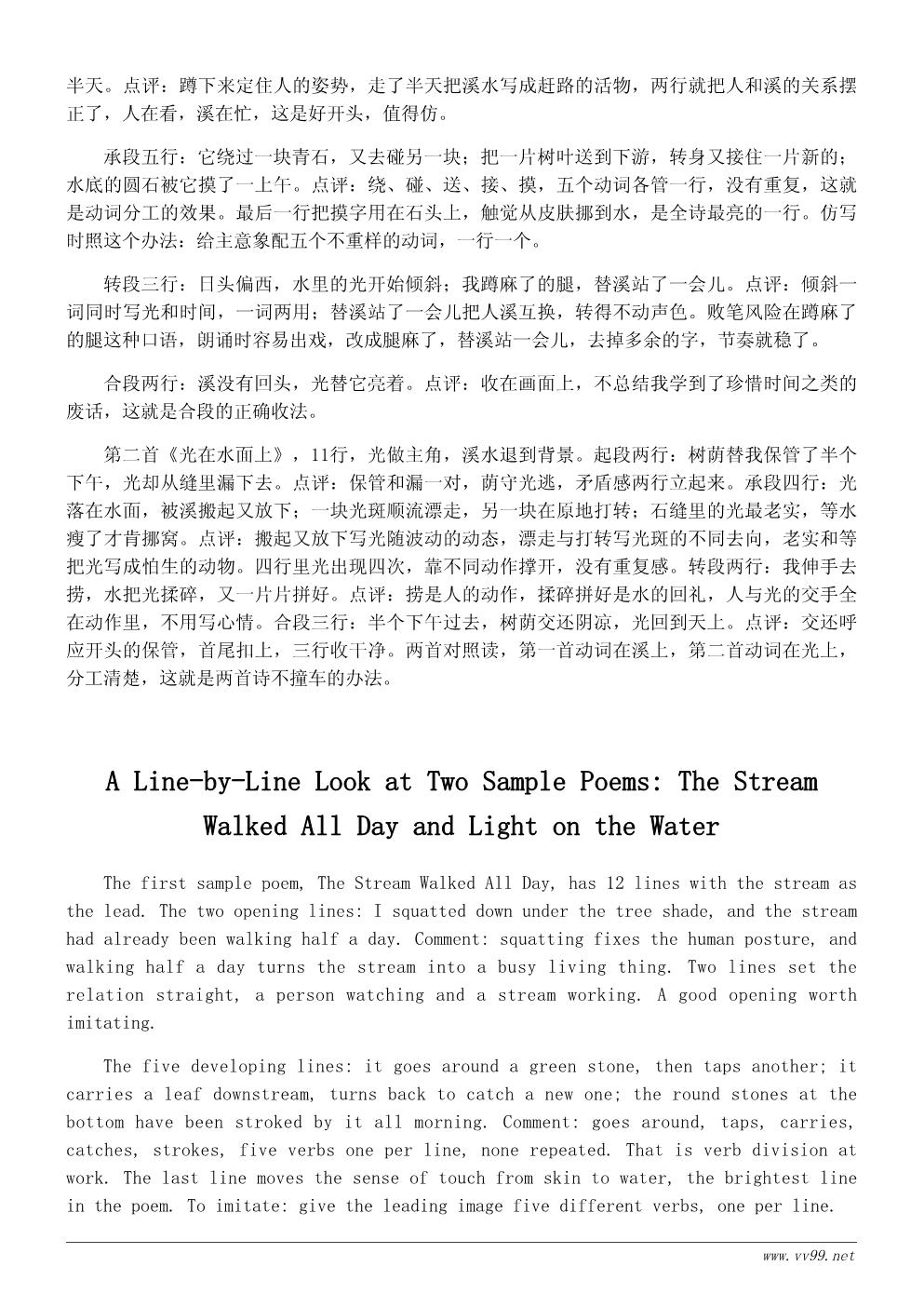
两首示例诗逐段点评:《溪走了一天》与《光在水面上》
第一首《溪走了一天》,12行,溪水做主角。起段两行:我从树荫下蹲下来,溪水已经走了半天。点评:蹲下来定住人的姿势,走了半天把溪水写成赶路的活物,两行就把人和溪的关系摆正了,人在看,溪在忙,这是好开头,值得仿。
承段五行:它绕过一块青石,又去碰另一块;把一片树叶送到下游,转身又接住一片新的;水底的圆石被它摸了一上午。点评:绕、碰、送、接、摸,五个动词各管一行,没有重复,这就是动词分工的效果。最后一行把摸字用在石头上,触觉从皮肤挪到水,是全诗最亮的一行。仿写时照这个办法:给主意象配五个不重样的动词,一行一个。
转段三行:日头偏西,水里的光开始倾斜;我蹲麻了的腿,替溪站了一会儿。点评:倾斜一词同时写光和时间,一词两用;替溪站了一会儿把人溪互换,转得不动声色。败笔风险在蹲麻了的腿这种口语,朗诵时容易出戏,改成腿麻了,替溪站一会儿,去掉多余的字,节奏就稳了。
合段两行:溪没有回头,光替它亮着。点评:收在画面上,不总结我学到了珍惜时间之类的废话,这就是合段的正确收法。
第二首《光在水面上》,11行,光做主角,溪水退到背景。起段两行:树荫替我保管了半个下午,光却从缝里漏下去。点评:保管和漏一对,荫守光逃,矛盾感两行立起来。承段四行:光落在水面,被溪搬起又放下;一块光斑顺流漂走,另一块在原地打转;石缝里的光最老实,等水瘦了才肯挪窝。点评:搬起又放下写光随波动的动态,漂走与打转写光斑的不同去向,老实和等把光写成怕生的动物。四行里光出现四次,靠不同动作撑开,没有重复感。转段两行:我伸手去捞,水把光揉碎,又一片片拼好。点评:捞是人的动作,揉碎拼好是水的回礼,人与光的交手全在动作里,不用写心情。合段三行:半个下午过去,树荫交还阴凉,光回到天上。点评:交还呼应开头的保管,首尾扣上,三行收干净。两首对照读,第一首动词在溪上,第二首动词在光上,分工清楚,这就是两首诗不撞车的办法。
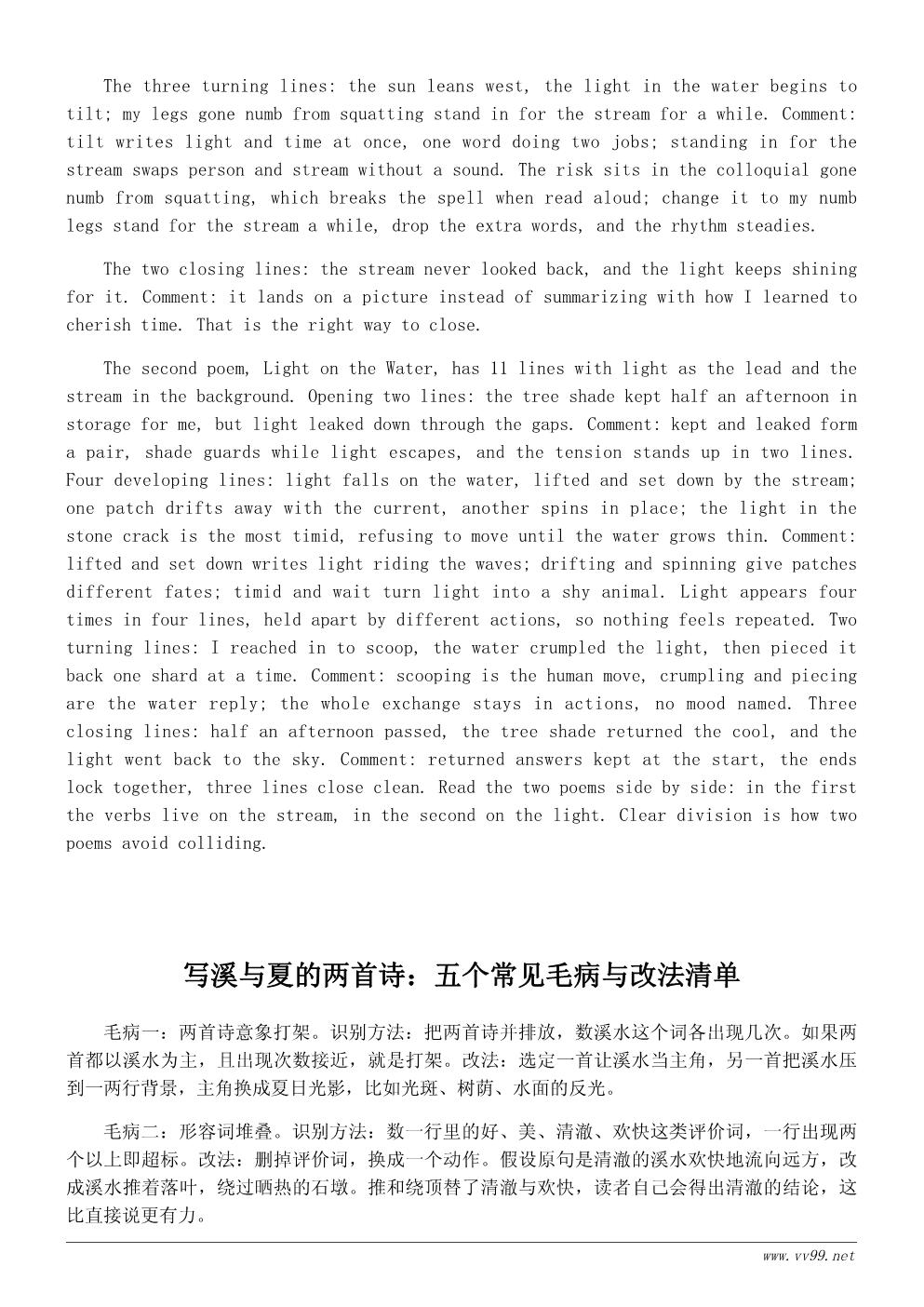
A Line-by-Line Look at Two Sample Poems: The Stream Walked All Day and Light on the Water
The first sample poem, The Stream Walked All Day, has 12 lines with the stream as the lead. The two opening lines: I squatted down under the tree shade, and the stream had already been walking half a day. Comment: squatting fixes the human posture, and walking half a day turns the stream into a busy living thing. Two lines set the relation straight, a person watching and a stream working. A good opening worth imitating.
The five developing lines: it goes around a green stone, then taps another; it carries a leaf downstream, turns back to catch a new one; the round stones at the bottom have been stroked by it all morning. Comment: goes around, taps, carries, catches, strokes, five verbs one per line, none repeated. That is verb division at work. The last line moves the sense of touch from skin to water, the brightest line in the poem. To imitate: give the leading image five different verbs, one per line.
The three turning lines: the sun leans west, the light in the water begins to tilt; my legs gone numb from squatting stand in for the stream for a while. Comment: tilt writes light and time at once, one word doing two jobs; standing in for the stream swaps person and stream without a sound. The risk sits in the colloquial gone numb from squatting, which breaks the spell when read aloud; change it to my numb legs stand for the stream a while, drop the extra words, and the rhythm steadies.
The two closing lines: the stream never looked back, and the light keeps shining for it. Comment: it lands on a picture instead of summarizing with how I learned to cherish time. That is the right way to close.
The second poem, Light on the Water, has 11 lines with light as the lead and the stream in the background. Opening two lines: the tree shade kept half an afternoon in storage for me, but light leaked down through the gaps. Comment: kept and leaked form a pair, shade guards while light escapes, and the tension stands up in two lines. Four developing lines: light falls on the water, lifted and set down by the stream; one patch drifts away with the current, another spins in place; the light in the stone crack is the most timid, refusing to move until the water grows thin. Comment: lifted and set down writes light riding the waves; drifting and spinning give patches different fates; timid and wait turn light into a shy animal. Light appears four times in four lines, held apart by different actions, so nothing feels repeated. Two turning lines: I reached in to scoop, the water crumpled the light, then pieced it back one shard at a time. Comment: scooping is the human move, crumpling and piecing are the water reply; the whole exchange stays in actions, no mood named. Three closing lines: half an afternoon passed, the tree shade returned the cool, and the light went back to the sky. Comment: returned answers kept at the start, the ends lock together, three lines close clean. Read the two poems side by side: in the first the verbs live on the stream, in the second on the light. Clear division is how two poems avoid colliding.
小提示:上面此文档内容仅展示完整文档里的部分内容, 若需要下载完整文档请 点击免费下载完整文档 。