文章内容
怎样写一首适合班级朗诵的短诗
班级朗诵的短诗和自己默默读的诗不一样。朗诵诗要句式整齐、段落分明,写之前先把框架定好。以写溪水叮咚为例,题目要求溪水、阳光、蝉鸣三个意象,就把诗分成三段,每段四行,一段管一个意象,共十二行。想要十六行,就加第四段收尾段,也是四行,把三个意象合在一起。框架先定,写句子时就不会乱。
第二步把句式做整齐。整齐不是每行字数一样,而是同一个句式重复出现。比如每段第一行都用溪水叮咚,叮咚到谁的句式:叮咚到阳光身上,叮咚到蝉鸣里。三段用同一个句式领三遍,听众听到第二段就能跟着走,听到第三段就想一起念。每行控制在六到九个字,超过十个字的句子要砍。
第三步弄节奏。儿童诗不必严格押韵,硬押韵反而写出别扭的句子。节奏靠两样东西。一是拟声词:叮咚、嗡嗡、哗啦,拟声词自带节拍。二是重复:每段末尾重复同一个短语,比如每段最后一行都落到夏天上,节奏就在重复里立起来。
第四步设计朗诵分工,这是最容易被忘的一步。写句子时就把角色分好:每段第一行一个人领诵,中间两行男女生轮流接,每段最后一行全班齐诵。齐诵的句子要短而响,像溪水叮咚,夏天在溪边这样的句子。写的时候心里标好这些行,整首诗就有了层次。
写完自查四样:三个意象齐不齐,同一个句式有没有出现三遍以上,有没有拟声词或重复短语,朗诵分工能不能分出来。四样都齐,这首诗就能拿到班级朗诵活动里用。
最后还有一步省不掉:定稿前把诗念给两三个孩子听。他们抬头看你的地方是能听进去的地方,低头扭动的地方就是要改的地方。朗诵诗的裁判不在稿子上,在耳朵上。照他们的反应改一轮,比自己对稿改十遍管用。班级活动前再让领诵和齐诵的孩子合练两次,哪一行接不上就在哪一行前多留半拍,诗是念给人听的,练的时候耳朵说了算。
How to Write a Short Poem for Class Recitation
A short poem for class recitation is different from a poem read silently alone. A recitation poem needs even sentence patterns and clear parts, so fix the frame before writing. Take writing Plop Plop Stream Water as an example. The task asks for three images, stream, sunlight and cicada song, so split the poem into three stanzas of four lines each, one image per stanza, twelve lines in all. If you want sixteen lines, add a fourth stanza of four lines that braids the three images together. Fix the frame first, and the lines will not wander.
Step two: make the sentence patterns even. Even does not mean every line has the same number of words; it means one pattern repeats. For example, the first line of each stanza uses the pattern, plop plop stream water, plopping to whom: plopping to the sunlight, plopping into the cicada song. Three stanzas use the same lead three times, so the audience follows along at the second stanza and wants to join in at the third. Keep each line six to nine words, and cut anything past ten.
Step three: rhythm. Children poems do not need strict end rhyme, and forcing rhyme produces stiff lines. Rhythm comes from two places. One is sound words: plop plop, buzz buzz, splash splash, which carry rhythm by themselves. The other is repetition: repeat one phrase at the end of every stanza, for example every last line lands on summer, and the beat stands up inside the repeat.
Step four: plan the recitation parts, the step most often missed. Assign voices while writing the lines: one solo voice takes the first line of each stanza, boys and girls alternate the middle two lines, and the whole class takes the last line of each stanza. Lines for the whole class should be short and ringing, like plop plop stream water, summer by the stream. Mark these lines in your head while writing, and the whole poem gains levels.
Self check on four things: are all three images present, does one pattern lead at least three times, is there a sound word or a repeated phrase, can the recitation parts be divided. If all four hold, the poem is ready for a class recitation activity.
One step cannot be skipped at the end: before the final draft, read the poem aloud to two or three children. Where they look up is where the poem lands, and where they look down and fidget is where it needs fixing. The judge of a recitation poem is not the page but the ear. One round of revision by their reactions beats ten rounds at your own desk. Before the class event, let the solo and unison voices rehearse together twice, and wherever a handover stumbles, leave half a beat more before that line. A poem is read to people, so in rehearsal the ear has the final say.
一首十二行朗诵诗的逐段点评
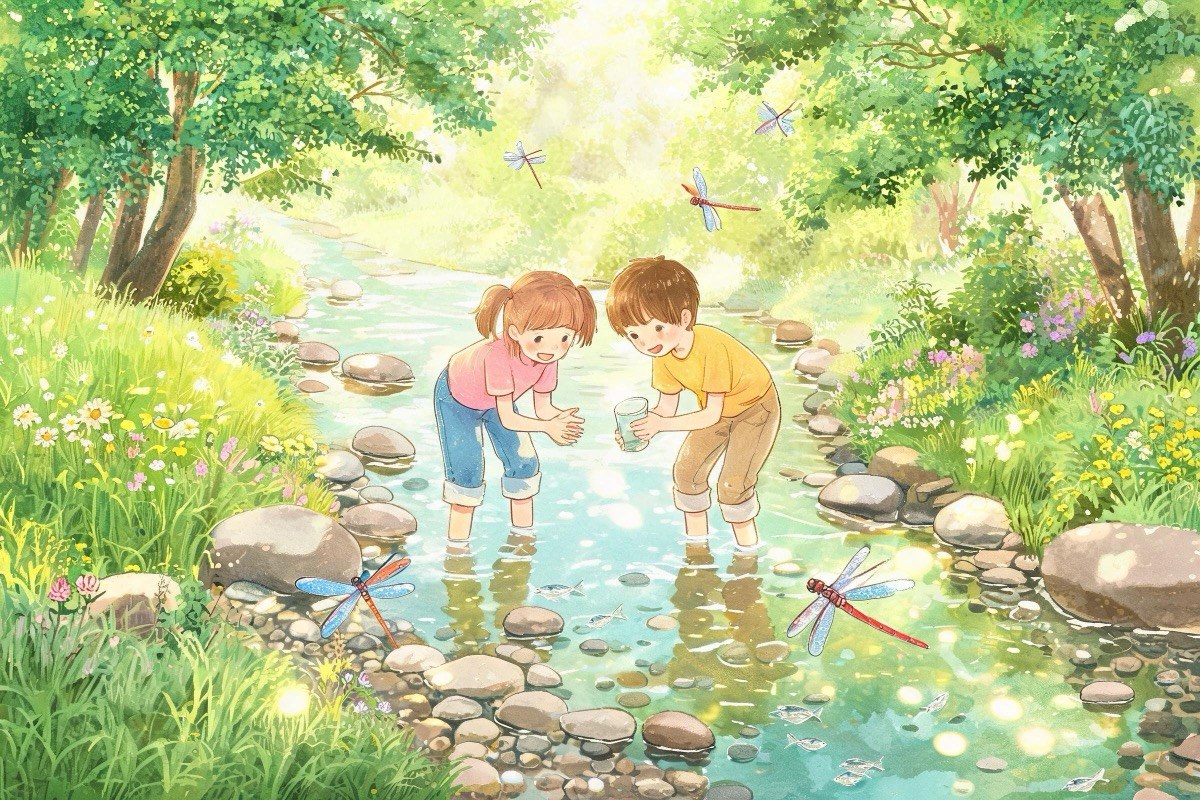
假设例诗叫《溪水叮咚》,十二行,分三段。第一段:溪水叮咚,叮咚地下了山道;叮咚到阳光身上,碎成半河的金子;叮咚到石头缝里,滚出一串小酒窝;叮咚进我的草帽,夏天开始嗡嗡。点评:第一段用叮咚领起,四个叮咚到排成一串,句式整齐到听众听一遍就能跟上。阳光落在水面上碎成半河的金子,是全诗最亮的一笔,阳光不是画出来的,是被水声撞出来的。
第二段:溪水叮咚,叮咚地过了老柳;叮咚到蝉鸣上,把蝉鸣滴得圆圆的;叮咚到蜻蜓翅膀,它抖抖水珠飞走;叮咚到水草的荫里,夏天开始藏。点评:第二段接着同一个句式,蝉鸣意象在第二行登场。把蝉鸣滴得圆圆的,把声音写成了水珠,感觉互通,孩子却听得懂,这就是儿童诗用得上的比喻。夏天开始藏和第一段的夏天开始嗡嗡呼应,重复短语立起来了。
第三段:溪水叮咚,叮咚地流向村口;叮咚到笑声里,浮起一群看不见的鱼;叮咚到石桥板上,桥墩跟着唱;叮咚进我心里,夏天开始长。点评:第三段把三个意象合起来收。笑声浮起一群看不见的鱼,形象具体可摸。夏天开始长是最后一行,主题从诗里长出来,不用另加一句道理。朗诵分工上,每段第一行领诵,中间两行男女生轮接,最后一行全班齐诵,重复短语夏天开始正适合齐诵。
两处可以改。第一处,叮咚到蜻蜓翅膀那行,前后衔接稍跳,朗诵时听众来不及反应,可以在下一行补一个动作接住,比如蜻蜓抖抖水珠飞走,动作一出来画面就稳了。第二处,十二行偏短,活动要十六行的话,加一个收尾段:溪水叮咚,阳光叮咚,蝉鸣叮咚;三个声音碰在一起,掉进同一条河;河流到村口,变成笑声;笑声流了一整个夏天,没有干。收尾段把三个意象并排点齐,最后一行回声一样收住全诗,齐诵部分也更足。
练这首诗时还有一个细节值得留意:三个夏天开始的短语,嗡嗡、藏、长,意思一级一级往里走,从外面的声音,到躲进水草,再长进心里。领诵的孩子念到藏可以慢一点,齐诵的长要放响。带班老师把这三处的高低快慢排出来,十二行小诗就有了起伏,听众跟着声音走完了整个夏天。
A Twelve Line Recitation Poem Annotated Stanza by Stanza
Suppose the sample poem is called Plop Plop Stream Water, twelve lines in three stanzas. Stanza one: plop plop stream water, plopping down the mountain path; plopping onto the sunlight, breaking into half a river of gold; plopping into the cracks of stones, rolling out a string of little dents; plopping into my straw hat, and summer begins to buzz. Comment: the first stanza leads with plop plop, four plopping onto in a row, even enough that the audience follows after one hearing. Sunlight on the water breaking into half a river of gold is the brightest stroke, sunlight is not painted, it is knocked out of the water by the sound.
Stanza two: plop plop stream water, plopping past the old willow; plopping onto the cicada song, dripping the song round and round; plopping onto a dragonfly wing, it shakes off the drops and flies away; plopping into the shade of the water grass, and summer begins to hide. Comment: the same pattern continues, and the cicada image arrives in the second line. Dripping the song round and round turns sound into water drops, the senses cross, yet children understand, and this is the kind of metaphor a children poem can carry. Summer begins to hide echoes summer begins to buzz from the first stanza, and the repeated phrase stands up.
Stanza three: plop plop stream water, plopping toward the village gate; plopping into laughter, floating up a school of invisible fish; plopping onto the stone bridge, and the bridge piers sing along; plopping into my heart, and summer begins to grow. Comment: the third stanza braids the three images for the close. Laughter floating up invisible fish is concrete enough to touch. Summer begins to grow is the last line, the theme grows out of the poem with no added lesson. For recitation parts, the first line of each stanza goes to a solo voice, the middle two lines alternate boys and girls, the last line goes to the whole class, and the repeated phrase summer begins fits unison by nature.
Two spots to improve. First, the line about the dragonfly wing jumps a little, and in recitation the audience cannot react in time, so the next line can catch it with one action, like the dragonfly shakes off the drops and flies away, and once the action shows up the picture is steady. Second, twelve lines run short, and if the activity wants sixteen, add a closing stanza: plop plop stream water, plop plop sunlight, plop plop cicada song; three sounds knock together and fall into one river; the river reaches the village gate and turns into laughter; the laughter flows all summer and never runs dry. The closing stanza lines the three images up side by side, the last line closes the whole poem like an echo, and the unison part grows fuller.
One more detail worth noticing when rehearsing this poem: the three summer begins phrases, buzz, hide, grow, step inward one level at a time, from the sound outside, to hiding in the water grass, to growing inside the heart. The solo voice can slow down on hide, and the unison grow should ring out. When the teacher arranges the loudness and speed of these three spots, the twelve short lines gain their rise and fall, and the audience walks through the whole summer following the sound.
小提示:上面此文档内容仅展示完整文档里的部分内容, 若需要下载完整文档请 点击免费下载完整文档 。