文章内容
溪边约定故事的三个场景怎么分配笔墨
溪边约定的故事只有三个场景:玩耍、约定、重聚。先定每个场景占多少笔墨。五百字上下,玩耍给二百字,约定给一百五十字,重聚给一百五十字。别在玩耍上写满三百字,重聚只剩五十字。约定是题眼,笔墨不能最轻。
开头别磨蹭,两句话把人带到溪边。那年夏天我家搬到乡下外婆屋后,外婆领我去认村口的小溪。谁、什么时候、在哪里,说完直接进玩耍。中高年级读者不挑开头,但字数有限,开头每多一句,场景就少一句。
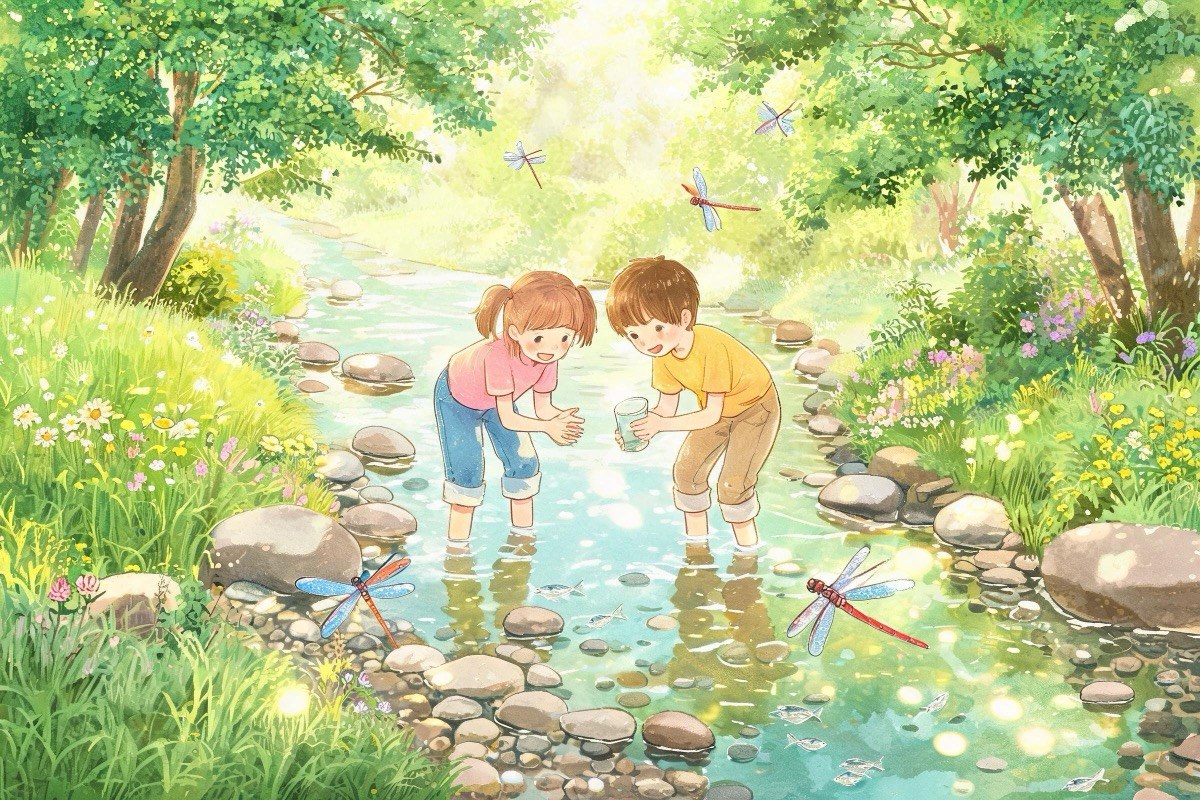
溪边玩耍挑三个细节写透。打水漂谁赢得多,捉小鱼谁的桶漏了,互相泼水谁恼了谁笑了。不写我们玩得很开心,写具体的比赛。孩子之间的友情藏在比赛里,比赛写得越具体,友情越真。
拉钩约定要有三样:话语、动作、见证。话语要具体,不写下年再见,写明年暑假头一天,还在这块大石头这儿。动作要写到手指头,小指钩住,指甲盖对在一起晃三下。见证可以是溪水也可以是大石头,一句就够:溪水哗啦啦地流,像是听见了。
第二年重聚,先写等待再写见面。重聚那天可能阴天,可能你到早了,可能你担心对方早忘了。把这些担心写出来,等溪湾里出现一个人影,读者跟着你一起高兴。见面一刻要低浓度:对方不但记得,还记得你去年捉到过一条三指长的鱼。一句对话,比一百句抱头大哭都动人。
以小见大靠物件。挑一个物件贯穿全篇:一块发白的平石头,一只纸船,一顶忘在石头上的草帽。物件在玩耍时出现,在约定时被提起,在重聚时还在老地方。读者自己会懂,友情被保管了一年。
写完自查:三个场景齐不齐,约定话语有没有具体到日子和地点,物件出现了几次,结尾有没有直接夸友情的句子。有夸友情的句子,删掉。
还有一个省事的写法:从约定那天往回写。开头直接写拉钩,明年暑假头一天,还在这儿,然后再回头补这个夏天你们怎么认识的、怎么玩熟的。玩耍的篇幅可以压短,因为读者已经知道这两个人要分别,看玩耍时自带牵挂。这个倒着来的顺序对中高年级特别好用,五百字里能省出二十字给重聚。
How to Split the Word Count Across Three Scenes of a Streamside Promise Story
A streamside promise story has only three scenes: playing, the promise, the reunion. Decide the share of each first. For about five hundred words, give playing two hundred, the promise one hundred fifty, the reunion one hundred fifty. Do not spend three hundred words on playing and leave fifty for the reunion. The promise is the title eye, so its share cannot be the lightest.
Do not dawdle at the opening. Two sentences carry the reader to the stream: that summer my family moved to the home of my grandma in the country, and she took me to know the stream at the village gate. Who, when, where, said, then straight into playing. Upper graders do not fuss over openings, but the word count is limited, and every extra sentence at the start costs one sentence inside a scene.
For playing by the stream, pick three details and write them out. Who skipped the most stones, whose bucket leaked while catching minnows, who got splashed and who laughed. Do not write that we played happily. Write the contests. Friendship among kids hides inside contests, and the more concrete the contest, the more real the friendship.
The pinky promise needs three things: words, a gesture, a witness. The words must be concrete. Not let us meet again next year, but next year, first day of summer vacation, still at this big rock. Write the gesture down to the fingers: pinkies hooked, nails pressed together and shaken three times. The witness can be the stream or the rock, one line is enough: the stream gurgled on, as if it had heard.
For the reunion, write the waiting before the meeting. The day might be cloudy, you might come early, you might fear the other side forgot long ago. Write these worries out, and when a figure shows at the bend of the stream, readers feel glad together with you. Keep the meeting low in intensity: the other side not only remembers, but remembers that you once caught a fish three fingers long. One line of talk moves more than a hundred lines of hugging and crying.
Showing big feeling through small things relies on an object. Pick one object running through the story: a flat white stone, a paper boat, a straw hat left on the rock. It appears during play, gets mentioned at the promise, and is still at the same place at the reunion. Readers understand by themselves that the friendship was kept for a whole year.
Self check after writing: are the three scenes complete, do the promise words fix a day and a place, how many times does the object appear, is there a sentence at the end that praises friendship directly. If there is a praising sentence, delete it.
One more shortcut worth knowing: write backward from the day of the promise. Open with the pinky hook itself, next year first day of summer vacation still here, then loop back to how the two met and grew close that summer. The playing section can stay short, because readers already know these two will part, so every game they watch carries a pull. This backward order works especially well for upper graders, and inside five hundred words it saves twenty words for the reunion.
一篇溪边友情小故事的逐段点评
假设故事叫《溪边的大石头》。第一段:那年夏天我随妈妈到乡下外婆家,吃不惯也玩不着,躲在门后哭。外婆领我去村后的小溪打水漂,我在那里认识了阿贵。点评:开头带一点别扭,吃不惯、哭,溪水就成了把别扭抹平的地方,大石头从第一段起就有了分量。
第二段:我们比赛打水漂,阿贵一下漂四个,还教我挑扁的、边薄的石头。捉小鱼时,他总把自己捉的倒进我的桶里。点评:友情全靠细节说话。教挑石头、往我桶里倒鱼,两个动作比一百句他真好有用。总字是关键,倒一次是客气,每次都倒是友情。
第三段:开学前一天,我们坐在大石头上。阿贵伸出小拇指:明年暑假头一天,还在这儿。我们拉了钩,大拇指盖章,晃了三下。点评:约定场景话语、动作、时间三样齐全。还在这儿两个字比咱们约定吧更像孩子嘴里的话。大拇指盖章是孩子真做的动作,写进故事就站得住。
第四段:一冬天我想起那条溪好几次,怕阿贵忘了。有一回我问外婆,村后溪边的大石头还在不在。外婆说,石头在,石头在的地方,人就在。点评:一年中间没有留白。一次担心、一句对话,就把两个夏天接上了。外婆这句是全篇最好的一句,读者的信心也是它稳住的。
第五段:第二年暑假头一天,我到溪边早了。溪湾里出现一个人影,阿贵手里扬着一样东西。走近看清,是我去年打水漂丢的那块发白的平石头。点评:重聚不靠抱不靠哭,靠一块石头。物件第三次出场,友情保管没保管好,读者亲眼看见,不用谁说破。
两处可以改。第一处,第二段可以加一次小别扭,比如为一块石头谁赢吵了几句,傍晚又和好,友情就多一面,不只是互相让。第二处,阿贵替我保管石头太巧,改成两个人蹲在溪边一起找那块石头,找到找不到都成立,故事更可信,找的过程本身也是重聚。
A Streamside Friendship Story Annotated Paragraph by Paragraph
Suppose the story is called The Big Rock by the Stream. Paragraph one: that summer I followed my mother to the home of my grandma in the country, could not get used to the food and had no one to play with, and hid behind the door crying. Grandma took me to skip stones at the stream behind the village, and there I met A-Gui. Comment: the opening carries a small trouble, the food and the crying, so the stream becomes the place that smooths the trouble away, and the big rock gains weight from the very first paragraph.
Paragraph two: we raced at skipping stones, A-Gui skipped four at a time, and he taught me to pick stones that are flat with thin edges. When catching minnows, he always poured his own catch into my bucket. Comment: the friendship lives entirely in details. Teaching stone picking and pouring fish into my bucket do more than a hundred lines of he is really good. The word always is the key. Pouring once is politeness, pouring every time is friendship.
Paragraph three: the day before school opened, we sat on the big rock. A-Gui held out his pinky: next year, first day of summer vacation, still here. We hooked pinkies and pressed thumbs to make a stamp, shaking three times. Comment: the promise scene has all three things, words, gesture, time. The two words still here sound more like a child than let us make a promise. The thumb stamp is a gesture kids really perform, so it stands firm inside a story.
Paragraph four: all winter I thought of that stream many times, afraid A-Gui had forgotten. Once I asked grandma whether the big rock by the stream was still there. Grandma said, the rock is there, and where the rock is, people are. Comment: the year in between is not left blank. One worry and one line of talk stitch the two summers together. The line of grandma is the best in the whole story, and the confidence of readers is steadied by it.
Paragraph five: on the first day of summer vacation the next year, I reached the stream early. A figure appeared at the bend, and A-Gui was waving something in his hand. Up close it was the flat white stone I had lost while skipping stones the year before. Comment: the reunion needs no hugging and no crying, only one stone. The object makes its third appearance, and readers see with their own eyes whether the friendship was kept, without anyone saying it out.
Two spots to improve. First, paragraph two could take a small quarrel, for instance a few sharp words over whose stone won, patched up by evening, and the friendship gains another face instead of only giving way to each other. Second, A-Gui keeping my stone for me is too neat. Change it to the two of them crouching by the stream looking for that stone together, found or not found both work, and the search itself becomes the reunion.
小提示:上面此文档内容仅展示完整文档里的部分内容, 若需要下载完整文档请 点击免费下载完整文档 。