文章内容
随笔怎么写:把捉虾、乘凉、傍晚回家排一下午,每段后加一句想头
随笔和记叙文不一样:记叙文把一件事讲完整就行,随笔要一边讲一边想,叙是骨头,议是灵魂。写那些在溪边度过的下午,素材就三个,溪边捉虾、树荫乘凉、傍晚回家。三步排成一篇随笔。
第一步排素材。三个素材按一天里的时辰和心情排:捉虾最闹,蹲在浅水滩,手伸在石头底下,整个人是绷着的,放第一段,文章一开场就活。乘凉最静,树荫底下一躺,蝉声远远吊着,人松下来,放中段,一闹一静,文章有了呼吸。傍晚回家最舍不得,日头落山,桶里两三只虾,人往回走一步三回头,放收尾,舍不得的心情自己把文章收住。这个顺序不用点明几点了,读者跟着时辰走。排完自己读一遍,读下来时辰在走、心情在变,骨架就算立住了。
第二步每段叙完加一句想头。写想头之前先问自己:这件事里最扎人的是哪一下?从那一下出发去想,想头才不会跑偏。随笔的议不是空喊道理,是从刚叙的这件小事里长出来的一句。写捉虾,叙完手怎么捂、虾怎么从指缝溜走,跟一句:捉虾从来不是为了捉到,图的是手伸到石头底下那一瞬的屏住气。写乘凉,叙完光斑在胳膊上晃、迷迷糊糊快睡着,跟一句:大人嫌我们疯,我们嫌大人吵,其实我们都一样,都贪这一段凉。想头要短,一句就够,长了就成了讲道理。三段三个想头,一篇随笔的思就立起来了。
第三步用一条线贯穿。挑一句能兜住全文的话,比如那些下午平常,可从不浪费,开头说一遍,结尾换个说法再说一遍:下午一个接一个,像溪水一样流过去,当时不觉得,如今全记得。首尾一呼应,三个素材就不散了。
写完自查三样:叙事有没有具体的手、身子、光,想头是不是从事情里长出来的而不是贴上去的,那条线有没有出现两次。三问都过,这篇随笔就顺了。随笔随笔,重点是随,材料随手挑,想头随手记,但排布和呼应是认真排出来的,松的是语气,紧的是结构。
How to Write an Informal Essay: Arrange Shrimp-Catching, Shade-Napping and Dusk-Going-Home, Then Add One Thought per Section
An informal essay differs from a narrative: a narrative only needs to tell one event completely, while an informal essay thinks as it tells, narration the bones, reflection the soul. To write of those afternoons spent by the stream, you have three materials: catching shrimp at the shallows, napping in the tree shade, and going home at dusk. Three steps arrange them into one essay.
Step one: order the materials. Arrange them by hour and mood across a day. Shrimp-catching is the most lively: crouched in the shallow riffle, hand slid under a stone, the whole body taut; put it first and the essay opens alive. Shade-napping is the stillest: lie down under the tree, cicadas hanging far off in the air, the body letting go; put it in the middle, and one lively, one quiet gives the essay its breathing. Going home at dusk is the most reluctant: the sun goes down behind the hill, two or three shrimp in the bucket, one step back and three glances behind; put it last, and the reluctance closes the essay by itself. With this order you never state the hour, and readers walk along with the daylight. When the ordering is done, read it through yourself; if the daylight moves and the mood changes as you read, the skeleton stands.
Step two: add one thought after each narrated section. Before writing a thought, ask yourself: in this event, which moment stings most? Start thinking from that moment and the thought will not wander. Reflection in an informal essay is not shouting a lesson; it is one sentence grown out of the small thing just told. For shrimp-catching, after narrating how the hand cups and how the shrimp slips through the fingers, add: catching shrimp was never about catching; what we wanted was the held breath in the instant the hand went under the stone. For the nap, after narrating light spots wobbling on your arm and drifting off, add: grown-ups call us wild, we call grown-ups noisy, but really we are the same, all greedy for this stretch of cool. Keep the thought short, one sentence is enough; longer turns into preaching. Three sections, three thoughts, and the thinking in the essay stands up.
Step three: run one thread through it. Pick a line that holds the whole piece, for instance those afternoons were ordinary, yet never wasted; say it once at the opening, and at the close say it again in other words: afternoons followed one another like the stream flowing past, unnoticed then, all remembered now. One call and response at the two ends, and the three materials stop scattering.
When done, check three things: does the narration have real hands, a real body, real light; did each thought grow out of the event rather than get pasted on; did the thread appear twice. Pass all three and this essay runs smooth.
随笔范文:那些在溪边度过的下午(逐段拆解)
下面是一篇随笔范文,写那些在溪边度过的下午,三个素材按捉虾、乘凉、回家排。每段后附拆解,说明这段叙了什么、议在哪句。
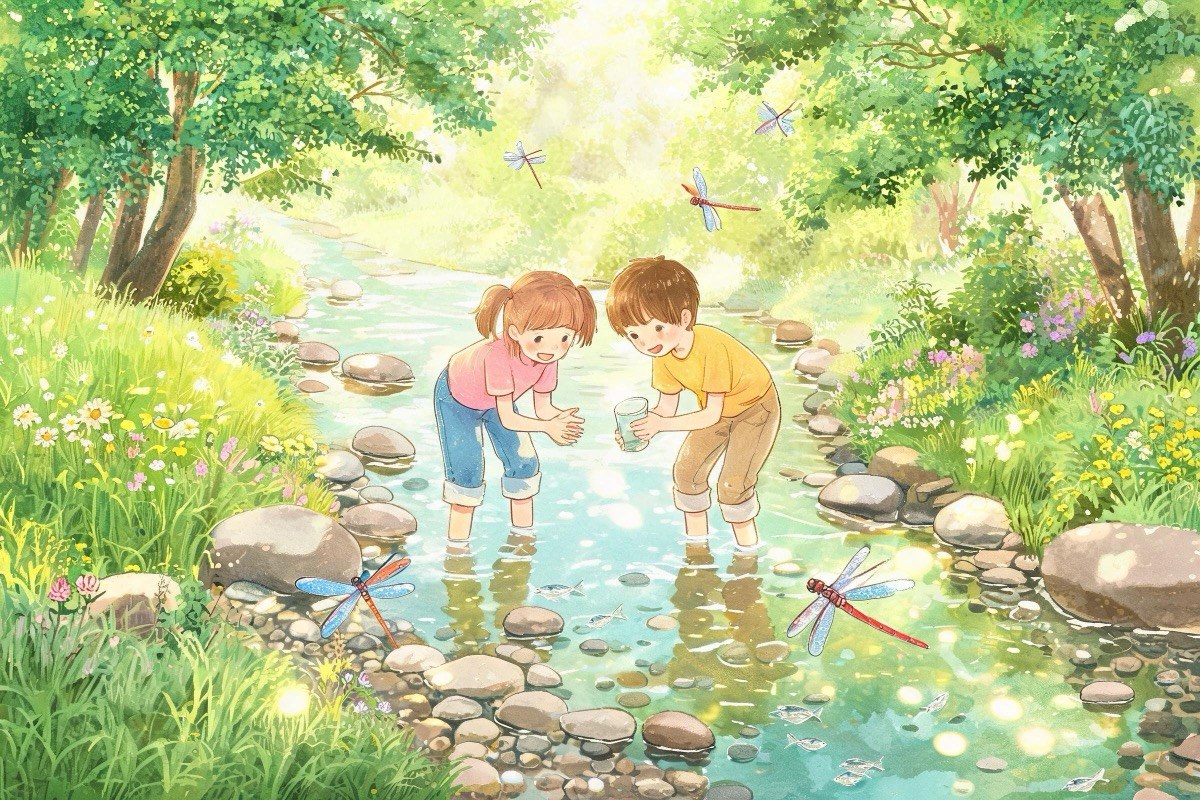
第一段:浅水滩的石头底下藏着虾。手伸进去,指头慢慢合上,掌心痒一下,是须。捏出来对着光看,透明的,尾巴一弹,水珠溅一脸。一下午手指翻过几十块石头,石头上的青苔滑得抓不住,指甲缝里全是沙,桶底只卧着两三只。捉虾从来不是为了捉到,图的是手伸到石头底下那一瞬的屏住气。(拆解:叙用了掌心痒、尾巴弹、指甲缝的沙三个具体细节;议只有最后一句,从一下午白忙这件小事里长出来,点出过程比结果值钱。)
第二段:玩累了就躺到柳树荫里。背贴着草,蝉声在头顶吊着,远远的,像谁在很远的地方喊一个人。光从叶缝漏下来,铜钱大的亮块在胳膊上晃,晃着晃着人就迷糊了。迷迷糊糊里想,大人嫌我们疯,我们嫌大人吵,其实都一样的,都贪这一段凉。(拆解:叙走身体感受,背贴草、蝉声远、光斑晃,人从闹到静;议夹在半睡的念头里,不是坐下来讲道理,是乘凉乘出来的想法,这就是夹叙夹议的夹字。)
第三段:日头落到山后头,该回家了。桶里两三只虾弹着,提一路看一路。影子先上岸,越拉越长,人在影子后头走,一步三回头。我妈在岸上喊,走啦,明天再来。我说好。那时候不知道,明天再来这四个字,是可以一直说到没有明天的。下午一个接一个,像溪水一样流过去,当时不觉得,如今全记得。(拆解:叙用影子拉长、一步三回头收束不舍;议从明天再来这四个字里长出来,把童年的一次告别写成后来的领悟;末句呼应开头,那条线在这里第二次出现。)
对照自查:你的三段是不是都先叙后议、议只一句;想头是不是从事情里长出来的;开头结尾有没有互相呼应。三处都有,这篇随笔就顺了。范文里的想头都只有一句,写的时候容易贪多,一段里塞三句议论,那就不是随笔了,改成一段一句,多出来的议论全删掉。
An Informal Essay Sample: Those Afternoons by the Stream, Taken Apart Paragraph by Paragraph
Below is a sample informal essay on those afternoons by the stream, with the three materials arranged as shrimp-catching, shade-napping, and going home. Each paragraph is followed by a note saying what it narrates and where it reflects.
Paragraph one: Under the stones in the shallow riffle hide shrimp. Slide your hand in, close the fingers slowly, and the palm itches once, that is a whisker. Hold it up to the light: transparent, and its tail flicks, splashing water on your face. An entire afternoon of turning over dozens of stones, sand packed under every fingernail, and the bucket holds only two or three shrimp at the bottom. Catching shrimp was never about catching; what we wanted was the held breath in the instant the hand went under the stone. (Note: the narration uses three concrete details, the itching whisker, the flicking tail, the sand under the nails; the reflection is a single closing sentence grown out of the small fact of a wasted afternoon, saying the process outweighs the catch.)
Paragraph two: When tired from playing, we lie down in the willow shade. Back against the grass, cicadas hanging overhead, far off, like someone calling a person from very far away. Light leaks through the leaf gaps, bright coins wobbling on your arm, and wobbling, you drift off. Half asleep I think: grown-ups call us wild, we call grown-ups noisy, but really we are the same, all greedy for this stretch of cool. (Note: the narration runs on body feeling, back on grass, distant cicadas, wobbling light, the person moving from lively to still; the reflection sits inside a half-asleep thought, not a lecture but a notion napped into being, and that is what weaving means.)
Paragraph three: The sun drops behind the hill; time to go home. Two or three shrimp flick in the bucket, carried along and watched all the way. The shadow gets to the bank first, stretching longer and longer, the person walking behind the shadow, one step and three glances back. My mother calls from the bank, come on, come again tomorrow. I say okay. Back then I did not know that the four words come again tomorrow were something you could keep saying until there were no more tomorrows. Afternoons followed one another like the stream flowing past, unnoticed then, all remembered now. (Note: the narration closes the reluctance with the lengthening shadow and the backward glances; the reflection grows out of the words come again tomorrow, turning one childhood farewell into a later realization; the last sentence echoes the opening, the thread appearing for the second time.)
Check against it: does each of your three paragraphs narrate first then reflect, with the reflection kept to one sentence; does each thought grow out of the event; do the opening and closing answer each other. Have all three and your essay runs smooth. Note that every thought in the sample is a single sentence; when writing, it is easy to get greedy and cram three reflections into one paragraph, which stops being an informal essay, so keep one sentence per paragraph and delete every extra reflection.
小提示:上面此文档内容仅展示完整文档里的部分内容, 若需要下载完整文档请 点击免费下载完整文档 。