文章内容
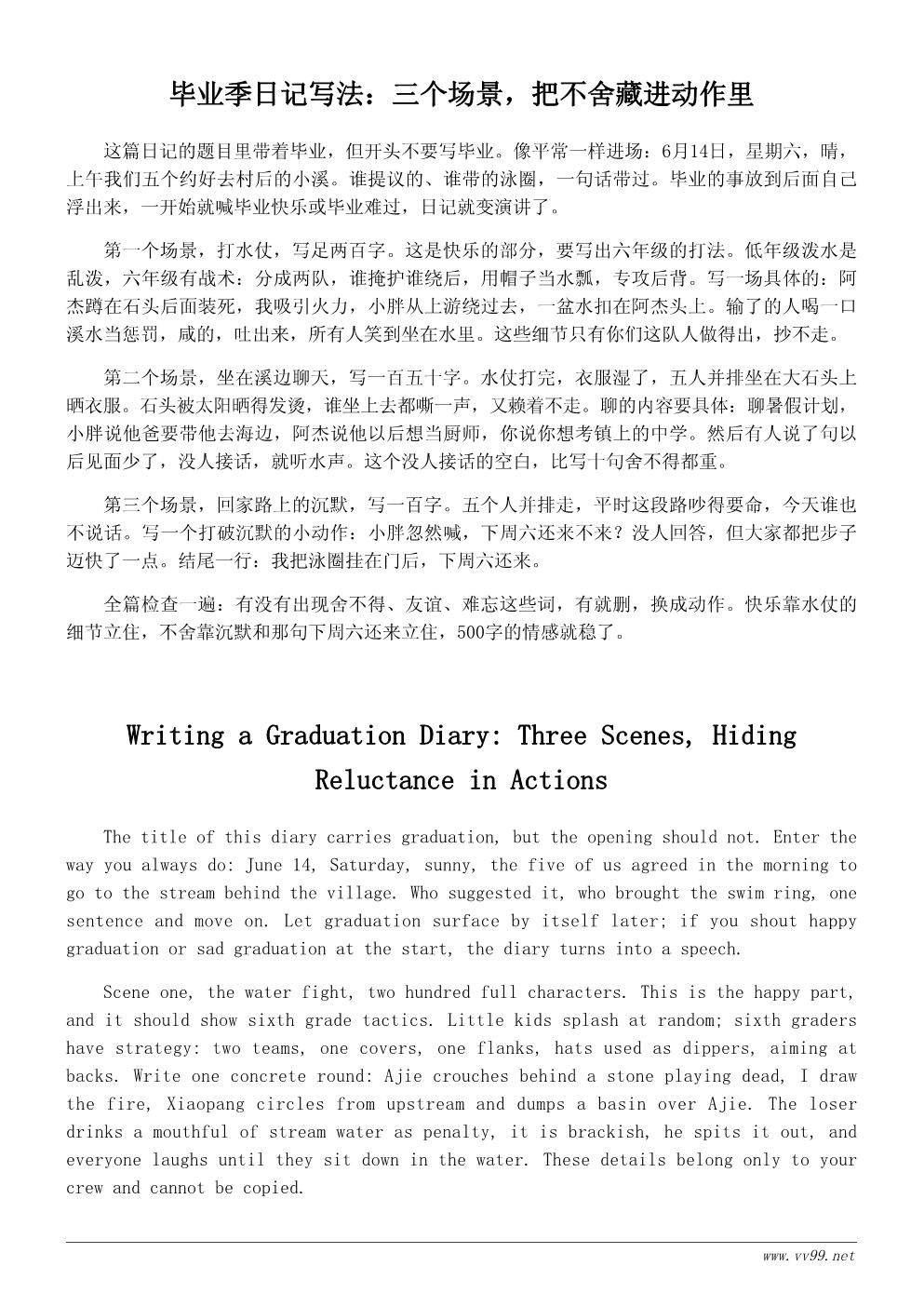
毕业季日记写法:三个场景,把不舍藏进动作里
这篇日记的题目里带着毕业,但开头不要写毕业。像平常一样进场:6月14日,星期六,晴,上午我们五个约好去村后的小溪。谁提议的、谁带的泳圈,一句话带过。毕业的事放到后面自己浮出来,一开始就喊毕业快乐或毕业难过,日记就变演讲了。
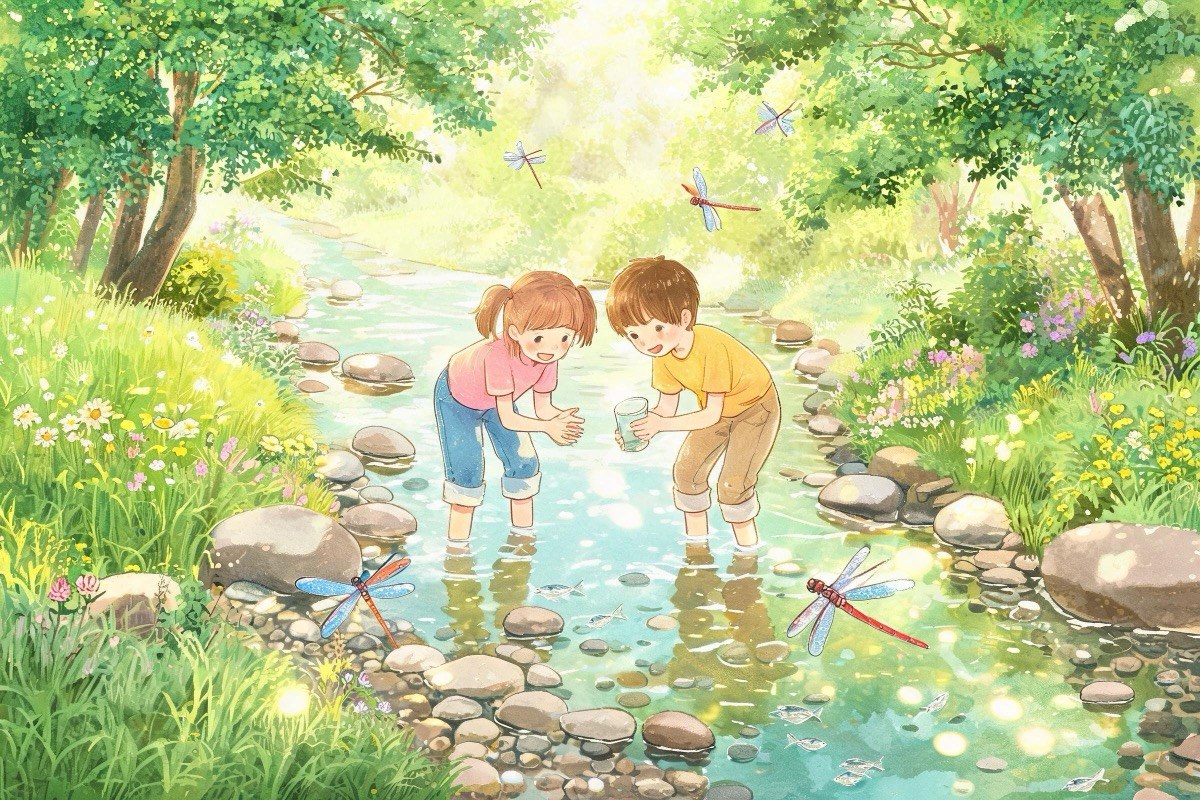
第一个场景,打水仗,写足两百字。这是快乐的部分,要写出六年级的打法。低年级泼水是乱泼,六年级有战术:分成两队,谁掩护谁绕后,用帽子当水瓢,专攻后背。写一场具体的:阿杰蹲在石头后面装死,我吸引火力,小胖从上游绕过去,一盆水扣在阿杰头上。输了的人喝一口溪水当惩罚,咸的,吐出来,所有人笑到坐在水里。这些细节只有你们这队人做得出,抄不走。
第二个场景,坐在溪边聊天,写一百五十字。水仗打完,衣服湿了,五人并排坐在大石头上晒衣服。石头被太阳晒得发烫,谁坐上去都嘶一声,又赖着不走。聊的内容要具体:聊暑假计划,小胖说他爸要带他去海边,阿杰说他以后想当厨师,你说你想考镇上的中学。然后有人说了句以后见面少了,没人接话,就听水声。这个没人接话的空白,比写十句舍不得都重。
第三个场景,回家路上的沉默,写一百字。五个人并排走,平时这段路吵得要命,今天谁也不说话。写一个打破沉默的小动作:小胖忽然喊,下周六还来不来?没人回答,但大家都把步子迈快了一点。结尾一行:我把泳圈挂在门后,下周六还来。
全篇检查一遍:有没有出现舍不得、友谊、难忘这些词,有就删,换成动作。快乐靠水仗的细节立住,不舍靠沉默和那句下周六还来立住,500字的情感就稳了。
Writing a Graduation Diary: Three Scenes, Hiding Reluctance in Actions
The title of this diary carries graduation, but the opening should not. Enter the way you always do: June 14, Saturday, sunny, the five of us agreed in the morning to go to the stream behind the village. Who suggested it, who brought the swim ring, one sentence and move on. Let graduation surface by itself later; if you shout happy graduation or sad graduation at the start, the diary turns into a speech.
Scene one, the water fight, two hundred full characters. This is the happy part, and it should show sixth grade tactics. Little kids splash at random; sixth graders have strategy: two teams, one covers, one flanks, hats used as dippers, aiming at backs. Write one concrete round: Ajie crouches behind a stone playing dead, I draw the fire, Xiaopang circles from upstream and dumps a basin over Ajie. The loser drinks a mouthful of stream water as penalty, it is brackish, he spits it out, and everyone laughs until they sit down in the water. These details belong only to your crew and cannot be copied.
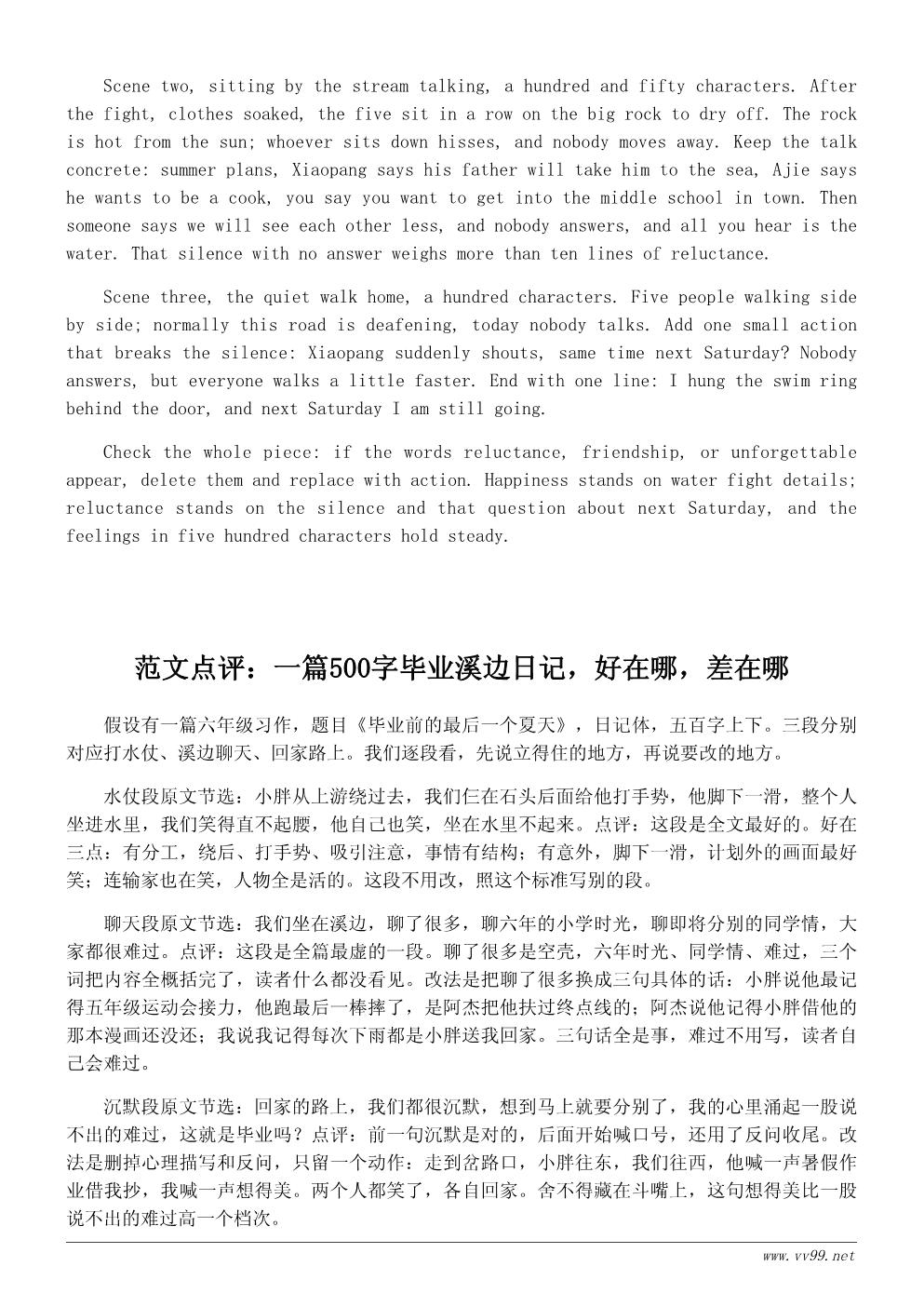
Scene two, sitting by the stream talking, a hundred and fifty characters. After the fight, clothes soaked, the five sit in a row on the big rock to dry off. The rock is hot from the sun; whoever sits down hisses, and nobody moves away. Keep the talk concrete: summer plans, Xiaopang says his father will take him to the sea, Ajie says he wants to be a cook, you say you want to get into the middle school in town. Then someone says we will see each other less, and nobody answers, and all you hear is the water. That silence with no answer weighs more than ten lines of reluctance.
Scene three, the quiet walk home, a hundred characters. Five people walking side by side; normally this road is deafening, today nobody talks. Add one small action that breaks the silence: Xiaopang suddenly shouts, same time next Saturday? Nobody answers, but everyone walks a little faster. End with one line: I hung the swim ring behind the door, and next Saturday I am still going.
Check the whole piece: if the words reluctance, friendship, or unforgettable appear, delete them and replace with action. Happiness stands on water fight details; reluctance stands on the silence and that question about next Saturday, and the feelings in five hundred characters hold steady.
范文点评:一篇500字毕业溪边日记,好在哪,差在哪
假设有一篇六年级习作,题目《毕业前的最后一个夏天》,日记体,五百字上下。三段分别对应打水仗、溪边聊天、回家路上。我们逐段看,先说立得住的地方,再说要改的地方。
水仗段原文节选:小胖从上游绕过去,我们仨在石头后面给他打手势,他脚下一滑,整个人坐进水里,我们笑得直不起腰,他自己也笑,坐在水里不起来。点评:这段是全文最好的。好在三点:有分工,绕后、打手势、吸引注意,事情有结构;有意外,脚下一滑,计划外的画面最好笑;连输家也在笑,人物全是活的。这段不用改,照这个标准写别的段。
聊天段原文节选:我们坐在溪边,聊了很多,聊六年的小学时光,聊即将分别的同学情,大家都很难过。点评:这段是全篇最虚的一段。聊了很多是空壳,六年时光、同学情、难过,三个词把内容全概括完了,读者什么都没看见。改法是把聊了很多换成三句具体的话:小胖说他最记得五年级运动会接力,他跑最后一棒摔了,是阿杰把他扶过终点线的;阿杰说他记得小胖借他的那本漫画还没还;我说我记得每次下雨都是小胖送我回家。三句话全是事,难过不用写,读者自己会难过。
沉默段原文节选:回家的路上,我们都很沉默,想到马上就要分别了,我的心里涌起一股说不出的难过,这就是毕业吗?点评:前一句沉默是对的,后面开始喊口号,还用了反问收尾。改法是删掉心理描写和反问,只留一个动作:走到岔路口,小胖往东,我们往西,他喊一声暑假作业借我抄,我喊一声想得美。两个人都笑了,各自回家。舍不得藏在斗嘴上,这句想得美比一股说不出的难过高一个档次。
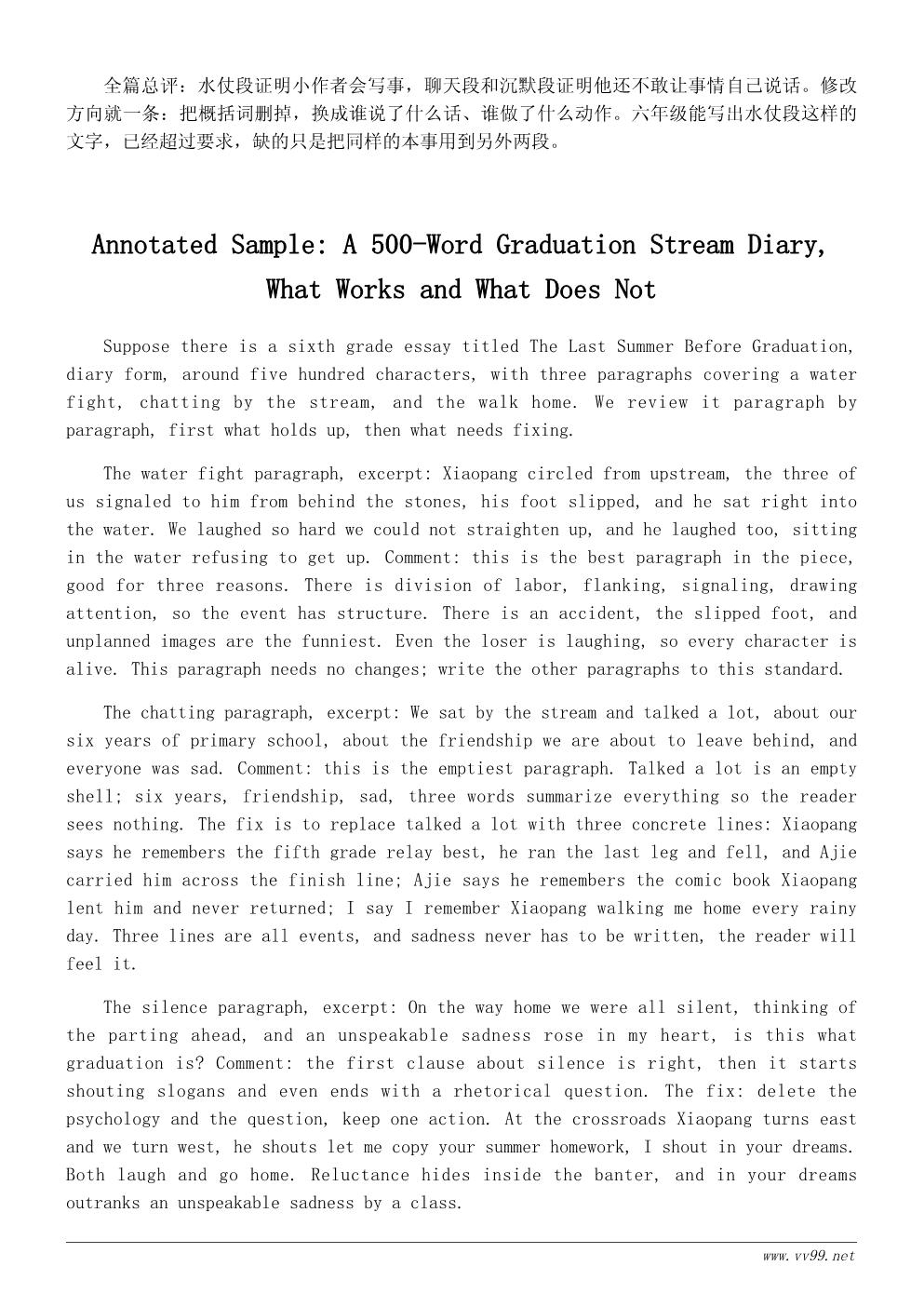
全篇总评:水仗段证明小作者会写事,聊天段和沉默段证明他还不敢让事情自己说话。修改方向就一条:把概括词删掉,换成谁说了什么话、谁做了什么动作。六年级能写出水仗段这样的文字,已经超过要求,缺的只是把同样的本事用到另外两段。
Annotated Sample: A 500-Word Graduation Stream Diary, What Works and What Does Not
Suppose there is a sixth grade essay titled The Last Summer Before Graduation, diary form, around five hundred characters, with three paragraphs covering a water fight, chatting by the stream, and the walk home. We review it paragraph by paragraph, first what holds up, then what needs fixing.
The water fight paragraph, excerpt: Xiaopang circled from upstream, the three of us signaled to him from behind the stones, his foot slipped, and he sat right into the water. We laughed so hard we could not straighten up, and he laughed too, sitting in the water refusing to get up. Comment: this is the best paragraph in the piece, good for three reasons. There is division of labor, flanking, signaling, drawing attention, so the event has structure. There is an accident, the slipped foot, and unplanned images are the funniest. Even the loser is laughing, so every character is alive. This paragraph needs no changes; write the other paragraphs to this standard.
The chatting paragraph, excerpt: We sat by the stream and talked a lot, about our six years of primary school, about the friendship we are about to leave behind, and everyone was sad. Comment: this is the emptiest paragraph. Talked a lot is an empty shell; six years, friendship, sad, three words summarize everything so the reader sees nothing. The fix is to replace talked a lot with three concrete lines: Xiaopang says he remembers the fifth grade relay best, he ran the last leg and fell, and Ajie carried him across the finish line; Ajie says he remembers the comic book Xiaopang lent him and never returned; I say I remember Xiaopang walking me home every rainy day. Three lines are all events, and sadness never has to be written, the reader will feel it.
The silence paragraph, excerpt: On the way home we were all silent, thinking of the parting ahead, and an unspeakable sadness rose in my heart, is this what graduation is? Comment: the first clause about silence is right, then it starts shouting slogans and even ends with a rhetorical question. The fix: delete the psychology and the question, keep one action. At the crossroads Xiaopang turns east and we turn west, he shouts let me copy your summer homework, I shout in your dreams. Both laugh and go home. Reluctance hides inside the banter, and in your dreams outranks an unspeakable sadness by a class.
Overall: the water fight paragraph proves the young author can write events; the chatting and silence paragraphs prove he still dares not let events speak for themselves. The revision direction is one line: delete summary words and replace them with who said what and who did what. Writing the water fight paragraph already exceeds the requirement at sixth grade; what is missing is only applying the same skill to the other two paragraphs.
小提示:上面此文档内容仅展示完整文档里的部分内容, 若需要下载完整文档请 点击免费下载完整文档 。