文章内容
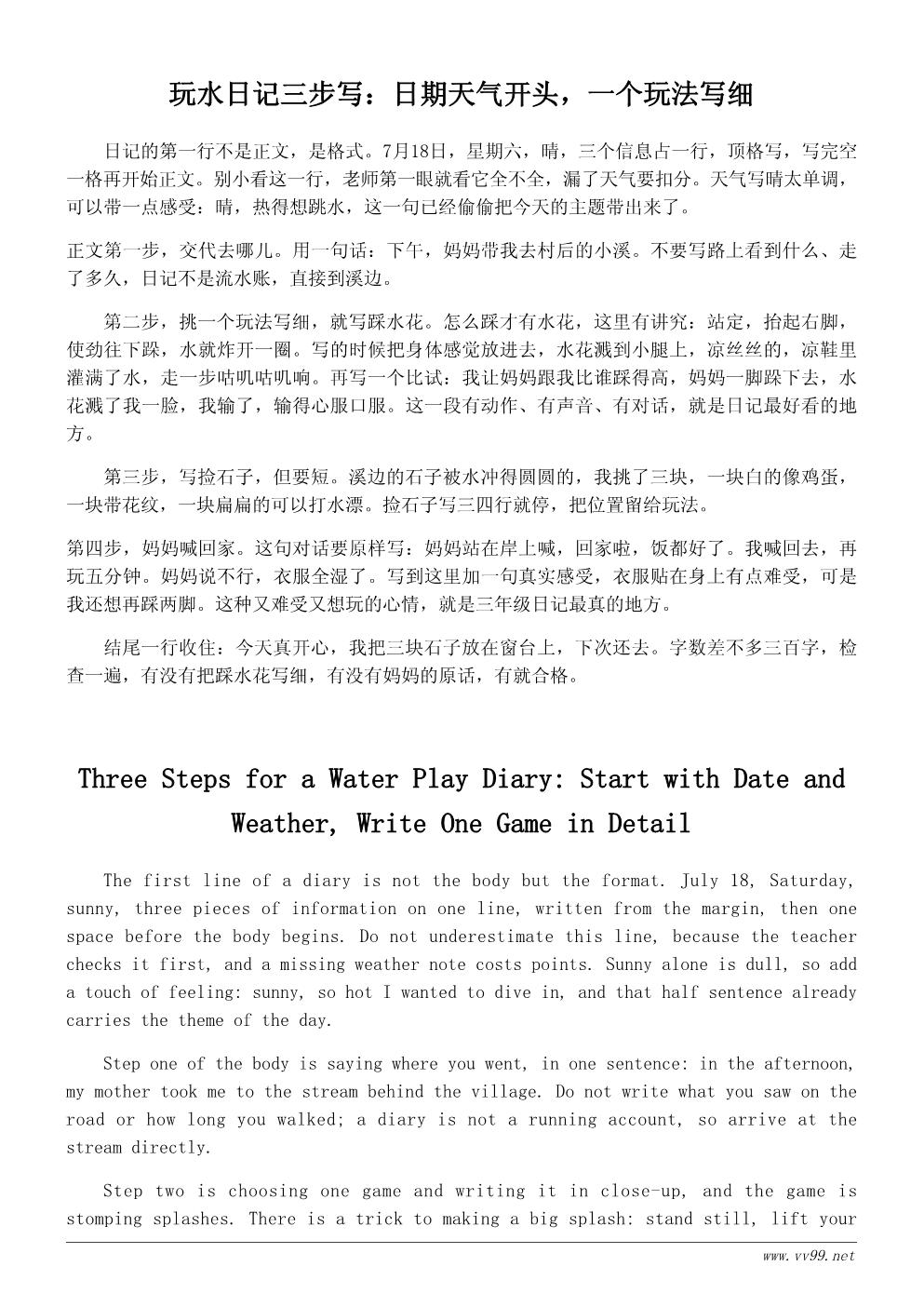
玩水日记三步写:日期天气开头,一个玩法写细
日记的第一行不是正文,是格式。7月18日,星期六,晴,三个信息占一行,顶格写,写完空一格再开始正文。别小看这一行,老师第一眼就看它全不全,漏了天气要扣分。天气写晴太单调,可以带一点感受:晴,热得想跳水,这一句已经偷偷把今天的主题带出来了。
正文第一步,交代去哪儿。用一句话:下午,妈妈带我去村后的小溪。不要写路上看到什么、走了多久,日记不是流水账,直接到溪边。
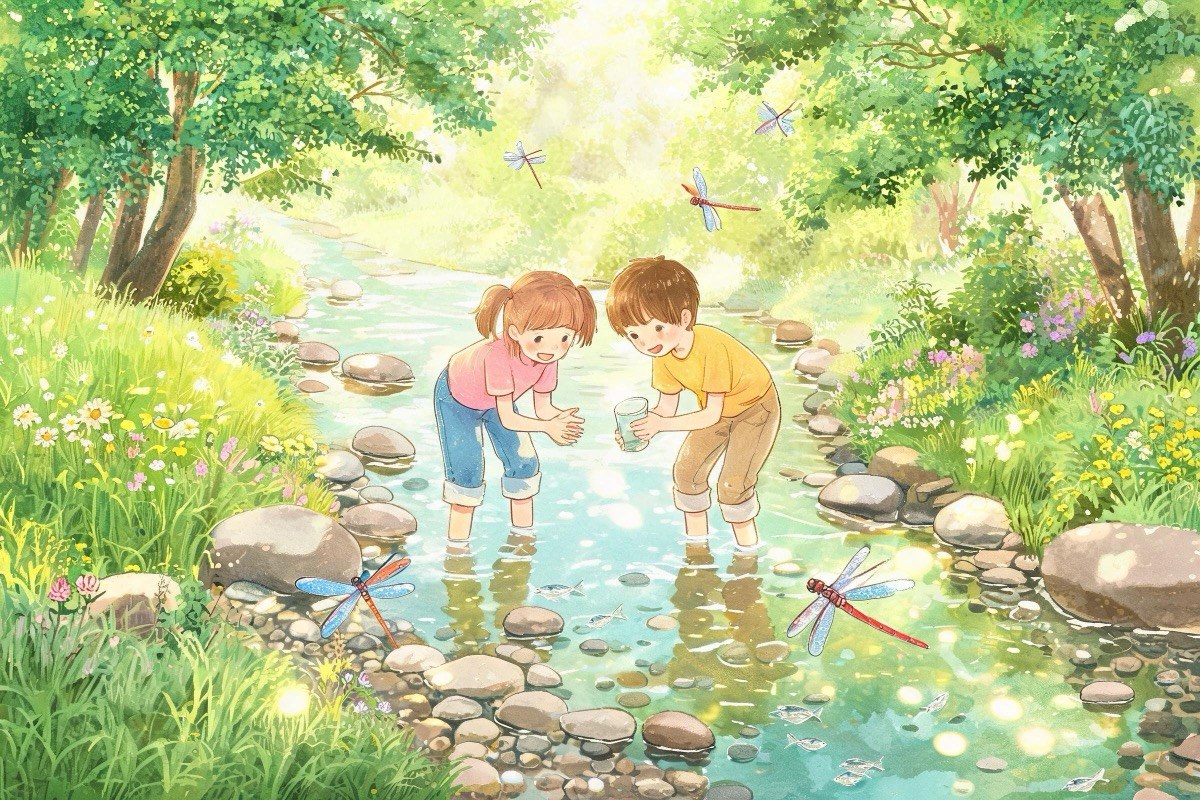
第二步,挑一个玩法写细,就写踩水花。怎么踩才有水花,这里有讲究:站定,抬起右脚,使劲往下跺,水就炸开一圈。写的时候把身体感觉放进去,水花溅到小腿上,凉丝丝的,凉鞋里灌满了水,走一步咕叽咕叽响。再写一个比试:我让妈妈跟我比谁踩得高,妈妈一脚跺下去,水花溅了我一脸,我输了,输得心服口服。这一段有动作、有声音、有对话,就是日记最好看的地方。
第三步,写捡石子,但要短。溪边的石子被水冲得圆圆的,我挑了三块,一块白的像鸡蛋,一块带花纹,一块扁扁的可以打水漂。捡石子写三四行就停,把位置留给玩法。
第四步,妈妈喊回家。这句对话要原样写:妈妈站在岸上喊,回家啦,饭都好了。我喊回去,再玩五分钟。妈妈说不行,衣服全湿了。写到这里加一句真实感受,衣服贴在身上有点难受,可是我还想再踩两脚。这种又难受又想玩的心情,就是三年级日记最真的地方。
结尾一行收住:今天真开心,我把三块石子放在窗台上,下次还去。字数差不多三百字,检查一遍,有没有把踩水花写细,有没有妈妈的原话,有就合格。
Three Steps for a Water Play Diary: Start with Date and Weather, Write One Game in Detail
The first line of a diary is not the body but the format. July 18, Saturday, sunny, three pieces of information on one line, written from the margin, then one space before the body begins. Do not underestimate this line, because the teacher checks it first, and a missing weather note costs points. Sunny alone is dull, so add a touch of feeling: sunny, so hot I wanted to dive in, and that half sentence already carries the theme of the day.
Step one of the body is saying where you went, in one sentence: in the afternoon, my mother took me to the stream behind the village. Do not write what you saw on the road or how long you walked; a diary is not a running account, so arrive at the stream directly.
Step two is choosing one game and writing it in close-up, and the game is stomping splashes. There is a trick to making a big splash: stand still, lift your right foot, and stomp down hard, and the water bursts into a ring. Put the body feelings in: the spray hits your calves, cool and tingling, your sandals fill with water, and every step goes squelch-squelch. Add a contest: I challenge mother to see who stomps higher, and her one stomp splashes water all over my face. I lose, and I lose fairly. This paragraph has action, sound, and dialogue, which is the best part of a diary.
Step three is picking up pebbles, but keep it short. The stones by the stream are washed round, and I choose three: one white as an egg, one with a pattern, one flat enough to skip. Spend three or four lines here and save the space for the game.
Step four is mother calling me home, and her words go in as spoken: mother stands on the bank and shouts, time to go home, dinner is ready. I shout back, five more minutes. She says no, my clothes are soaked. Add one true feeling here: the wet clothes stick to me and feel unpleasant, yet I still want to stomp two more times. That mix of uncomfortable and unwilling to stop is the most honest thing in a third grade diary.
Close with one line: today was so fun, I put my three pebbles on the windowsill, and I will go again. About three hundred characters in total. Check once: is the splash stomping written in detail, and are mother exact words there? If yes, it passes.
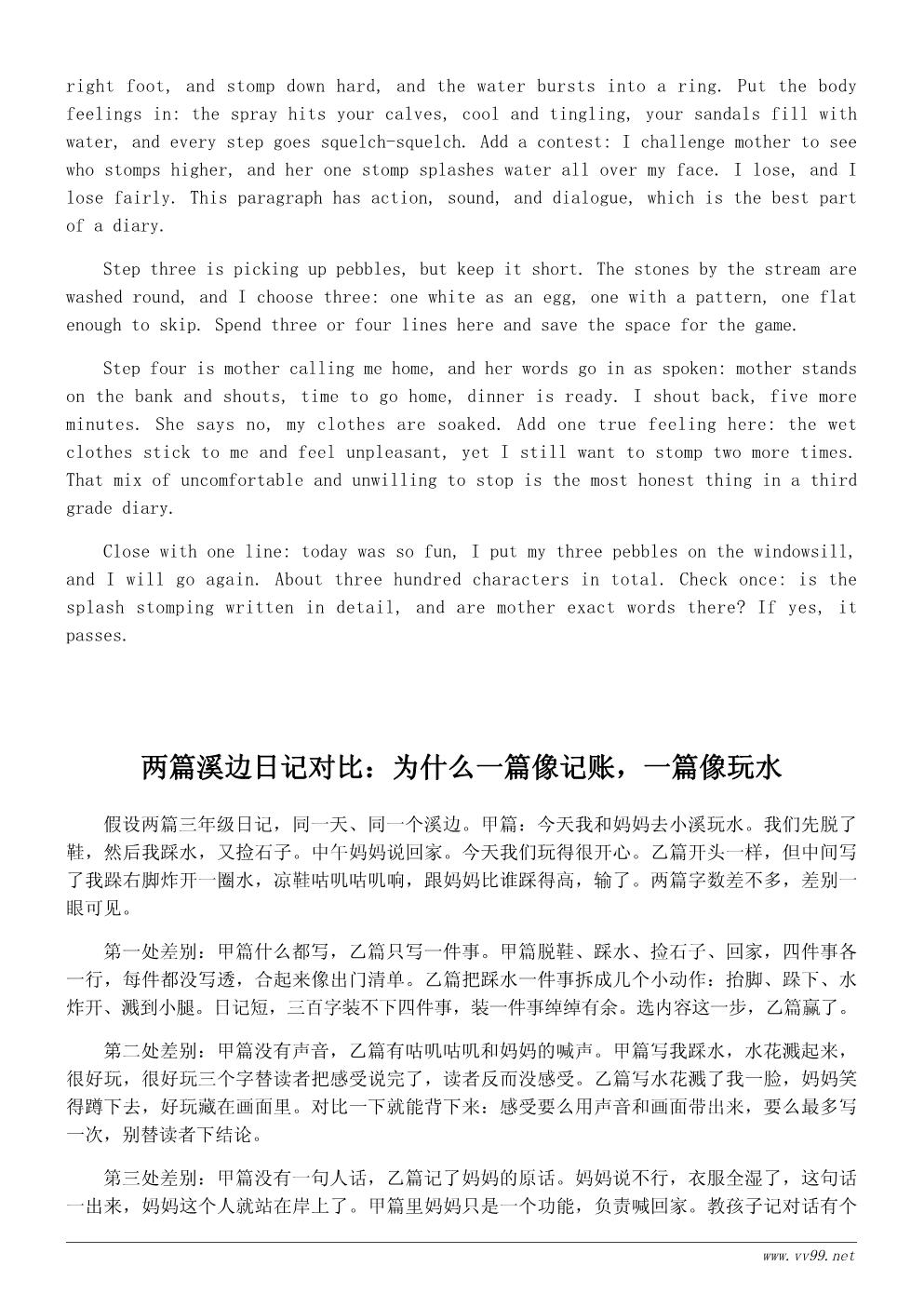
两篇溪边日记对比:为什么一篇像记账,一篇像玩水
假设两篇三年级日记,同一天、同一个溪边。甲篇:今天我和妈妈去小溪玩水。我们先脱了鞋,然后我踩水,又捡石子。中午妈妈说回家。今天我们玩得很开心。乙篇开头一样,但中间写了我跺右脚炸开一圈水,凉鞋咕叽咕叽响,跟妈妈比谁踩得高,输了。两篇字数差不多,差别一眼可见。
第一处差别:甲篇什么都写,乙篇只写一件事。甲篇脱鞋、踩水、捡石子、回家,四件事各一行,每件都没写透,合起来像出门清单。乙篇把踩水一件事拆成几个小动作:抬脚、跺下、水炸开、溅到小腿。日记短,三百字装不下四件事,装一件事绰绰有余。选内容这一步,乙篇赢了。
第二处差别:甲篇没有声音,乙篇有咕叽咕叽和妈妈的喊声。甲篇写我踩水,水花溅起来,很好玩,很好玩三个字替读者把感受说完了,读者反而没感受。乙篇写水花溅了我一脸,妈妈笑得蹲下去,好玩藏在画面里。对比一下就能背下来:感受要么用声音和画面带出来,要么最多写一次,别替读者下结论。
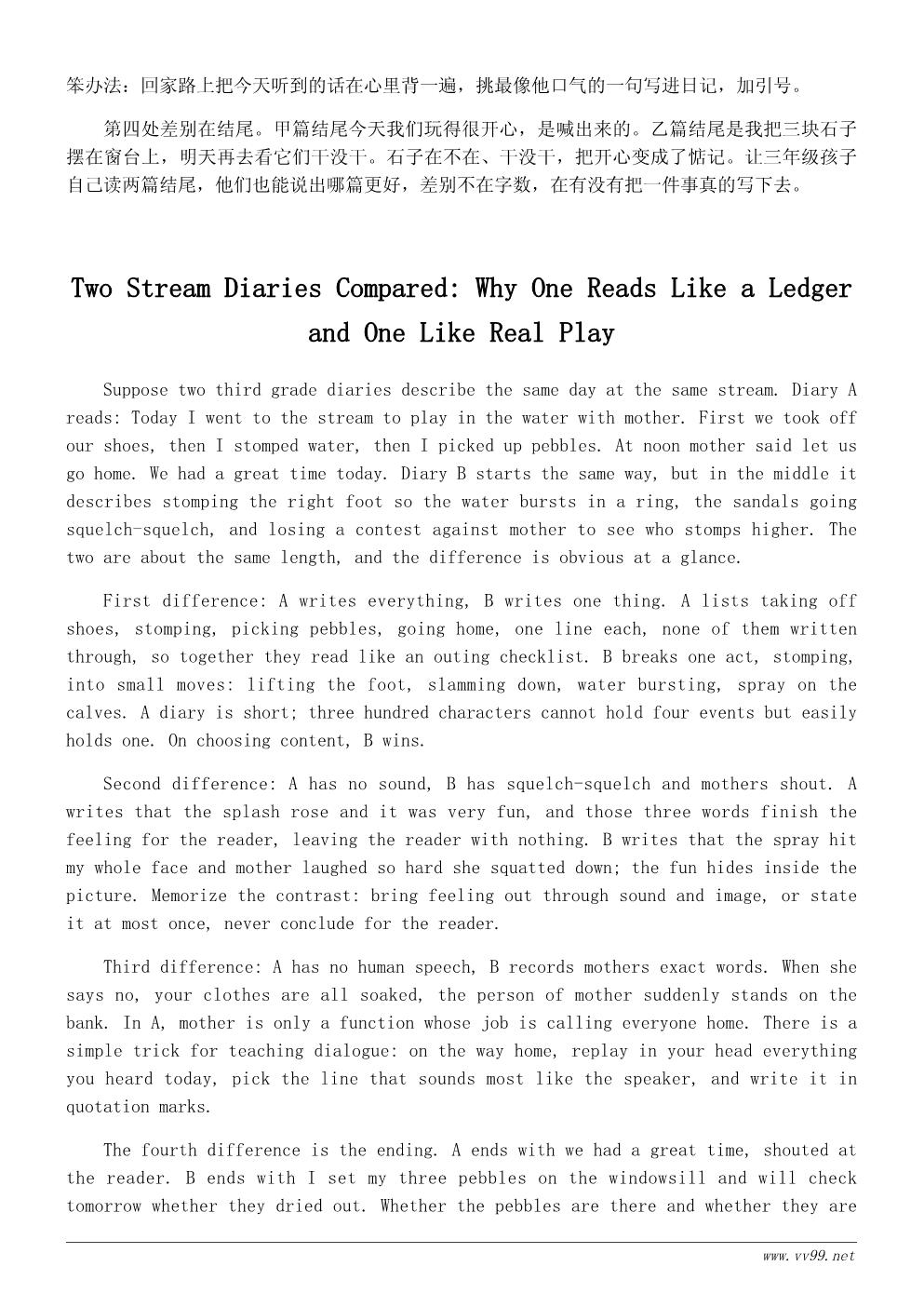
第三处差别:甲篇没有一句人话,乙篇记了妈妈的原话。妈妈说不行,衣服全湿了,这句话一出来,妈妈这个人就站在岸上了。甲篇里妈妈只是一个功能,负责喊回家。教孩子记对话有个笨办法:回家路上把今天听到的话在心里背一遍,挑最像他口气的一句写进日记,加引号。
第四处差别在结尾。甲篇结尾今天我们玩得很开心,是喊出来的。乙篇结尾是我把三块石子摆在窗台上,明天再去看它们干没干。石子在不在、干没干,把开心变成了惦记。让三年级孩子自己读两篇结尾,他们也能说出哪篇更好,差别不在字数,在有没有把一件事真的写下去。
Two Stream Diaries Compared: Why One Reads Like a Ledger and One Like Real Play
Suppose two third grade diaries describe the same day at the same stream. Diary A reads: Today I went to the stream to play in the water with mother. First we took off our shoes, then I stomped water, then I picked up pebbles. At noon mother said let us go home. We had a great time today. Diary B starts the same way, but in the middle it describes stomping the right foot so the water bursts in a ring, the sandals going squelch-squelch, and losing a contest against mother to see who stomps higher. The two are about the same length, and the difference is obvious at a glance.
First difference: A writes everything, B writes one thing. A lists taking off shoes, stomping, picking pebbles, going home, one line each, none of them written through, so together they read like an outing checklist. B breaks one act, stomping, into small moves: lifting the foot, slamming down, water bursting, spray on the calves. A diary is short; three hundred characters cannot hold four events but easily holds one. On choosing content, B wins.
Second difference: A has no sound, B has squelch-squelch and mothers shout. A writes that the splash rose and it was very fun, and those three words finish the feeling for the reader, leaving the reader with nothing. B writes that the spray hit my whole face and mother laughed so hard she squatted down; the fun hides inside the picture. Memorize the contrast: bring feeling out through sound and image, or state it at most once, never conclude for the reader.
Third difference: A has no human speech, B records mothers exact words. When she says no, your clothes are all soaked, the person of mother suddenly stands on the bank. In A, mother is only a function whose job is calling everyone home. There is a simple trick for teaching dialogue: on the way home, replay in your head everything you heard today, pick the line that sounds most like the speaker, and write it in quotation marks.
The fourth difference is the ending. A ends with we had a great time, shouted at the reader. B ends with I set my three pebbles on the windowsill and will check tomorrow whether they dried out. Whether the pebbles are there and whether they are dry turns happiness into looking forward. Let a third grader read both endings aloud, and they can tell which is better: the gap is not word count but whether one thing was truly written through.
小提示:上面此文档内容仅展示完整文档里的部分内容, 若需要下载完整文档请 点击免费下载完整文档 。