文章内容
观察日记怎么写:定三个时间点,蹲下来看
观察日记和玩水日记不一样,主角不是你,是溪。写它的第一步是定时间点。出门前就在本子上写好三行:早晨、中午、傍晚,每个时间去溪边站五分钟。没有时间点,观察就是一团模糊的印象,写出来只有很美很清,什么变化都没有。
早晨这个点,看溪面。站下去先别急着写,问自己:现在溪面上有什么东西是没有的?早晨的答案常常是雾,一层薄雾贴着水面,对岸的柳树只露出上半截。再蹲下来看近处,溪面上漂着一片叶子,它不动,还是慢慢往下游挪?伸手摸一下水,凉。把这些写下来,早晨这一段就有了,雾、半截柳树、挪动的叶子、凉的水,四个东西都在。
中午这个点,看树荫。同一棵柳树,中午的影子缩到脚底下一小团,溪面上亮得睁不开眼。找一块早上有太阳、中午被树荫盖住的石头,做记号,中午再去看它,石头是干的还是湿的,摸上去烫不烫。观察日记最值钱的就是这种前后对照,早上晒得烫手的石头,傍晚摸是凉的,这就是变化,变化就是内容。
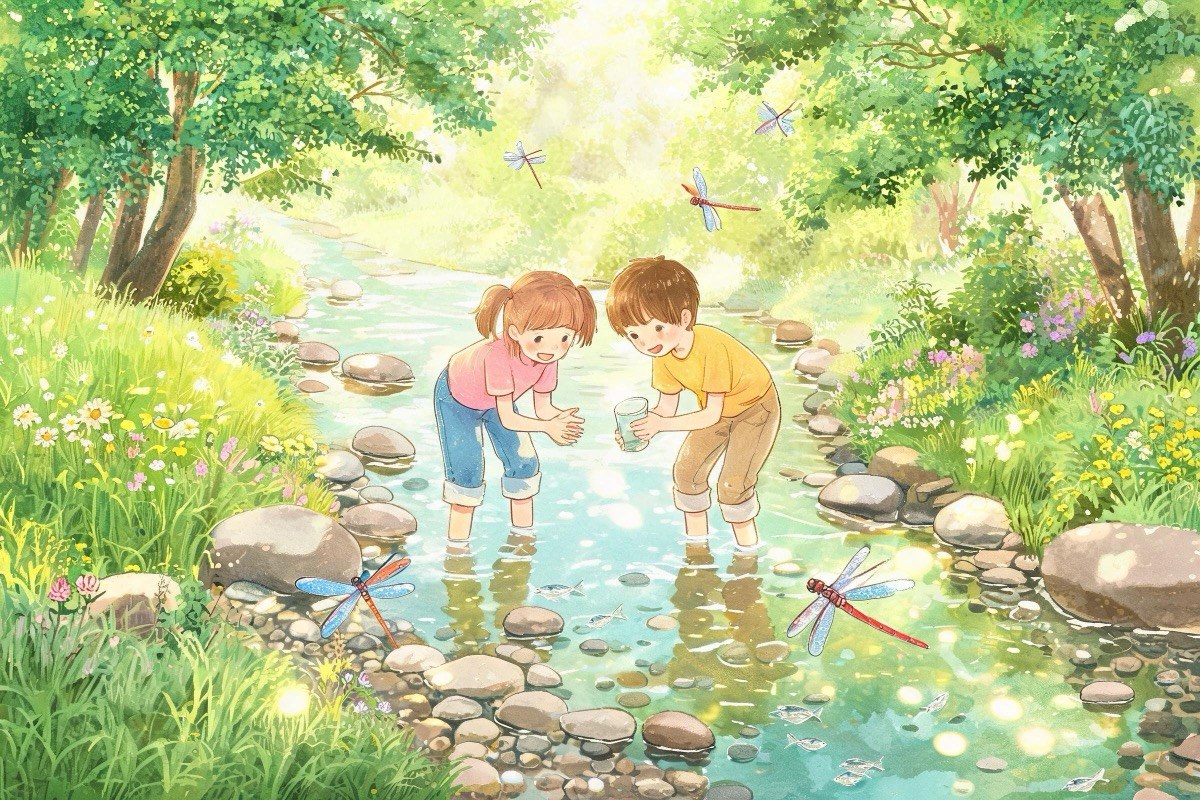
傍晚这个点,看蜻蜓。蜻蜓低飞的时候离水面很近,尾巴点一下水,一圈小波纹散开,这叫点水。看一只就够,盯住它来回飞几次、每次落在哪里。它落在枯枝上时,凑近三步看翅膀,四片翅膀是合着的还是张开的。看完记下时间,傍晚六点一刻。
现场只记关键词:雾、半截柳树、叶子挪、石头烫、蜻蜓点水、落枯枝。回家趁晚饭前把关键词扩成句子,每个时间点一段,一段七八十到一百字,开头一行写日期天气,结尾一行写一个明天的问题,比如那片叶子明天还在不在原来的地方。一个问号让日记有了下一天。
How to Write an Observation Diary: Fix Three Time Points and Watch Up Close
An observation diary differs from a water play diary: the main character is not you but the stream. The first step is fixing your time points. Before leaving, write three lines in your notebook: morning, noon, evening, and at each time stand by the stream for five minutes. Without time points, observation stays a blurry impression, and what comes out on paper is only beautiful and clear, with no change at all.
At the morning point, watch the water surface. Do not write right away; ask yourself what is on the surface now that was not there before. The morning answer is often mist, a thin layer hugging the water, with the willow on the far bank showing only its upper half. Then squat and look close: a leaf floats on the surface, is it still, or drifting slowly downstream? Touch the water with your hand, cold. Write these down and the morning paragraph is done: mist, half a willow, a drifting leaf, cold water, all four are there.
At the noon point, watch the tree shade. The same willow shrinks its shadow to a small patch under its trunk, and the water is too bright to stare at. Find a stone that had sun in the morning and sits in shade by noon, mark it, and go back: is the stone dry or wet, hot to the touch? This before-and-after pairing is the treasure of an observation diary. A stone burning hot at noon feels cool at dusk, and that change is content.
At the dusk point, watch dragonflies. Flying low, a dragonfly skims the surface, taps once, and a small ring spreads, which is called dragonfly dotting water. Watching one is enough: note how many times it flies back and forth and where it lands each time. When it rests on a dead branch, come within three steps and look at its wings, whether the four wings are folded or spread. Record the time, 6:15 in the evening.
On site, write keywords only: mist, half a willow, the leaf drifting, hot stone, dragonfly tapping, landing on the branch. Before dinner, while memory is fresh, expand the keywords into sentences, one paragraph per time point, seventy to a hundred characters each, with date and weather on the first line, and end with one question for tomorrow, such as whether that leaf will still be in the same place. A question mark gives the diary a next day.
一篇溪边观察日记范文:早中晚三段各改一处
假设有一篇四年级观察日记,题目是《溪边的一天》,按早晨、中午、傍晚分成三段。三段都有素材,但每段都差一口气。我们一段改一处,改完对比着读,就能看出观察日记的门道。
早晨段原文:早晨,溪面上有雾,柳树看不清楚,水很清。毛病:这是照片,不是观察。照片只记录样子,观察要记录变化。改法:加一个对比动作,我站在早上常站的石头上,发现对岸的柳树只露出上半截,下半截被雾藏住了,昨天这个时候它是完整的。柳树昨天完整、今天缺一截,变化就跳出来了。改完这一段多两行,信息量多一倍。
中午段原文:中午,太阳很大,很热,树荫底下凉快。毛病:只报了天气,凉快是多少度的凉快没写。改法:做对照实验,早上那块晒得烫手的石头,中午躲进了柳树的影子里,我伸手摸,温的,不烫了。再写自己:我坐在树荫里,脚泡进溪里,风一吹,胳膊上起了一层小疙瘩。温度从皮肤上写出来,比写十次很热都管用。
傍晚段原文:傍晚,我看见蜻蜓在飞,老师说过这叫点水,蜻蜓的卵产在水里。毛病:后半段变成了自然课,观察日记里不需要引用老师。改法:把科普删掉,只写眼睛看到的,一只蜻蜓来回飞了四次,每次都贴着水面,尾巴往下一点,波纹散开就没了。第五次它落在枯枝上,我走近三步,它又飞起来,这次飞得高了,可能发现了我。蜻蜓怕不怕人,这是你自己的发现,比背下来的知识值钱。
结尾原文:今天的观察真有趣。改法:换成一个明天的问题,那片早上漂着的叶子,明天还在不在老地方?在,说明它卡住了;不在,说明它走了。观察日记的结尾不是总结,是给明天留一个钩子。
A Sample Stream Observation Diary: One Fix for Each of the Three Time Paragraphs
Suppose there is a fourth grade observation diary titled A Day by the Stream, divided into morning, noon, and evening paragraphs. Each paragraph has material, but each falls just short. We will fix one thing per paragraph, then read the before and after side by side, and the craft of an observation diary becomes visible.
The morning paragraph originally reads: In the morning there is mist on the water, the willow is unclear, and the water is very clear. Problem: this is a photograph, not an observation. A photograph records appearance; observation records change. The fix: add a comparison action. I stand on the stone I always stand on and notice the far willow shows only its upper half, the lower half hidden by mist, while at this hour yesterday it was whole. Whole yesterday, missing a section today, and the change jumps off the page. The paragraph grows two lines and doubles its information.
The noon paragraph originally reads: At noon the sun is huge, very hot, and the tree shade is cool. Problem: it only reports weather, without saying how cool cool is. The fix: run a comparison. The stone that was too hot to touch in the morning now hides in the willow shadow; I reach out and it is warm, no longer hot. Then write myself: sitting in the shade with my feet in the stream, a breeze raises tiny bumps on my arms. Temperature written through the skin works better than ten uses of very hot.
The evening paragraph originally reads: At dusk I saw dragonflies flying, and the teacher said this is called dotting water, dragonflies lay eggs in the water. Problem: the second half turns into a science lesson, and a quoted teacher has no place in an observation diary. The fix: delete the textbook and write only what the eyes saw. One dragonfly flew back and forth four times, each pass hugging the surface, tail tapping down once, the ripple spreading and vanishing. The fifth time it landed on a dead branch; I came within three steps and it flew again, this time higher, perhaps having noticed me. Whether dragonflies fear people is your own discovery, worth more than memorized knowledge.
The ending originally reads: Today observation was really interesting. The fix: replace it with a question for tomorrow, will the leaf that floated there this morning still be in the same place tomorrow? If yes, it is stuck; if no, it has moved on. The ending of an observation diary is not a summary but a hook left for tomorrow.
小提示:上面此文档内容仅展示完整文档里的部分内容, 若需要下载完整文档请 点击免费下载完整文档 。