文章内容
三种作文开头句式:声音引入、场景定格、回忆触发
声音引入式是最快进入现场的开头。第一句直接给声音,不介绍时间地点。示例:叮咚,叮咚,溪水从石头缝里挤出来,一路小跑。谁还记得这条溪?先让读者听见,再让读者看见。可改写素材就是溪水叮咚:把拟声词换成你那条溪真实的声音,水浅石头多的溪是叮咚,水深一点的溪是咕咕,雨后涨水的溪是哗哗。改的时候保留第一句只有声音、第二句才出现溪水的节奏,这个两拍节奏是抓人的关键。
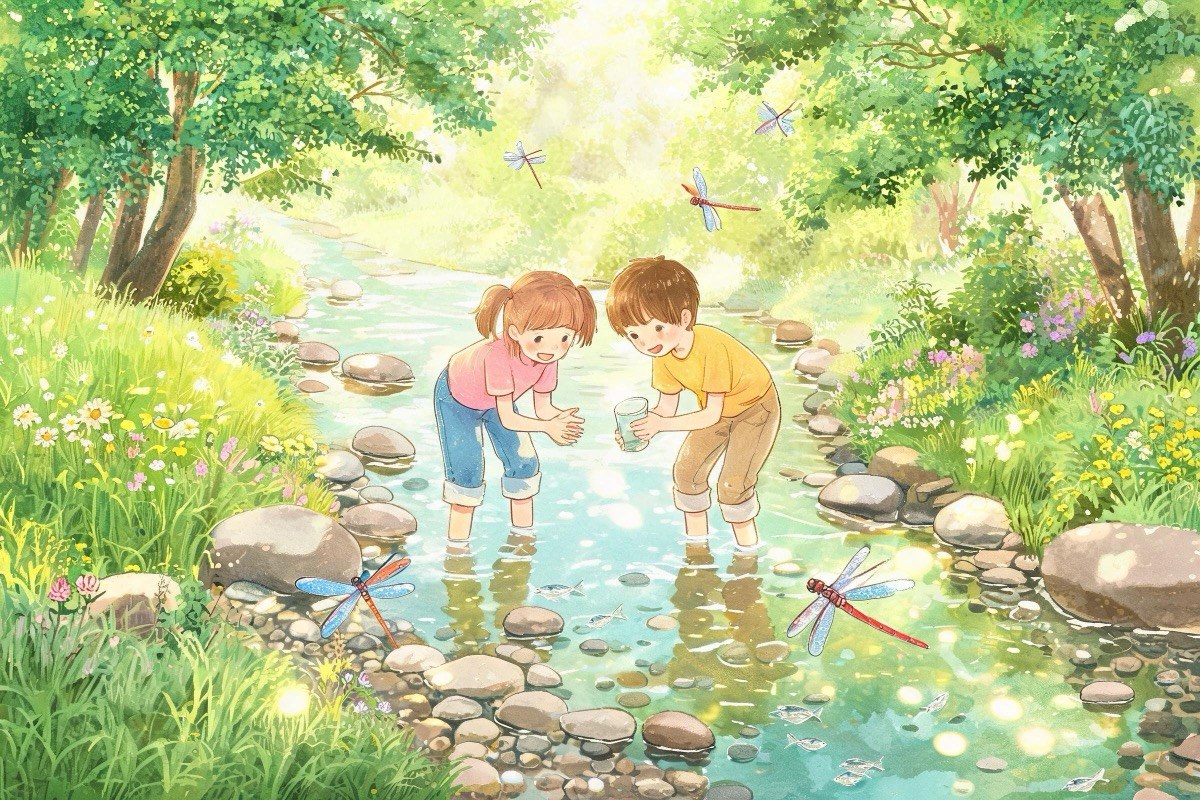
场景定格式像电影开场,直接把镜头停在画面上。示例:夕阳把溪面烧成橘红色,水底的石头一颗颗发亮,几只蜻蜓点了一下水就飞走了。这个开头不出现我字,纯写景,写完景再用一句我站在岸边已经很久了把人放进来。可改写素材是夕阳下的溪面:把橘红色换成你见过的颜色,金色、粉色都行,再换一个小动作,蜻蜓点水可以换成落叶打转、鸭子划出一道水纹。定格式开头的要点是只写一个画面,不要从东写到西,画面越窄越清楚。
回忆触发式适合写怀念类的文章,用一个现在的东西打开过去。示例:又听见蝉鸣了,一声接一声,像有人在我耳边喊:那年夏天,溪边。蝉鸣、冰棍纸、旧草帽都能当触发器。可改写素材就是蝉鸣:换成别的也行,闻到蚊香想到溪边野餐,摸到凉席想到午睡。触发式开头的要点是触发物要具体,不能是我想起童年这种空触发,具体东西才能带出具体画面。
三种开头各有一个毛病要防。声音引入式防拟声词用三遍以上,两遍刚好,三遍就吵。场景定格式防形容词堆满,一个画面里形容词别超过两个。回忆触发式防第二段就开始抒情,触发之后第二段必须进具体事件,不许直接怀念。开头只有七八十到一百字,三种任选其一,别混着用,混着用哪个都写不透。
选哪种看文章走哪条路:全文写一次玩水,用声音引入;全文写一个夏天的几个片段,用场景定格;全文从现在跳回过去,用回忆触发。开头定了,结尾的写法就跟着定了,照应式结尾接声音和场景开头,抒情式结尾接回忆开头,下一篇文章专门拆结尾。
Three Essay Openings: Sound Lead-in, Frozen Scene, Memory Trigger
The sound lead-in is the fastest way into the scene. The first sentence gives sound only, with no time or place. Example: plip, plip, the stream squeezes out between the stones and runs off downhill. Who still remembers this creek? Let the reader hear first, then see. The reusable material is the plip-plip of the stream: swap the onomatopoeia for the real sound of your own creek - shallow stony water says plip, deeper water says gurgle, rain-swollen water says roar. Keep the two-beat rhythm: sound alone in sentence one, the stream appears in sentence two. That rhythm is what hooks people.
The frozen-scene opening works like the first shot of a film: the camera stops on one image. Example: the setting sun burns the stream orange, every stone on the bottom glows, a dragonfly touches the water once and flies off. No I appears; pure scenery, and only after it comes one line placing the writer there - I had been standing on the bank for a while. The reusable material is the sunset stream: change orange to the color you actually saw, gold or pink, and swap in another small motion - a drifting leaf, a duck trailing a wrinkle. The rule is one image only, no panning east to west; the narrower the frame, the clearer it glows.
The memory trigger suits nostalgia pieces: one present object unlocks the past. Example: the cicadas are at it again, cry after cry, like someone calling in my ear: that summer, by the water. Cicadas, a popsicle wrapper, an old straw hat - any can be the trigger. The reusable material is the cicadas; swap freely - mosquito coils summon a picnic by the stream, a bamboo mat summons the nap. The rule: the trigger must be a thing, never an empty I remember my childhood; concrete objects carry concrete pictures.
Each opening has one flaw to guard against. Sound lead-in: never repeat the onomatopoeia more than twice - twice is music, three times is noise. Frozen scene: no more than two adjectives in one image. Memory trigger: the second paragraph must enter an event, not sentiment. An opening runs eighty to a hundred words; pick one method, do not blend them, or none lands.
Choose by the road the essay takes: one water-play event, use sound; several fragments of one summer, use the frozen scene; jumping from now back to then, use the trigger. Once the opening is set, the ending follows: echo endings pair with sound and scene openings, lyrical endings pair with trigger openings. The next piece takes apart endings.
两种结尾句式:首尾照应与收在画面上
照应式结尾是最稳的收尾,把开头的东西再摸一遍。开头用了溪水叮咚,结尾就写:叮咚,叮咚,溪还在响,听的人已经换了一副耳朵。开头用了夕阳下的溪面,结尾就写:夕阳又把溪面烧成橘红色,只是岸边看夕阳的人长高了。照应的要点是只重复一个东西,重复多了像复读机。改写的做法是回到开头第一段,找出里面最具体的那个名词,声音、颜色或者物件,结尾段围绕它写两三句,最后一句点出变化,变化只写人的变化,溪什么都不变。
抒情式结尾不是不能写,是不能直接喊。错误示范:啊,美丽的小溪,我爱你,你是我童年的乐园。这种句子任何一篇作文都能抄过去,说明它没有写你的溪。正确的抒情式结尾把情绪压进动作里:我蹲下去,把手伸进溪里,凉意顺着手臂爬上来。我站起来,往家走,走了几步又回头看了一眼。全程没有一个爱字没有一个怀念字,但读者全收到了。这就是收在画面上的抒情,比喊出来的重。
夕阳下的溪面这个素材在结尾特别好用,因为夕阳自带收束感。示例:太阳落到山后面去了,溪面暗下来,像谁把一盏灯拧小了。天黑之前,那条溪最后亮了一下。写完这两句就停,不要再加我的童年也暗下来了这种解释,解释是结尾最大的敌人。读者能看懂灯拧小是什么意思,不需要你翻译。
开头结尾的搭配要检查三件事。第一,开头出现过的声音、画面或物件,结尾至少接回一个,接不上说明中间写着写着跑题了。第二,结尾段不超过四句话,超过四句基本开始啰嗦。第三,全文搜一遍啊、呀、呢这类感叹词,结尾段里超过两个就删到只剩一个,感叹词一多,文章立刻变幼稚。
最后给一个考场检验法:把开头第一段和结尾第一段单独抄出来,放在眼前对比。好的搭配读起来像同一首曲子的第一小节和最后一小节,声音或画面能对上,情绪有变化。对不上就改结尾,别改开头,开头是全文的锚,动了开头整篇都要重排。
Two Endings: First-last Echo, and Closing on an Image
The echo ending is the safest close: touch again what the opening touched. If the opening used the plip-plip of the stream, the ending writes: plip, plip, the stream still sings, but the listener has new ears. If the opening used the sunset stream, the ending writes: the sunset burns the water orange again, only the watcher on the bank has grown taller. The rule: echo exactly one thing; echoing several turns the essay into a repeater. How to revise: go back to the first paragraph, find its most concrete noun - a sound, a color, an object - write two or three sentences around it, and let the last sentence mark one change, the change in the person only, while the stream changes nothing.
Lyrical endings are not forbidden; shouting is. Wrong model: oh beautiful stream, I love you, you are the playground of my childhood. That sentence could be copied into any essay, which proves it describes no stream of yours. The correct lyrical ending presses feeling into action: I crouched, put my hand in, cold climbing up my arm; I stood, walked home, and looked back once after a few steps. No love, no nostalgia, yet the reader receives everything. Lyrical by image weighs more than lyrical by shout.
The sunset-stream material works especially well at the end because sunset carries closure. Example: the sun dropped behind the hill, the water dimmed, like someone turning a lamp down; before dark, the stream lit up one last time. Stop there. Do not add my childhood dimmed too - explanation is the ending's worst enemy. Readers understand what turning down a lamp means; they do not need your translation.
Check three things in the opening-ending pair. One: at least one sound, image or object from the opening returns in the ending; if none can return, the middle wandered off. Two: the ending paragraph stays under four sentences; the fifth sentence is where rambling starts. Three: search the whole essay for exclamatory particles; if the ending has more than two, cut down to one - too many particles and the piece turns childish at once.
One exam-hall test: copy the first paragraph and the last paragraph side by side. A good pair reads like the first and last bars of one tune - sound or image matches, feeling has moved. If they do not match, revise the ending, never the opening; the opening is the anchor, and moving it forces the whole essay to be re-strung.
小提示:上面此文档内容仅展示完整文档里的部分内容, 若需要下载完整文档请 点击免费下载完整文档 。