文章内容
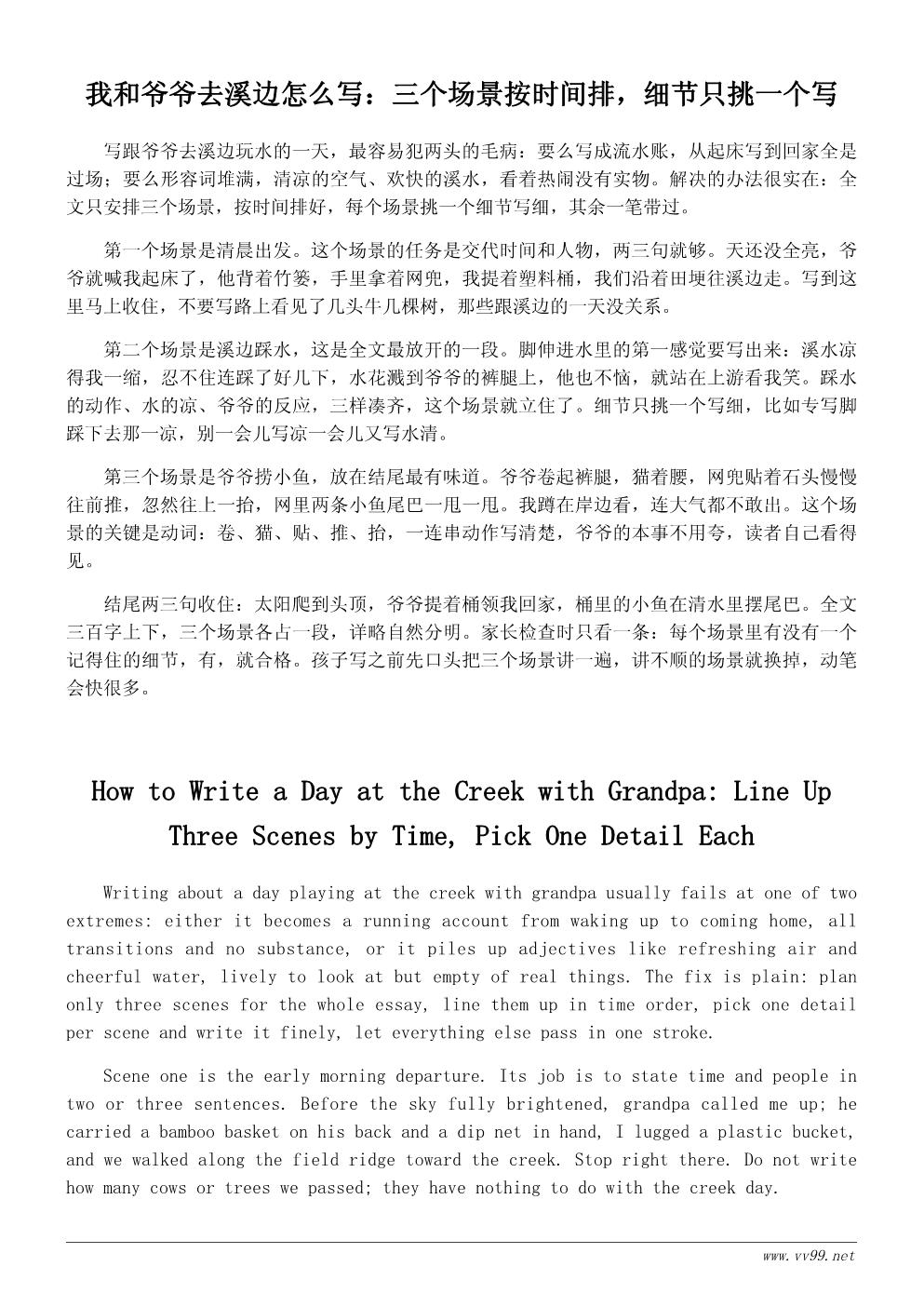
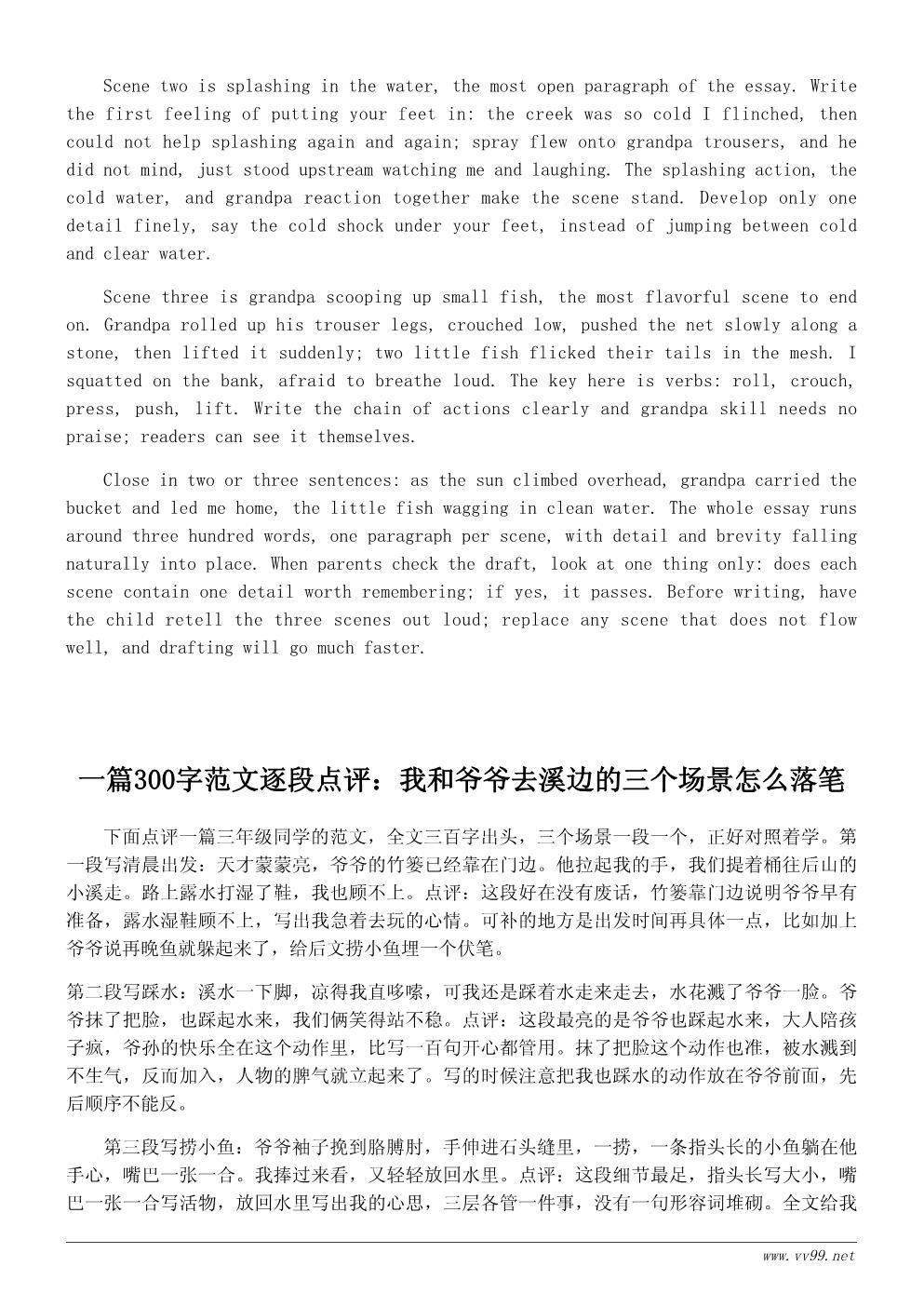
我和爷爷去溪边怎么写:三个场景按时间排,细节只挑一个写
写跟爷爷去溪边玩水的一天,最容易犯两头的毛病:要么写成流水账,从起床写到回家全是过场;要么形容词堆满,清凉的空气、欢快的溪水,看着热闹没有实物。解决的办法很实在:全文只安排三个场景,按时间排好,每个场景挑一个细节写细,其余一笔带过。
第一个场景是清晨出发。这个场景的任务是交代时间和人物,两三句就够。天还没全亮,爷爷就喊我起床了,他背着竹篓,手里拿着网兜,我提着塑料桶,我们沿着田埂往溪边走。写到这里马上收住,不要写路上看见了几头牛几棵树,那些跟溪边的一天没关系。
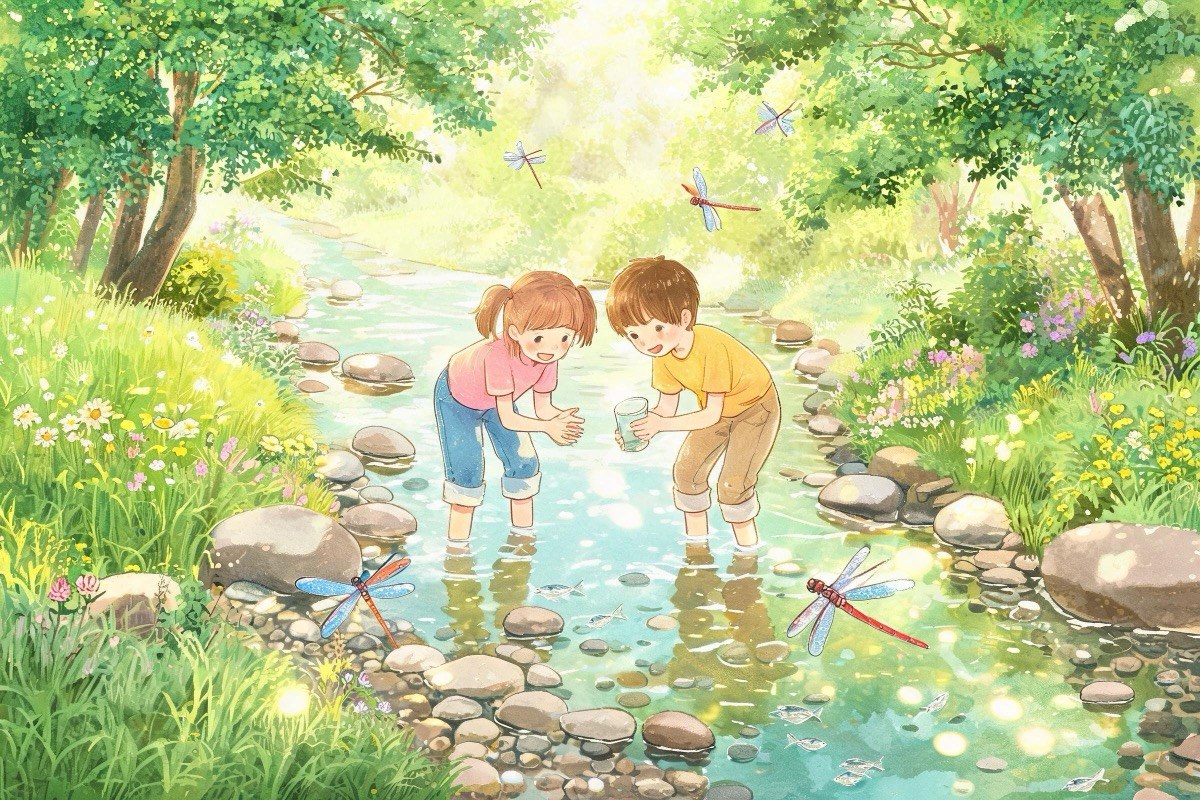
第二个场景是溪边踩水,这是全文最放开的一段。脚伸进水里的第一感觉要写出来:溪水凉得我一缩,忍不住连踩了好几下,水花溅到爷爷的裤腿上,他也不恼,就站在上游看我笑。踩水的动作、水的凉、爷爷的反应,三样凑齐,这个场景就立住了。细节只挑一个写细,比如专写脚踩下去那一凉,别一会儿写凉一会儿又写水清。
第三个场景是爷爷捞小鱼,放在结尾最有味道。爷爷卷起裤腿,猫着腰,网兜贴着石头慢慢往前推,忽然往上一抬,网里两条小鱼尾巴一甩一甩。我蹲在岸边看,连大气都不敢出。这个场景的关键是动词:卷、猫、贴、推、抬,一连串动作写清楚,爷爷的本事不用夸,读者自己看得见。
结尾两三句收住:太阳爬到头顶,爷爷提着桶领我回家,桶里的小鱼在清水里摆尾巴。全文三百字上下,三个场景各占一段,详略自然分明。家长检查时只看一条:每个场景里有没有一个记得住的细节,有,就合格。孩子写之前先口头把三个场景讲一遍,讲不顺的场景就换掉,动笔会快很多。
How to Write a Day at the Creek with Grandpa: Line Up Three Scenes by Time, Pick One Detail Each
Writing about a day playing at the creek with grandpa usually fails at one of two extremes: either it becomes a running account from waking up to coming home, all transitions and no substance, or it piles up adjectives like refreshing air and cheerful water, lively to look at but empty of real things. The fix is plain: plan only three scenes for the whole essay, line them up in time order, pick one detail per scene and write it finely, let everything else pass in one stroke.
Scene one is the early morning departure. Its job is to state time and people in two or three sentences. Before the sky fully brightened, grandpa called me up; he carried a bamboo basket on his back and a dip net in hand, I lugged a plastic bucket, and we walked along the field ridge toward the creek. Stop right there. Do not write how many cows or trees we passed; they have nothing to do with the creek day.
Scene two is splashing in the water, the most open paragraph of the essay. Write the first feeling of putting your feet in: the creek was so cold I flinched, then could not help splashing again and again; spray flew onto grandpa trousers, and he did not mind, just stood upstream watching me and laughing. The splashing action, the cold water, and grandpa reaction together make the scene stand. Develop only one detail finely, say the cold shock under your feet, instead of jumping between cold and clear water.
Scene three is grandpa scooping up small fish, the most flavorful scene to end on. Grandpa rolled up his trouser legs, crouched low, pushed the net slowly along a stone, then lifted it suddenly; two little fish flicked their tails in the mesh. I squatted on the bank, afraid to breathe loud. The key here is verbs: roll, crouch, press, push, lift. Write the chain of actions clearly and grandpa skill needs no praise; readers can see it themselves.
Close in two or three sentences: as the sun climbed overhead, grandpa carried the bucket and led me home, the little fish wagging in clean water. The whole essay runs around three hundred words, one paragraph per scene, with detail and brevity falling naturally into place. When parents check the draft, look at one thing only: does each scene contain one detail worth remembering; if yes, it passes. Before writing, have the child retell the three scenes out loud; replace any scene that does not flow well, and drafting will go much faster.
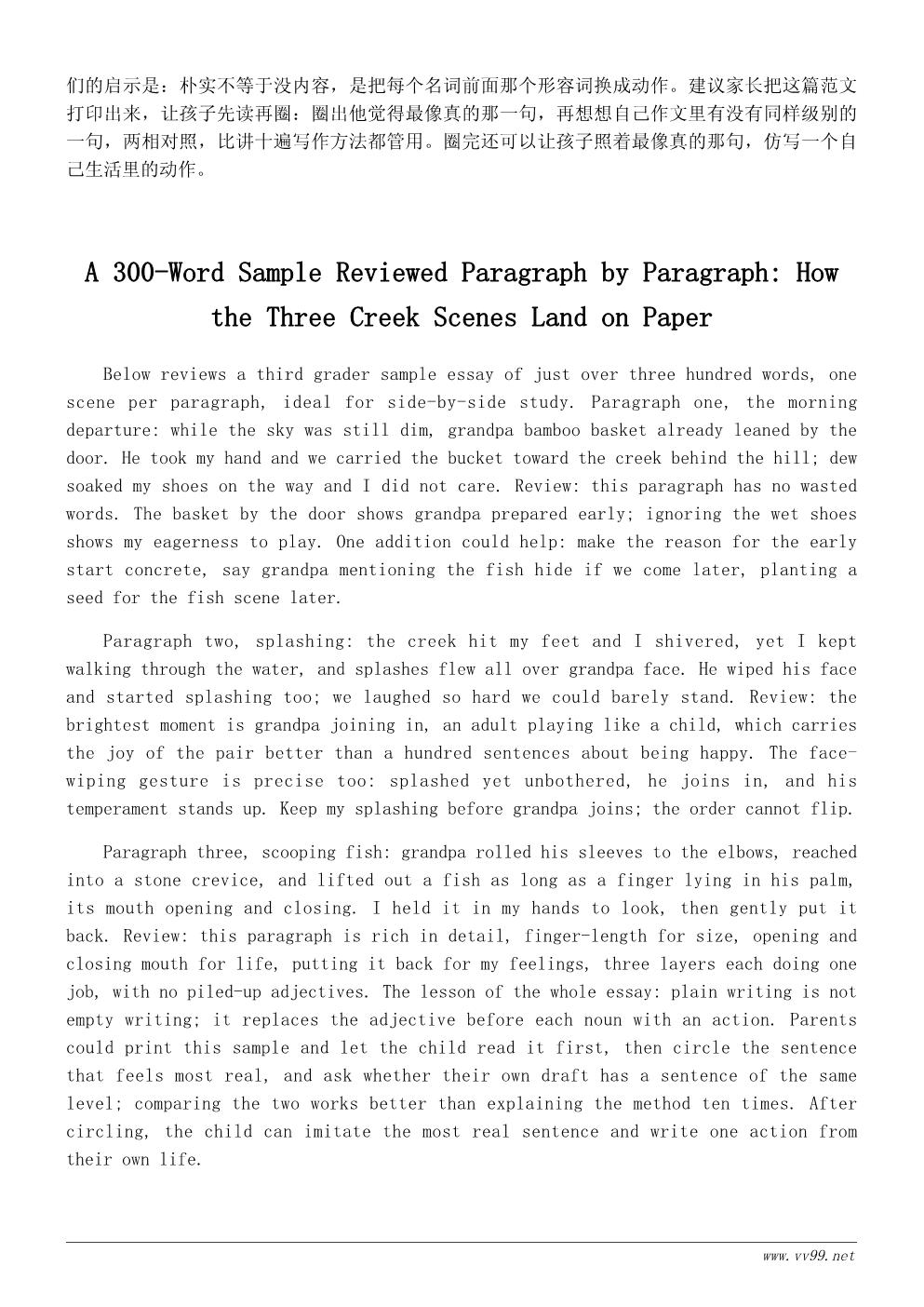
一篇300字范文逐段点评:我和爷爷去溪边的三个场景怎么落笔
下面点评一篇三年级同学的范文,全文三百字出头,三个场景一段一个,正好对照着学。第一段写清晨出发:天才蒙蒙亮,爷爷的竹篓已经靠在门边。他拉起我的手,我们提着桶往后山的小溪走。路上露水打湿了鞋,我也顾不上。点评:这段好在没有废话,竹篓靠门边说明爷爷早有准备,露水湿鞋顾不上,写出我急着去玩的心情。可补的地方是出发时间再具体一点,比如加上爷爷说再晚鱼就躲起来了,给后文捞小鱼埋一个伏笔。
第二段写踩水:溪水一下脚,凉得我直哆嗦,可我还是踩着水走来走去,水花溅了爷爷一脸。爷爷抹了把脸,也踩起水来,我们俩笑得站不稳。点评:这段最亮的是爷爷也踩起水来,大人陪孩子疯,爷孙的快乐全在这个动作里,比写一百句开心都管用。抹了把脸这个动作也准,被水溅到不生气,反而加入,人物的脾气就立起来了。写的时候注意把我也踩水的动作放在爷爷前面,先后顺序不能反。
第三段写捞小鱼:爷爷袖子挽到胳膊肘,手伸进石头缝里,一捞,一条指头长的小鱼躺在他手心,嘴巴一张一合。我捧过来看,又轻轻放回水里。点评:这段细节最足,指头长写大小,嘴巴一张一合写活物,放回水里写出我的心思,三层各管一件事,没有一句形容词堆砌。全文给我们的启示是:朴实不等于没内容,是把每个名词前面那个形容词换成动作。建议家长把这篇范文打印出来,让孩子先读再圈:圈出他觉得最像真的那一句,再想想自己作文里有没有同样级别的一句,两相对照,比讲十遍写作方法都管用。圈完还可以让孩子照着最像真的那句,仿写一个自己生活里的动作。
A 300-Word Sample Reviewed Paragraph by Paragraph: How the Three Creek Scenes Land on Paper
Below reviews a third grader sample essay of just over three hundred words, one scene per paragraph, ideal for side-by-side study. Paragraph one, the morning departure: while the sky was still dim, grandpa bamboo basket already leaned by the door. He took my hand and we carried the bucket toward the creek behind the hill; dew soaked my shoes on the way and I did not care. Review: this paragraph has no wasted words. The basket by the door shows grandpa prepared early; ignoring the wet shoes shows my eagerness to play. One addition could help: make the reason for the early start concrete, say grandpa mentioning the fish hide if we come later, planting a seed for the fish scene later.
Paragraph two, splashing: the creek hit my feet and I shivered, yet I kept walking through the water, and splashes flew all over grandpa face. He wiped his face and started splashing too; we laughed so hard we could barely stand. Review: the brightest moment is grandpa joining in, an adult playing like a child, which carries the joy of the pair better than a hundred sentences about being happy. The face-wiping gesture is precise too: splashed yet unbothered, he joins in, and his temperament stands up. Keep my splashing before grandpa joins; the order cannot flip.
Paragraph three, scooping fish: grandpa rolled his sleeves to the elbows, reached into a stone crevice, and lifted out a fish as long as a finger lying in his palm, its mouth opening and closing. I held it in my hands to look, then gently put it back. Review: this paragraph is rich in detail, finger-length for size, opening and closing mouth for life, putting it back for my feelings, three layers each doing one job, with no piled-up adjectives. The lesson of the whole essay: plain writing is not empty writing; it replaces the adjective before each noun with an action. Parents could print this sample and let the child read it first, then circle the sentence that feels most real, and ask whether their own draft has a sentence of the same level; comparing the two works better than explaining the method ten times. After circling, the child can imitate the most real sentence and write one action from their own life.
小提示:上面此文档内容仅展示完整文档里的部分内容, 若需要下载完整文档请 点击免费下载完整文档 。