文章内容
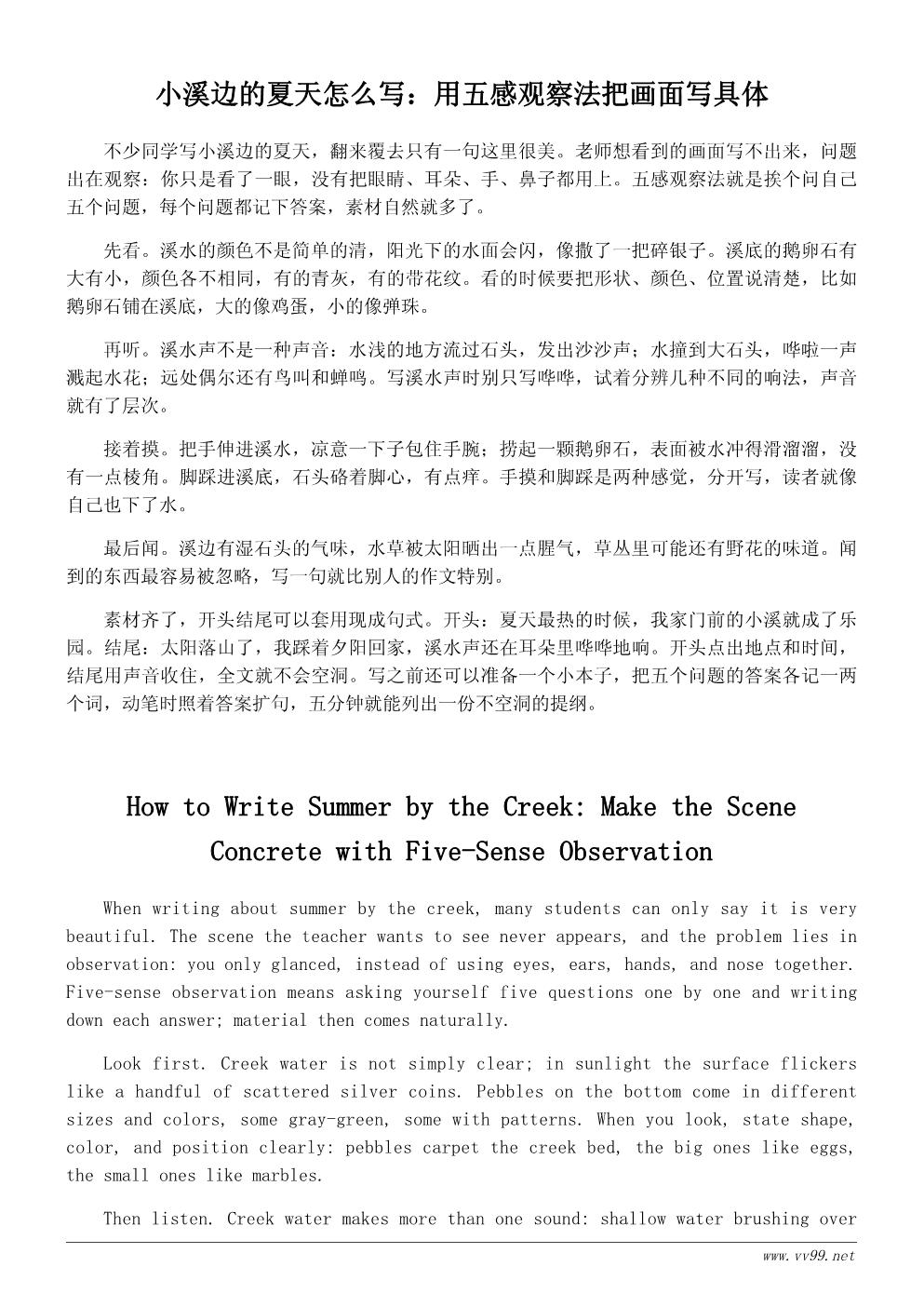
小溪边的夏天怎么写:用五感观察法把画面写具体
不少同学写小溪边的夏天,翻来覆去只有一句这里很美。老师想看到的画面写不出来,问题出在观察:你只是看了一眼,没有把眼睛、耳朵、手、鼻子都用上。五感观察法就是挨个问自己五个问题,每个问题都记下答案,素材自然就多了。
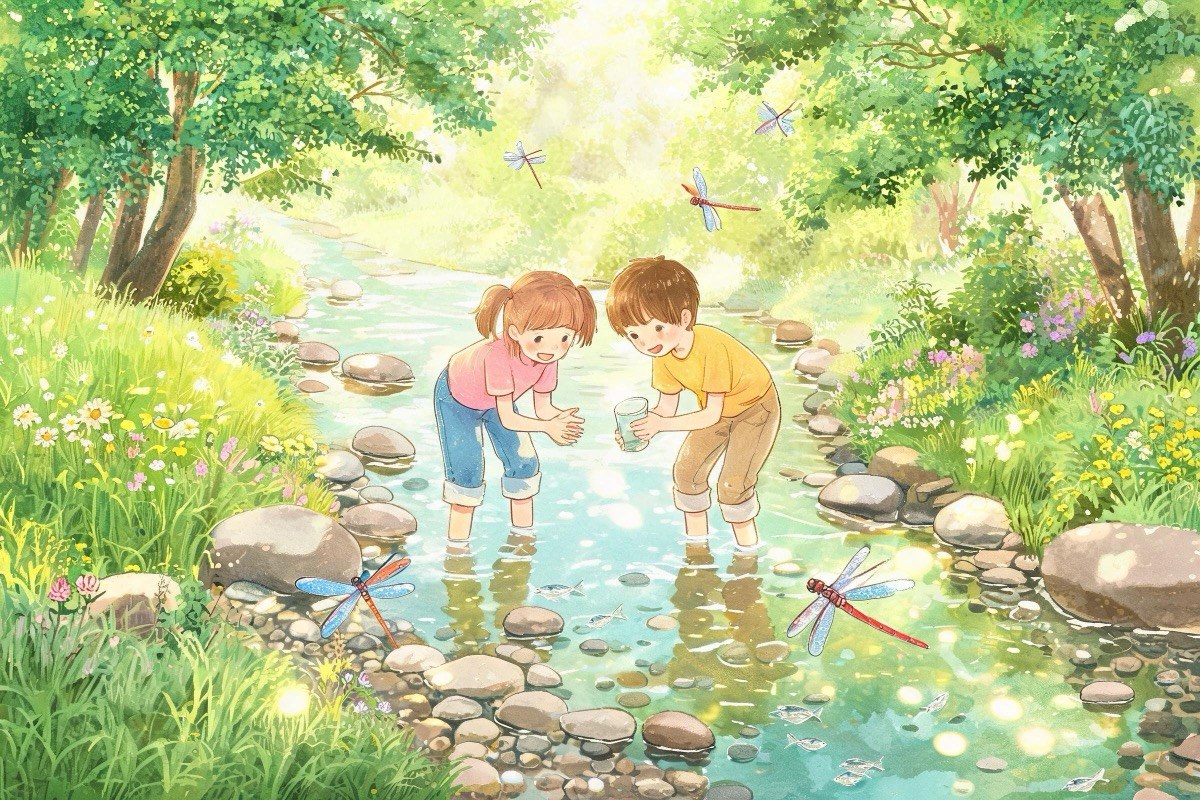
先看。溪水的颜色不是简单的清,阳光下的水面会闪,像撒了一把碎银子。溪底的鹅卵石有大有小,颜色各不相同,有的青灰,有的带花纹。看的时候要把形状、颜色、位置说清楚,比如鹅卵石铺在溪底,大的像鸡蛋,小的像弹珠。
再听。溪水声不是一种声音:水浅的地方流过石头,发出沙沙声;水撞到大石头,哗啦一声溅起水花;远处偶尔还有鸟叫和蝉鸣。写溪水声时别只写哗哗,试着分辨几种不同的响法,声音就有了层次。
接着摸。把手伸进溪水,凉意一下子包住手腕;捞起一颗鹅卵石,表面被水冲得滑溜溜,没有一点棱角。脚踩进溪底,石头硌着脚心,有点痒。手摸和脚踩是两种感觉,分开写,读者就像自己也下了水。
最后闻。溪边有湿石头的气味,水草被太阳晒出一点腥气,草丛里可能还有野花的味道。闻到的东西最容易被忽略,写一句就比别人的作文特别。
素材齐了,开头结尾可以套用现成句式。开头:夏天最热的时候,我家门前的小溪就成了乐园。结尾:太阳落山了,我踩着夕阳回家,溪水声还在耳朵里哗哗地响。开头点出地点和时间,结尾用声音收住,全文就不会空洞。写之前还可以准备一个小本子,把五个问题的答案各记一两个词,动笔时照着答案扩句,五分钟就能列出一份不空洞的提纲。
How to Write Summer by the Creek: Make the Scene Concrete with Five-Sense Observation
When writing about summer by the creek, many students can only say it is very beautiful. The scene the teacher wants to see never appears, and the problem lies in observation: you only glanced, instead of using eyes, ears, hands, and nose together. Five-sense observation means asking yourself five questions one by one and writing down each answer; material then comes naturally.
Look first. Creek water is not simply clear; in sunlight the surface flickers like a handful of scattered silver coins. Pebbles on the bottom come in different sizes and colors, some gray-green, some with patterns. When you look, state shape, color, and position clearly: pebbles carpet the creek bed, the big ones like eggs, the small ones like marbles.
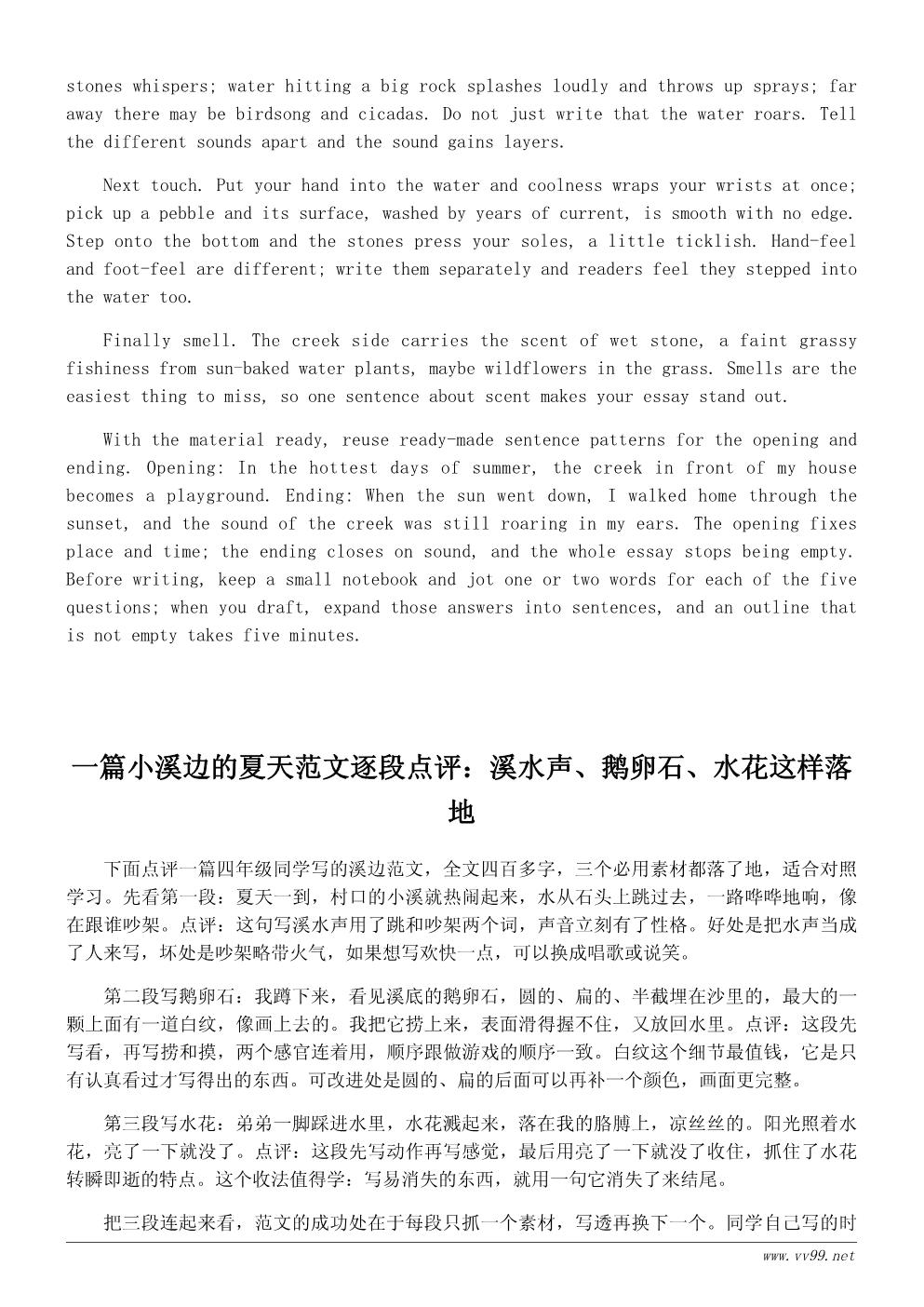
Then listen. Creek water makes more than one sound: shallow water brushing over stones whispers; water hitting a big rock splashes loudly and throws up sprays; far away there may be birdsong and cicadas. Do not just write that the water roars. Tell the different sounds apart and the sound gains layers.
Next touch. Put your hand into the water and coolness wraps your wrists at once; pick up a pebble and its surface, washed by years of current, is smooth with no edge. Step onto the bottom and the stones press your soles, a little ticklish. Hand-feel and foot-feel are different; write them separately and readers feel they stepped into the water too.
Finally smell. The creek side carries the scent of wet stone, a faint grassy fishiness from sun-baked water plants, maybe wildflowers in the grass. Smells are the easiest thing to miss, so one sentence about scent makes your essay stand out.
With the material ready, reuse ready-made sentence patterns for the opening and ending. Opening: In the hottest days of summer, the creek in front of my house becomes a playground. Ending: When the sun went down, I walked home through the sunset, and the sound of the creek was still roaring in my ears. The opening fixes place and time; the ending closes on sound, and the whole essay stops being empty. Before writing, keep a small notebook and jot one or two words for each of the five questions; when you draft, expand those answers into sentences, and an outline that is not empty takes five minutes.
一篇小溪边的夏天范文逐段点评:溪水声、鹅卵石、水花这样落地
下面点评一篇四年级同学写的溪边范文,全文四百多字,三个必用素材都落了地,适合对照学习。先看第一段:夏天一到,村口的小溪就热闹起来,水从石头上跳过去,一路哗哗地响,像在跟谁吵架。点评:这句写溪水声用了跳和吵架两个词,声音立刻有了性格。好处是把水声当成了人来写,坏处是吵架略带火气,如果想写欢快一点,可以换成唱歌或说笑。
第二段写鹅卵石:我蹲下来,看见溪底的鹅卵石,圆的、扁的、半截埋在沙里的,最大的一颗上面有一道白纹,像画上去的。我把它捞上来,表面滑得握不住,又放回水里。点评:这段先写看,再写捞和摸,两个感官连着用,顺序跟做游戏的顺序一致。白纹这个细节最值钱,它是只有认真看过才写得出的东西。可改进处是圆的、扁的后面可以再补一个颜色,画面更完整。
第三段写水花:弟弟一脚踩进水里,水花溅起来,落在我的胳膊上,凉丝丝的。阳光照着水花,亮了一下就没了。点评:这段先写动作再写感觉,最后用亮了一下就没了收住,抓住了水花转瞬即逝的特点。这个收法值得学:写易消失的东西,就用一句它消失了来结尾。
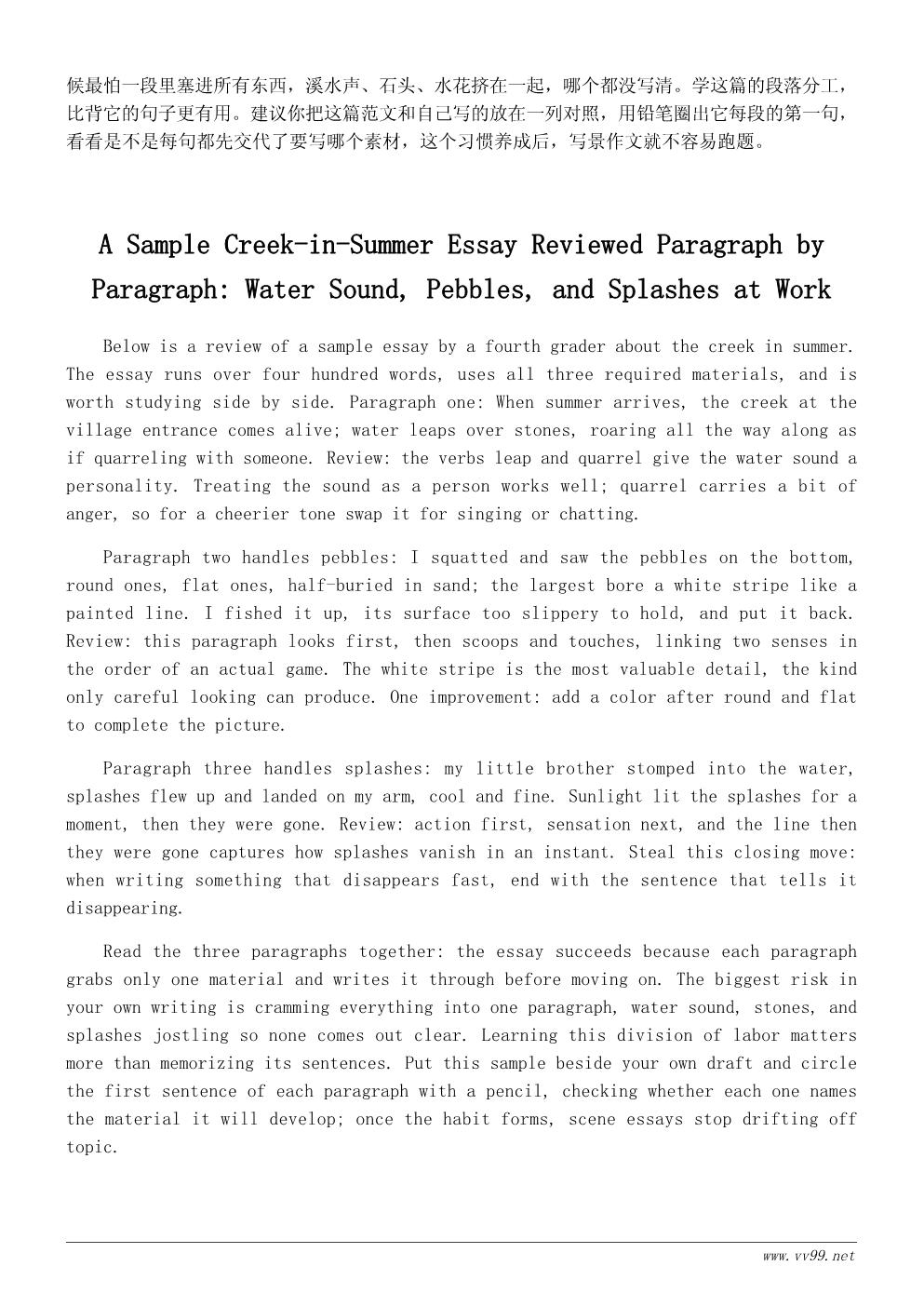
把三段连起来看,范文的成功处在于每段只抓一个素材,写透再换下一个。同学自己写的时候最怕一段里塞进所有东西,溪水声、石头、水花挤在一起,哪个都没写清。学这篇的段落分工,比背它的句子更有用。建议你把这篇范文和自己写的放在一列对照,用铅笔圈出它每段的第一句,看看是不是每句都先交代了要写哪个素材,这个习惯养成后,写景作文就不容易跑题。
A Sample Creek-in-Summer Essay Reviewed Paragraph by Paragraph: Water Sound, Pebbles, and Splashes at Work
Below is a review of a sample essay by a fourth grader about the creek in summer. The essay runs over four hundred words, uses all three required materials, and is worth studying side by side. Paragraph one: When summer arrives, the creek at the village entrance comes alive; water leaps over stones, roaring all the way along as if quarreling with someone. Review: the verbs leap and quarrel give the water sound a personality. Treating the sound as a person works well; quarrel carries a bit of anger, so for a cheerier tone swap it for singing or chatting.
Paragraph two handles pebbles: I squatted and saw the pebbles on the bottom, round ones, flat ones, half-buried in sand; the largest bore a white stripe like a painted line. I fished it up, its surface too slippery to hold, and put it back. Review: this paragraph looks first, then scoops and touches, linking two senses in the order of an actual game. The white stripe is the most valuable detail, the kind only careful looking can produce. One improvement: add a color after round and flat to complete the picture.
Paragraph three handles splashes: my little brother stomped into the water, splashes flew up and landed on my arm, cool and fine. Sunlight lit the splashes for a moment, then they were gone. Review: action first, sensation next, and the line then they were gone captures how splashes vanish in an instant. Steal this closing move: when writing something that disappears fast, end with the sentence that tells it disappearing.
Read the three paragraphs together: the essay succeeds because each paragraph grabs only one material and writes it through before moving on. The biggest risk in your own writing is cramming everything into one paragraph, water sound, stones, and splashes jostling so none comes out clear. Learning this division of labor matters more than memorizing its sentences. Put this sample beside your own draft and circle the first sentence of each paragraph with a pencil, checking whether each one names the material it will develop; once the habit forms, scene essays stop drifting off topic.
小提示:上面此文档内容仅展示完整文档里的部分内容, 若需要下载完整文档请 点击免费下载完整文档 。