文章内容
写景散文三步法:把溪水声、树影、蝉鸣排成一下午
写景散文和记叙文的区别在骨架:记叙文靠一件事往前推,写景散文靠几个意象排着走。写溪水叮咚的午后,手里就三样东西,溪水声、树影、蝉鸣。三步把它们排成一下午,文章就有了。
第一步排顺序。三个意象不要想到哪个写哪个,按它们在一下午里的变化排。溪水声从早到晚一直在,适合当底,第一段就让它响起来。树影会动,日头偏一点影子就挪一寸,适合当中段,写光的变化。蝉鸣最躁,午后最热的时辰叫得最凶,日头一斜就稀了,适合收尾前推一把,再随光线一起落下去。顺序定下来:水声起,树影移,蝉声落。这个顺序本身就是时间流逝,不用写下午三点四点,读者自己感觉到时间在走。
第二步给每个意象配两种感官。只写看到的,意象就扁了。溪水声先配听觉再配触觉:先是远远的一片,像谁在抖一块白布,走近了才听清是一声一声的叮咚;手插进水里,凉从指缝里往上冒,声音忽然变得近,原来水声一直贴在耳朵边上。树影配视觉和动感:光从树叶缝里漏下来,在地上碎成铜钱大的亮块,风一过,亮块全跑了,又落回来,比原来密。蝉鸣配听觉和体感:叫声一层压一层,压得人眼皮发沉,日头偏西,蝉声忽然薄了,人才发觉后背全是汗。每个意象两种感官,六个细节,六百字的散文材料就够了。
第三步用声音的起落控节奏。散文的节奏靠句子长短:写水声用短句,叮咚,叮咚,一句就是一声;写树影用长句,让句子像影子一样拖在地上;写蝉鸣先短后长再短,蝉声密的时候句子挤在一起,蝉声稀的时候句子拉开。三段读出声检验:水声段读起来快,树影段读起来慢,蝉声段先急后缓,节奏就立住了。
最后说情感。写景散文不喊好美啊、真宁静啊,情感藏在选哪个意象、写它哪个状态里。写蝉声薄了、树影长了,宁静自己就来了。写完自查:三个意象是不是都在动,有没有哪一段只剩形容词,读出声节奏顺不顺。三问都过,这篇散文就成立。
Three Steps to Arrange Stream Sound, Tree Shadows, and Cicadas Into One Afternoon
Descriptive prose and narrative essays differ in their skeleton: a narrative is pushed forward by one event, while descriptive prose walks through a sequence of images. To write of an afternoon when the stream babbles, you hold just three things in your hands: the sound of water, tree shadows, and cicadas. Three steps arrange them into one afternoon, and the essay exists.
Step one: set the order. Do not write whichever image comes to mind first; order them by how they change across an afternoon. The stream sound is there from morning to night, so it works as the ground floor; let it start sounding in the first paragraph. Tree shadows move; the sun shifts a little and the shadows crawl an inch, so they fit the middle, carrying the movement of light. Cicadas are the most restless, loudest at the hottest hour, thinning once the sun slants west, so they give one last push before the close and then settle down with the light. The order is fixed: water rises, shadows shift, cicadas fade. That order is the passage of time itself; you never write three o clock or four o clock, and readers still feel time moving.
Step two: give each image two senses. Write only what the eye sees and the image goes flat. For the stream, hearing first, then touch: from far off it is one broad sheet, like someone shaking out a white cloth; come closer and it resolves into plink, plink, one note at a time; plunge your hand in, and cold climbs through your fingers, the sound suddenly close, as if it had been pressed against your ear all along. For tree shadows, sight and motion: light leaks through the leaves and breaks into bright coins on the ground; a gust passes, the coins scatter and fall back, denser than before. For cicadas, hearing and body feeling: their sound layers press on one another, heavy on the eyelids; as the sun slants, the sound thins, and only then do you notice your back is soaked with sweat. Two senses per image, six details, and a six-hundred-word prose essay has all the material it needs.
Step three: control rhythm with the rise and fall of sound. Prose rhythm lives in sentence length. Write the water in short sentences, plink, plink, one sentence per note. Write the shadows in long sentences that trail along the ground like the shadows themselves. Write the cicadas short, then long, then short: when they press, crowd the sentences together; when they thin, stretch the sentences out. Read the three paragraphs aloud: the water paragraph should read fast, the shadow paragraph slow, the cicada paragraph urgent then easing. The rhythm now stands.
One last word on feeling. Descriptive prose never shouts how beautiful or how peaceful; feeling hides in which image you choose and which state of it you write. Write the cicadas thinning and the shadows lengthening, and the peace arrives by itself. When you finish, check three things: are all three images moving; does any paragraph hold nothing but adjectives; does the piece read smoothly aloud. Pass all three and the essay works.
600字散文示例:溪水叮咚的午后(逐段拆解)
下面是一篇示例散文,写溪水叮咚的午后,三个意象按水声起、树影移、蝉声落排。每段后附拆解,说明这段做了什么。
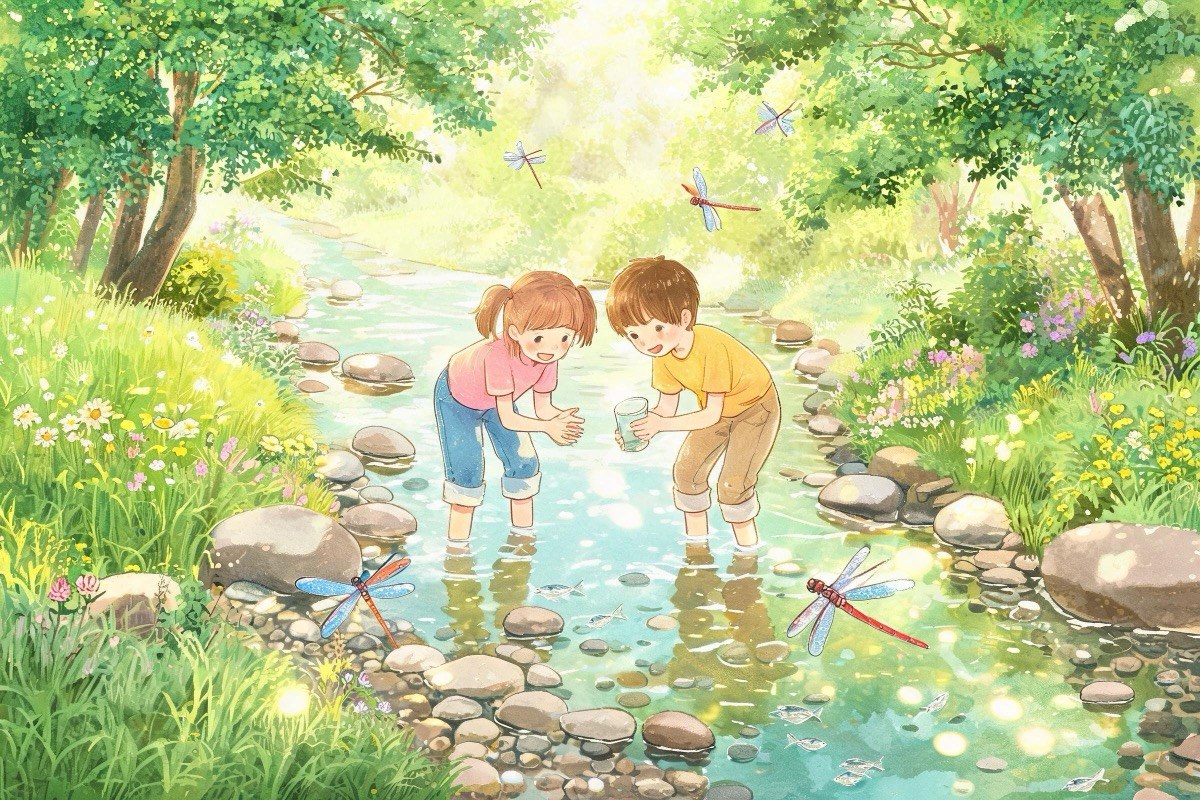
第一段:午后的溪不吵,它只是不停。水从石头上翻过去,叮咚一声,再翻过去,又一声。石头被水养得圆,圆得没有一处硌手。光落进水里,碎成一捧,手一捞,水从指缝漏下去,光又回到石头上,安安静静,像什么都没发生。(拆解:这段立底。水声用短句,一声一句;石头圆、光碎又复原,两个细节都在写静,静不是没有声音,是声音重复得让人安心。全段没有一个抒情词。)
第二段:岸上的影子在挪。那棵歪脖子柳树把影子搭在水面上,日头偏一寸,影子就退一寸,像潮水在退。光从叶缝里漏下来,地上全是铜钱大的亮块,风一来,亮块全跑,追上去踩,脚下踩住的是一小块凉。柳叶细,风过的时候声音也细,沙沙的,盖不住水声,只是给水声镶了一道边。(拆解:这段写动。树影本身不动,靠日头和风让它动,退一寸、全跑、镶边三个动词撑起整段。踩亮块踩住一小块凉,视觉接触觉,人进了景里,但没有我的一天叙事。)
第三段:蝉在叫。先是一只,叫声又长又直,像一根线拉到顶。接着满树都叫起来,声音一层压一层,压得空气发稠。水声这时候退到最底下,凉意从石头缝里往上冒。日头落到山后,蝉声忽然薄了,薄得能听见水声一声一声数着日子。影子漫过整个溪面,我站起来,影子比我先上岸。(拆解:这段先推后收。蝉声由一只到满树,句子由长到挤,节奏推上去;日头一落蝉声薄,句子拉开,水声重新浮上来,完成收。影子比我先上岸是全段唯一带人的动作,情感不喊自现。)
对照自查:你的三段是不是也各有一个主意象、一种动法;每段有没有至少一处两种感官相接;结尾有没有一个像影子先上岸这样的小动作代替抒情。三处都有,模仿就成了自己的。
A Six-Hundred-Word Prose Sample: The Babbling Afternoon, Taken Apart Paragraph by Paragraph
Below is a sample prose essay on the babbling afternoon, with the three images arranged as water rising, shadows shifting, cicadas fading. Each paragraph is followed by a note saying what it does.
Paragraph one: The stream in the afternoon is not noisy; it simply never stops. Water rolls over a stone, plink, rolls over another, plink again. The stones are raised round by the water, round with no edge to catch the hand. Light falls into the stream and shatters into a handful; scoop it up, it leaks through the fingers, and the light returns to the stones, quiet, as if nothing happened. (Note: this paragraph lays the ground. The water sound runs in short sentences, one note per sentence; the round stones and the light that shatters and restores both write stillness, and stillness here is not the absence of sound but sound repeating enough to reassure. Not one feeling-word appears in the paragraph.)
Paragraph two: The shadows on the bank are moving. The crooked willow drapes its shadow across the water; the sun shifts an inch and the shadow retreats an inch, like a tide going out. Light leaks through the leaf gaps, and the ground fills with bright coins; a gust comes, the coins all run, you chase and step on one, and under your foot is a small square of cool. Willow leaves are fine, and their sound in the wind is fine too, a hush that cannot cover the water, only trimming its edge. (Note: this paragraph writes motion. The shadow itself does not move; the sun and the wind move it, and retreats an inch, all run, trimming are three verbs holding the paragraph up. Stepping on a coin and finding cool joins sight to touch, and the person enters the scene without any narrative of my day.)
Paragraph three: The cicadas are calling. First one, its cry long and straight, a wire pulled to its top. Then the whole tree joins, sound layer pressing layer, thickening the air. The stream sinks to the very bottom, and cold rises through the seams between stones. When the sun drops behind the hill, the cicadas thin suddenly, thin enough to hear the water counting the days, one note at a time. The shadow floods the whole stream surface; I stand up, and my shadow reaches the bank before I do. (Note: this paragraph pushes then gathers. The cicadas grow from one to a whole tree, the sentences from long to crowded, the rhythm pushed up; the sun sets, the sound thins, the sentences stretch, and the water floats back up to finish. My shadow reaching the bank first is the only human gesture in the paragraph, and the feeling shows without being shouted.)
Check your own draft against it: does each of your three paragraphs hold one main image and one way of moving; does every paragraph join at least two senses somewhere; does the ending carry one small gesture like the shadow landing first instead of a shout of feeling. If all three are there, the imitation has become yours.
小提示:上面此文档内容仅展示完整文档里的部分内容, 若需要下载完整文档请 点击免费下载完整文档 。