文章内容
500字范文:溪水带走的和留下的(四段完整示例)
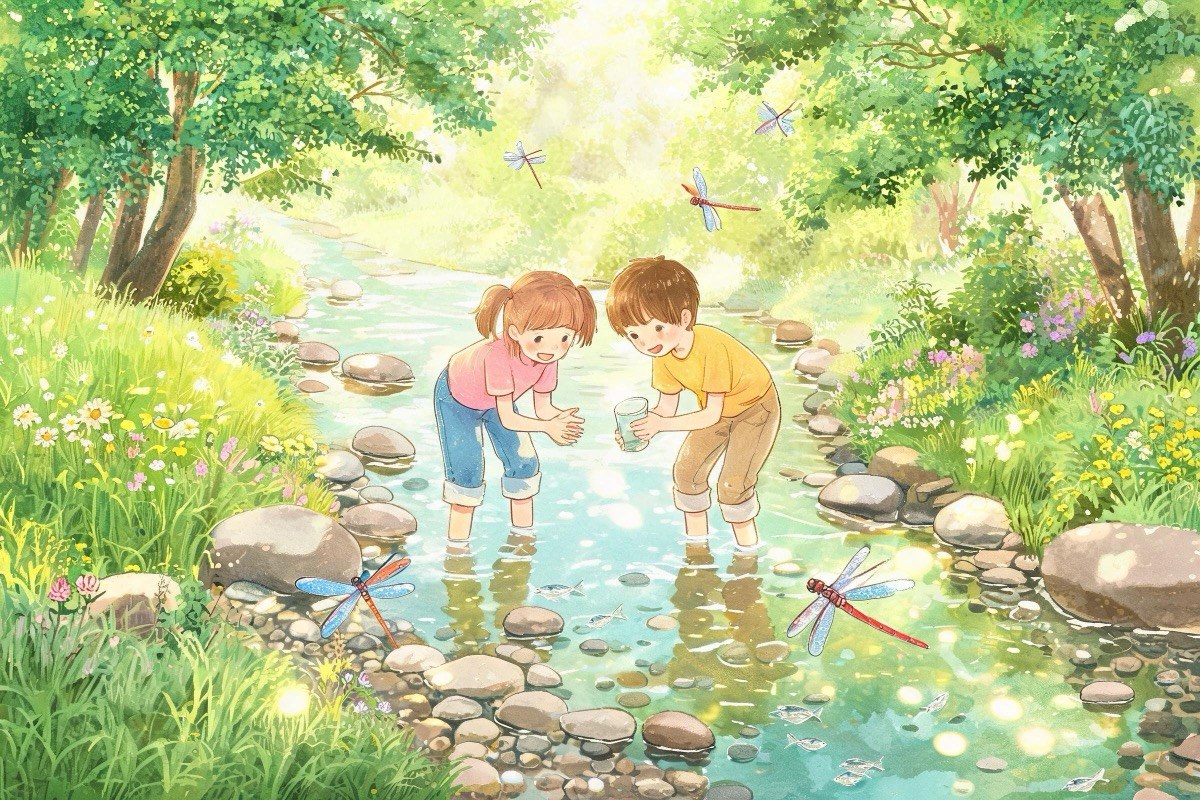
《小溪边的夏天》里有一处写了很久:秋天还没到,作者先把一片落叶放进溪水,看它打着旋往下游走,越漂越小,最后拐过一道弯就不见了。他在岸边站到太阳偏西才回家。这一段我读了三遍。(这一段的任务:只引一个场景,落叶和拐弯两个细节留给后文用。)
我猜作者不是真的在等那片叶子,他是在试一样东西:溪水流走的东西,还能不能追回来。答案他写在后面了,追不回来,但他还是天天去放叶子。我觉得这就是这篇文章最实在的地方,它承认留不住,还愿意站一下午。(这一段的任务:议只说一个判断,承认留不住还愿意等,后文的经历要接住这个判断。)
我老家屋后也有一条溪,小时候夏天泡在里面,捉的小虾养在罐头瓶里,能看一晚上。前年回去,溪不见了,改成一条笔直的水泥水渠,渠底铺着塑料布,水比记忆里快,也比记忆里清。我蹲下去想摸一把,水凉得和记忆里一模一样,手伸进去那一秒,我忽然确定那条溪真的存在过,不是做梦。水渠里什么都没有,没有圆石头,没有虾,也没有那个拐弯。我妈在岸上喊我上车,我站起来,裤脚滴着水,又看了一眼那条渠才走。(这一段的任务:联写一次真实经历,溪水变了是带走的部分,水一样的凉是留下的部分,凉意这个细节呼应第一段的溪水。)
溪水带走的是虾、石头和那个拐弯,留下的是手伸进去那一秒的凉。文章里的作者守着他的落叶,我守着我的那一下凉。溪还在流,只是换了一条流法。(这一段的任务:结从正文长出来,带走和留下都指回第三段的具体东西,不喊珍惜时光。)
范文全文六百多字,比五百字略长,是因为第三段放慢了摸水那一秒。自己写的时候按这个骨架换素材:文中一个会动的细节,自己一次回去看不复从前的经历,一个身体感觉收尾。三个素材换完,文章就不是抄的。
A Model Essay: What the Stream Took Away and What It Left
In Summer by the Stream there is a passage that lingers: before autumn arrives, the author sets a fallen leaf on the water, watches it spin downstream, grow smaller, and disappear around a bend. He stands on the bank until the sun tilts west before going home. I read this part three times. (This paragraph does one job: quote a single scene, and keep the leaf and the bend as details for later.)
I think the author was not really waiting for that leaf. He was testing something: can what the stream carries away ever be caught back? He answers it later, no, and still he goes to set leaves every day. That is the most honest thing in the article: it admits nothing can be kept, and still stands there the whole afternoon. (This paragraph holds one judgment: admitting loss and still willing to wait. The story below must catch this judgment.)
Behind my grandparents old house there was a stream too. As a child I soaked in it every summer, keeping caught shrimp in a jam jar I would watch all night. The year before last I went back and the stream was gone, replaced by a straight concrete channel lined with plastic sheeting. The water ran faster than memory and looked cleaner than memory. I squatted down to touch it, and the cold was exactly the cold I remembered. In that one second with my hand in the water, I knew the stream had truly existed; it was not a dream. The channel holds nothing, no round stones, no shrimp, and no bend. My mother called from the bank that it was time to get in the car; I stood up, my trouser cuffs dripping, and looked at the channel once more before leaving. (This paragraph is the connection: one real visit where the stream is gone. What was taken is the shrimp, the stones, the bend; what remains is the same cold. The cold echoes the stream water in paragraph one.)
The stream took the shrimp, the stones, and the bend, and left the cold of that one second. The author in the article keeps watch over his leaf; I keep watch over my one second of cold. The water still flows, it just changed how it flows. (The ending grows from the body: taken and left both point back to concrete things in paragraph three, with no slogan about cherishing time.)
The model runs past six hundred words because paragraph three slows down for that one second of touching water. When you write your own, keep the frame and swap the material: one moving detail from the article, one visit of your own to something that no longer exists, and one body sensation to close. Swap all three and the piece is no longer copied.
感悟写具体的五种写法:从空喊到落地的自查清单
溪水带走的和留下的这类题目,感悟一不留神就写成时光飞逝、我们要珍惜童年。这两句谁都会写,写出来等于没写。五种办法能把感悟落到地上,每种先看病句再看改后句。
办法一:落在物件上。感悟句里出现一个正文写过的东西。病句:童年就这样远去了。改后:那个装虾的罐头瓶我还留着,瓶里空了,虾早就不知道跑哪儿去了。检验:把句子里的名词圈出来,圈不出正文里的名词,就是空话。
办法二:落在身体感觉上。用冷、热、沉、轻这类感觉词收尾。病句:我感到十分怀念。改后:手伸进水里那一秒,凉意顺着手腕上来,我愣在渠边半天没动。感觉词逼着你回到现场,空话用不了愣在渠边半天没动这种说法。
办法三:落在变化对比上。把从前和现在并排放,让读者自己看出感慨。病句:家乡变化真大。改后:小时候溪水深到胸口,现在的水渠深到膝盖,水反而更急了。对比句不用出现感慨两个字,感慨在数字和画面里。
办法四:落在一个动作上。用一个没说完的动作收尾。病句:我久久不愿离去。改后:走的时候我回头看了一眼,水渠笔直,看不到头。动作比心理描写可信,看一眼这个动作谁都能写,写出来就有画面。
办法五:落在一句问话上。结尾留一个没有答案的问题,只许问一次。病句:难道我们不该珍惜吗?这是空喊的反问。改后:那条溪的水现在流到哪儿去了?问话要问具体的东西,溪、水、虾能问,时光不能问。
自查清单三条:感悟句里有没有正文出现过的名词或感觉词;有没有直接出现珍惜、难忘、飞逝这几个词,出现了就删;把感悟句单独抄出来,脱离正文它还能不能让人想起那条溪。三条全过,感悟就立住了。五种办法用一种就够,堆在一起反而挤。改的时候只动感悟那一句,正文不动,改完读一遍,前后接得上才算改对。
Five Ways to Make Your Insight Concrete: A Self-Check List
Essays on what the stream took away and left behind slip easily into insights like time flies or we should cherish childhood. Anyone can write those two lines, and writing them amounts to writing nothing. Five methods land the insight on the ground. For each, look at the sick sentence first, then the fixed one.
Method one: land on an object. Let the insight carry a thing already written in the body. Sick: childhood faded away. Fixed: I still keep the jam jar that held the shrimp; it is empty now, and the shrimp went who knows where long ago. Test: circle the nouns in your sentence. If none of them appeared in your body text, it is empty talk.
Method two: land on a body sensation. Close with cold, heat, heaviness, lightness. Sick: I felt deeply nostalgic. Fixed: in that one second my hand was in the water, the cold climbed my wrist, and I stood frozen by the channel for a long time. Sensation words force you back to the scene; empty talk cannot say stood frozen by the channel for a long time.
Method three: land on a before-and-after contrast. Set then and now side by side and let readers feel it themselves. Sick: my hometown has changed so much. Fixed: the stream once reached my chest, the channel now reaches my knee, and the water runs faster than before. A contrast sentence never uses the word emotion; the emotion lives in the numbers and the picture.
Method four: land on one unfinished action. Close with a gesture instead of a feeling. Sick: I lingered, unwilling to leave. Fixed: on my way out I looked back once; the channel ran straight and I could not see its end. Actions read truer than psychology; anyone can write looked back once, and the picture appears.
Method five: land on one question, asked only once. Sick: should we not cherish it? That is a shouted rhetorical question. Fixed: where does that stream water go now? Ask about concrete things: the stream, the water, the shrimp. Never ask about time itself.
Three-point checklist: does the insight contain a noun or sensation word from your body text; do the words cherish, unforgettable, or fleeting appear directly, and if so delete them; copy the insight alone, away from the body, and see if it still brings the stream to mind. Pass all three and the insight stands. One of the five methods is enough; stacking them crowds the sentence. When revising, change only the insight sentence and leave the body alone; reread once, and the fix counts only if the new sentence connects to what comes before.
小提示:上面此文档内容仅展示完整文档里的部分内容, 若需要下载完整文档请 点击免费下载完整文档 。