文章内容
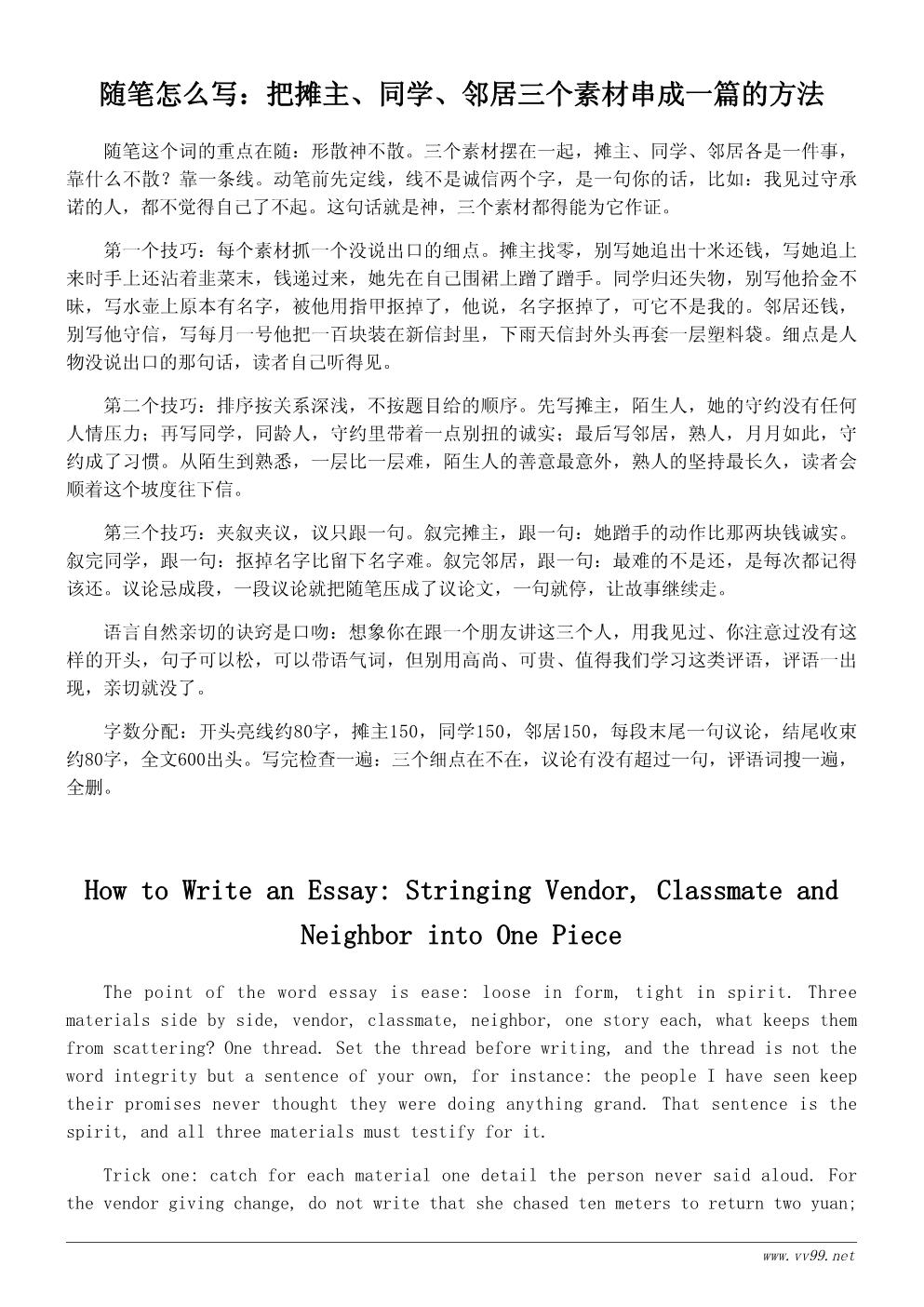
随笔怎么写:把摊主、同学、邻居三个素材串成一篇的方法
随笔这个词的重点在随:形散神不散。三个素材摆在一起,摊主、同学、邻居各是一件事,靠什么不散?靠一条线。动笔前先定线,线不是诚信两个字,是一句你的话,比如:我见过守承诺的人,都不觉得自己了不起。这句话就是神,三个素材都得能为它作证。
第一个技巧:每个素材抓一个没说出口的细点。摊主找零,别写她追出十米还钱,写她追上来时手上还沾着韭菜末,钱递过来,她先在自己围裙上蹭了蹭手。同学归还失物,别写他拾金不昧,写水壶上原本有名字,被他用指甲抠掉了,他说,名字抠掉了,可它不是我的。邻居还钱,别写他守信,写每月一号他把一百块装在新信封里,下雨天信封外头再套一层塑料袋。细点是人物没说出口的那句话,读者自己听得见。
第二个技巧:排序按关系深浅,不按题目给的顺序。先写摊主,陌生人,她的守约没有任何人情压力;再写同学,同龄人,守约里带着一点别扭的诚实;最后写邻居,熟人,月月如此,守约成了习惯。从陌生到熟悉,一层比一层难,陌生人的善意最意外,熟人的坚持最长久,读者会顺着这个坡度往下信。
第三个技巧:夹叙夹议,议只跟一句。叙完摊主,跟一句:她蹭手的动作比那两块钱诚实。叙完同学,跟一句:抠掉名字比留下名字难。叙完邻居,跟一句:最难的不是还,是每次都记得该还。议论忌成段,一段议论就把随笔压成了议论文,一句就停,让故事继续走。
语言自然亲切的诀窍是口吻:想象你在跟一个朋友讲这三个人,用我见过、你注意过没有这样的开头,句子可以松,可以带语气词,但别用高尚、可贵、值得我们学习这类评语,评语一出现,亲切就没了。
字数分配:开头亮线约80字,摊主150,同学150,邻居150,每段末尾一句议论,结尾收束约80字,全文600出头。写完检查一遍:三个细点在不在,议论有没有超过一句,评语词搜一遍,全删。
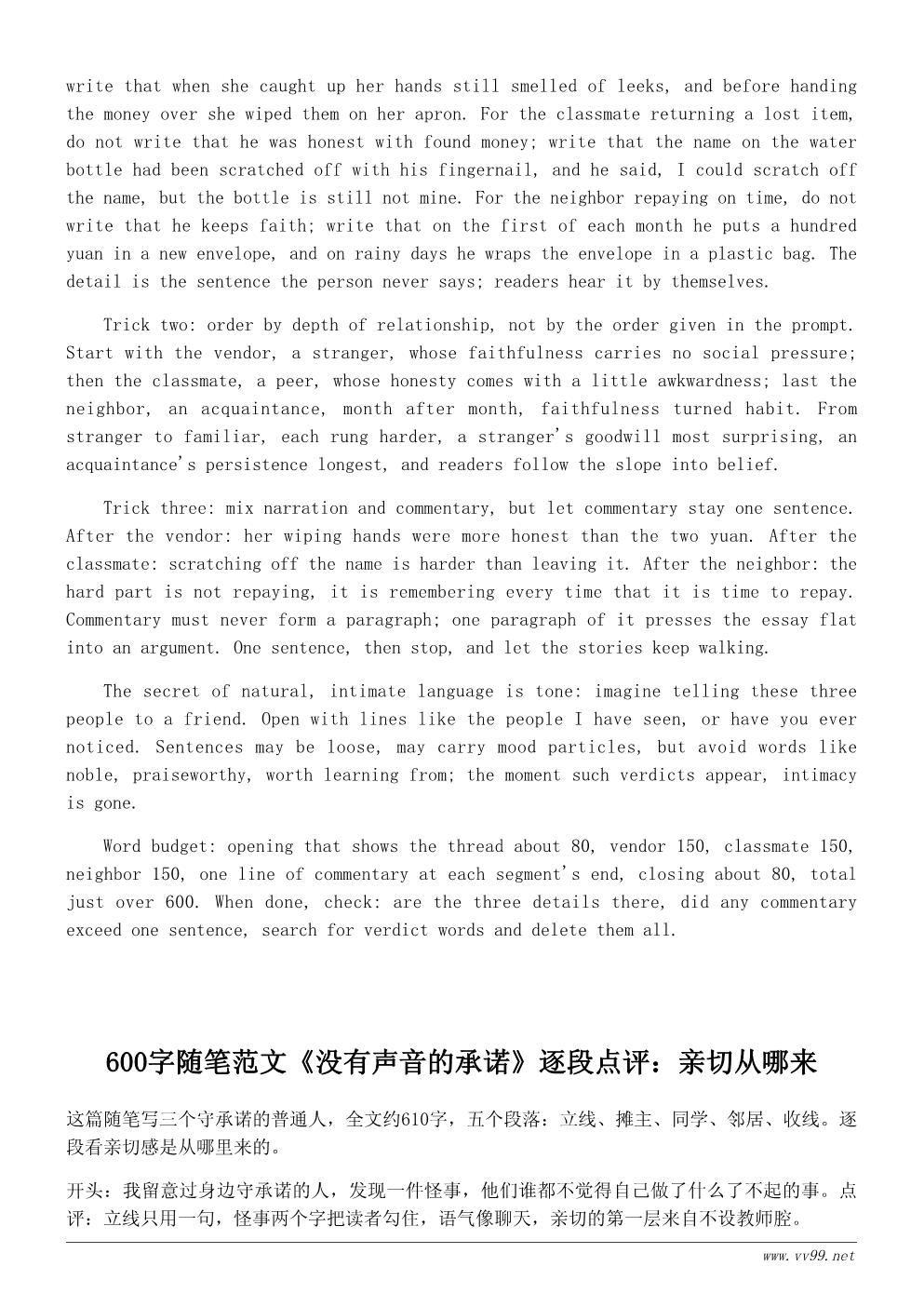
How to Write an Essay: Stringing Vendor, Classmate and Neighbor into One Piece
The point of the word essay is ease: loose in form, tight in spirit. Three materials side by side, vendor, classmate, neighbor, one story each, what keeps them from scattering? One thread. Set the thread before writing, and the thread is not the word integrity but a sentence of your own, for instance: the people I have seen keep their promises never thought they were doing anything grand. That sentence is the spirit, and all three materials must testify for it.
Trick one: catch for each material one detail the person never said aloud. For the vendor giving change, do not write that she chased ten meters to return two yuan; write that when she caught up her hands still smelled of leeks, and before handing the money over she wiped them on her apron. For the classmate returning a lost item, do not write that he was honest with found money; write that the name on the water bottle had been scratched off with his fingernail, and he said, I could scratch off the name, but the bottle is still not mine. For the neighbor repaying on time, do not write that he keeps faith; write that on the first of each month he puts a hundred yuan in a new envelope, and on rainy days he wraps the envelope in a plastic bag. The detail is the sentence the person never says; readers hear it by themselves.
Trick two: order by depth of relationship, not by the order given in the prompt. Start with the vendor, a stranger, whose faithfulness carries no social pressure; then the classmate, a peer, whose honesty comes with a little awkwardness; last the neighbor, an acquaintance, month after month, faithfulness turned habit. From stranger to familiar, each rung harder, a stranger's goodwill most surprising, an acquaintance's persistence longest, and readers follow the slope into belief.
Trick three: mix narration and commentary, but let commentary stay one sentence. After the vendor: her wiping hands were more honest than the two yuan. After the classmate: scratching off the name is harder than leaving it. After the neighbor: the hard part is not repaying, it is remembering every time that it is time to repay. Commentary must never form a paragraph; one paragraph of it presses the essay flat into an argument. One sentence, then stop, and let the stories keep walking.
The secret of natural, intimate language is tone: imagine telling these three people to a friend. Open with lines like the people I have seen, or have you ever noticed. Sentences may be loose, may carry mood particles, but avoid words like noble, praiseworthy, worth learning from; the moment such verdicts appear, intimacy is gone.
Word budget: opening that shows the thread about 80, vendor 150, classmate 150, neighbor 150, one line of commentary at each segment's end, closing about 80, total just over 600. When done, check: are the three details there, did any commentary exceed one sentence, search for verdict words and delete them all.
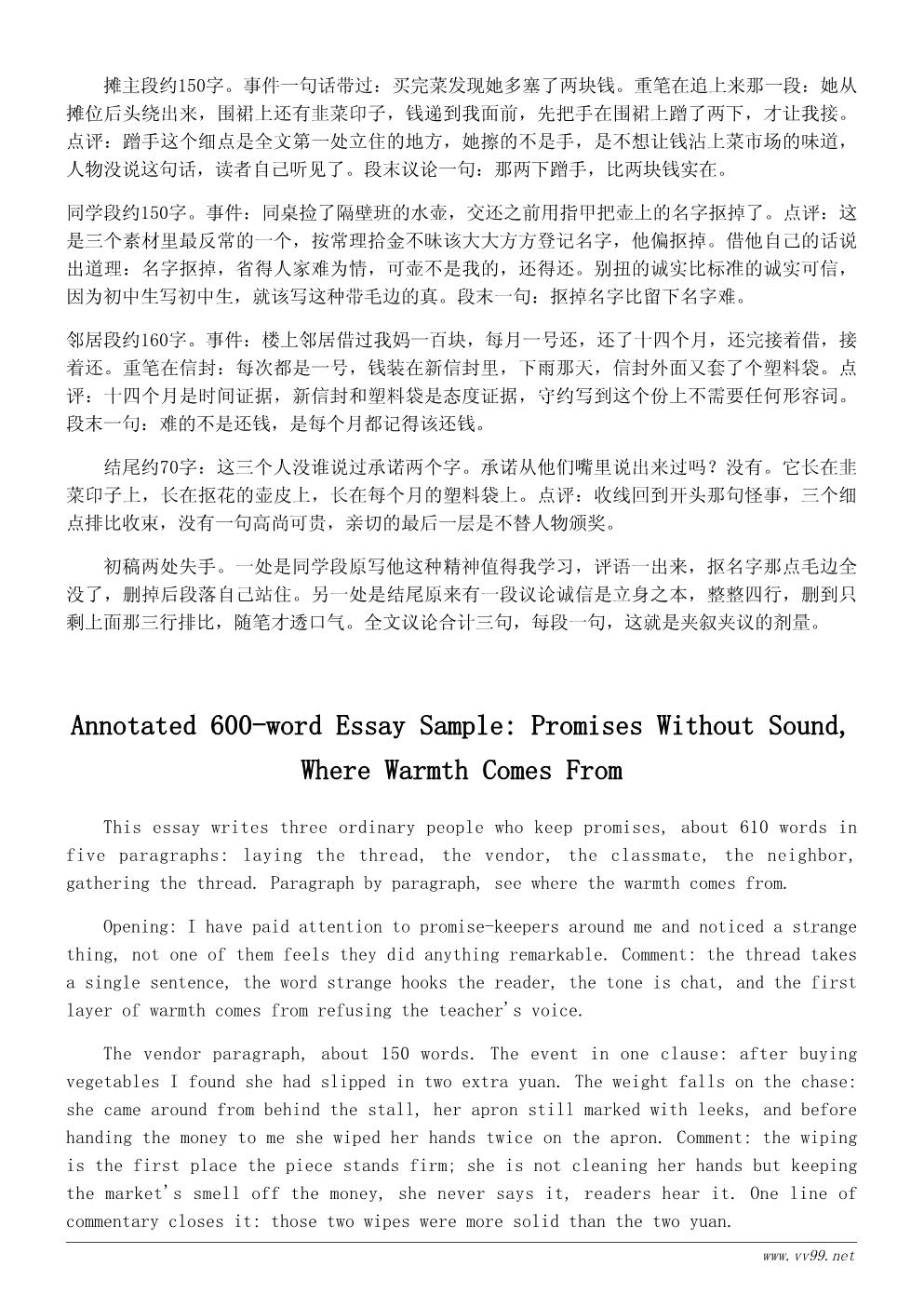
600字随笔范文《没有声音的承诺》逐段点评:亲切从哪来
这篇随笔写三个守承诺的普通人,全文约610字,五个段落:立线、摊主、同学、邻居、收线。逐段看亲切感是从哪里来的。
开头:我留意过身边守承诺的人,发现一件怪事,他们谁都不觉得自己做了什么了不起的事。点评:立线只用一句,怪事两个字把读者勾住,语气像聊天,亲切的第一层来自不设教师腔。
摊主段约150字。事件一句话带过:买完菜发现她多塞了两块钱。重笔在追上来那一段:她从摊位后头绕出来,围裙上还有韭菜印子,钱递到我面前,先把手在围裙上蹭了两下,才让我接。点评:蹭手这个细点是全文第一处立住的地方,她擦的不是手,是不想让钱沾上菜市场的味道,人物没说这句话,读者自己听见了。段末议论一句:那两下蹭手,比两块钱实在。
同学段约150字。事件:同桌捡了隔壁班的水壶,交还之前用指甲把壶上的名字抠掉了。点评:这是三个素材里最反常的一个,按常理拾金不昧该大大方方登记名字,他偏抠掉。借他自己的话说出道理:名字抠掉,省得人家难为情,可壶不是我的,还得还。别扭的诚实比标准的诚实可信,因为初中生写初中生,就该写这种带毛边的真。段末一句:抠掉名字比留下名字难。
邻居段约160字。事件:楼上邻居借过我妈一百块,每月一号还,还了十四个月,还完接着借,接着还。重笔在信封:每次都是一号,钱装在新信封里,下雨那天,信封外面又套了个塑料袋。点评:十四个月是时间证据,新信封和塑料袋是态度证据,守约写到这个份上不需要任何形容词。段末一句:难的不是还钱,是每个月都记得该还钱。
结尾约70字:这三个人没谁说过承诺两个字。承诺从他们嘴里说出来过吗?没有。它长在韭菜印子上,长在抠花的壶皮上,长在每个月的塑料袋上。点评:收线回到开头那句怪事,三个细点排比收束,没有一句高尚可贵,亲切的最后一层是不替人物颁奖。
初稿两处失手。一处是同学段原写他这种精神值得我学习,评语一出来,抠名字那点毛边全没了,删掉后段落自己站住。另一处是结尾原来有一段议论诚信是立身之本,整整四行,删到只剩上面那三行排比,随笔才透口气。全文议论合计三句,每段一句,这就是夹叙夹议的剂量。
Annotated 600-word Essay Sample: Promises Without Sound, Where Warmth Comes From
This essay writes three ordinary people who keep promises, about 610 words in five paragraphs: laying the thread, the vendor, the classmate, the neighbor, gathering the thread. Paragraph by paragraph, see where the warmth comes from.
Opening: I have paid attention to promise-keepers around me and noticed a strange thing, not one of them feels they did anything remarkable. Comment: the thread takes a single sentence, the word strange hooks the reader, the tone is chat, and the first layer of warmth comes from refusing the teacher's voice.
The vendor paragraph, about 150 words. The event in one clause: after buying vegetables I found she had slipped in two extra yuan. The weight falls on the chase: she came around from behind the stall, her apron still marked with leeks, and before handing the money to me she wiped her hands twice on the apron. Comment: the wiping is the first place the piece stands firm; she is not cleaning her hands but keeping the market's smell off the money, she never says it, readers hear it. One line of commentary closes it: those two wipes were more solid than the two yuan.
The classmate paragraph, about 150 words. The event: my deskmate found a water bottle from another class and, before returning it, scratched the name off with his fingernail. Comment: the strangest of the three materials, since honesty by the book would mean registering the name proudly, and he deliberately scratched it off. The piece of reasoning comes from his own mouth: scratching off the name saves the owner embarrassment, but the bottle is not mine, so it still gets returned. Awkward honesty is more believable than textbook honesty, because when a middle schooler writes a middle schooler, the truth should keep its burrs. One line closes it: scratching off the name is harder than leaving it.
The neighbor paragraph, about 160 words. The event: the neighbor upstairs borrowed a hundred yuan from my mother, repaid it on the first of each month for fourteen months, then borrowed again and repaid again. The weight falls on the envelope: always the first, money in a new envelope, and on a rainy day the envelope wore a plastic bag outside. Comment: fourteen months is the evidence of time, the new envelope and the plastic bag are evidence of attitude, faithfulness at this depth needs no adjectives. One line closes it: the hard part is not repaying, it is remembering every month that repayment is due.
The ending, about 70 words: none of these three ever said the word promise. Did a promise ever leave their mouths? No. It grows on leek stains, on the scratched skin of a bottle, on each month's plastic bag. Comment: the thread is gathered back to the strange thing from the opening, three details close in parallel, not one word about nobility, and the last layer of warmth is refusing to hand out medals to your characters.
Two slips in the first draft. One: the classmate paragraph once ended with his spirit being worth learning from; the verdict erased every burr of the scratched name, and after deletion the paragraph stood on its own. Two: the ending once carried a four-line lecture on integrity as the foundation of character, cut down to the three parallel lines above, and only then could the essay breathe. Commentary totals three sentences, one per segment, and that is the correct dose of mixing narration with comment.
小提示:上面此文档内容仅展示完整文档里的部分内容, 若需要下载完整文档请 点击免费下载完整文档 。