文章内容
文章内容
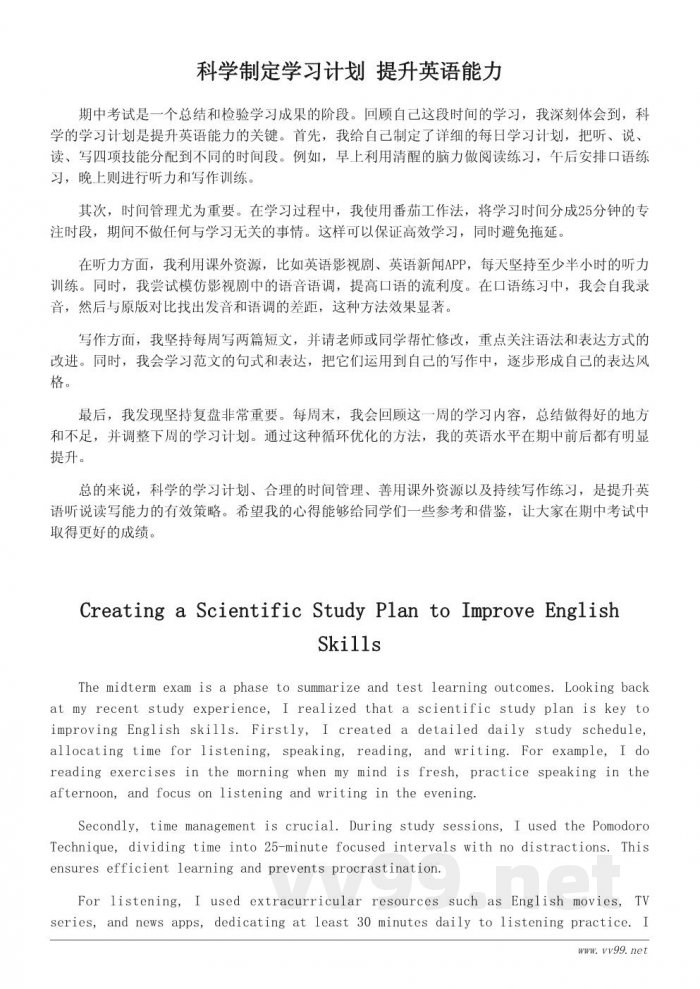
科学制定学习计划 提升英语能力
期中考试是一个总结和检验学习成果的阶段。回顾自己这段时间的学习,我深刻体会到,科学的学习计划是提升英语能力的关键。首先,我给自己制定了详细的每日学习计划,把听、说、读、写四项技能分配到不同的时间段。例如,早上利用清醒的脑力做阅读练习,午后安排口语练习,晚上则进行听力和写作训练。
其次,时间管理尤为重要。在学习过程中,我使用番茄工作法,将学习时间分成25分钟的专注时段,期间不做任何与学习无关的事情。这样可以保证高效学习,同时避免拖延。
在听力方面,我利用课外资源,比如英语影视剧、英语新闻APP,每天坚持至少半小时的听力训练。同时,我尝试模仿影视剧中的语音语调,提高口语的流利度。在口语练习中,我会自我录音,然后与原版对比找出发音和语调的差距,这种方法效果显著。
写作方面,我坚持每周写两篇短文,并请老师或同学帮忙修改,重点关注语法和表达方式的改进。同时,我会学习范文的句式和表达,把它们运用到自己的写作中,逐步形成自己的表达风格。
最后,我发现坚持复盘非常重要。每周末,我会回顾这一周的学习内容,总结做得好的地方和不足,并调整下周的学习计划。通过这种循环优化的方法,我的英语水平在期中前后都有明显提升。
总的来说,科学的学习计划、合理的时间管理、善用课外资源以及持续写作练习,是提升英语听说读写能力的有效策略。希望我的心得能够给同学们一些参考和借鉴,让大家在期中考试中取得更好的成绩。
Creating a Scientific Study Plan to Improve English Skills
The midterm exam is a phase to summarize and test learning outcomes. Looking back at my recent study experience, I realized that a scientific study plan is key to improving English skills. Firstly, I created a detailed daily study schedule, allocating time for listening, speaking, reading, and writing. For example, I do reading exercises in the morning when my mind is fresh, practice speaking in the afternoon, and focus on listening and writing in the evening.
Secondly, time management is crucial. During study sessions, I used the Pomodoro Technique, dividing time into 25-minute focused intervals with no distractions. This ensures efficient learning and prevents procrastination.
For listening, I used extracurricular resources such as English movies, TV series, and news apps, dedicating at least 30 minutes daily to listening practice. I also imitate the pronunciation and intonation from these materials to improve fluency. For speaking practice, I record myself and compare it with native speakers to identify pronunciation and intonation gaps, which has been very effective.
For writing, I consistently write two short essays per week and ask teachers or classmates for feedback, focusing on grammar and expression improvements. I also study sample essays and incorporate useful sentence structures into my writing, gradually developing my own style.
Finally, I found that regular review is very important. Every weekend, I reflect on my week's study, summarize strengths and weaknesses, and adjust the plan for the next week. Through this iterative process, my English proficiency has noticeably improved before and after the midterm.
In summary, a scientific study plan, proper time management, effective use of extracurricular resources, and continuous writing practice are practical strategies to enhance English listening, speaking, reading, and writing skills. I hope my experience can provide some reference for fellow students, helping them achieve better results in their midterm exams.
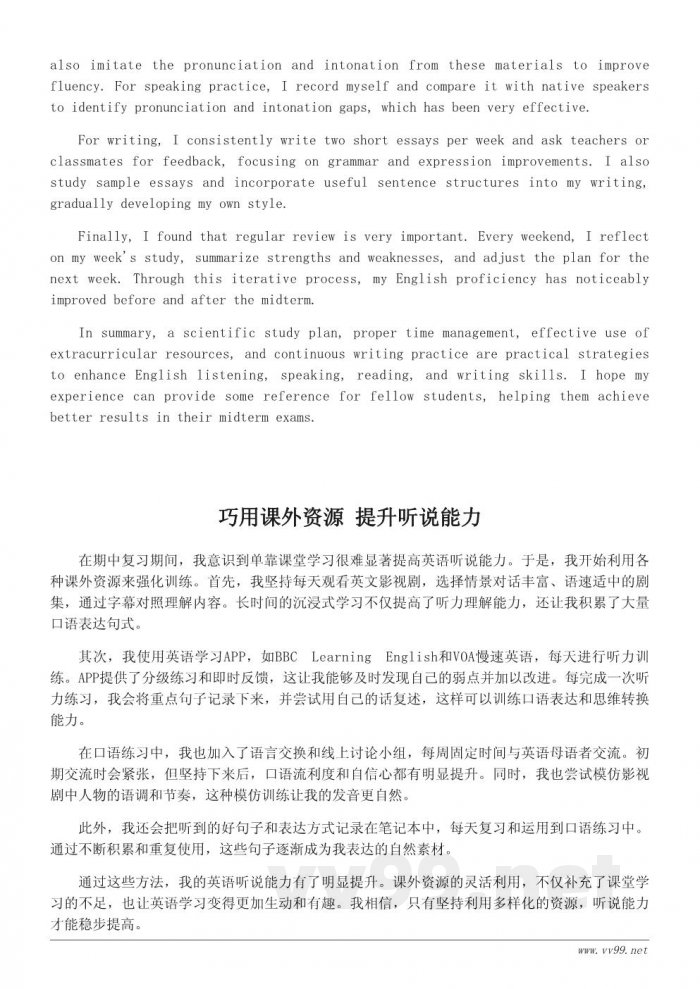
巧用课外资源 提升听说能力
在期中复习期间,我意识到单靠课堂学习很难显著提高英语听说能力。于是,我开始利用各种课外资源来强化训练。首先,我坚持每天观看英文影视剧,选择情景对话丰富、语速适中的剧集,通过字幕对照理解内容。长时间的沉浸式学习不仅提高了听力理解能力,还让我积累了大量口语表达句式。
其次,我使用英语学习APP,如BBC Learning English和VOA慢速英语,每天进行听力训练。APP提供了分级练习和即时反馈,这让我能够及时发现自己的弱点并加以改进。每完成一次听力练习,我会将重点句子记录下来,并尝试用自己的话复述,这样可以训练口语表达和思维转换能力。
在口语练习中,我也加入了语言交换和线上讨论小组,每周固定时间与英语母语者交流。初期交流时会紧张,但坚持下来后,口语流利度和自信心都有明显提升。同时,我也尝试模仿影视剧中人物的语调和节奏,这种模仿训练让我的发音更自然。
此外,我还会把听到的好句子和表达方式记录在笔记本中,每天复习和运用到口语练习中。通过不断积累和重复使用,这些句子逐渐成为我表达的自然素材。
通过这些方法,我的英语听说能力有了明显提升。课外资源的灵活利用,不仅补充了课堂学习的不足,也让英语学习变得更加生动和有趣。我相信,只有坚持利用多样化的资源,听说能力才能稳步提高。
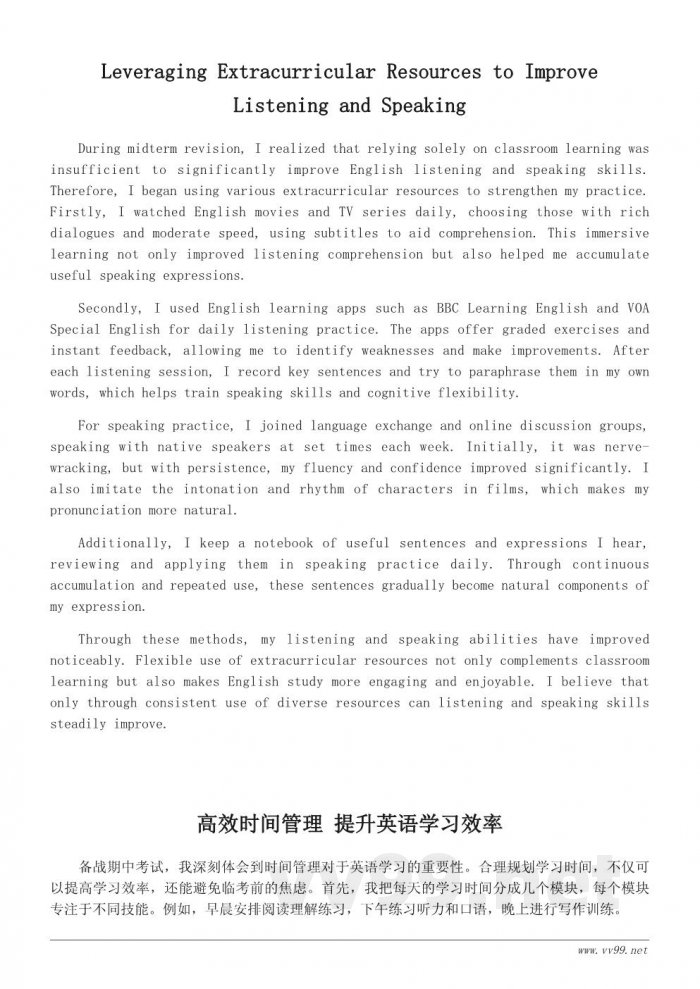
Leveraging Extracurricular Resources to Improve Listening and Speaking
During midterm revision, I realized that relying solely on classroom learning was insufficient to significantly improve English listening and speaking skills. Therefore, I began using various extracurricular resources to strengthen my practice. Firstly, I watched English movies and TV series daily, choosing those with rich dialogues and moderate speed, using subtitles to aid comprehension. This immersive learning not only improved listening comprehension but also helped me accumulate useful speaking expressions.
Secondly, I used English learning apps such as BBC Learning English and VOA Special English for daily listening practice. The apps offer graded exercises and instant feedback, allowing me to identify weaknesses and make improvements. After each listening session, I record key sentences and try to paraphrase them in my own words, which helps train speaking skills and cognitive flexibility.
For speaking practice, I joined language exchange and online discussion groups, speaking with native speakers at set times each week. Initially, it was nerve-wracking, but with persistence, my fluency and confidence improved significantly. I also imitate the intonation and rhythm of characters in films, which makes my pronunciation more natural.
Additionally, I keep a notebook of useful sentences and expressions I hear, reviewing and applying them in speaking practice daily. Through continuous accumulation and repeated use, these sentences gradually become natural components of my expression.
Through these methods, my listening and speaking abilities have improved noticeably. Flexible use of extracurricular resources not only complements classroom learning but also makes English study more engaging and enjoyable. I believe that only through consistent use of diverse resources can listening and speaking skills steadily improve.
小提示:上面此文档内容仅展示完整文档里的部分内容, 若需要下载完整文档请 点击免费下载完整文档 。