文章内容
文章内容
Unit 1 How can I get there? 我怎样到达这里?
重点单词:
where 哪里,how 怎样,can 能够,near 近的,ask 问,tell 告诉,far 远的
science 科学,library 图书馆,hospital 医院,museum 博物馆,post office 邮局,bookstore 书店,usually 通常,sometimes 有时候,often 经常,know 知道,near 旁边,next to 旁边(比 near 更近),crossing 十字路口,turn left 左转,turn right 右转,go straight 直走,in front 在前面,behind 在后面
重点句子:
1. How do you go to school? 你是怎样去上学的?
2. Where is the restaurant? 餐馆在哪里?
3. Usually, I go to school on foot. 我通常走路去上学。
4. Sometimes I go by bike. 有时候我骑自行车去。
5. 问路之前,出于礼貌,我们要说 “Excuse me”。与后面的句子要用标点符号隔开。
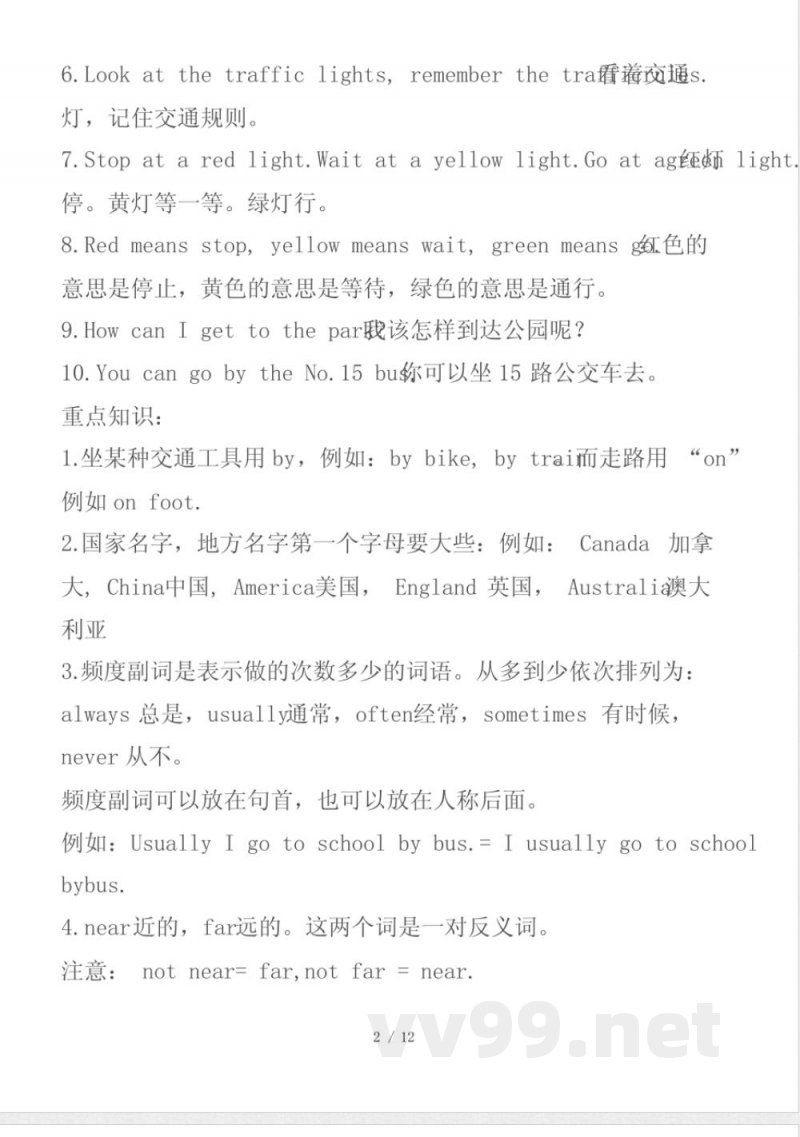
6. Look at the traffic lights, remember the traffic rules. 记住交通规则。
7. Stop at a red light. Wait at a yellow light. Go at a green light. 红灯停,黄灯等,绿灯行。
8. Red means stop, yellow means wait, green means go. 红色的意思是停止,黄色的意思是等待,绿色的意思是通行。
9. How can I get to the park? 该怎样到达公园呢?
10. You can go by the No. 15 bus. 你可以坐15路公交车去。
重点知识:
1. 坐某种交通工具用 by,例如:by bike, by train,而走路用 on foot。
2. 国家名字,地方名字第一个字母要大些:例如:Canada 加拿大,China 中国,America 美国,England 英国,Australia 澳大利亚。
3. 频度副词表示做的次数多少的词语。从多到少依次排列为:always 总是,usually 通常,often 经常,sometimes 有时候,never 从不。频度副词可以放在句首,也可以放在人称后面。例如:Usually I go to school by bus. = I usually go to school by bus。
4. near 近的,far 远的。这两个词是一对反义词。注意:not near = far, not far = near。
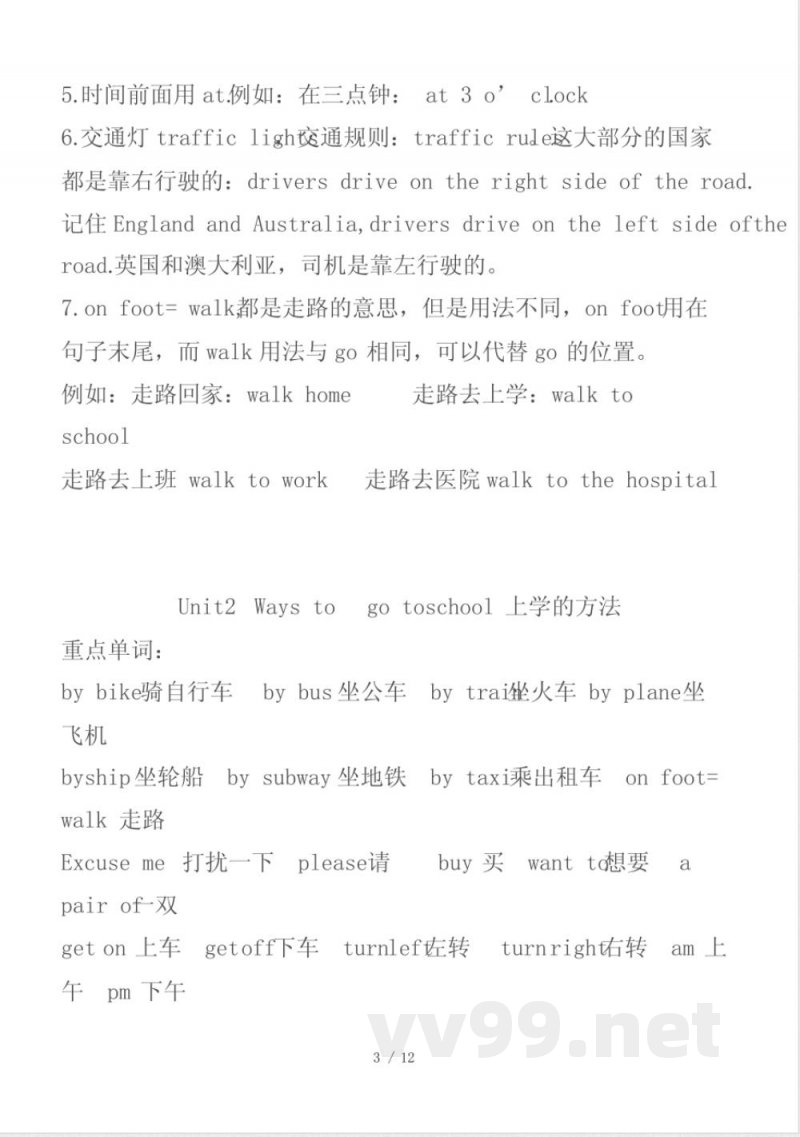
5. 时间前面用 at。例如:在三点钟:at 3 o’clock。
6. 交通灯 traffic light,交通规则 traffic rule。大部分的国家都是靠右行驶的:drivers drive on the right side of the road。记住,England 和 Australia,drivers drive on the left side of the road。英国和澳大利亚,司机是靠左行驶的。
7. on foot = walk,都是走路的意思,但是用法不同,on foot 通常在句子末尾,而 walk 用法与 go 相同,可以代替 go 的位置。例如:走路回家:walk home。
说明:本文档为学习资料,仅供教学与自学使用,资源免费下载,不含任何诱导下载或捆绑程序。
小提示:上面此文档内容仅展示完整文档里的部分内容, 若需要下载完整文档请 点击免费下载完整文档。