文章内容
文章内容
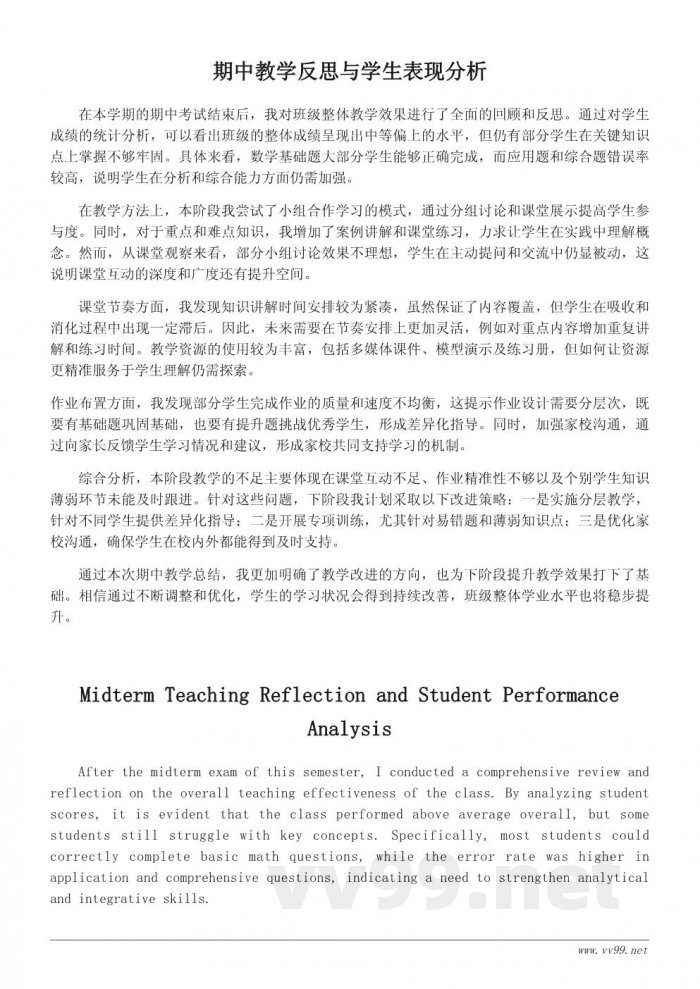
期中教学反思与学生表现分析
在本学期的期中考试结束后,我对班级整体教学效果进行了全面的回顾和反思。通过对学生成绩的统计分析,可以看出班级的整体成绩呈现出中等偏上的水平,但仍有部分学生在关键知识点上掌握不够牢固。具体来看,数学基础题大部分学生能够正确完成,而应用题和综合题错误率较高,说明学生在分析和综合能力方面仍需加强。
在教学方法上,本阶段我尝试了小组合作学习的模式,通过分组讨论和课堂展示提高学生参与度。同时,对于重点和难点知识,我增加了案例讲解和课堂练习,力求让学生在实践中理解概念。然而,从课堂观察来看,部分小组讨论效果不理想,学生在主动提问和交流中仍显被动,这说明课堂互动的深度和广度还有提升空间。
课堂节奏方面,我发现知识讲解时间安排较为紧凑,虽然保证了内容覆盖,但学生在吸收和消化过程中出现一定滞后。因此,未来需要在节奏安排上更加灵活,例如对重点内容增加重复讲解和练习时间。教学资源的使用较为丰富,包括多媒体课件、模型演示及练习册,但如何让资源更精准服务于学生理解仍需探索。
作业布置方面,我发现部分学生完成作业的质量和速度不均衡,这提示作业设计需要分层次,既要有基础题巩固基础,也要有提升题挑战优秀学生,形成差异化指导。同时,加强家校沟通,通过向家长反馈学生学习情况和建议,形成家校共同支持学习的机制。
综合分析,本阶段教学的不足主要体现在课堂互动不足、作业精准性不够以及个别学生知识薄弱环节未能及时跟进。针对这些问题,下阶段我计划采取以下改进策略:一是实施分层教学,针对不同学生提供差异化指导;二是开展专项训练,尤其针对易错题和薄弱知识点;三是优化家校沟通,确保学生在校内外都能得到及时支持。
通过本次期中教学总结,我更加明确了教学改进的方向,也为下阶段提升教学效果打下了基础。相信通过不断调整和优化,学生的学习状况会得到持续改善,班级整体学业水平也将稳步提升。
Midterm Teaching Reflection and Student Performance Analysis
After the midterm exam of this semester, I conducted a comprehensive review and reflection on the overall teaching effectiveness of the class. By analyzing student scores, it is evident that the class performed above average overall, but some students still struggle with key concepts. Specifically, most students could correctly complete basic math questions, while the error rate was higher in application and comprehensive questions, indicating a need to strengthen analytical and integrative skills.
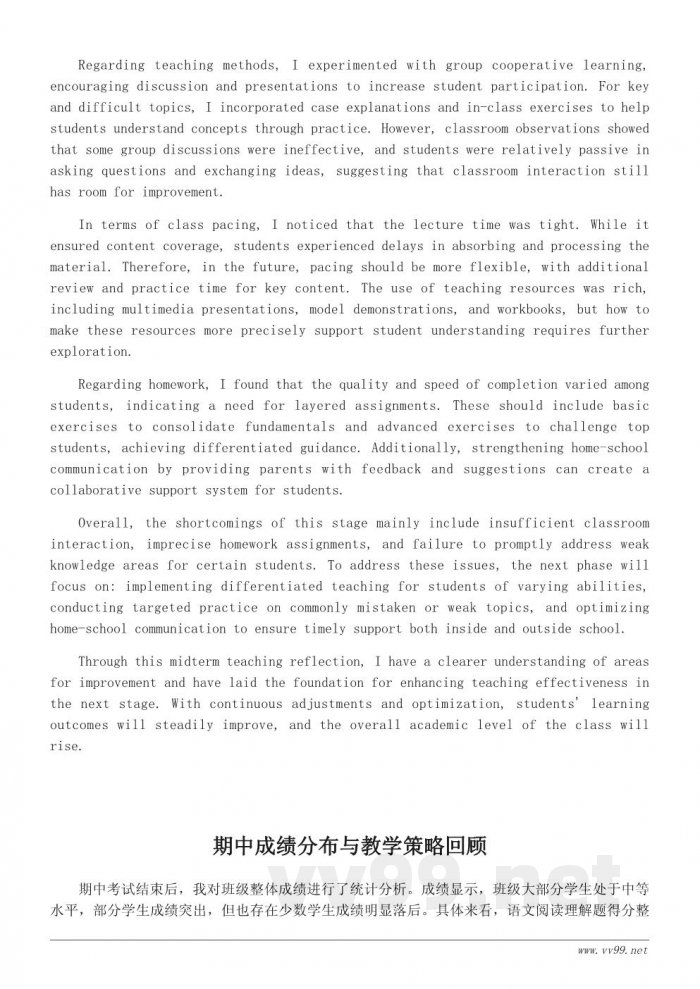
Regarding teaching methods, I experimented with group cooperative learning, encouraging discussion and presentations to increase student participation. For key and difficult topics, I incorporated case explanations and in-class exercises to help students understand concepts through practice. However, classroom observations showed that some group discussions were ineffective, and students were relatively passive in asking questions and exchanging ideas, suggesting that classroom interaction still has room for improvement.
In terms of class pacing, I noticed that the lecture time was tight. While it ensured content coverage, students experienced delays in absorbing and processing the material. Therefore, in the future, pacing should be more flexible, with additional review and practice time for key content. The use of teaching resources was rich, including multimedia presentations, model demonstrations, and workbooks, but how to make these resources more precisely support student understanding requires further exploration.
Regarding homework, I found that the quality and speed of completion varied among students, indicating a need for layered assignments. These should include basic exercises to consolidate fundamentals and advanced exercises to challenge top students, achieving differentiated guidance. Additionally, strengthening home-school communication by providing parents with feedback and suggestions can create a collaborative support system for students.
Overall, the shortcomings of this stage mainly include insufficient classroom interaction, imprecise homework assignments, and failure to promptly address weak knowledge areas for certain students. To address these issues, the next phase will focus on: implementing differentiated teaching for students of varying abilities, conducting targeted practice on commonly mistaken or weak topics, and optimizing home-school communication to ensure timely support both inside and outside school.
Through this midterm teaching reflection, I have a clearer understanding of areas for improvement and have laid the foundation for enhancing teaching effectiveness in the next stage. With continuous adjustments and optimization, students' learning outcomes will steadily improve, and the overall academic level of the class will rise.
期中成绩分布与教学策略回顾
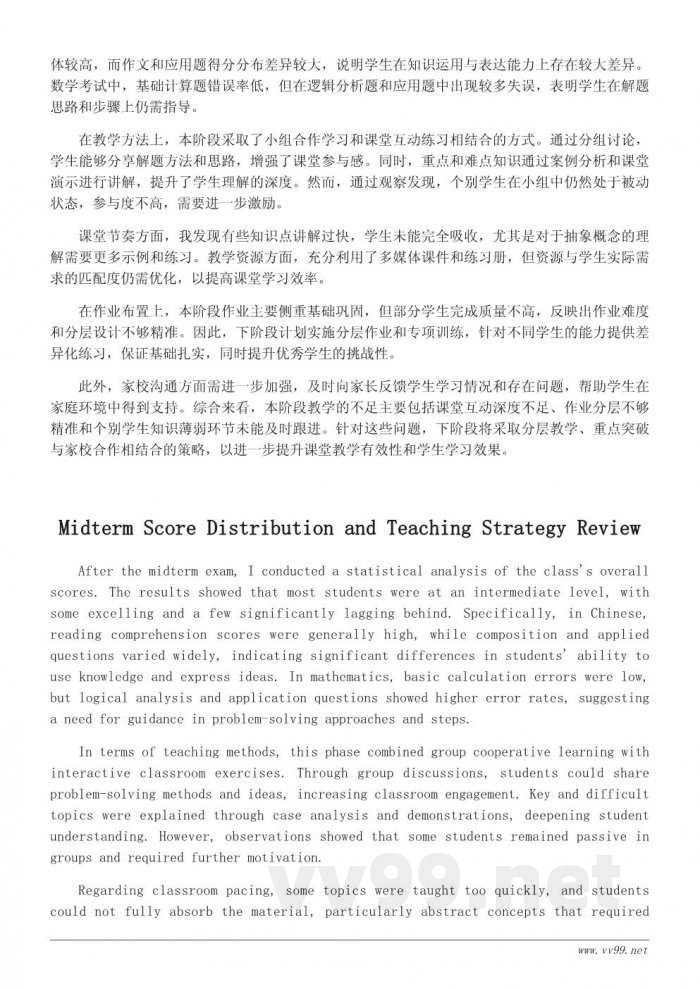
期中考试结束后,我对班级整体成绩进行了统计分析。成绩显示,班级大部分学生处于中等水平,部分学生成绩突出,但也存在少数学生成绩明显落后。具体来看,语文阅读理解题得分整体较高,而作文和应用题得分分布差异较大,说明学生在知识运用与表达能力上存在较大差异。数学考试中,基础计算题错误率低,但在逻辑分析题和应用题中出现较多失误,表明学生在解题思路和步骤上仍需指导。
在教学方法上,本阶段采取了小组合作学习和课堂互动练习相结合的方式。通过分组讨论,学生能够分享解题方法和思路,增强了课堂参与感。同时,重点和难点知识通过案例分析和课堂演示进行讲解,提升了学生理解的深度。然而,通过观察发现,个别学生在小组中仍然处于被动状态,参与度不高,需要进一步激励。
课堂节奏方面,我发现有些知识点讲解过快,学生未能完全吸收,尤其是对于抽象概念的理解需要更多示例和练习。教学资源方面,充分利用了多媒体课件和练习册,但资源与学生实际需求的匹配度仍需优化,以提高课堂学习效率。
在作业布置上,本阶段作业主要侧重基础巩固,但部分学生完成质量不高,反映出作业难度和分层设计不够精准。因此,下阶段计划实施分层作业和专项训练,针对不同学生的能力提供差异化练习,保证基础扎实,同时提升优秀学生的挑战性。
此外,家校沟通方面需进一步加强,及时向家长反馈学生学习情况和存在问题,帮助学生在家庭环境中得到支持。综合来看,本阶段教学的不足主要包括课堂互动深度不足、作业分层不够精准和个别学生知识薄弱环节未能及时跟进。针对这些问题,下阶段将采取分层教学、重点突破与家校合作相结合的策略,以进一步提升课堂教学有效性和学生学习效果。
Midterm Score Distribution and Teaching Strategy Review
After the midterm exam, I conducted a statistical analysis of the class's overall scores. The results showed that most students were at an intermediate level, with some excelling and a few significantly lagging behind. Specifically, in Chinese, reading comprehension scores were generally high, while composition and applied questions varied widely, indicating significant differences in students' ability to use knowledge and express ideas. In mathematics, basic calculation errors were low, but logical analysis and application questions showed higher error rates, suggesting a need for guidance in problem-solving approaches and steps.
In terms of teaching methods, this phase combined group cooperative learning with interactive classroom exercises. Through group discussions, students could share problem-solving methods and ideas, increasing classroom engagement. Key and difficult topics were explained through case analysis and demonstrations, deepening student understanding. However, observations showed that some students remained passive in groups and required further motivation.
Regarding classroom pacing, some topics were taught too quickly, and students could not fully absorb the material, particularly abstract concepts that required more examples and practice. Teaching resources included multimedia presentations and workbooks, but alignment with students' actual needs needs improvement to enhance learning efficiency.
For homework, assignments mainly focused on basic consolidation, but the quality of completion varied among students, reflecting insufficient differentiation. Therefore, the next phase will implement layered homework and targeted practice, providing differentiated exercises based on students' abilities, ensuring a solid foundation while challenging top performers.
Additionally, home-school communication should be strengthened, providing timely feedback to parents on students' learning status and issues to support students at home. Overall, the shortcomings of this phase include insufficient depth of classroom interaction, inadequate differentiation in homework, and failure to promptly address weak knowledge areas for some students. To address these issues, the next stage will integrate differentiated teaching, targeted breakthroughs, and home-school collaboration to further improve classroom effectiveness and student learning outcomes.
小提示:上面此文档内容仅展示完整文档里的部分内容, 若需要下载完整文档请 点击免费下载完整文档 。