文章内容
文章内容
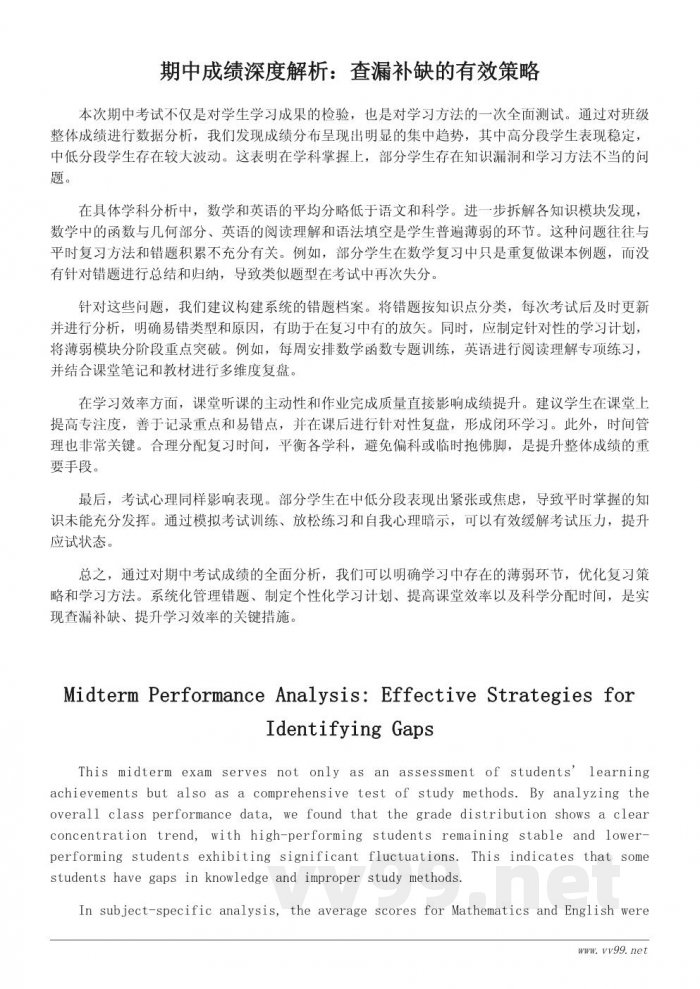
期中成绩深度解析:查漏补缺的有效策略
本次期中考试不仅是对学生学习成果的检验,也是对学习方法的一次全面测试。通过对班级整体成绩进行数据分析,我们发现成绩分布呈现出明显的集中趋势,其中高分段学生表现稳定,中低分段学生存在较大波动。这表明在学科掌握上,部分学生存在知识漏洞和学习方法不当的问题。
在具体学科分析中,数学和英语的平均分略低于语文和科学。进一步拆解各知识模块发现,数学中的函数与几何部分、英语的阅读理解和语法填空是学生普遍薄弱的环节。这种问题往往与平时复习方法和错题积累不充分有关。例如,部分学生在数学复习中只是重复做课本例题,而没有针对错题进行总结和归纳,导致类似题型在考试中再次失分。
针对这些问题,我们建议构建系统的错题档案。将错题按知识点分类,每次考试后及时更新并进行分析,明确易错类型和原因,有助于在复习中有的放矢。同时,应制定针对性的学习计划,将薄弱模块分阶段重点突破。例如,每周安排数学函数专题训练,英语进行阅读理解专项练习,并结合课堂笔记和教材进行多维度复盘。
在学习效率方面,课堂听课的主动性和作业完成质量直接影响成绩提升。建议学生在课堂上提高专注度,善于记录重点和易错点,并在课后进行针对性复盘,形成闭环学习。此外,时间管理也非常关键。合理分配复习时间,平衡各学科,避免偏科或临时抱佛脚,是提升整体成绩的重要手段。
最后,考试心理同样影响表现。部分学生在中低分段表现出紧张或焦虑,导致平时掌握的知识未能充分发挥。通过模拟考试训练、放松练习和自我心理暗示,可以有效缓解考试压力,提升应试状态。
总之,通过对期中考试成绩的全面分析,我们可以明确学习中存在的薄弱环节,优化复习策略和学习方法。系统化管理错题、制定个性化学习计划、提高课堂效率以及科学分配时间,是实现查漏补缺、提升学习效率的关键措施。
Midterm Performance Analysis: Effective Strategies for Identifying Gaps
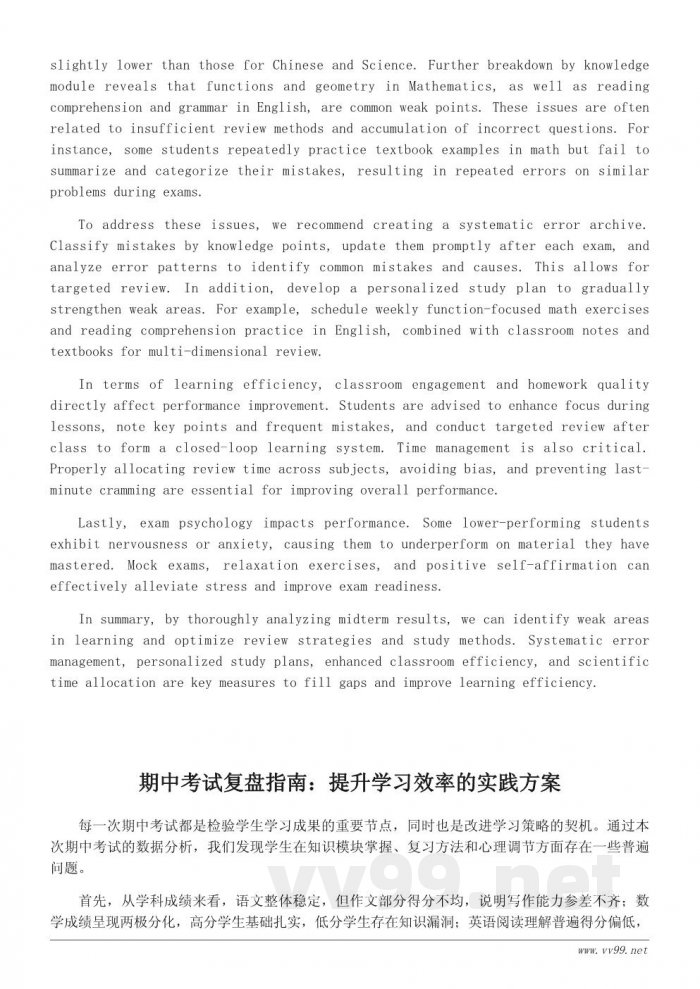
This midterm exam serves not only as an assessment of students' learning achievements but also as a comprehensive test of study methods. By analyzing the overall class performance data, we found that the grade distribution shows a clear concentration trend, with high-performing students remaining stable and lower-performing students exhibiting significant fluctuations. This indicates that some students have gaps in knowledge and improper study methods.
In subject-specific analysis, the average scores for Mathematics and English were slightly lower than those for Chinese and Science. Further breakdown by knowledge module reveals that functions and geometry in Mathematics, as well as reading comprehension and grammar in English, are common weak points. These issues are often related to insufficient review methods and accumulation of incorrect questions. For instance, some students repeatedly practice textbook examples in math but fail to summarize and categorize their mistakes, resulting in repeated errors on similar problems during exams.
To address these issues, we recommend creating a systematic error archive. Classify mistakes by knowledge points, update them promptly after each exam, and analyze error patterns to identify common mistakes and causes. This allows for targeted review. In addition, develop a personalized study plan to gradually strengthen weak areas. For example, schedule weekly function-focused math exercises and reading comprehension practice in English, combined with classroom notes and textbooks for multi-dimensional review.
In terms of learning efficiency, classroom engagement and homework quality directly affect performance improvement. Students are advised to enhance focus during lessons, note key points and frequent mistakes, and conduct targeted review after class to form a closed-loop learning system. Time management is also critical. Properly allocating review time across subjects, avoiding bias, and preventing last-minute cramming are essential for improving overall performance.
Lastly, exam psychology impacts performance. Some lower-performing students exhibit nervousness or anxiety, causing them to underperform on material they have mastered. Mock exams, relaxation exercises, and positive self-affirmation can effectively alleviate stress and improve exam readiness.
In summary, by thoroughly analyzing midterm results, we can identify weak areas in learning and optimize review strategies and study methods. Systematic error management, personalized study plans, enhanced classroom efficiency, and scientific time allocation are key measures to fill gaps and improve learning efficiency.
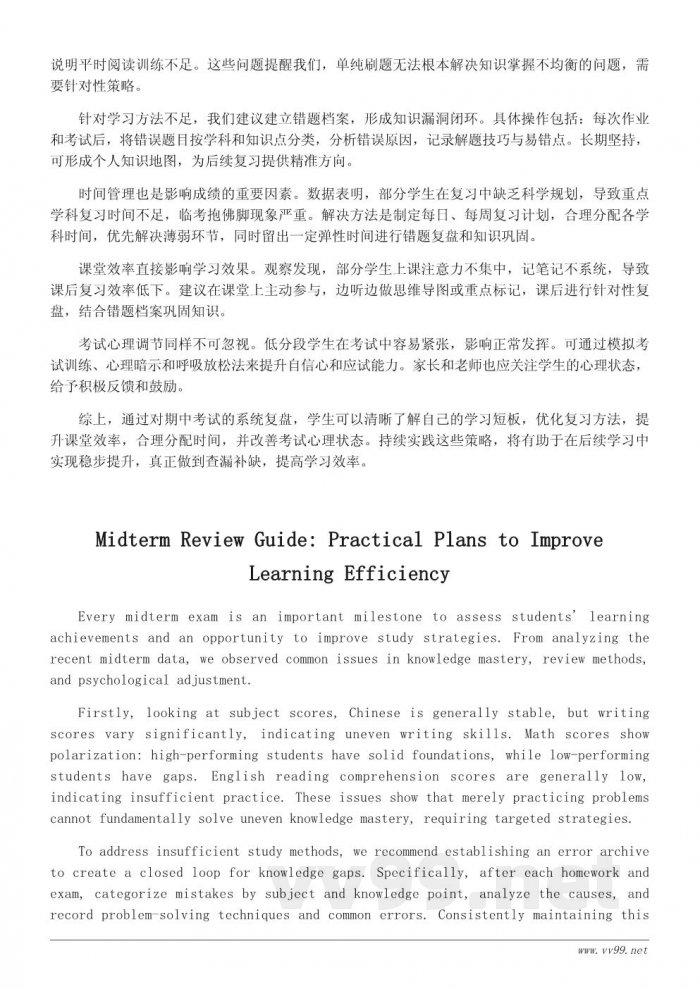
期中考试复盘指南:提升学习效率的实践方案
每一次期中考试都是检验学生学习成果的重要节点,同时也是改进学习策略的契机。通过本次期中考试的数据分析,我们发现学生在知识模块掌握、复习方法和心理调节方面存在一些普遍问题。
首先,从学科成绩来看,语文整体稳定,但作文部分得分不均,说明写作能力参差不齐;数学成绩呈现两极分化,高分学生基础扎实,低分学生存在知识漏洞;英语阅读理解普遍得分偏低,说明平时阅读训练不足。这些问题提醒我们,单纯刷题无法根本解决知识掌握不均衡的问题,需要针对性策略。
针对学习方法不足,我们建议建立错题档案,形成知识漏洞闭环。具体操作包括:每次作业和考试后,将错误题目按学科和知识点分类,分析错误原因,记录解题技巧与易错点。长期坚持,可形成个人知识地图,为后续复习提供精准方向。
时间管理也是影响成绩的重要因素。数据表明,部分学生在复习中缺乏科学规划,导致重点学科复习时间不足,临考抱佛脚现象严重。解决方法是制定每日、每周复习计划,合理分配各学科时间,优先解决薄弱环节,同时留出一定弹性时间进行错题复盘和知识巩固。
课堂效率直接影响学习效果。观察发现,部分学生上课注意力不集中,记笔记不系统,导致课后复习效率低下。建议在课堂上主动参与,边听边做思维导图或重点标记,课后进行针对性复盘,结合错题档案巩固知识。
考试心理调节同样不可忽视。低分段学生在考试中容易紧张,影响正常发挥。可通过模拟考试训练、心理暗示和呼吸放松法来提升自信心和应试能力。家长和老师也应关注学生的心理状态,给予积极反馈和鼓励。
综上,通过对期中考试的系统复盘,学生可以清晰了解自己的学习短板,优化复习方法,提升课堂效率,合理分配时间,并改善考试心理状态。持续实践这些策略,将有助于在后续学习中实现稳步提升,真正做到查漏补缺,提高学习效率。
Midterm Review Guide: Practical Plans to Improve Learning Efficiency
Every midterm exam is an important milestone to assess students' learning achievements and an opportunity to improve study strategies. From analyzing the recent midterm data, we observed common issues in knowledge mastery, review methods, and psychological adjustment.
Firstly, looking at subject scores, Chinese is generally stable, but writing scores vary significantly, indicating uneven writing skills. Math scores show polarization: high-performing students have solid foundations, while low-performing students have gaps. English reading comprehension scores are generally low, indicating insufficient practice. These issues show that merely practicing problems cannot fundamentally solve uneven knowledge mastery, requiring targeted strategies.
To address insufficient study methods, we recommend establishing an error archive to create a closed loop for knowledge gaps. Specifically, after each homework and exam, categorize mistakes by subject and knowledge point, analyze the causes, and record problem-solving techniques and common errors. Consistently maintaining this archive can form a personal knowledge map and provide precise guidance for future review.
Time management is also a key factor affecting performance. Data shows that some students lack a scientific review plan, resulting in insufficient time for key subjects and last-minute cramming. The solution is to create daily and weekly study plans, allocate time reasonably across subjects, prioritize weak areas, and reserve time for reviewing mistakes and consolidating knowledge.
Classroom efficiency directly affects learning outcomes. Observations indicate that some students are not focused in class and take disorganized notes, reducing post-class review efficiency. Students are advised to actively participate, take structured notes or mind maps during lessons, and conduct targeted review afterward, combined with the error archive to reinforce knowledge.
Exam psychology is also crucial. Low-performing students are prone to nervousness, affecting performance. Mock exams, self-affirmation, and relaxation techniques can enhance confidence and exam skills. Parents and teachers should also pay attention to students' mental state and provide positive feedback and encouragement.
In summary, by systematically reviewing midterm exams, students can clearly understand their learning weaknesses, optimize review methods, improve classroom efficiency, manage time wisely, and regulate exam psychology. Continuous implementation of these strategies will help achieve steady progress, effectively identify gaps, and improve learning efficiency.
小提示:上面此文档内容仅展示完整文档里的部分内容, 若需要下载完整文档请 点击免费下载完整文档 。