文章内容
文章内容
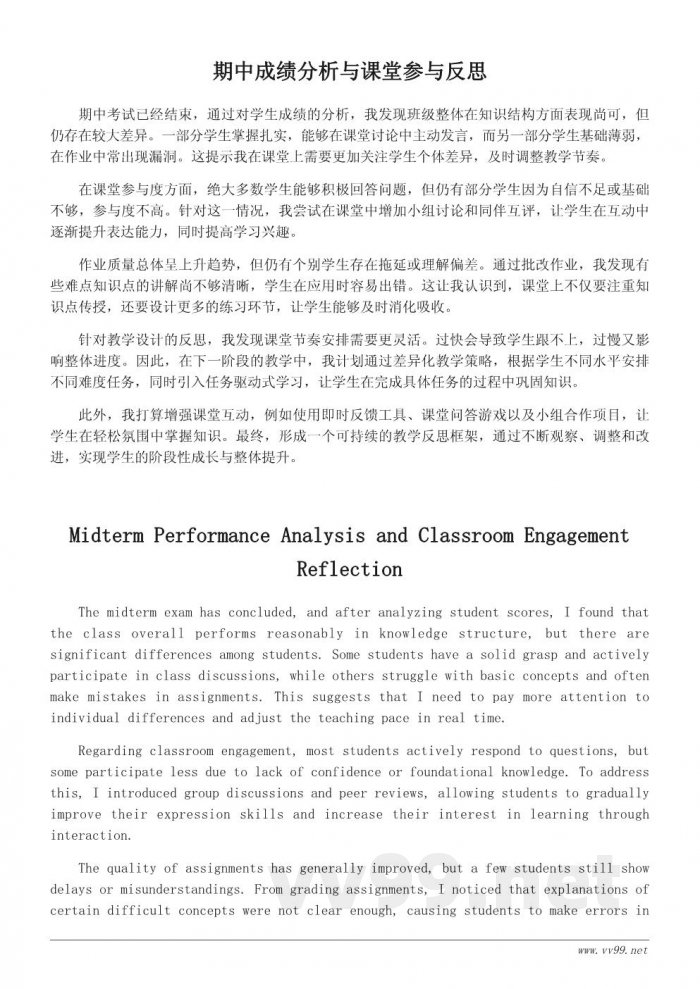
期中成绩分析与课堂参与反思
期中考试已经结束,通过对学生成绩的分析,我发现班级整体在知识结构方面表现尚可,但仍存在较大差异。一部分学生掌握扎实,能够在课堂讨论中主动发言,而另一部分学生基础薄弱,在作业中常出现漏洞。这提示我在课堂上需要更加关注学生个体差异,及时调整教学节奏。
在课堂参与度方面,绝大多数学生能够积极回答问题,但仍有部分学生因为自信不足或基础不够,参与度不高。针对这一情况,我尝试在课堂中增加小组讨论和同伴互评,让学生在互动中逐渐提升表达能力,同时提高学习兴趣。
作业质量总体呈上升趋势,但仍有个别学生存在拖延或理解偏差。通过批改作业,我发现有些难点知识点的讲解尚不够清晰,学生在应用时容易出错。这让我认识到,课堂上不仅要注重知识点传授,还要设计更多的练习环节,让学生能够及时消化吸收。
针对教学设计的反思,我发现课堂节奏安排需要更灵活。过快会导致学生跟不上,过慢又影响整体进度。因此,在下一阶段的教学中,我计划通过差异化教学策略,根据学生不同水平安排不同难度任务,同时引入任务驱动式学习,让学生在完成具体任务的过程中巩固知识。
此外,我打算增强课堂互动,例如使用即时反馈工具、课堂问答游戏以及小组合作项目,让学生在轻松氛围中掌握知识。最终,形成一个可持续的教学反思框架,通过不断观察、调整和改进,实现学生的阶段性成长与整体提升。
Midterm Performance Analysis and Classroom Engagement Reflection
The midterm exam has concluded, and after analyzing student scores, I found that the class overall performs reasonably in knowledge structure, but there are significant differences among students. Some students have a solid grasp and actively participate in class discussions, while others struggle with basic concepts and often make mistakes in assignments. This suggests that I need to pay more attention to individual differences and adjust the teaching pace in real time.
Regarding classroom engagement, most students actively respond to questions, but some participate less due to lack of confidence or foundational knowledge. To address this, I introduced group discussions and peer reviews, allowing students to gradually improve their expression skills and increase their interest in learning through interaction.
The quality of assignments has generally improved, but a few students still show delays or misunderstandings. From grading assignments, I noticed that explanations of certain difficult concepts were not clear enough, causing students to make errors in application. This made me realize that beyond delivering knowledge, I need to design more exercises for students to consolidate learning in real time.
Reflecting on teaching design, I found that pacing needs to be more flexible. Too fast, and students cannot keep up; too slow, and the class loses momentum. Therefore, in the next stage, I plan to implement differentiated instruction, assigning tasks of varying difficulty based on student levels and introducing task-driven learning to reinforce knowledge through concrete activities.
Additionally, I aim to enhance classroom interaction through instant feedback tools, Q&A games, and group projects, allowing students to learn in a relaxed environment. Ultimately, this will form a sustainable teaching reflection framework, promoting continuous observation, adjustment, and improvement, and supporting students’ phased growth and overall progress.
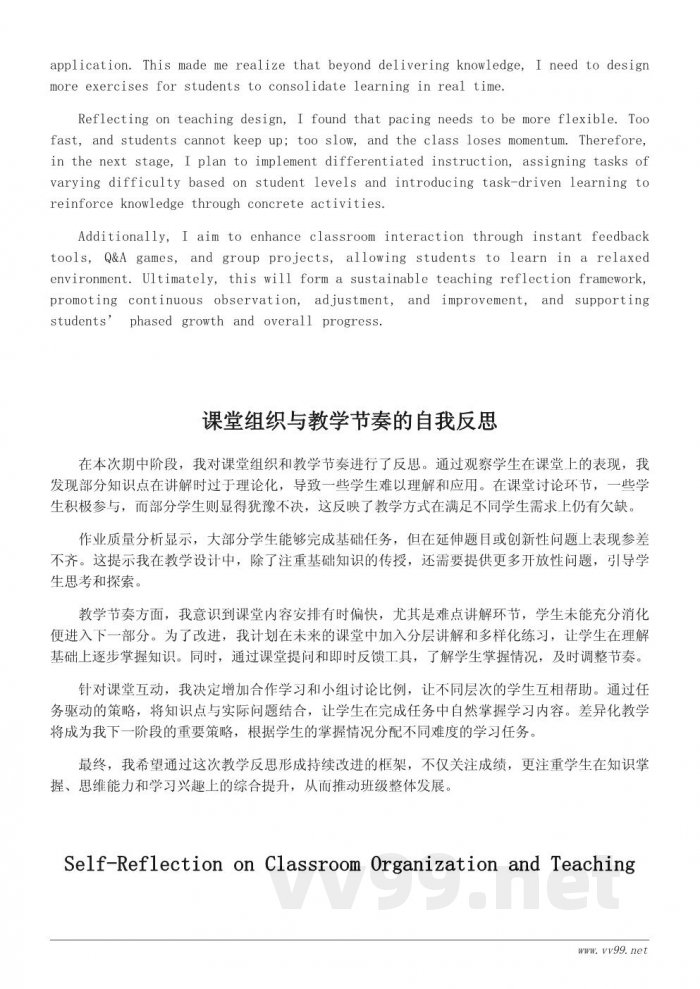
课堂组织与教学节奏的自我反思
在本次期中阶段,我对课堂组织和教学节奏进行了反思。通过观察学生在课堂上的表现,我发现部分知识点在讲解时过于理论化,导致一些学生难以理解和应用。在课堂讨论环节,一些学生积极参与,而部分学生则显得犹豫不决,这反映了教学方式在满足不同学生需求上仍有欠缺。
作业质量分析显示,大部分学生能够完成基础任务,但在延伸题目或创新性问题上表现参差不齐。这提示我在教学设计中,除了注重基础知识的传授,还需要提供更多开放性问题,引导学生思考和探索。
教学节奏方面,我意识到课堂内容安排有时偏快,尤其是难点讲解环节,学生未能充分消化便进入下一部分。为了改进,我计划在未来的课堂中加入分层讲解和多样化练习,让学生在理解基础上逐步掌握知识。同时,通过课堂提问和即时反馈工具,了解学生掌握情况,及时调整节奏。
针对课堂互动,我决定增加合作学习和小组讨论比例,让不同层次的学生互相帮助。通过任务驱动的策略,将知识点与实际问题结合,让学生在完成任务中自然掌握学习内容。差异化教学将成为我下一阶段的重要策略,根据学生的掌握情况分配不同难度的学习任务。
最终,我希望通过这次教学反思形成持续改进的框架,不仅关注成绩,更注重学生在知识掌握、思维能力和学习兴趣上的综合提升,从而推动班级整体发展。
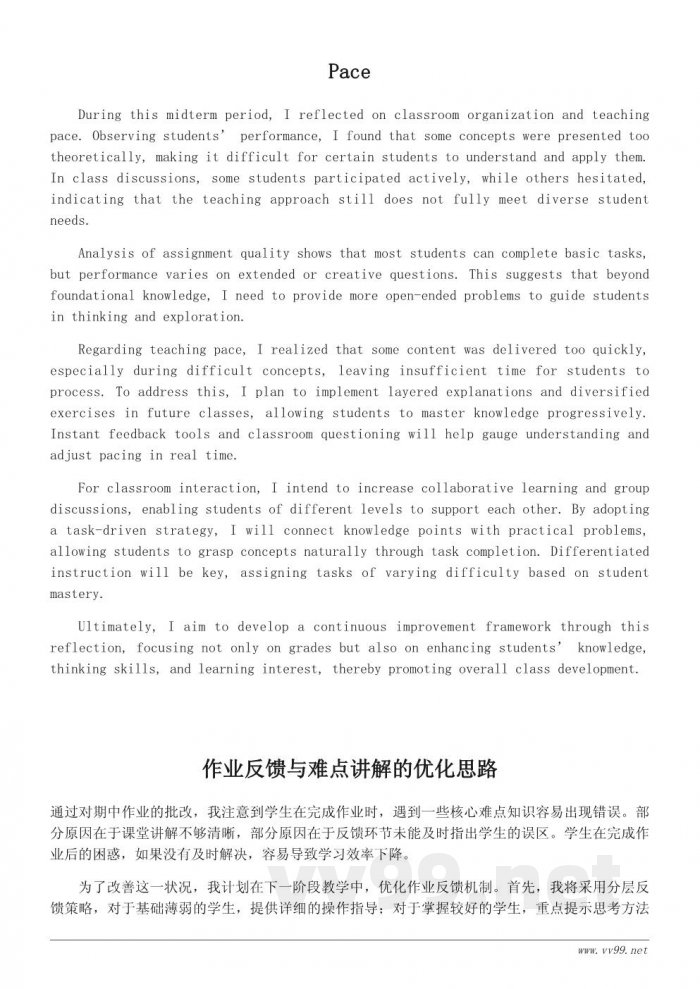
Self-Reflection on Classroom Organization and Teaching Pace
During this midterm period, I reflected on classroom organization and teaching pace. Observing students’ performance, I found that some concepts were presented too theoretically, making it difficult for certain students to understand and apply them. In class discussions, some students participated actively, while others hesitated, indicating that the teaching approach still does not fully meet diverse student needs.
Analysis of assignment quality shows that most students can complete basic tasks, but performance varies on extended or creative questions. This suggests that beyond foundational knowledge, I need to provide more open-ended problems to guide students in thinking and exploration.
Regarding teaching pace, I realized that some content was delivered too quickly, especially during difficult concepts, leaving insufficient time for students to process. To address this, I plan to implement layered explanations and diversified exercises in future classes, allowing students to master knowledge progressively. Instant feedback tools and classroom questioning will help gauge understanding and adjust pacing in real time.
For classroom interaction, I intend to increase collaborative learning and group discussions, enabling students of different levels to support each other. By adopting a task-driven strategy, I will connect knowledge points with practical problems, allowing students to grasp concepts naturally through task completion. Differentiated instruction will be key, assigning tasks of varying difficulty based on student mastery.
Ultimately, I aim to develop a continuous improvement framework through this reflection, focusing not only on grades but also on enhancing students’ knowledge, thinking skills, and learning interest, thereby promoting overall class development.
小提示:上面此文档内容仅展示完整文档里的部分内容, 若需要下载完整文档请 点击免费下载完整文档 。