文章内容
文章内容
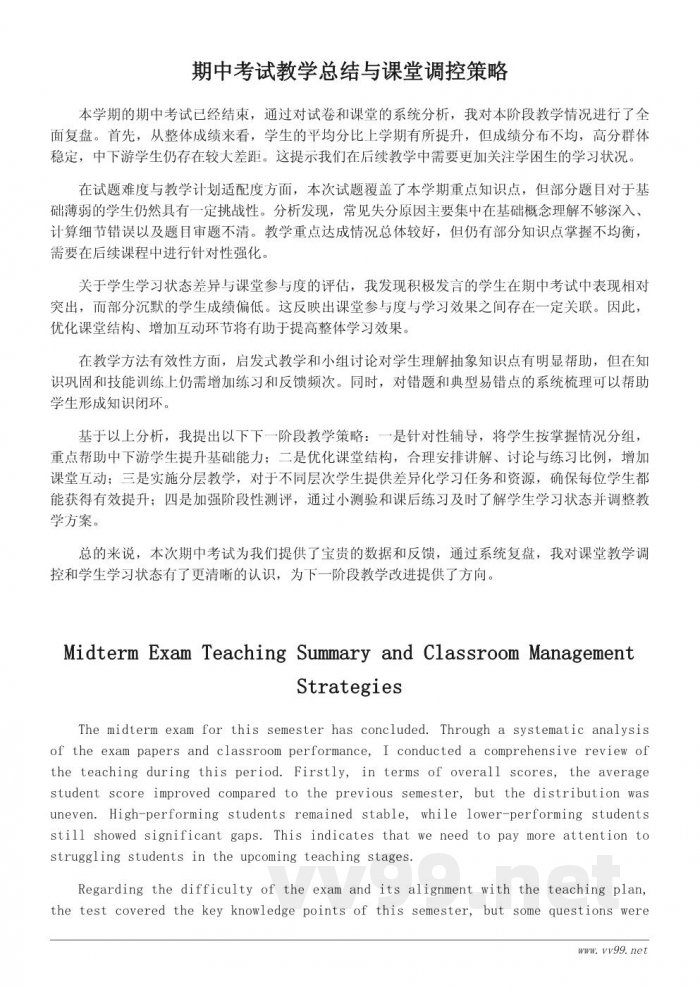
期中考试教学总结与课堂调控策略
本学期的期中考试已经结束,通过对试卷和课堂的系统分析,我对本阶段教学情况进行了全面复盘。首先,从整体成绩来看,学生的平均分比上学期有所提升,但成绩分布不均,高分群体稳定,中下游学生仍存在较大差距。这提示我们在后续教学中需要更加关注学困生的学习状况。
在试题难度与教学计划适配度方面,本次试题覆盖了本学期重点知识点,但部分题目对于基础薄弱的学生仍然具有一定挑战性。分析发现,常见失分原因主要集中在基础概念理解不够深入、计算细节错误以及题目审题不清。教学重点达成情况总体较好,但仍有部分知识点掌握不均衡,需要在后续课程中进行针对性强化。
关于学生学习状态差异与课堂参与度的评估,我发现积极发言的学生在期中考试中表现相对突出,而部分沉默的学生成绩偏低。这反映出课堂参与度与学习效果之间存在一定关联。因此,优化课堂结构、增加互动环节将有助于提高整体学习效果。
在教学方法有效性方面,启发式教学和小组讨论对学生理解抽象知识点有明显帮助,但在知识巩固和技能训练上仍需增加练习和反馈频次。同时,对错题和典型易错点的系统梳理可以帮助学生形成知识闭环。
基于以上分析,我提出以下下一阶段教学策略:一是针对性辅导,将学生按掌握情况分组,重点帮助中下游学生提升基础能力;二是优化课堂结构,合理安排讲解、讨论与练习比例,增加课堂互动;三是实施分层教学,对于不同层次学生提供差异化学习任务和资源,确保每位学生都能获得有效提升;四是加强阶段性测评,通过小测验和课后练习及时了解学生学习状态并调整教学方案。
总的来说,本次期中考试为我们提供了宝贵的数据和反馈,通过系统复盘,我对课堂教学调控和学生学习状态有了更清晰的认识,为下一阶段教学改进提供了方向。
Midterm Exam Teaching Summary and Classroom Management Strategies
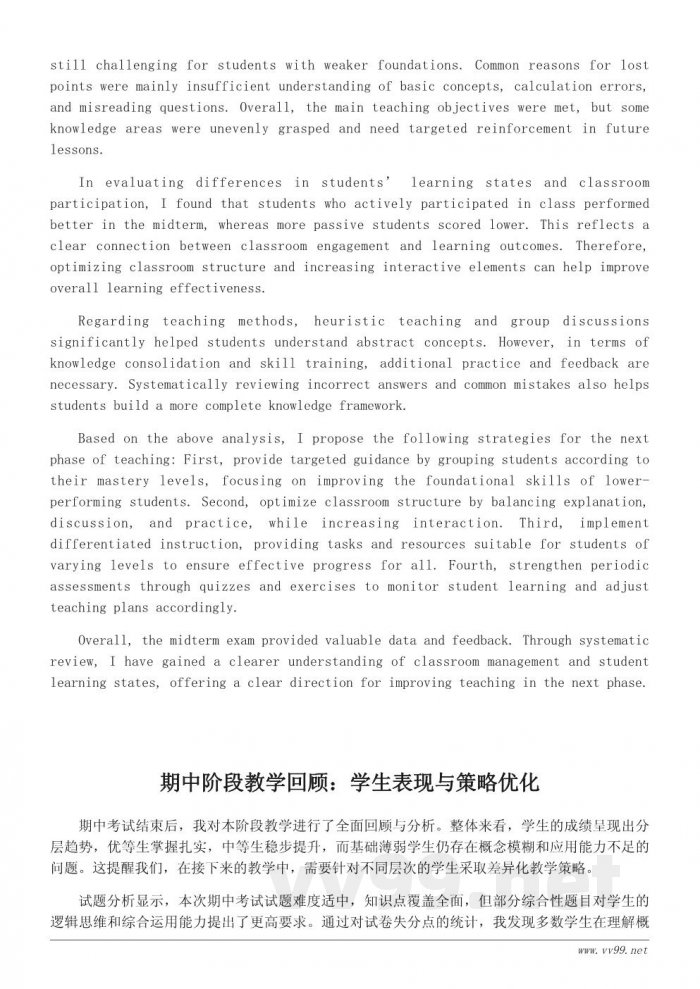
The midterm exam for this semester has concluded. Through a systematic analysis of the exam papers and classroom performance, I conducted a comprehensive review of the teaching during this period. Firstly, in terms of overall scores, the average student score improved compared to the previous semester, but the distribution was uneven. High-performing students remained stable, while lower-performing students still showed significant gaps. This indicates that we need to pay more attention to struggling students in the upcoming teaching stages.
Regarding the difficulty of the exam and its alignment with the teaching plan, the test covered the key knowledge points of this semester, but some questions were still challenging for students with weaker foundations. Common reasons for lost points were mainly insufficient understanding of basic concepts, calculation errors, and misreading questions. Overall, the main teaching objectives were met, but some knowledge areas were unevenly grasped and need targeted reinforcement in future lessons.
In evaluating differences in students’ learning states and classroom participation, I found that students who actively participated in class performed better in the midterm, whereas more passive students scored lower. This reflects a clear connection between classroom engagement and learning outcomes. Therefore, optimizing classroom structure and increasing interactive elements can help improve overall learning effectiveness.
Regarding teaching methods, heuristic teaching and group discussions significantly helped students understand abstract concepts. However, in terms of knowledge consolidation and skill training, additional practice and feedback are necessary. Systematically reviewing incorrect answers and common mistakes also helps students build a more complete knowledge framework.
Based on the above analysis, I propose the following strategies for the next phase of teaching: First, provide targeted guidance by grouping students according to their mastery levels, focusing on improving the foundational skills of lower-performing students. Second, optimize classroom structure by balancing explanation, discussion, and practice, while increasing interaction. Third, implement differentiated instruction, providing tasks and resources suitable for students of varying levels to ensure effective progress for all. Fourth, strengthen periodic assessments through quizzes and exercises to monitor student learning and adjust teaching plans accordingly.
Overall, the midterm exam provided valuable data and feedback. Through systematic review, I have gained a clearer understanding of classroom management and student learning states, offering a clear direction for improving teaching in the next phase.
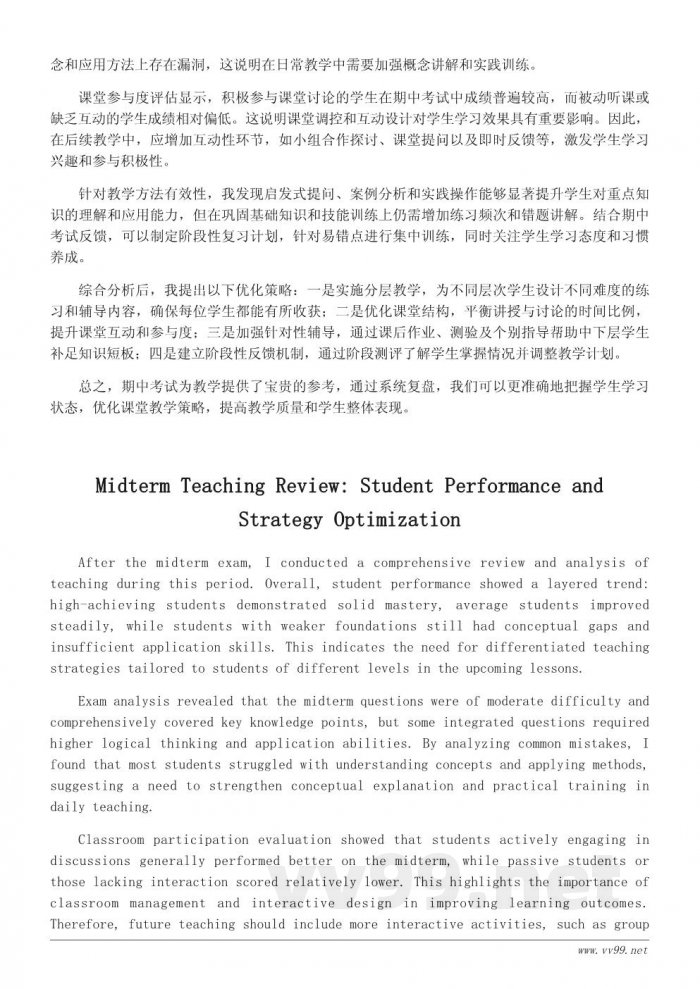
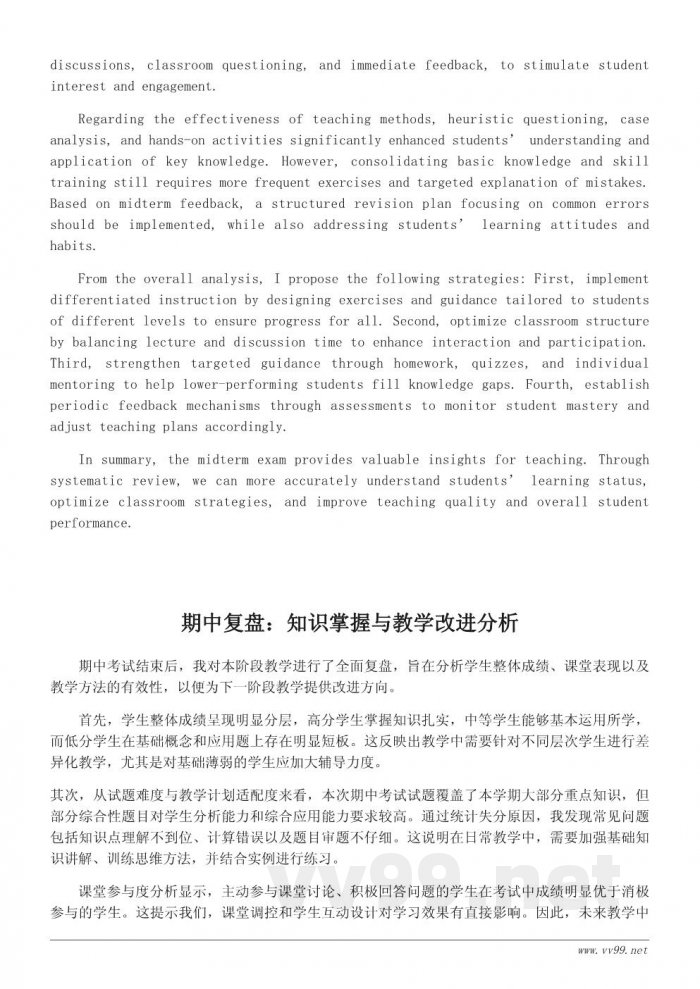
期中阶段教学回顾:学生表现与策略优化
期中考试结束后,我对本阶段教学进行了全面回顾与分析。整体来看,学生的成绩呈现出分层趋势,优等生掌握扎实,中等生稳步提升,而基础薄弱学生仍存在概念模糊和应用能力不足的问题。这提醒我们,在接下来的教学中,需要针对不同层次的学生采取差异化教学策略。
试题分析显示,本次期中考试试题难度适中,知识点覆盖全面,但部分综合性题目对学生的逻辑思维和综合运用能力提出了更高要求。通过对试卷失分点的统计,我发现多数学生在理解概念和应用方法上存在漏洞,这说明在日常教学中需要加强概念讲解和实践训练。
课堂参与度评估显示,积极参与课堂讨论的学生在期中考试中成绩普遍较高,而被动听课或缺乏互动的学生成绩相对偏低。这说明课堂调控和互动设计对学生学习效果具有重要影响。因此,在后续教学中,应增加互动性环节,如小组合作探讨、课堂提问以及即时反馈等,激发学生学习兴趣和参与积极性。
针对教学方法有效性,我发现启发式提问、案例分析和实践操作能够显著提升学生对重点知识的理解和应用能力,但在巩固基础知识和技能训练上仍需增加练习频次和错题讲解。结合期中考试反馈,可以制定阶段性复习计划,针对易错点进行集中训练,同时关注学生学习态度和习惯养成。
综合分析后,我提出以下优化策略:一是实施分层教学,为不同层次学生设计不同难度的练习和辅导内容,确保每位学生都能有所收获;二是优化课堂结构,平衡讲授与讨论的时间比例,提升课堂互动和参与度;三是加强针对性辅导,通过课后作业、测验及个别指导帮助中下层学生补足知识短板;四是建立阶段性反馈机制,通过阶段测评了解学生掌握情况并调整教学计划。
总之,期中考试为教学提供了宝贵的参考,通过系统复盘,我们可以更准确地把握学生学习状态,优化课堂教学策略,提高教学质量和学生整体表现。
Midterm Teaching Review: Student Performance and Strategy Optimization
After the midterm exam, I conducted a comprehensive review and analysis of teaching during this period. Overall, student performance showed a layered trend: high-achieving students demonstrated solid mastery, average students improved steadily, while students with weaker foundations still had conceptual gaps and insufficient application skills. This indicates the need for differentiated teaching strategies tailored to students of different levels in the upcoming lessons.
Exam analysis revealed that the midterm questions were of moderate difficulty and comprehensively covered key knowledge points, but some integrated questions required higher logical thinking and application abilities. By analyzing common mistakes, I found that most students struggled with understanding concepts and applying methods, suggesting a need to strengthen conceptual explanation and practical training in daily teaching.
Classroom participation evaluation showed that students actively engaging in discussions generally performed better on the midterm, while passive students or those lacking interaction scored relatively lower. This highlights the importance of classroom management and interactive design in improving learning outcomes. Therefore, future teaching should include more interactive activities, such as group discussions, classroom questioning, and immediate feedback, to stimulate student interest and engagement.
Regarding the effectiveness of teaching methods, heuristic questioning, case analysis, and hands-on activities significantly enhanced students’ understanding and application of key knowledge. However, consolidating basic knowledge and skill training still requires more frequent exercises and targeted explanation of mistakes. Based on midterm feedback, a structured revision plan focusing on common errors should be implemented, while also addressing students’ learning attitudes and habits.
From the overall analysis, I propose the following strategies: First, implement differentiated instruction by designing exercises and guidance tailored to students of different levels to ensure progress for all. Second, optimize classroom structure by balancing lecture and discussion time to enhance interaction and participation. Third, strengthen targeted guidance through homework, quizzes, and individual mentoring to help lower-performing students fill knowledge gaps. Fourth, establish periodic feedback mechanisms through assessments to monitor student mastery and adjust teaching plans accordingly.
In summary, the midterm exam provides valuable insights for teaching. Through systematic review, we can more accurately understand students’ learning status, optimize classroom strategies, and improve teaching quality and overall student performance.
小提示:上面此文档内容仅展示完整文档里的部分内容, 若需要下载完整文档请 点击免费下载完整文档 。