文章内容
文章内容
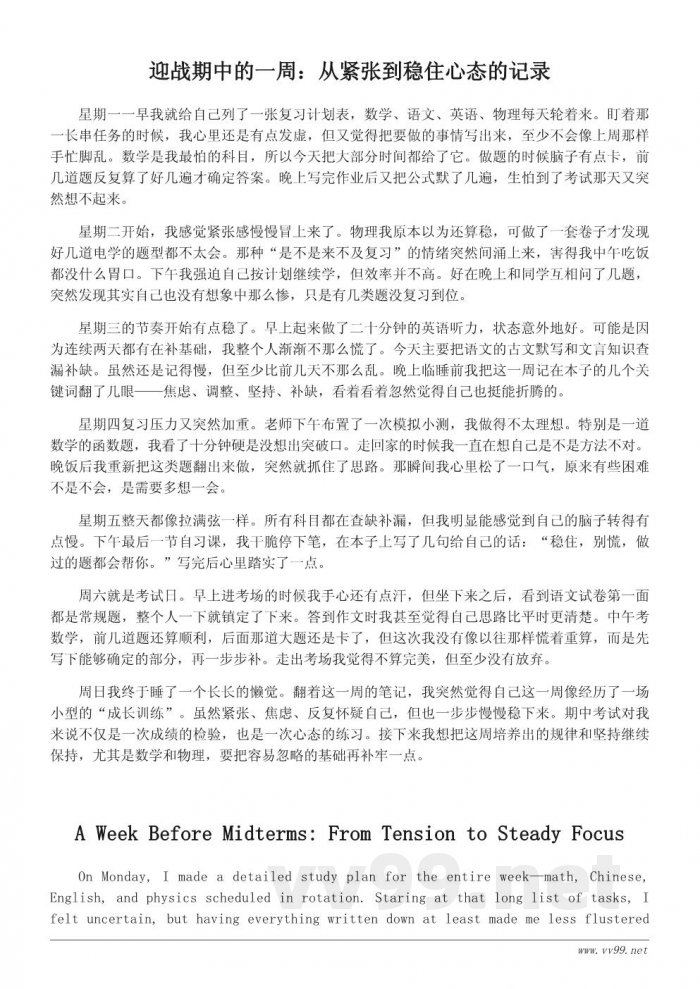
迎战期中的一周:从紧张到稳住心态的记录
星期一一早我就给自己列了一张复习计划表,数学、语文、英语、物理每天轮着来。盯着那一长串任务的时候,我心里还是有点发虚,但又觉得把要做的事情写出来,至少不会像上周那样手忙脚乱。数学是我最怕的科目,所以今天把大部分时间都给了它。做题的时候脑子有点卡,前几道题反复算了好几遍才确定答案。晚上写完作业后又把公式默了几遍,生怕到了考试那天又突然想不起来。
星期二开始,我感觉紧张感慢慢冒上来了。物理我原本以为还算稳,可做了一套卷子才发现好几道电学的题型都不太会。那种“是不是来不及复习”的情绪突然间涌上来,害得我中午吃饭都没什么胃口。下午我强迫自己按计划继续学,但效率并不高。好在晚上和同学互相问了几题,突然发现其实自己也没有想象中那么惨,只是有几类题没复习到位。
星期三的节奏开始有点稳了。早上起来做了二十分钟的英语听力,状态意外地好。可能是因为连续两天都有在补基础,我整个人渐渐不那么慌了。今天主要把语文的古文默写和文言知识查漏补缺。虽然还是记得慢,但至少比前几天不那么乱。晚上临睡前我把这一周记在本子的几个关键词翻了几眼——焦虑、调整、坚持、补缺,看着看着忽然觉得自己也挺能折腾的。
星期四复习压力又突然加重。老师下午布置了一次模拟小测,我做得不太理想。特别是一道数学的函数题,我看了十分钟硬是没想出突破口。走回家的时候我一直在想自己是不是方法不对。晚饭后我重新把这类题翻出来做,突然就抓住了思路。那瞬间我心里松了一口气,原来有些困难不是不会,是需要多想一会。
星期五整天都像拉满弦一样。所有科目都在查缺补漏,但我明显能感觉到自己的脑子转得有点慢。下午最后一节自习课,我干脆停下笔,在本子上写了几句给自己的话:“稳住,别慌,做过的题都会帮你。”写完后心里踏实了一点。
周六就是考试日。早上进考场的时候我手心还有点汗,但坐下来之后,看到语文试卷第一面都是常规题,整个人一下就镇定了下来。答到作文时我甚至觉得自己思路比平时更清楚。中午考数学,前几道题还算顺利,后面那道大题还是卡了,但这次我没有像以往那样慌着重算,而是先写下能够确定的部分,再一步步补。走出考场我觉得不算完美,但至少没有放弃。
周日我终于睡了一个长长的懒觉。翻着这一周的笔记,我突然觉得自己这一周像经历了一场小型的“成长训练”。虽然紧张、焦虑、反复怀疑自己,但也一步步慢慢稳下来。期中考试对我来说不仅是一次成绩的检验,也是一次心态的练习。接下来我想把这周培养出的规律和坚持继续保持,尤其是数学和物理,要把容易忽略的基础再补牢一点。
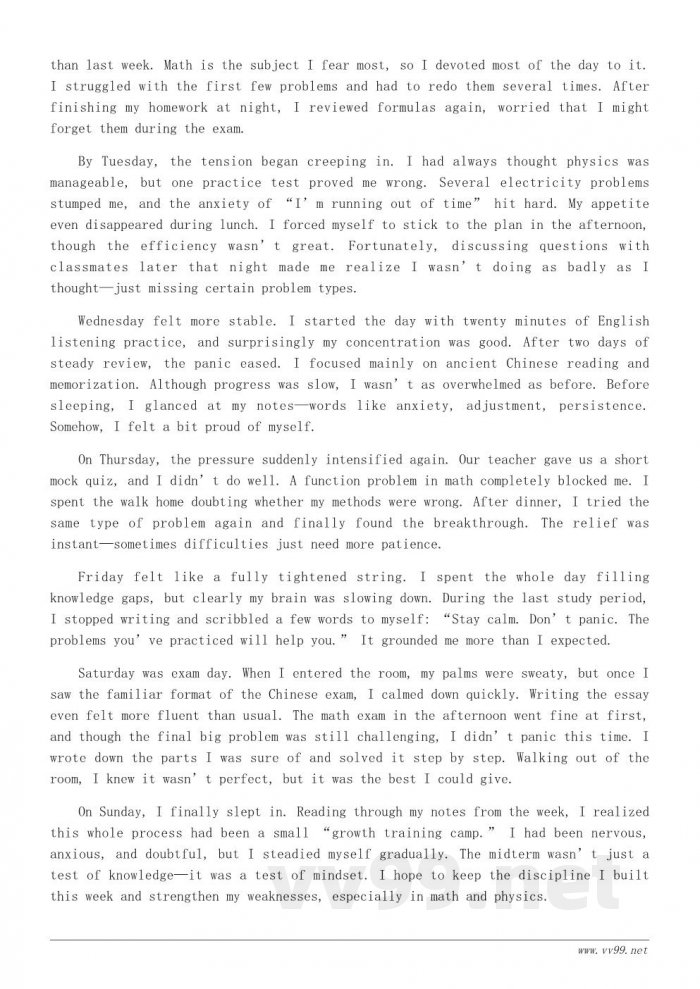
A Week Before Midterms: From Tension to Steady Focus
On Monday, I made a detailed study plan for the entire week—math, Chinese, English, and physics scheduled in rotation. Staring at that long list of tasks, I felt uncertain, but having everything written down at least made me less flustered than last week. Math is the subject I fear most, so I devoted most of the day to it. I struggled with the first few problems and had to redo them several times. After finishing my homework at night, I reviewed formulas again, worried that I might forget them during the exam.
By Tuesday, the tension began creeping in. I had always thought physics was manageable, but one practice test proved me wrong. Several electricity problems stumped me, and the anxiety of “I’m running out of time” hit hard. My appetite even disappeared during lunch. I forced myself to stick to the plan in the afternoon, though the efficiency wasn’t great. Fortunately, discussing questions with classmates later that night made me realize I wasn’t doing as badly as I thought—just missing certain problem types.
Wednesday felt more stable. I started the day with twenty minutes of English listening practice, and surprisingly my concentration was good. After two days of steady review, the panic eased. I focused mainly on ancient Chinese reading and memorization. Although progress was slow, I wasn’t as overwhelmed as before. Before sleeping, I glanced at my notes—words like anxiety, adjustment, persistence. Somehow, I felt a bit proud of myself.
On Thursday, the pressure suddenly intensified again. Our teacher gave us a short mock quiz, and I didn’t do well. A function problem in math completely blocked me. I spent the walk home doubting whether my methods were wrong. After dinner, I tried the same type of problem again and finally found the breakthrough. The relief was instant—sometimes difficulties just need more patience.
Friday felt like a fully tightened string. I spent the whole day filling knowledge gaps, but clearly my brain was slowing down. During the last study period, I stopped writing and scribbled a few words to myself: “Stay calm. Don’t panic. The problems you’ve practiced will help you.” It grounded me more than I expected.
Saturday was exam day. When I entered the room, my palms were sweaty, but once I saw the familiar format of the Chinese exam, I calmed down quickly. Writing the essay even felt more fluent than usual. The math exam in the afternoon went fine at first, and though the final big problem was still challenging, I didn’t panic this time. I wrote down the parts I was sure of and solved it step by step. Walking out of the room, I knew it wasn’t perfect, but it was the best I could give.
On Sunday, I finally slept in. Reading through my notes from the week, I realized this whole process had been a small “growth training camp.” I had been nervous, anxious, and doubtful, but I steadied myself gradually. The midterm wasn’t just a test of knowledge—it was a test of mindset. I hope to keep the discipline I built this week and strengthen my weaknesses, especially in math and physics.
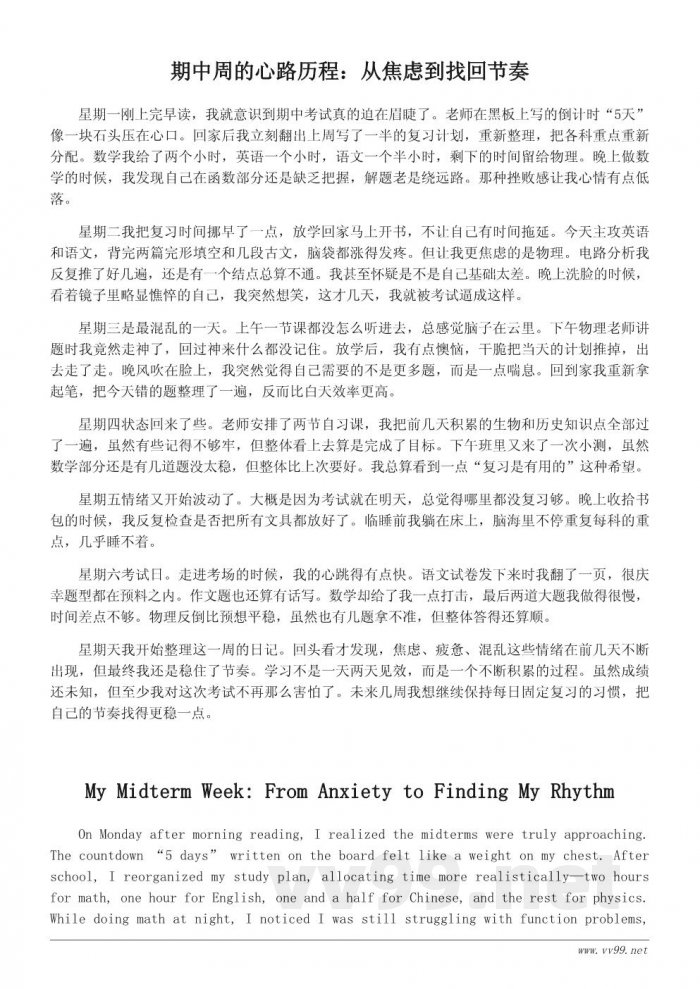
期中周的心路历程:从焦虑到找回节奏
星期一刚上完早读,我就意识到期中考试真的迫在眉睫了。老师在黑板上写的倒计时“5天”像一块石头压在心口。回家后我立刻翻出上周写了一半的复习计划,重新整理,把各科重点重新分配。数学我给了两个小时,英语一个小时,语文一个半小时,剩下的时间留给物理。晚上做数学的时候,我发现自己在函数部分还是缺乏把握,解题老是绕远路。那种挫败感让我心情有点低落。
星期二我把复习时间挪早了一点,放学回家马上开书,不让自己有时间拖延。今天主攻英语和语文,背完两篇完形填空和几段古文,脑袋都涨得发疼。但让我更焦虑的是物理。电路分析我反复推了好几遍,还是有一个结点总算不通。我甚至怀疑是不是自己基础太差。晚上洗脸的时候,看着镜子里略显憔悴的自己,我突然想笑,这才几天,我就被考试逼成这样。
星期三是最混乱的一天。上午一节课都没怎么听进去,总感觉脑子在云里。下午物理老师讲题时我竟然走神了,回过神来什么都没记住。放学后,我有点懊恼,干脆把当天的计划推掉,出去走了走。晚风吹在脸上,我突然觉得自己需要的不是更多题,而是一点喘息。回到家我重新拿起笔,把今天错的题整理了一遍,反而比白天效率更高。
星期四状态回来了些。老师安排了两节自习课,我把前几天积累的生物和历史知识点全部过了一遍,虽然有些记得不够牢,但整体看上去算是完成了目标。下午班里又来了一次小测,虽然数学部分还是有几道题没太稳,但整体比上次要好。我总算看到一点“复习是有用的”这种希望。
星期五情绪又开始波动了。大概是因为考试就在明天,总觉得哪里都没复习够。晚上收拾书包的时候,我反复检查是否把所有文具都放好了。临睡前我躺在床上,脑海里不停重复每科的重点,几乎睡不着。
星期六考试日。走进考场的时候,我的心跳得有点快。语文试卷发下来时我翻了一页,很庆幸题型都在预料之内。作文题也还算有话写。数学却给了我一点打击,最后两道大题我做得很慢,时间差点不够。物理反倒比预想平稳,虽然也有几题拿不准,但整体答得还算顺。
星期天我开始整理这一周的日记。回头看才发现,焦虑、疲惫、混乱这些情绪在前几天不断出现,但最终我还是稳住了节奏。学习不是一天两天见效,而是一个不断积累的过程。虽然成绩还未知,但至少我对这次考试不再那么害怕了。未来几周我想继续保持每日固定复习的习惯,把自己的节奏找得更稳一点。
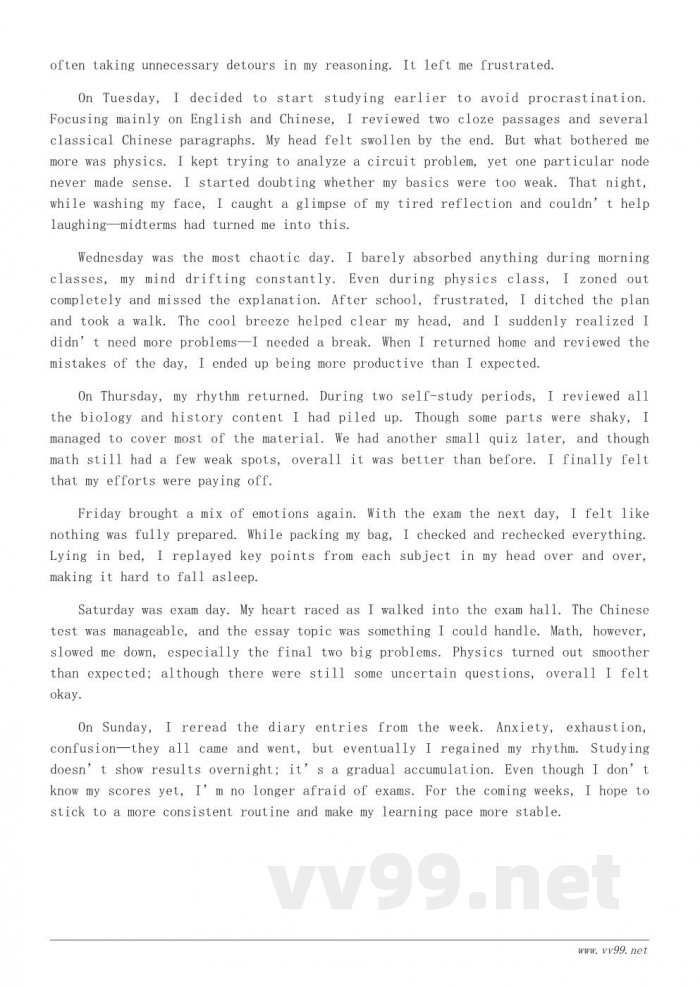
My Midterm Week: From Anxiety to Finding My Rhythm
On Monday after morning reading, I realized the midterms were truly approaching. The countdown “5 days” written on the board felt like a weight on my chest. After school, I reorganized my study plan, allocating time more realistically—two hours for math, one hour for English, one and a half for Chinese, and the rest for physics. While doing math at night, I noticed I was still struggling with function problems, often taking unnecessary detours in my reasoning. It left me frustrated.
On Tuesday, I decided to start studying earlier to avoid procrastination. Focusing mainly on English and Chinese, I reviewed two cloze passages and several classical Chinese paragraphs. My head felt swollen by the end. But what bothered me more was physics. I kept trying to analyze a circuit problem, yet one particular node never made sense. I started doubting whether my basics were too weak. That night, while washing my face, I caught a glimpse of my tired reflection and couldn’t help laughing—midterms had turned me into this.
Wednesday was the most chaotic day. I barely absorbed anything during morning classes, my mind drifting constantly. Even during physics class, I zoned out completely and missed the explanation. After school, frustrated, I ditched the plan and took a walk. The cool breeze helped clear my head, and I suddenly realized I didn’t need more problems—I needed a break. When I returned home and reviewed the mistakes of the day, I ended up being more productive than I expected.
On Thursday, my rhythm returned. During two self-study periods, I reviewed all the biology and history content I had piled up. Though some parts were shaky, I managed to cover most of the material. We had another small quiz later, and though math still had a few weak spots, overall it was better than before. I finally felt that my efforts were paying off.
Friday brought a mix of emotions again. With the exam the next day, I felt like nothing was fully prepared. While packing my bag, I checked and rechecked everything. Lying in bed, I replayed key points from each subject in my head over and over, making it hard to fall asleep.
Saturday was exam day. My heart raced as I walked into the exam hall. The Chinese test was manageable, and the essay topic was something I could handle. Math, however, slowed me down, especially the final two big problems. Physics turned out smoother than expected; although there were still some uncertain questions, overall I felt okay.
On Sunday, I reread the diary entries from the week. Anxiety, exhaustion, confusion—they all came and went, but eventually I regained my rhythm. Studying doesn’t show results overnight; it’s a gradual accumulation. Even though I don’t know my scores yet, I’m no longer afraid of exams. For the coming weeks, I hope to stick to a more consistent routine and make my learning pace more stable.
小提示:上面此文档内容仅展示完整文档里的部分内容, 若需要下载完整文档请 点击免费下载完整文档 。