文章内容
把爬山的收获写具体:三个场景各配一个动作
写爬山的收获,最容易犯的毛病是全文喊坚持:我累了,但我坚持,最后我明白了坚持就是胜利。三句话把作文说完了,画面一个没有。把三个场景各配一个动作,作文就立起来了。
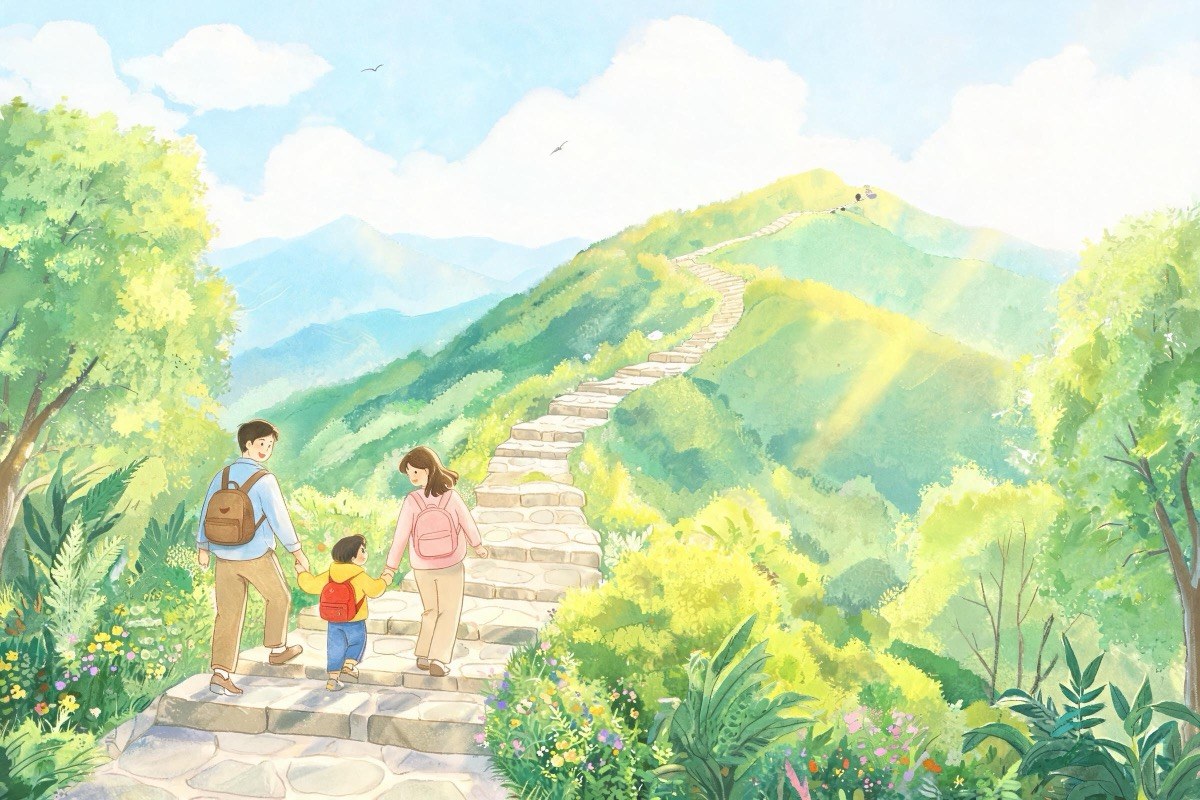
第一个场景是山脚石阶。开头别写今天天气晴朗,直接写踩上第一级石阶的感觉。石阶比家里的台阶高,我第一级就跨得费劲,书包带往下滑。配的动作是跨和滑。这个动作告诉读者山不好爬,后面想放弃才有根。
第二个场景是半山腰歇脚,这是全文的心脏。想放弃的念头不许直接写,要拆成身体:腿抖,手撑着膝盖喘,抬头数还剩多少弯,数到第三弯就不数了。爸爸鼓励我也别写他讲道理,写他做了什么。假设他递过来水壶,说数脚下这一级就行,别数山顶。我照做,眼睛只看下一级石阶,一级一级踩。放弃到继续之间,靠的是一个具体的动作,不是一句加油。
第三个场景是山顶远眺。登顶那一刻不写我高兴得跳起来,写眼睛看到了什么:小区楼房变成火柴盒,平时走的大马路变细,风把汗吹凉。收获从这些画面里自己长出来:原来不是山变矮了,是我走过来了。
三个动作配完,检查一遍:每个场景里有没有一个身体在做的事,跨、撑、看、踩、吹。有,坚持两个字可以不写,读者也懂;没有,写十遍坚持也是空话。
还有一处要补:三个场景之间的过渡。别用过了一会儿、接着这类空词,用身体状态接。从山脚到半山腰,写石阶一个弯接一个弯,喘声越来越重;从歇脚到登顶,写腿从抖到发软,再写脚一软踩上最后一级平台。过渡也用身体写,全文的动作链就不断。
最后是字数。中年级作文常要求四百到六百字,三个场景各写一百多字,开头结尾各一两行,正好够。字数不够时别加形容词,把动作再拆细一步:踩上石阶之后,再加手扶栏杆、回头看一眼来路。动作拆细,字数自然上去,画面也离读者更近。
Making the Lesson of a Hike Concrete: One Action for Each of Three Scenes
The most common flaw in essays about what a hike teaches is shouting perseverance all the way through: I was tired, but I persevered, and at last I learned that perseverance wins. Three sentences finish the essay and leave not one picture. Give each of the three scenes one body action, and the essay stands up.
Scene one: the stone steps at the foot. Do not open with the weather. Write the feeling of the first step directly. The steps are higher than the ones at home; my first stride was a struggle and my backpack strap slid down. The actions are stride and slide. They tell the reader the mountain is hard, which gives the later urge to quit a root.
Scene two: resting halfway up, the heart of the essay. Never write the thought of giving up outright; break it into the body: legs shaking, hands on knees gasping, counting how many switchbacks remain and stopping at the third. Do not have dad lecture either; write what he does. Suppose he hands over the water bottle and says count only the step under your feet, not the summit. I obeyed, eyes on the next step alone, one step after another. Between quitting and continuing stands one concrete action, not one cheer.
Scene three: the view from the top. At the summit do not write that I jumped for joy; write what the eyes saw: apartment blocks shrunk to matchboxes, the wide road I walk daily turned thin, wind cooling my sweat. The lesson grows out of the picture: the mountain did not get shorter; I walked through.
After placing the three actions, check each scene for one thing a body is doing: stride, brace, look, step, blow. If it is there, the word perseverance never needs writing and readers still understand; if it is not, writing perseverance ten times is still empty.
One more thing to fill in: the joins between the three scenes. Do not use empty connectors like after a while or next; join them with body states. From foot to halfway, write step after switchback and breathing growing heavier; from the rest to the summit, write legs going from shaking to weak, then a soft foot landing on the last platform step. Join with the body too, and the action chain never breaks.
On length: middle-grade essays often ask for four to six hundred characters. Three scenes at a little over a hundred each, plus a line or two for opening and closing, lands right in range. When the count falls short, do not add adjectives; split one action one notch finer: after stepping up, add a hand on the railing, a glance back at the road already walked. Finer actions raise the count by themselves and move the picture closer to the reader.
一篇300字爬山范文的逐段点评:哪句实在,哪句该删
下面点评一篇假设的三年级习作《爬山的收获》,全文约三百字,分四段。逐段说哪里实在、哪里该动刀,改法写在点评后面。
第一段原文:周六早上,我和爸爸去爬家门口的小山。山脚有很多石阶,又高又陡,我一级一级往上爬。点评:开头两句里,第一句是交代,第二句有石阶、有高、有一级一级,是实在的。该动的是第一句,周六早上和去字都多余。改法:直接从石阶进来,家门口的小山有一百多级石阶,比家里的台阶高出一截。
第二段原文:爬到半山腰,我太累了,心想还是放弃吧。爸爸鼓励我说:坚持就是胜利!我听了爸爸的话,又继续往上爬。点评:这一段问题最多。太累没有画面,放弃吧是念头直说,坚持就是胜利是口号,听了爸爸的话是空过渡。整段四个句子没有一个是身体在做事。改法:腿开始发抖,我把手撑在膝盖上,抬头数前面的弯,数到第三弯就不数了。爸爸把水壶递给我,说只看脚下这一级。我盯着鞋尖前面那级石阶,踩上去,再踩下一级。
第三段原文:终于到了山顶,山顶的风景真美啊!我爱这美丽的山顶。点评:风景真美是结论,爱山顶是空喊,两句都该删。改法:站在山顶,我们小区的高楼变成了小火柴盒,学校方向的大马路细得像根线,风吹过来,后背的汗凉凉的。
第四段原文:这次爬山让我明白了一个道理:做什么事都要坚持,坚持就能成功!点评:道理喊得太响,而且成功二字把作文抬过头了。爬山没有成功不成功,只有走完没走完。改法:下山时腿还在抖,可我走路比上山轻。原来不是山变矮了,是我走过来了。
整篇点评下来,范文的病集中在两处:用结论代替画面,用口号代替动作。改法全部一样:把形容词换成身体在做的事,把口号换成一句话加一个动作。改完字数反而多了两行,这就是实在话比空话占地方的道理。
Line-by-Line Notes on a 300-Word Model Hike Essay: What Stays, What Goes
The essay below is a hypothetical third-grade piece titled What a Hike Taught Me, about three hundred words in four paragraphs. Each paragraph gets notes on what is solid and what needs the knife, with the fix written after the note.
Paragraph one: On Saturday morning, my dad and I went to climb the little hill near our home. There were many stone steps at the foot, tall and steep, and I climbed them one by one. Note: of the two opening sentences, the first is mere setup; the second has steps, height, and one by one, so it is solid. The knife goes into the first sentence; Saturday morning and the word went are surplus. Fix: enter straight at the steps - the little hill near our home has over a hundred stone steps, a good deal higher than the ones at home.
Paragraph two: Halfway up, I was so tired that I thought about giving up. Dad encouraged me, saying perseverance is victory! I listened to dad and kept climbing. Note: this paragraph has the most problems. So tired has no picture, thought about giving up states the thought directly, perseverance is victory is a slogan, and I listened to dad is an empty bridge. Not one of its four sentences has a body doing anything. Fix: my legs began to shake; I braced my hands on my knees and counted the switchbacks ahead, stopping at the third. Dad handed me the water bottle and said look only at the step under your feet. I stared at the step just ahead of my shoe tips, stepped up, then the next one.
Paragraph three: Finally we reached the summit. The view up there was so beautiful! I love this beautiful summit. Note: so beautiful is a conclusion and I love the summit is shouting; both sentences go. Fix: standing at the top, our neighborhood towers had become little matchboxes, the big road toward my school was thin as a thread, and the wind cooled the sweat on my back.
Paragraph four: This hike taught me a lesson: whatever you do, you must persevere, and perseverance brings success! Note: the lesson is shouted too loud, and the word success lifts the essay past its own head. A hike has no success, only finished or not finished. Fix: on the way down my legs still shook, but my steps were lighter than on the way up. The mountain did not get shorter; I walked through.
Across the whole critique the model essay is sick in two places: conclusions standing in for pictures, slogans standing in for actions. The fix is always the same: trade adjectives for what the body is doing, trade slogans for one line of speech plus one action. The revised version actually grew two lines longer - that is how solid detail takes more room than empty talk.
小提示:上面此文档内容仅展示完整文档里的部分内容, 若需要下载完整文档请 点击免费下载完整文档 。