文章内容
六年级登山作文怎么写:把三个场景各自写具体
写班级秋游爬山,最容易犯的毛病是把三个场景平均用力,每个都写两三句,全文变成行程记录。正确做法是先分字数:假设全文五百字,集合出发约一百二十字,陡坡互助约二百二十字,山顶合影约一百六十字。中间场景字数最多,因为互助友情是这篇文章的重点,必须给它足够的空间。
集合出发场景的任务是交代时间地点和人物状态,写法是用一个具体动作开场。不要写今天天气晴朗我们兴高采烈地出发,改成大巴停在山脚下,班长举着班旗点名,队伍里有人背包带松了,有人把水壶塞进包侧袋,检票口排起长队。动作一多,出发的热闹就出来了。人物状态靠细节交代:谁带了满包的零食,谁一路上都在问还有多久到,这些细节后文还能回收使用。
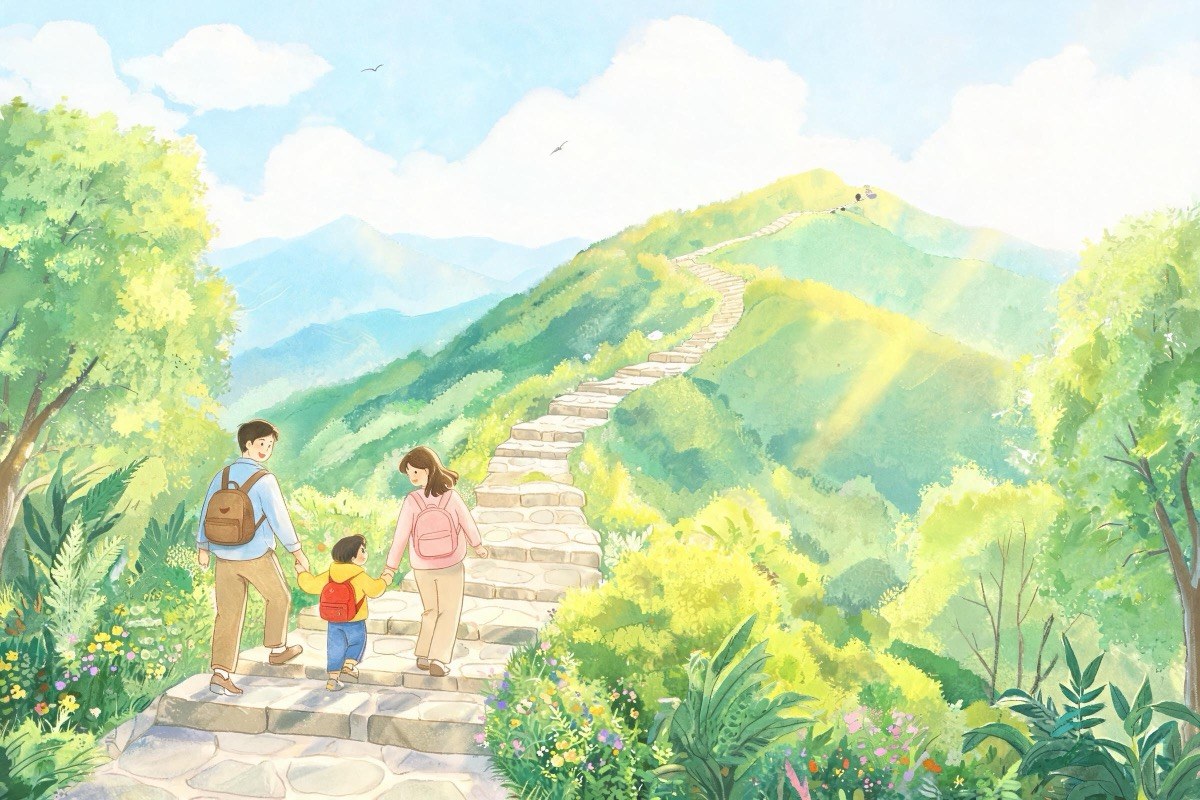
陡坡互助场景要放慢镜头。先写坡的难走:石阶又高又滑,背包带勒着肩膀,爬到一半小腿发酸,手撑着膝盖直喘。再写互助的动作:前面同学回过头伸手,抓住手腕往上带;后面同学用手顶了一下背包底。语言要短,喊一声慢点我拉你,或者回一句不用我自己能行,两句话就够,长了反而假。动作和语言交替出现,一段动作一段对话,互助的过程就立住了。注意写被帮助者的反应:先不好意思,站稳后说谢谢,脸有点热,这些反应让友情显得真实。
山顶合影场景收在情绪上,但情绪要从动作里来。写大家挤在一起,个子矮的被安排在中间,有人喊看镜头,快门响之前还在整理被风吹歪的帽子。然后补一句回望来路:刚才觉得爬不上来的陡坡,现在从山顶看下去只有手指那么长。这句话自然带出收获,不需要再写这次爬山让我明白了坚持就是胜利。
三个场景之间用一两句过渡衔接:从山脚到半山腰写腿越来越沉,从互助到合影写终于踏上山顶平台。过渡句只负责移动地点,不要插入感想。写完后自查一遍:全文有没有出现超过三个字的口号式句子,有的话删掉,换成一个动作或一句对话。
How to Write a Grade Six Hiking Essay: Making Three Scenes Concrete
The most common mistake in a class field trip hiking essay is giving all three scenes equal weight, two or three sentences each, turning the whole piece into a travel log. The right move is to split the word budget first. Suppose the essay is about five hundred words: gathering and departure gets about one hundred twenty, helping each other on the steep slope gets about two hundred twenty, and the summit group photo gets about one hundred sixty. The middle scene gets the most space because friendship and mutual help are the heart of this essay.
The gathering scene only needs time, place, and the mood of the crowd, and it should open with one concrete action. Instead of writing that the weather was fine and we set out happily, write that the bus stopped at the foot of the hill, the monitor held the class flag while calling names, one kid retied a loose backpack strap, another stuffed a water bottle into the side pocket, and the ticket gate had a long line. Detail actions like these make the departure feel alive. Character states also come from small details: who packed a bag full of snacks, who kept asking how far it was, details the later paragraphs can pick up again.
The mutual help scene needs slow motion. First show how hard the slope is: tall slippery stone steps, straps digging into shoulders, calves burning halfway up, hands on knees while gasping. Then show the helping actions: a classmate ahead turns back and reaches down, grabs your wrist and pulls; someone behind pushes the bottom of your pack. Keep the dialogue short, one shout of take it easy I got you, one reply of no thanks I can do it myself, two lines are enough, more would sound fake. Alternate action and speech, one action paragraph then one dialogue paragraph, and the help scene stands firm. Do not forget the reaction of the helped person: first embarrassment, then a quiet thank you once steady, a warm face, reactions like these make the friendship believable.
The summit photo scene closes on emotion, but emotion must come from action. Write how everyone squeezes together, the shortest kids pushed to the middle, someone shouting look at the camera, hats still being fixed in the wind before the shutter clicks. Then add one line looking back down: the slope that felt impossible to climb now looks no longer than a finger from the top. That line delivers the gain naturally, no need to add that this trip taught me persistence wins.
Move between scenes with one or two transition lines: legs getting heavier from the foot to the mid-slope, feet finally on the summit platform after the help scene. Transition lines only move the location, never insert reflections. After writing, check once: if any slogan-like sentence appears, delete it and replace it with one action or one line of dialogue.
一篇500字登山范文逐段点评:互助友情是怎么写出来的
假设有一篇范文叫《山路上伸过来的手》,第一段这样开头:大巴一停稳,班长的班旗就在车门口晃起来。队伍往检票口走,林浩的零食袋从包侧袋里鼓出来,走一步响一声,他索性把袋子攥在手里。点评:开头没有一句天气和心情,两个动作(举旗点名、攥零食袋)就把出发的场面钉住了,零食袋这个细节还埋了伏笔,后文能用上。
第二段写爬坡:石阶一级比一级高,走到第三段陡坡时我的小腿开始抖,手撑着膝盖,喘得说不出整句话。前面忽然伸下来一只手,是同桌周雨,她反手抓住我的手腕,说慢点,我拉你。我抓住她的胳膊往上带了两步,背包底被后面的人顶了一下,是后排的王小川,他喊一声别停,一停就软了。点评:这一段是全文最重的部分,写法是慢镜头加短对话。先写身体的反应(腿抖、撑膝、喘),再让手出现,顺序不能反,难走写够了,那只手才有分量。对话各一句,王小川那句别停,一停就软了带点经验之谈的味道,符合常爬山的孩子的口吻。
第三段写被拉上去之后:站稳了,我拍拍裤子上的土,说了声谢谢。周雨摆摆手,说上周你等我系鞋带,我还没谢你呢。点评:这一问一答是全篇最好的一处。谢谢和不用谢太普通,互相记着对方的小恩才真实,一句话把友情写成了来回的账,不是单方面的施舍。前面埋的零食袋在这里回收:周雨掏出一块糖,说是早上留的,路上分了一半给我。
第四段写山顶:平台上人挤人,摄影师喊看镜头,风把班旗吹得啪啪响,前排的人弯腰按住帽子。快门响完,我回头看山道,刚才爬不动的那段陡坡,躺在脚下像一条窄石缝。点评:合影先写乱(挤、喊、按帽子),再写回望,收获从回望的视觉里长出来,像一条窄石缝这个比喻替代了所有坚持就是胜利之类的句子。
全文五百字出头,没有一句口号。可学的三条:难走写够再出现帮助;对话短且带人物口吻;收获用画面收尾。可挑的毛病:王小川出场略突然,前文集合时可加一句他走在后排,出场就不突兀。
A 500-Word Hiking Model Essay, Paragraph by Paragraph: How Friendship Gets Written
Suppose a model essay is titled The Hand Reaching Down the Mountain Path. Its first paragraph opens like this: the moment the bus stopped, the monitor waved the class flag at the door. As the line moved toward the ticket gate, Lin Hao snack bag bulged out of his side pocket, crinkling with every step, until he just carried it in his hand. Comment: no word about weather or mood; two actions, the flag and the snack bag, nail the departure scene, and the bag plants a seed the later paragraphs harvest.
The second paragraph writes the climb: each step higher than the last, my calves shaking on the third steep stretch, hands on knees, too out of breath to finish a sentence. Suddenly a hand came down from in front, my deskmate Zhou Yu, she gripped my wrist and said slow down, I will pull you. I held her arm and got two steps up, and the bottom of my pack was pushed from behind by Wang Xiaochuan in the back row, who shouted do not stop, stopping makes your legs give out. Comment: this is the heaviest paragraph, written in slow motion with short dialogue. Body reactions first, then the hand appears, the order cannot flip, the harder the climb is shown the heavier that hand feels. One line each, and Wang Xiaochuan line carries the tone of a kid who hikes often.
The third paragraph comes after being pulled up: I stood steady, patted the dust off my pants, and said thanks. Zhou Yu waved her hand and said you waited for me to tie my shoes last week, I never even thanked you. Comment: this exchange is the best part of the piece. Thanks and you are welcome are too plain; remembering each other small favors makes the friendship real, a two-way account rather than one-way charity. The snack bag planted earlier pays off here: Zhou Yu takes out a candy she saved from morning and splits half with me on the way down.
The fourth paragraph is the summit: the platform packed with people, the photographer shouting look at the camera, the wind snapping the class flag, front rows bending to hold their hats. After the shutter, I look back at the trail, and the steep stretch I could barely climb lies under my feet like a narrow crack of stone. Comment: the photo scene starts with chaos, then the backward glance, and the gain grows out of that image, the narrow crack replacing every sentence about persistence.
The essay runs just over five hundred words with zero slogans. Three things worth copying: show the difficulty fully before the help arrives; keep dialogue short and in character voice; end the lesson on an image. One flaw worth noting: Wang Xiaochuan appears abruptly, a single line at the gathering placing him in the back row would fix it.
小提示:上面此文档内容仅展示完整文档里的部分内容, 若需要下载完整文档请 点击免费下载完整文档 。